Our attributed population includes more than 100,000 residents spanning 32,000 km.
2
Algoma’s vast geography and sparse population can create challenges for access to and delivery of health and social services. Isolated communities, lack of public transportation in and between communities, staff retention, travel costs, and hazardous driving conditions are all significant factors.
Life expectancy
Life expectancy at birth in Algoma is lower for both males and females than the provincial average. In Algoma, males are expected to live to around 76 years old (80 Ontario-wide), whereas females are expected to live to 82 (84 Ontario-wide).
The average age in Algoma is 45.5 – four years older than the provincial average.
Social determinants of health
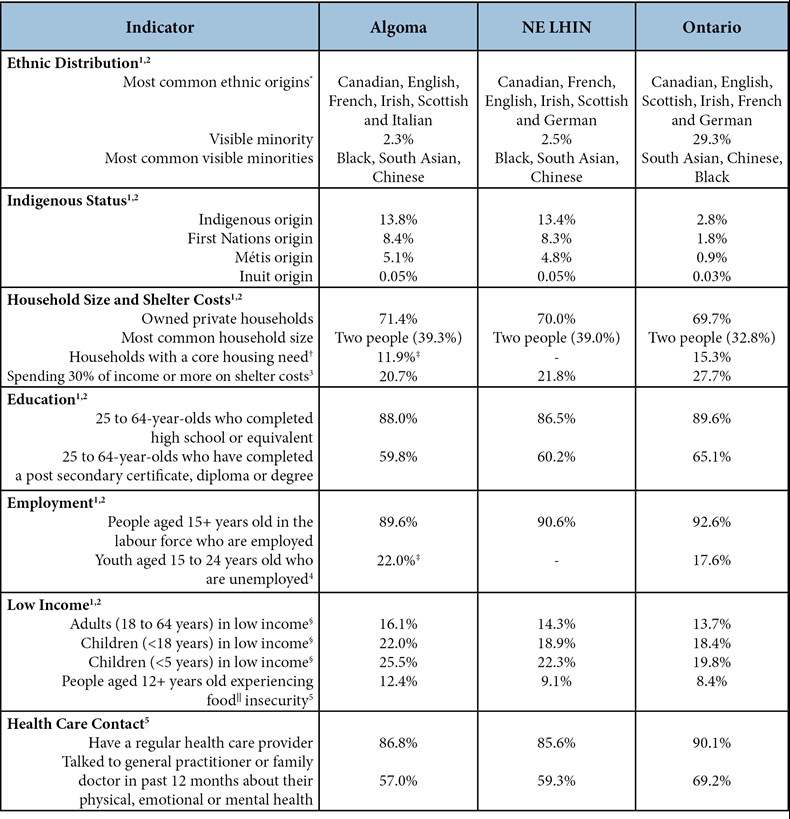
Health in Algoma communities can be influenced by ethnic distribution, Indigenous status, household size and costs, education, employment, income, and access to health care (APH, 2018). In Algoma, several of these indicators are notable when compared to Ontario as whole. This includes a higher number of Indigenous and Francophone community members and a higher percentage of residents with low income. Because Algoma is a diverse and widespread community, these population characteristics help underpin the importance of taking an equity-focused approach and emphasize the value of culturally appropriate care.
https://www.algomaoht.ca/community-health#:~:text=In%202018%2C%20Algoma%20Public%20Health,self-harm%2C%20and%20suicide.
https://www.algomapublichealth.com/stats-reports/community-health-profile-2018/








 bismillahschool.net