Fast-forward to 18th-century Prussia, where an entirely different philosophy of education was emerging. The Prussian model of education wasn’t designed to create critical thinkers; it wasn’t even designed for kids. Prussian leaders built it to produce disciplined, obedient soldiers who would follow orders without question.
This was in response to the military weaknesses exposed by Prussia’s defeat by Napoleon. The defeat revealed shortcomings not only in military tactics but also in the population’s readiness and loyalty. This led Prussian leaders to recognize the need for a more unified, reliable, and well-trained citizenry that could support the state’s military and political objectives.
This shift in control allowed the state to decide what children learned and, more importantly, how they learned to think — or rather, not to think. In Prussia, schooling was a tool for control, shaping young people into compliant subjects who wouldn’t question authority or run tail in the face of a canon.
Origins and Importation
Prussian Roots: Developed in the early 1800s after Prussia’s defeat by Napoleon, the system aimed to create disciplined soldiers, unified citizens, and an obedient populace. [1, 2, 3]
American Adoption: In the 1840s, American educators traveled to Prussia, translated reports on their state-run schools, and brought the framework back to standardize a fragmented local schooling approach. [1, 2, 3]
Industrial Scaling: Later in the late 19th and early 20th centuries, industrialists and philanthropists—such as through the Rockefeller General Education Board—helped scale and fund this framework to supply a predictable, manageable workforce for factories;
Work with Tellwell’s talented publishing team to design, edit, distribute and market your book. Focus on writing, we’ll do the rest.
100% Royalties: Tellwell combines the strengths of each distribution channel, creating the best distribution deal in the industry.
Consultative Approach: We guide you through the book publishing process in an informative and thoughtful way.
Transparency: You’ll know the professionals working on your book, from designer to illustrator to project manager to marketing consultant.
Complete Control: Authors have the final say on every decision from cover design, to editing, to pricing.
100% Rights: Self-publish and retain 100% of your book publishing rights
Choose Tellwell
Distribution
Guidance
Full-service Team
Book availability to 39,000 booksellers including Amazon and Barnes and Noble. Hardcover, paperback and e-book formatting.
To get the highest quality, we provide a team to support you through editing, design, distribution and marketing.
We understand the publishing process may be new to you. Our team thoughtfully guides you through each step of the journey.
Design & Layout
Editing
Marketing
Our talented designers create a beautiful, customized cover design and format the interior layout of your book to meet various distribution requirements.
Tellwell offers copy editing to catch errors as well as more comprehensive content editing to improve the structure and quality of your book.
From an author website, to media outreach, to social media marketing and book reviews, our book marketing consultants will develop a strategy to suit your needs.
Fill out the form to get your free guide to book publishing. Learn how to publish your book, and about traditional publishing vs. self-publishing. First Name *Last Name *Phone Number *Email *Manuscript Status *Complete and editedComplete but not editedWill be done within 1 monthWill be done within 3 monthsWill be done within 6 monthsWill be done within 12 monthsWon’t be done for over 12 monthsType of Book *Kids bookMemoir or biographyFictionNon-FictionPhoto / Art / CookbookOtherTell us about your book. How can we help?Free Publishing Guide
The two things I most appreciated about Tellwell were the editing service and my Customer Support / Project Manager. The editor assigned to me was perfect. He had marvelous command of the written word, great editing skills and was attuned to what I what we were writing on somewhat complex subject matter. My Customer Support / Project Manager was always there to help me with both technical and administrative difficulties. He was fantastic.
I recommend Tellwell for those who are wanting to self-publish. My project manager was beyond amazing with great time punctuation and kindness that was unmatchable. With the added bonus of great patience and the understanding on delivering what the author is asking for. Even other departments within Tellwell Publishing have exceptional service and quality you want in a team that is working for you! Overall, Tellwell Publishing checked all my boxes for what I was expecting and a little bit more!
As a new publisher I was lost and confused as to the whole process of getting my book published. I got all my questions answered in terms that I could understand. When I had questions or issues they were handled immediately and I always get excellent results. My Tellwell experience was amazing and I would tell anyone who is thinking about or writing a book that they couldn’t do any better than Tellwell. I am currently writing a second book and I will be using Tellwell services again. Great job everyone.
Chelee Cromwell Newbie; Peter Desrochers Balletomane
1.800.891.4160
Vicki Beames Into the Light
I have worked with Tellwell since 2018, publishing with them 18 books. I highly commend their project managers, book cover designers, and book interior designers. I have found them to be highly professional, dedicated, courteous, and diligent in every aspect of their work.
Tellwell was recommended to me by a good friend who authored a children’s book. She led me to Tellwell, and told me how easy the process of getting her work published was for her. Not only was I sold, I experienced the same thing. My project manager and marketing manager were both EXTREMELY helpful, and made sure I was informed of my book’s progress to distribution every step of the way.
Your professionalism and support has been fantastic and I really felt heard and supported at every stage along the process of producing my first book. The videos and phone calls were helpful and explanatory which was important because I was stepping into a world unknown to me. Thank you.
Garrett Carr’s debut adult novel is big-hearted and welcoming, opening with a collective voice that immediately sets the tone for the rest of the novel.
We were a hardy people, raised facing the Atlantic. A few thousand men, women and children, clinging to the coast and trying to stay dry. Our town wasn’t just a town, it was a logic and a fate.
The story is told through the “we” of the fishing town of Killybegs in Donegal, and it works brilliantly, filled with lovely, unforced colloquialisms that feel completely true to the place and the people.
We’re building Ellipsus as a platform that prioritizes transparency, trust, independence, and creative freedom. Writers shouldn’t have to trade their privacy or their ownership for good tools. The rise of AI scraping and big tech overreach only made that more urgent for us. —Rex at Ellipsus
Whatever your attitude toward emerging technologies, we can probably agree it’s tough to be online these days. The tools available seem to be multiplying for some and dwindling for others—particularly for those who don’t want to use generative AI. A growing distrust of big tech is leading people to search for less exploitative options than Google or Microsoft.
Fortunately for them (and also me), new developers are creating tools that don’t push AI without the opportunity to opt-in. One of those new tools is Ellipsus, a writing tool created by a small group of writers who wanted better collaborative document options, and who are solidly for transparency, privacy, and writers’ rights to their own work.
As a text editor, Ellipsus is a lot like Google Docs, but more focused on better performance for large docs. It’s got a git-style feature for better version control, richer permissions, flexibility, and creative customizations. It’s got a unique knack for supporting real-time collaboration, and is simple enough to start using right away.
How Ellipsus Addresses Concerns about AI, Privacy, and Access
Ellipsus has been very clear on their stance: no generative AI in the program, ever. They believe writers’ work shouldn’t be harvested to train models without consent. Generative AI, when built on creative labor, undermines originality, and they believe putting it inside a writing tool would be fundamentally counterproductive to fostering genuine voices. Ellipsus’s creators want it to be a safe space for writers, and are working on offering better encryption and privacy protections, too.
Things that Make Ellipsus Fun
Ellipsus has a vibrant Discord community of writers providing mutual support, betas, collaborators, and the opportunity to commune. Collaboration options in the documents themselves are pretty fun too—I love being able to create different drafts for different beta readers so no one has to feel put on the spot.
And another small but mighty feature is the variety of different skins you can apply to your program.
A Book about the Communist “Hell” (political prisoners sent to Siberia) – during communist hell – by the political prisoner and teachers Alexandr Solzhenitsyn;
EXTRAORDINARY STORY OF Aleksandr Solzhenitsyn
Aleksandr Solzhenitsyn did not write a book called Road to Siberia, but he wrote extensively about the Soviet penal system and his own imprisonment. His most famous works documenting the brutal labor camps include The Gulag Archipelago and the novella One Day in the Life of Ivan Denisovich. [1, 2, 3, 4, 5]
Key Details on Solzhenitsyn’s Exile and Works
Imprisonment: Arrested in February 1945 for criticizing Joseph Stalin in a private letter, spending eight years in labor camps and subsequent internal exile. [1, 2]
The Gulag Archipelago:A monumental three-volume historical investigation of the Soviet forced labor camp system, drawing on testimonies from 227 survivors and his own time inside. [1, 2, 3]
Return to Russia: After the fall of the Soviet Union, he famously returned to Russia via a train journey from Vladivostok in 1994. [1, 2]
Aleksandr Isayevich Solzhenitsyn[a][b]ⓘ (11 December 1918 – 3 August 2008)[6][7] was a Soviet and Russian author and dissident who helped to raise global awareness of political repression in the Soviet Union, especially the Gulag prison system. He was awarded the 1970 Nobel Prize in Literature “for the ethical force with which he has pursued the indispensable traditions of Russian literature”.[8]His nonfiction work The Gulag Archipelago “amounted to a head-on challenge to the Soviet state” and sold tens of millions of copies.[9
During the Khrushchev Thaw, Solzhenitsyn was released and exonerated. He started writing novels about his experiences and repression in the Soviet Union. In 1962, he published his first novel, One Day in the Life of Ivan Denisovich—an account of Stalinist repressions—with approval from Soviet leader Nikita Khrushchev. His last work to be published in the Soviet Union was Matryona’s Place in 1963. After Khrushchev lost power, Soviet authorities unsuccessfully tried to discourage Solzhenitsyn from writing. His novels published in other countries included Cancer Ward in 1966, In the First Circle in 1968 and August 1914 in 1971. The history The Gulag Archipelago was published in 1973. The last outraged authorities and, in 1974, he was stripped of his Soviet citizenship and flown to West Germany.[12] He soon moved to Switzerland and then, in 1976, to Vermont in the United States with his family. He continued to write and his Soviet citizenship was restored in 1990. He returned to Russia four years later and remained there until his death in 2008.
Ka’ab ibn Malik (R.A) said, “When I greeted the Messenger of Allah, whose face was glittering with happiness, for whenever Allah’s Messenger ﷺ was happy, his face used to glitter, as if it was a piece of the moon, and we used to recognize it (i.e. his happiness) from his face.” Once Al-Baraa (R.A) was asked whether the Prophet Muhammad ﷺ face was like the sword to which he replied: No, it was like the moon.
On the authority of Umm Ma‘bad ‘Atikah bint Khalid al-Khuza‘iyyah (ra) who said:’I saw a man of visible radiance and purity, beautiful appearance, bright faced, with neither protruding ribs nor a small head, handsome and fair. His eyes were deep black and large, and his eyelashes were lush. His voice was mellow and soft. The whiteness of his eyes was bright and his pupils were very black. His eyebrows were beautifully arched and connected. His neck was long, his beard densely full. When he was silent, he appeared dignified. When he spoke, he was eminent and crowned with magnificence. His speech was sweet, his words precise, neither too little nor too much. Like a string of pearls flowing down gradually.
From useful utilities to handy archivers and transcoders, here are our favorite free yet powerful macOS apps you can download today.
There’s something of a misconception when it comes to the Mac: that Mac apps cost more, just like the computer itself. While powerful tools like Photoshop or Final Cut Pro certainly have price tags commensurate with their robust feature sets, many of the greatest Mac apps won’t cost you anything more than the time they take to download them.
A quick note before we begin. Apple has changed its security settings in macOS, so you’ll need to allow your system to open a couple of these apps. A dialogue box may pop up telling you a certain app “is an application downloaded from the Internet. Are you sure you want to open it?” Click Open to proceed with the installation.
KINDLE BOOKS
Sometimes you just want to curl up with your Mac and read a good book. With the Kindle app for Mac you can do just that. Like iBooks, but for all of your Kindle books, comics, and Kindle Unlimited subscriptions, you’ll be able to access all fo your Amazon.com purchases right on your desktop. With a full-screen mode, five font options, a dark theme, and adjustable point sizes, brightness, and page widths, you can customize your reading experience just the way you like it. There’s also a built-in dictionary and easy annotating, and Amazon’s Whispersync tech will let you pick up right where you left off on any device. Except, you know, from an actual book.
SPARK – free email app
IDG
Apple’s default email client gets better with each macOS revision, but if you’re looking for something different, Spark will be a refreshing change of pace. Smart, stylish, and speedy, Spark will help you get control over your inbox with powerful filters that help you focus on the messages that need your attention. It works with Gmail, iCloud, Outlook, and just about any other email address, and its companion iOS apps will keep all of them perfectly synced. With a deceptively powerful interface and a slew of advanced features, Spark just might ignite your passion for email again. Or at least make you not hate it as much.
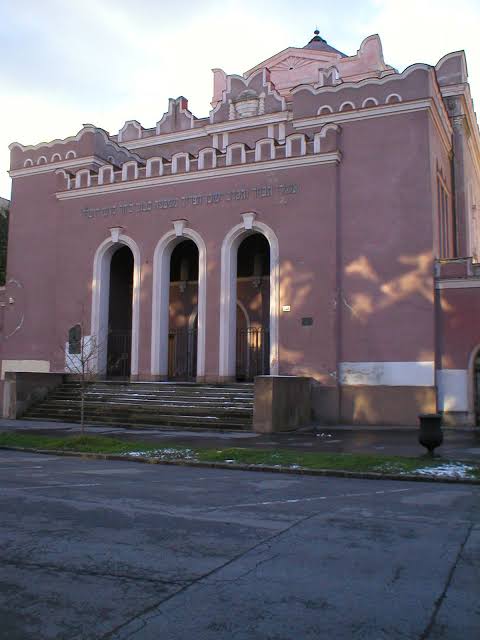
Were Allah not to check people by means of others, there would have been demolished the monasteries, churches, synagogues, and mosques in which the name of Allah is often mentioned. Surat Al-Hajj 22:40
Ibn Khuwaiz said: Included in this verse is the prohibition of demolishing the churches of non-Muslim citizens, their temples, and their houses of worship. Source: Tafseer Al-Qurtubi 22:40
This legal requirement is part of the tolerance, compassion, and good will that Islam teaches concerning other religious groups. The Prophet defined Islam as safety and security for people in general.