Fast-forward to 18th-century Prussia, where an entirely different philosophy of education was emerging. The Prussian model of education wasn’t designed to create critical thinkers; it wasn’t even designed for kids. Prussian leaders built it to produce disciplined, obedient soldiers who would follow orders without question.
This was in response to the military weaknesses exposed by Prussia’s defeat by Napoleon. The defeat revealed shortcomings not only in military tactics but also in the population’s readiness and loyalty. This led Prussian leaders to recognize the need for a more unified, reliable, and well-trained citizenry that could support the state’s military and political objectives.
This shift in control allowed the state to decide what children learned and, more importantly, how they learned to think — or rather, not to think. In Prussia, schooling was a tool for control, shaping young people into compliant subjects who wouldn’t question authority or run tail in the face of a canon.
Origins and Importation
Prussian Roots: Developed in the early 1800s after Prussia’s defeat by Napoleon, the system aimed to create disciplined soldiers, unified citizens, and an obedient populace. [1, 2, 3]
American Adoption: In the 1840s, American educators traveled to Prussia, translated reports on their state-run schools, and brought the framework back to standardize a fragmented local schooling approach. [1, 2, 3]
Industrial Scaling: Later in the late 19th and early 20th centuries, industrialists and philanthropists—such as through the Rockefeller General Education Board—helped scale and fund this framework to supply a predictable, manageable workforce for factories;
Work with Tellwell’s talented publishing team to design, edit, distribute and market your book. Focus on writing, we’ll do the rest.
100% Royalties: Tellwell combines the strengths of each distribution channel, creating the best distribution deal in the industry.
Consultative Approach: We guide you through the book publishing process in an informative and thoughtful way.
Transparency: You’ll know the professionals working on your book, from designer to illustrator to project manager to marketing consultant.
Complete Control: Authors have the final say on every decision from cover design, to editing, to pricing.
100% Rights: Self-publish and retain 100% of your book publishing rights
Choose Tellwell
Distribution
Guidance
Full-service Team
Book availability to 39,000 booksellers including Amazon and Barnes and Noble. Hardcover, paperback and e-book formatting.
To get the highest quality, we provide a team to support you through editing, design, distribution and marketing.
We understand the publishing process may be new to you. Our team thoughtfully guides you through each step of the journey.
Design & Layout
Editing
Marketing
Our talented designers create a beautiful, customized cover design and format the interior layout of your book to meet various distribution requirements.
Tellwell offers copy editing to catch errors as well as more comprehensive content editing to improve the structure and quality of your book.
From an author website, to media outreach, to social media marketing and book reviews, our book marketing consultants will develop a strategy to suit your needs.
Fill out the form to get your free guide to book publishing. Learn how to publish your book, and about traditional publishing vs. self-publishing. First Name *Last Name *Phone Number *Email *Manuscript Status *Complete and editedComplete but not editedWill be done within 1 monthWill be done within 3 monthsWill be done within 6 monthsWill be done within 12 monthsWon’t be done for over 12 monthsType of Book *Kids bookMemoir or biographyFictionNon-FictionPhoto / Art / CookbookOtherTell us about your book. How can we help?Free Publishing Guide
The two things I most appreciated about Tellwell were the editing service and my Customer Support / Project Manager. The editor assigned to me was perfect. He had marvelous command of the written word, great editing skills and was attuned to what I what we were writing on somewhat complex subject matter. My Customer Support / Project Manager was always there to help me with both technical and administrative difficulties. He was fantastic.
I recommend Tellwell for those who are wanting to self-publish. My project manager was beyond amazing with great time punctuation and kindness that was unmatchable. With the added bonus of great patience and the understanding on delivering what the author is asking for. Even other departments within Tellwell Publishing have exceptional service and quality you want in a team that is working for you! Overall, Tellwell Publishing checked all my boxes for what I was expecting and a little bit more!
As a new publisher I was lost and confused as to the whole process of getting my book published. I got all my questions answered in terms that I could understand. When I had questions or issues they were handled immediately and I always get excellent results. My Tellwell experience was amazing and I would tell anyone who is thinking about or writing a book that they couldn’t do any better than Tellwell. I am currently writing a second book and I will be using Tellwell services again. Great job everyone.
Chelee Cromwell Newbie; Peter Desrochers Balletomane
1.800.891.4160
Vicki Beames Into the Light
I have worked with Tellwell since 2018, publishing with them 18 books. I highly commend their project managers, book cover designers, and book interior designers. I have found them to be highly professional, dedicated, courteous, and diligent in every aspect of their work.
Tellwell was recommended to me by a good friend who authored a children’s book. She led me to Tellwell, and told me how easy the process of getting her work published was for her. Not only was I sold, I experienced the same thing. My project manager and marketing manager were both EXTREMELY helpful, and made sure I was informed of my book’s progress to distribution every step of the way.
Your professionalism and support has been fantastic and I really felt heard and supported at every stage along the process of producing my first book. The videos and phone calls were helpful and explanatory which was important because I was stepping into a world unknown to me. Thank you.
Garrett Carr’s debut adult novel is big-hearted and welcoming, opening with a collective voice that immediately sets the tone for the rest of the novel.
We were a hardy people, raised facing the Atlantic. A few thousand men, women and children, clinging to the coast and trying to stay dry. Our town wasn’t just a town, it was a logic and a fate.
The story is told through the “we” of the fishing town of Killybegs in Donegal, and it works brilliantly, filled with lovely, unforced colloquialisms that feel completely true to the place and the people.
We’re building Ellipsus as a platform that prioritizes transparency, trust, independence, and creative freedom. Writers shouldn’t have to trade their privacy or their ownership for good tools. The rise of AI scraping and big tech overreach only made that more urgent for us. —Rex at Ellipsus
Whatever your attitude toward emerging technologies, we can probably agree it’s tough to be online these days. The tools available seem to be multiplying for some and dwindling for others—particularly for those who don’t want to use generative AI. A growing distrust of big tech is leading people to search for less exploitative options than Google or Microsoft.
Fortunately for them (and also me), new developers are creating tools that don’t push AI without the opportunity to opt-in. One of those new tools is Ellipsus, a writing tool created by a small group of writers who wanted better collaborative document options, and who are solidly for transparency, privacy, and writers’ rights to their own work.
As a text editor, Ellipsus is a lot like Google Docs, but more focused on better performance for large docs. It’s got a git-style feature for better version control, richer permissions, flexibility, and creative customizations. It’s got a unique knack for supporting real-time collaboration, and is simple enough to start using right away.
How Ellipsus Addresses Concerns about AI, Privacy, and Access
Ellipsus has been very clear on their stance: no generative AI in the program, ever. They believe writers’ work shouldn’t be harvested to train models without consent. Generative AI, when built on creative labor, undermines originality, and they believe putting it inside a writing tool would be fundamentally counterproductive to fostering genuine voices. Ellipsus’s creators want it to be a safe space for writers, and are working on offering better encryption and privacy protections, too.
Things that Make Ellipsus Fun
Ellipsus has a vibrant Discord community of writers providing mutual support, betas, collaborators, and the opportunity to commune. Collaboration options in the documents themselves are pretty fun too—I love being able to create different drafts for different beta readers so no one has to feel put on the spot.
And another small but mighty feature is the variety of different skins you can apply to your program.
English is a very welcoming language in the sense that it incorporates terms from many other languages from all over the world. And, as it couldn’t be otherwise, Native American languages have lent many of their words and terms to English speakers. Some traveled through Spanish or French before settling into English, and others arrived directly through early contact and trade, helping shape the way we speak today. Did you know about these 11 terms?
1 – CANOE
Image: Michael Niessl
The word “canoe” comes from the Taino term canoa, which was first used by Caribbean islanders long before Europeans arrived. Early explorers adopted it to describe the slim, sturdy boats they saw.
Over time, “canoe” became the standard English word for a small paddled craft. Today it still carries that sense of simplicity and closeness to nature.
CANOE-The word “canoe” comes from the Taino term canoa, which was first used by Caribbean islanders long before Europeans arrived. Early explorers adopted it to describe the slim, sturdy boats they saw.
BARBECUE – comes from barbacoa, another Taino term for a wooden frame used for cooking meat over fire.
SKUNK – “Skunk” comes from the Algonquian word squnk, which means “urinating fox” (quite a fitting term, indeed).
MOOSE – Eastern Abenaki, a part of the Algonquian family, where it meant “he strips off bark;
RACOON – “Raccoon” comes from the Powhatan word arakun, meaning “he scratches with his hands.” (front paws);
CHIPMUNK – comes from the Ojibwe word ajidamoo, which means “one who descends trees headfirst.”
CARIBOO – comes from the Mi’kmaq term qalipu, which means “snow shoveler,”
TOTEM – “Totem” comes from the Ojibwe word ototeman, which means “kinship group.” It described symbols representing clans and shared roots.
COYOTE – “Coyote” comes from the Nahuatl word coyōtl, which was used by Indigenous tribes of central Mexico. Spanish speakers adopted it, and English borrowed later.
AVOCADO – traces to the Nahuatl word ahacatl, which refers to the fruit and to a body part as well.
CHOCOLATE – The last Nahuatl word and also the last word on the list comes from the term xocolātl, which describes a bitter cacao drink that was consumed long before Europeans arrived in America. The name traveled from Spanish to English.
Ka’ab ibn Malik (R.A) said, “When I greeted the Messenger of Allah, whose face was glittering with happiness, for whenever Allah’s Messenger ﷺ was happy, his face used to glitter, as if it was a piece of the moon, and we used to recognize it (i.e. his happiness) from his face.” Once Al-Baraa (R.A) was asked whether the Prophet Muhammad ﷺ face was like the sword to which he replied: No, it was like the moon.
On the authority of Umm Ma‘bad ‘Atikah bint Khalid al-Khuza‘iyyah (ra) who said:’I saw a man of visible radiance and purity, beautiful appearance, bright faced, with neither protruding ribs nor a small head, handsome and fair. His eyes were deep black and large, and his eyelashes were lush. His voice was mellow and soft. The whiteness of his eyes was bright and his pupils were very black. His eyebrows were beautifully arched and connected. His neck was long, his beard densely full. When he was silent, he appeared dignified. When he spoke, he was eminent and crowned with magnificence. His speech was sweet, his words precise, neither too little nor too much. Like a string of pearls flowing down gradually.
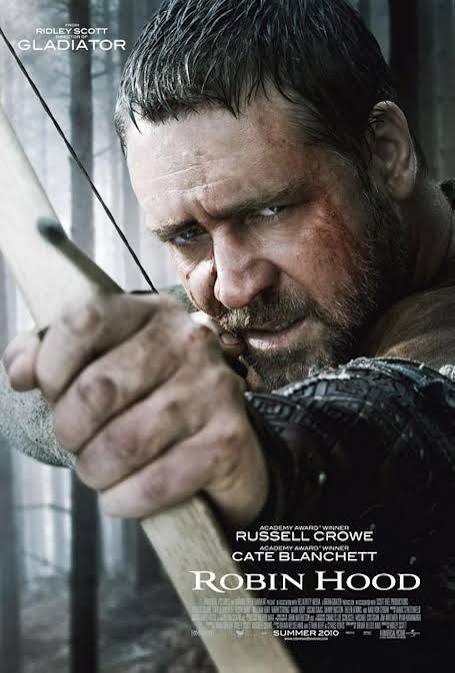
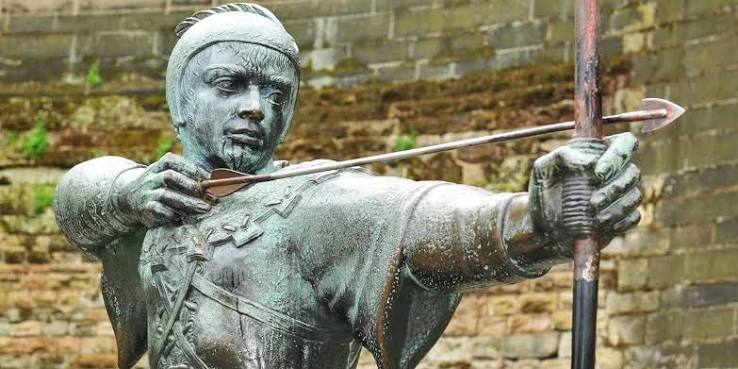
Although there has been plenty of speculation about an actual Robin Hood, historians largely agree that there was no single, living person behind the character, just a vastly unequal society of wealthy landowners and impoverished peasants that inspired his creation. The stories began as an oral tradition in the 12th Century, but the first written accounts didn’t arrive until two centuries later, in ballads that showed him as a celebrated figure even then.
In those first written accounts, he wasn’t the noble Sir Robin of Locksley as later versions made him. He wasn’t noble at all, but a yeoman, a rung above a peasant. There was no Maid Marian in the story until the 16th Century. And while he was perfectly nice to the poor, helping them was not his main purpose. His enemies were the corrupt clergy and the land-owning nobles who took advantage of their underlings.
In an afterword to her revisionist novel, The Traitor of Sherwood Forest (2025), medieval historian Amy S Kaufman describes the Robin Hood of the early legends as “a morally grey medieval trickster,” and a “violent, irreverent rogue”. Disney was right about one thing: the first ballads suggest that Robin was as sly as a fox.
A major change in the story came in the 16th Century. King Henry VIII was a fan and sometimes dressed up as Robin Hood. During the reign of the monarch who split from the Catholic Church, Robin’s devotion to the Virgin Mary vanished from the legend.
As the upper classes embraced him, in influential chronicles of the time the character no longer hated the nobility, but became noble himself. Positioned as a morally upright nobleman battling his disreputable equals, he stopped questioning the power structure of society. He was enlisted to help the good King Richard return to the throne that had been usurped by his evil brother, Prince John, a trope that persists through Disney’s depiction of John as a greedy, power-hungry lion.
WHERE IS SHERWOOD FOREST?
Sherwood Forest is a famous Royal Forest and National Nature Reserve located in Nottinghamshire, England. Centered around the village of Edwinstowe, the reserve is roughly 17 miles (27 km) north of Nottingham and 28 miles (45 km) south of Sheffield. [1, 2]
The forest covers an area of about 1,045 acres (424 hectares) and is known worldwide for its historical links to the legendary outlaw, Robin Hood. If you are planning to visit, here are a few key details about the area:
The Major Oak: This is the most famous tree in the forest, estimated to be around 800 to 1,000 years old. According to local folklore, it served as the main hideout for Robin Hood and his band of merry men.
ahabah: Love Original Word: אַהֲבָה Part of Speech: Noun Feminine Transliteration: ahabah Pronunciation: ah-hah-VAH Phonetic Spelling: (a-hab-aw) NASB: love, lovingly Word Origin: [feminine of H158 (אַהַב – lovers) and meaning the same]
love
Strong’s Exhaustive Concordance Love Feminine of ‘ahab and meaning the same — love.
see HEBREW ‘ahab
NAS Exhaustive Concordance Word Origin; from aheb Definition; love (noun) NASB Translation love (28), lovesick* (2), lovingly (1).
Brown-Driver-Briggs אַהֲבָה noun feminine love (= Infinitive of אהב q. v.) — absolute ׳א Proverbs 10:12 18t.; construct אַהֲבַת Jeremiah 2:2 3t.; suffix אַהֲבָתִי Psalm 109:4; Psalm 109:5; אַהֲבָֽתְךָ 2 Samuel 1:26; אַהֲבָתוֺ Isaiah 63:9; Zephaniah 3:17; אַהֲבָתָהּ Proverbs 5:19; אַהֲבָתָם Ecclesiastes 9:6 — love, especially Wisdom Literature & late. 1 human (to human object) absolute Ecclesiastes 9:1,6 (both “” שִׂנְאָה) so Proverbs 10:12; Proverbs 15:17; compare Proverbs 27:5; see also Proverbs 17:9; of man toward man Psalm 109:4; Psalm 109:5; love for one’s self (נַפְשׁוֺ) 1 Samuel 20:17; between man & woman Songs 2:4,5; Songs 5:8; Songs 8:6,7 (twice in verse); Proverbs 5:19 compare also 2 Samuel 1:26 (נָשִׁים ׳א); personified Songs 2:7; Songs 3:5; Songs 7:7; Songs 8:4; compare figurative use Songs 3:10; of mere sexual desire 2 Samuel 13:15; figurative of Jerusalem’s love to ׳י Jeremiah 2:2 (כְּלוּלֹתַיִח ׳א), & of love of adulter. Jesus. Jeremiah 2:33.
2 God’s love to his people Hosea 11:4 (׳עֲבֹתוֺת א) Jeremiah 31:3; Isaiah 63:9; Zephaniah 3:17.
אהד (= אחד ? see Thes.)
Topical Lexicon Overview The noun אַהֲבָה (ʼahavah) appears roughly forty times in the Old Testament and gathers within itself the full range of “love” in human experience—romantic attraction, covenant loyalty, family affection, devotion to God, and even misplaced or illicit desire. The term bridges Genesis to post-exilic writings, demonstrating that love is neither a late development nor a merely human sentiment but a reality rooted in God’s own character and purposes.
Divine Covenant Love
ʼAhavah most often reveals the gracious initiative of the LORD toward His people. Moses reminds Israel that “it was because the LORD loved you and kept the oath He swore to your fathers” that He redeemed them from Egypt (Deuteronomy 7:8). The prophets echo this theme after centuries of rebellion: “I have loved you with an everlasting love; therefore I have drawn you with loving devotion” (Jeremiah 31:3). Hosea dramatizes the same covenant love when the LORD commands the prophet to “love a woman beloved of her companion yet an adulteress, just as the LORD loves the children of Israel” (Hosea 3:1). ʼAhavah, then, discloses divine faithfulness that neither Israel’s sin nor exile can finally annul.
Human Love for God
Though the verb “to love” dominates calls to love God, the noun also portrays genuine devotion flowing back to Him. Ezra records that out of God’s “steadfast love” (Ezra 7:28) the writer found courage to reform worship. The mutuality of covenant emerges: God loves His people, and they love Him by obedience (Deuteronomy 10:12-13) and worship (Psalm 116:1, where the noun underlies the personal declaration, “I love the LORD”).
Marriage and Romantic Affection
The first occurrence of ʼahavah concerns Jacob’s seven years of labor for Rachel: they “seemed like only a few days to him because of his love for her” (Genesis 29:20). Song of Solomon elevates marital love to poetic celebration: “Many waters cannot quench love; rivers cannot sweep it away” (Song of Solomon 8:7). While the book honors physical delight, it frames it within covenant commitment, foreshadowing the New Testament union of Christ and His church (Ephesians 5:25-32).
Family and Kinship
Proper family affection enriches daily life: “Better a dish of vegetables where there is love than a fattened ox with hatred” (Proverbs 15:17). Parental love motivates discipline (Proverbs 13:24) and undergirds generational blessing (1 Kings 3:3 records Solomon’s early love for the LORD learned from David).
Friendship and Loyal Commitment
David’s lament for Jonathan employs ʼahavah to describe covenant friendship: “Your love to me was more wonderful than the love of women” (2 Samuel 1:26). Such passages portray self-giving camaraderie that strengthens leaders, preserves kingdoms, and models Christ’s own statement, “Greater love has no one than this, that he lay down his life for his friends” (John 15:13).
National and Royal Contexts
Queen Sheba credits Israel’s stability to divine affection: “Because of the LORD’s everlasting love for Israel, He has made you king to carry out justice and righteousness” (1 Kings 10:9). Royal ʼahavah thus carries ethical demands—kings are to reflect God’s love by safeguarding equity and covenant law.
#Love Context; #Bible; #Quotes; different #types of Love – Love of God/ Divine Love, caring for others, marriage and affection, Family and Kindship, National and Royal Contexts;