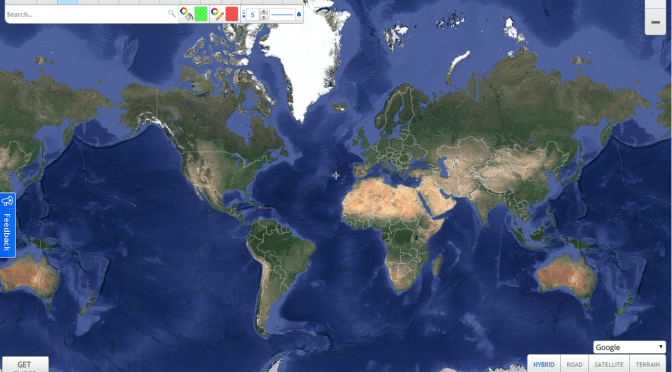
ScribbleMaps -Maps for Students and Teachers those who can’t use google Maps; Five Digital Mapping Tools for Teachers and Students Who Can’t Use Google
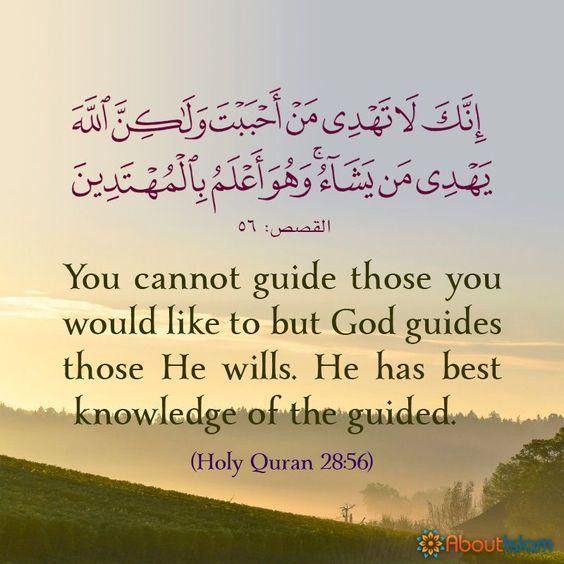
(Surah Al Qasas – 28:56) (O Prophet), you cannot grant guidance to whom you please. It is Allah Who guides those whom He will.79 He knows best who are amenable to guidance.
(28:57) They say: “If we were to follow this guidance with you, we should be snatched away from our land.”80 Have We not established for them a secure sanctuary to which fruits of all kinds are brought as a provision from Us? But most of them do not know.81
(28:58) And how many a town did We destroy whose inhabitants exulted on account of their affluence. These are their dwellings in which very few dwelt after them. Eventually it is We Who inherited them.82
Commentary
79. This sentence occurs after mentioning the acceptance of Islam by the Abyssinian Christians. Although the statement is ostensibly addressed to the Prophet (peace be on him), it is actually meant for the Makkan unbelievers. It exposes their folly and virtually tells them: “See, how unfortunate you are! Others are coming from distant lands to receive the benefit of True Guidance from the spiritual stream which is flowing in your own land, and yet you remain deprived of it.” But the manner in which it has been said is as follows: “O Muhammad, you wish that your people, your kith and kin, your fellow-tribesmen should benefit from this spring of life; but your wishes do not matter for Guidance ultimately rests with God and He grants it only to those who are worthy of receiving it. If your relatives are not worthy of that Guidance, how can they receive it?” According to Bukhari and Muslim, this verse was revealed with regard to Abu Talib, the Prophet’s (peace be on him) uncle. When his last moment came, the Prophet (peace be on him) tried his best to persuade him to pronounce the shahadah, “There is no god but Allah”, so that his end might be good. But Abu Talib preferred to die with the religion of his ancestor, ‘Abd al-Muttalib. It was in this context that God revealed the present verse: “You cannot grant Guidance to whom you please. It is Allah Who guides those whom He wills.” (See Bukhari, ‘K. al-Tafsir’, ‘Bab “Innaka la Tahdi man Ahbabta wa lakinna Allah Yahdi man Yasha’ ”, Muslim, ‘K. al-Iman’, ‘Bab al-Dalil ‘ala Sihhat Islam man Hadarahu al-Mawt … wa la Yunqidhuhu min dhalik Shay’ min al-Wasa’il’ — Ed.)
As we know, traditionists and Qur’anic commentators are wont to mention the specific events in the Prophet’s (peace be on him) life to which a Qur’anic verse applies as the “occasion” of its Revelation. It is in this light that we should view ‘the above tradition as also other traditions on the same subject in Tirmidhi and Ahmad ibn Hanbal’s Musnad on the authority of Companions such as Abu Hurayrah, ‘Abd Allah ibn ‘Abbas, “Abd Allah ibn ‘Umar and others. (See Ahmad ibn Hanbal, Musnad, Vol. 5, p. 433. Also see Tirmidhi, ‘K. Tafsir al-Qur’an’, ‘Bab Surah al-Qasas’ ~ Ed.) If we bear this in mind, there is reason to feel sure, on the grounds of these traditions, that the present verse was necessarily revealed at the time of Abu Talib’s death. All that we can be sure about is that the significance of this verse was felt most intensely on that occasion. The Prophet (peace be on him) was desirous that everyone should become a believer and, thus, his efforts in this regard were directed towards all. But if someone’s death in a state of non-acceptance of True Faith would agonize him most, it would be Abu Talib’s. This because of the Prophet’s intense personal attachment to his uncle. If the Prophet (peace be on him) did not even have the power to make his uncle accept God’s Guidance, then obviously he did not have this power with regard to anyone else. Enabling someone to believe lies entirely in Allah’s Hand, it is He Who dispenses this grace not on the grounds of any kinship or other affiliation, but in consideration of a person’s capacity to appreciate, and because of his sincere readiness to accept the Truth.
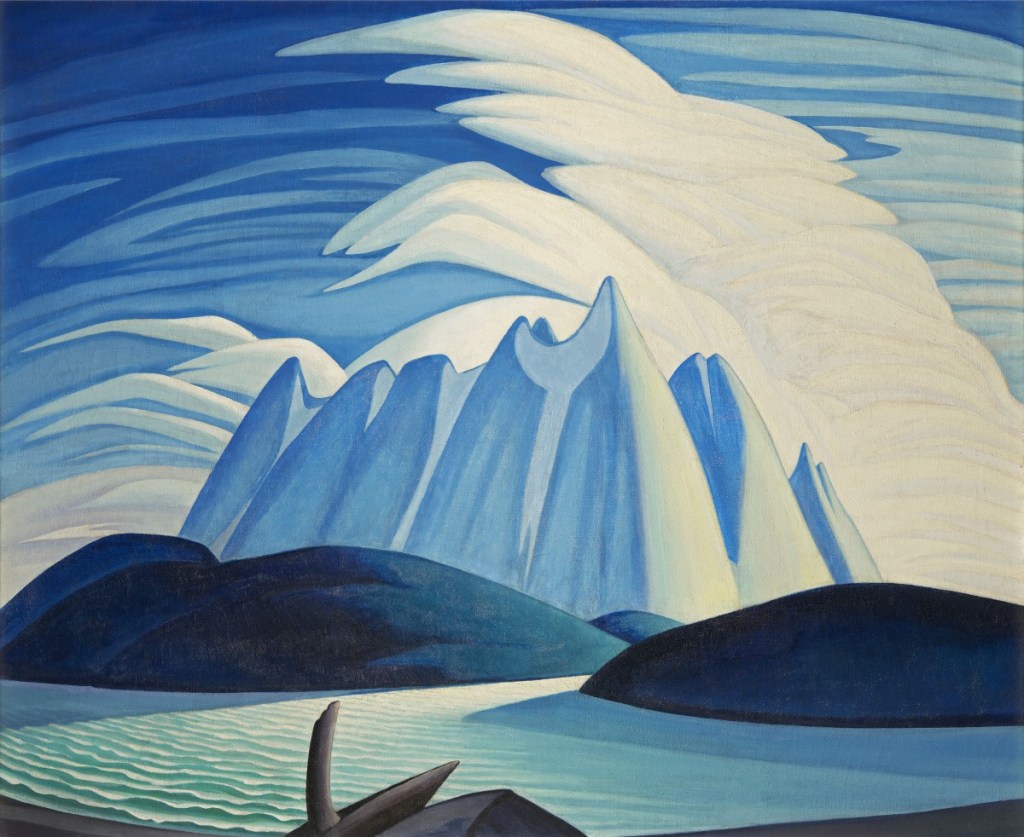
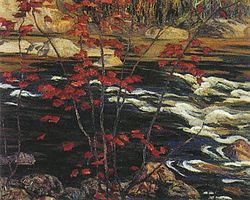
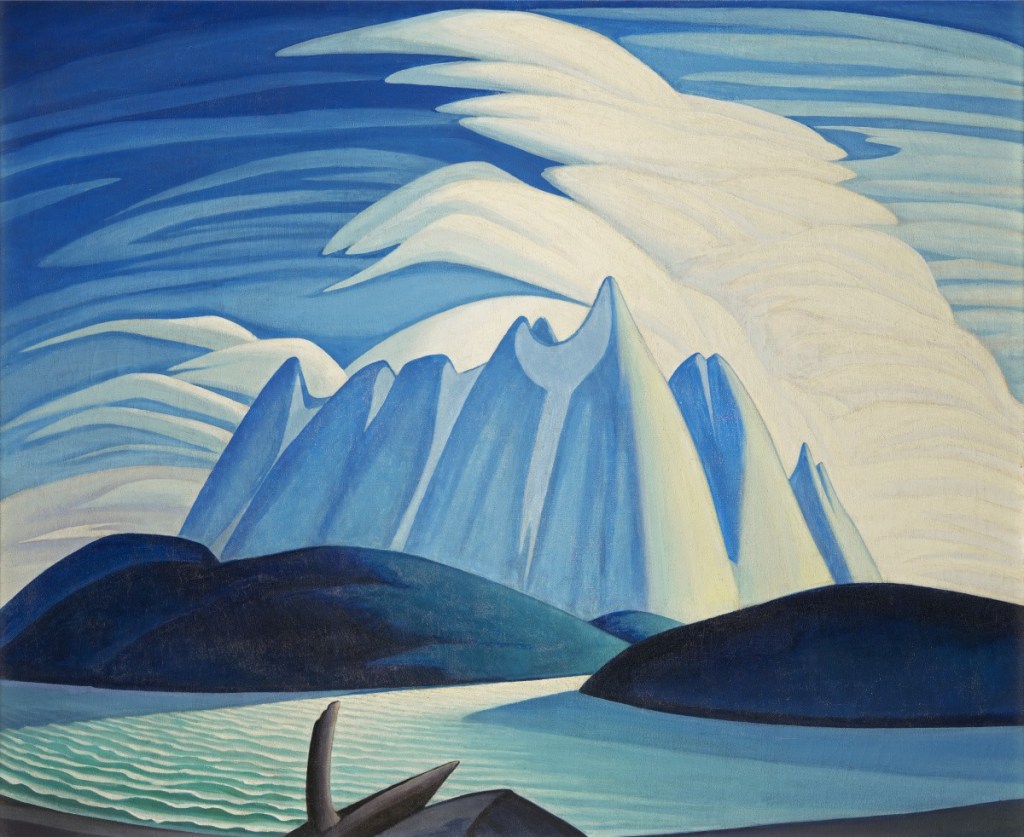
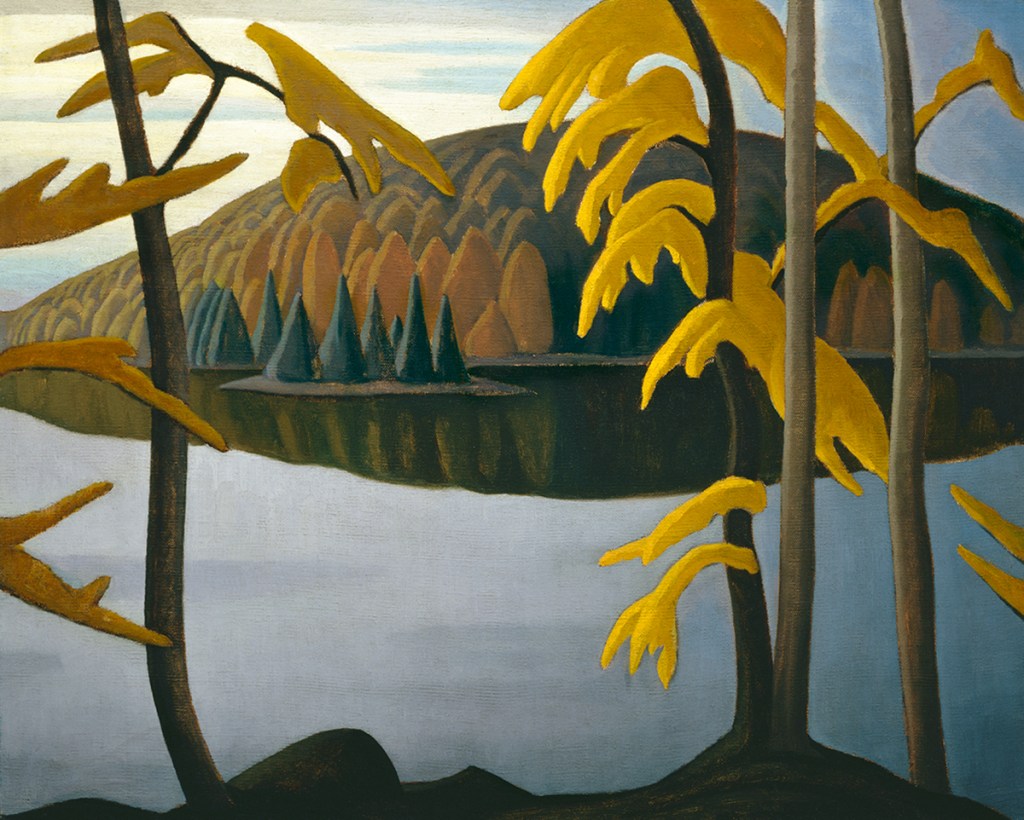
The Group of Seven, once known as the Algonquin School, was a group of Canadian Landscape Painters from 1920 to 1933, with a :like vision” . The initial group consisted of Franklin Carmichael (1890-1945) Lawren Harris (1885-1970), A.Y. Jackson (1890-1945), Frank Johnson (1889-1949) , Arthur Lismer (1885-1969), J.E.H. MacDonald (1873-1932), and Frederick Varley (1881-1969). A.J. Casson (1898-1992) was invited to join in 1926, Edwin Holgate (1892-1977) in 1930 and Lionel LeMoine Fitzgerald (1890-1956) joined in 1932.
Two artists associated with the group are Tom Thomson (1877-1917) and Emily Carr (1871-1945). Tom Thomson died before the official group formation – although the group was his Idea; in his essay “the Story of the Group of Seven”, Harris Thomson was a part of the movement before they pinned a label to it; Thomson’s paintings “The West Wind” and “The Jack Pine” are tow of the groups most iconic pieces.
Believing that a distinct Canadian art could be developed through direct contact with nature,[3] the Group of Seven is best known for its paintings inspired by the Canadian landscape, and initiated the first major Canadian national art movement.
McMichael Canadian Art Collection was founded by Robert and Signe McMichael, who began collecting paintings by the Group of Seven and their contemporaries in 1955.












 bismillahschool.net