





WHO WERE THE GROUP OF SEVEN?
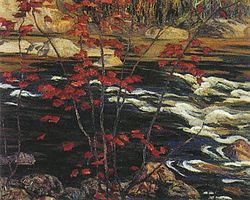
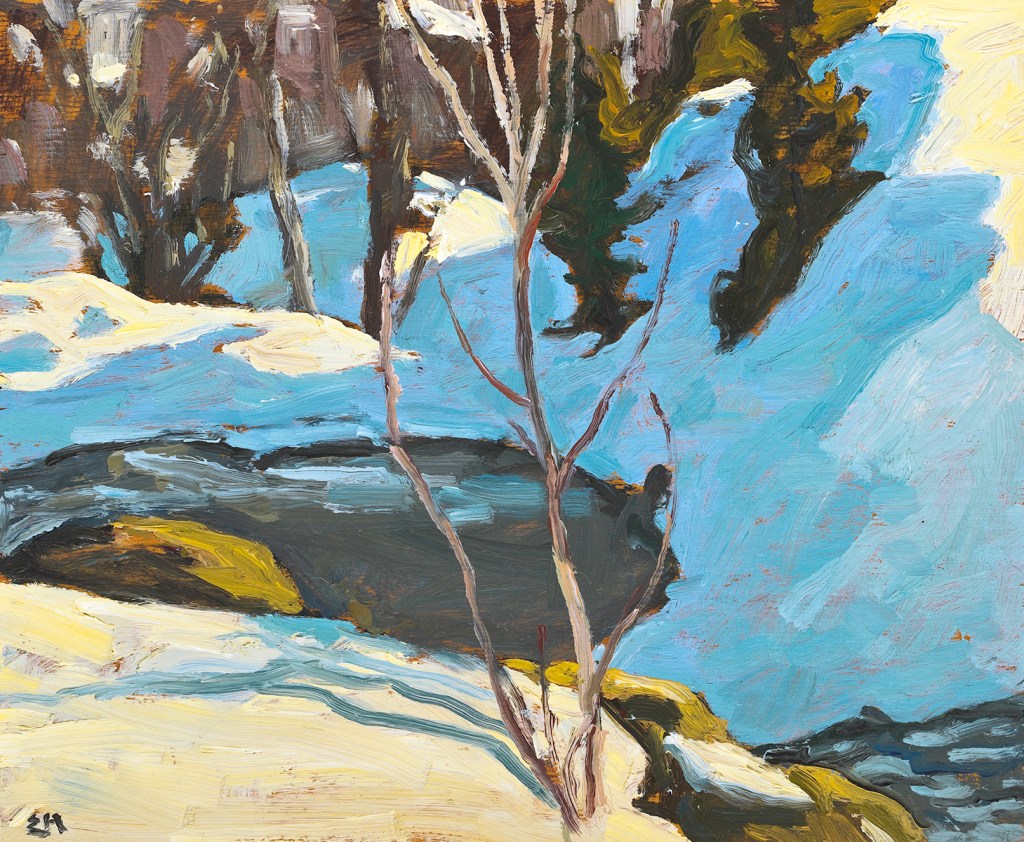
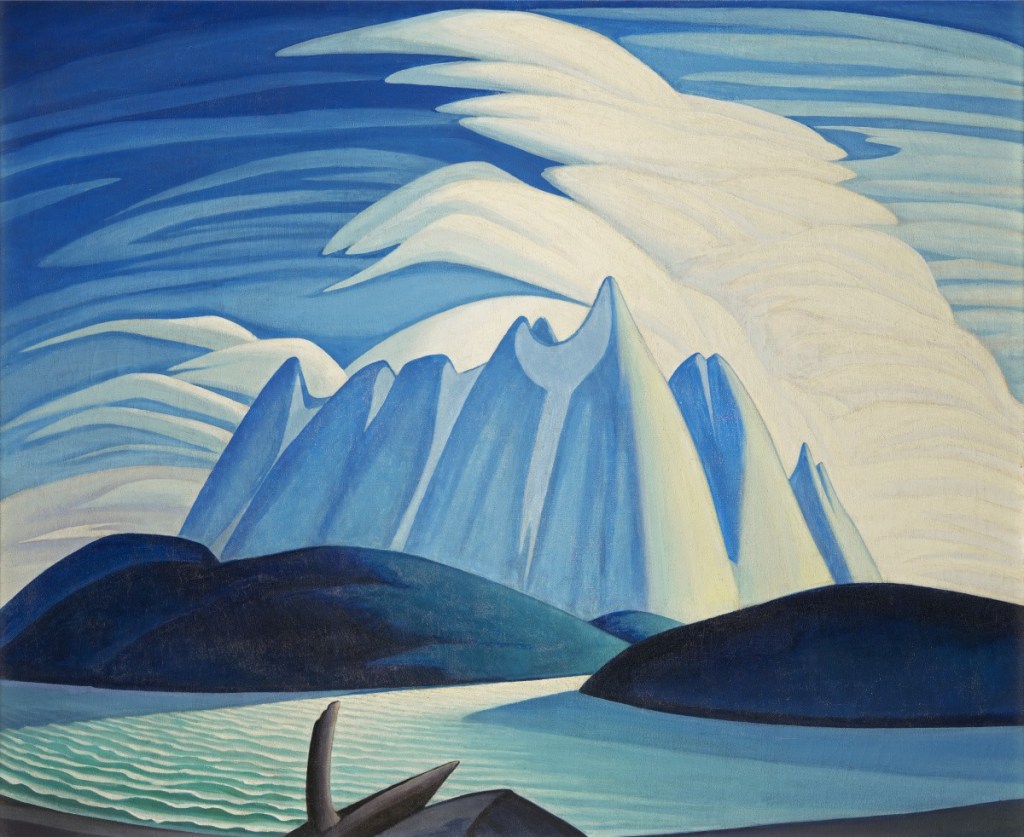
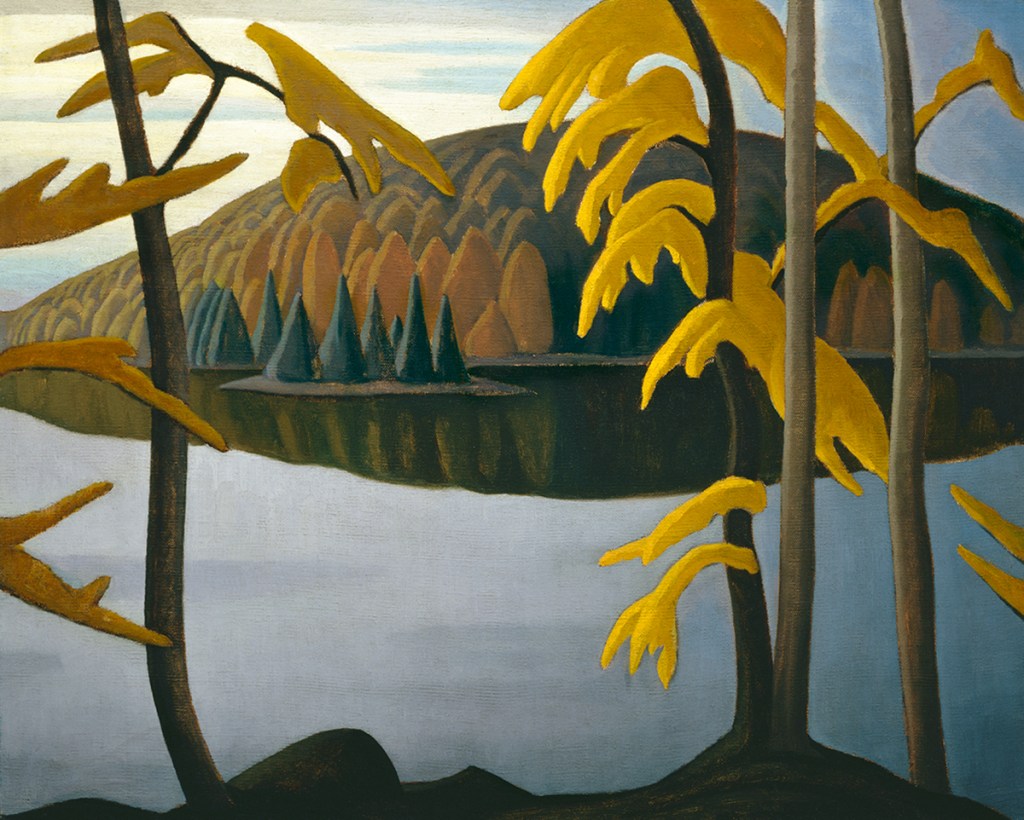
- The Group of Seven, once known as the Algonquin School, was a group of Canadian Landscape Painters from 1920 to 1933, with a :like vision” . The initial group consisted of Franklin Carmichael (1890-1945) Lawren Harris (1885-1970), A.Y. Jackson (1890-1945), Frank Johnson (1889-1949) , Arthur Lismer (1885-1969), J.E.H. MacDonald (1873-1932), and Frederick Varley (1881-1969). A.J. Casson (1898-1992) was invited to join in 1926, Edwin Holgate (1892-1977) in 1930 and Lionel LeMoine Fitzgerald (1890-1956) joined in 1932.
- Two artists associated with the group are Tom Thomson (1877-1917) and Emily Carr (1871-1945). Tom Thomson died before the official group formation – although the group was his Idea; in his essay “the Story of the Group of Seven”, Harris Thomson was a part of the movement before they pinned a label to it; Thomson’s paintings “The West Wind” and “The Jack Pine” are tow of the groups most iconic pieces.
- Believing that a distinct Canadian art could be developed through direct contact with nature,[3] the Group of Seven is best known for its paintings inspired by the Canadian landscape, and initiated the first major Canadian national art movement.
- Large collections of work of the Group of Seven are located at the Art Gallery of Ontario in Toronto, the National Gallery of Canada in Ottawa as well as the Ottawa Art Gallery (home to The Firestone Collection of Canadian Art) and the McMichael Canadian Art Collection in Kleinburg, Ontario.
- McMichael Canadian Art Collection was founded by Robert and Signe McMichael, who began collecting paintings by the Group of Seven and their contemporaries in 1955.
http://collections.mcmichael.com/collections/87758/group-of-seven-and-associates/objects – E Collections – Group of Seven – Canadian Artists;


#Group of Seven #Canadian #Art #Galleries #Landscape #Nature
Discover more from bismillahschool.net
Subscribe to get the latest posts sent to your email.
 bismillahschool.net