
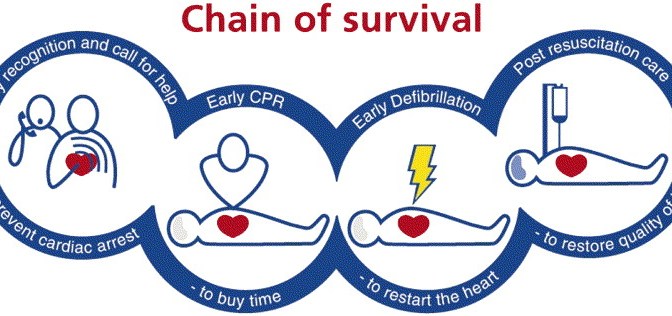
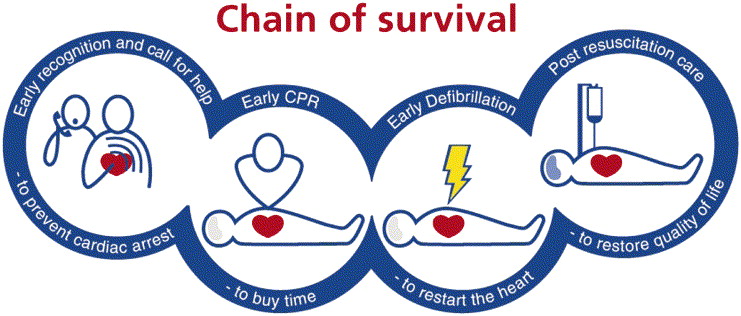
The Cardiac Chain of Survival is a sequence of critical steps that must be performed in order to improve the chances of survival for someone experiencing a sudden cardiac arrest. The most common adult chain of survival includes: 1. Early Recognition and Emergency Response (calling 911), 2. Early CPR (to keep oxygen flowing), 3. Rapid Defibrillation (using an AED to restart the heart), 4. Advanced Life Support (by EMS), and 5. Integrated Post-Cardiac Arrest Care (hospital care for recovery).
LINKS OF THE CHAIN OF SURVIVAL
- Early Recognition and Activation of the Emergency Response: The first step is to recognize the signs of cardiac arrest and immediately call emergency services (like 911).
- Early CPR (Cardiopulmonary Resuscitation): Performing high-quality CPR, especially chest compressions, helps to keep vital organs like the brain supplied with oxygen until more advanced care is available.
- Rapid Defibrillation: Using an Automated External Defibrillator (AED) to deliver an electric shock to the heart can restart its normal rhythm.
- Effective Advanced Life Support (ALS): Emergency Medical Services (EMS) arrive and provide more advanced medical care, including administering medications and continuing resuscitation efforts.
- Integrated Post-Cardiac Arrest Care: After the heart is restarted, integrated care in a hospital setting is crucial for recovery and managing potential complications.
Why the Chain of Survival is Important
Each link in the chain is interdependent; if one link is broken or delayed, the chances of survival are significantly reduced. By providing timely, coordinated care, the chain of survival improves outcomes for people who experience sudden cardiac arrest.
 bismillahschool.net