



The prohibition of interest (usury, or riba in Islam) forbids charging extra money on a loan, viewing it as exploitative, unjust, or a form of double-charging, with roots in religious texts (Judaism, Christianity, Islam) and early economic philosophy, though modern finance has evolved complex workarounds like profit-sharing or market-rate adjustments, especially in Islamic finance which strictly prohibits guaranteed monetary gain from lending to promote equity and risk-sharing.
Core Concepts & Reasons
- Exploitation: Charging interest on money (a consumable good used as a medium of exchange) was seen as getting paid twice for the same thing – the principal and its use, like selling wine and then charging for its use.
- Social Justice: Prohibition aims to prevent the wealthy from exploiting the needy, fostering charity and discouraging selfishness, creating more equitable economic systems.
- Religious Mandates:
- Judaism/Christianity: Biblical texts forbid interest on loans to fellow Israelites, though interpretations varied historically.
- Islam (Riba): Quranic verses forbid riba (increase/excess), viewing it as unjust gain, making it a major principle in Islamic finance.
Historical & Modern Context
Early Church: The Catholic Church historically condemned usury, initially applying it mainly to clerics, later extending it to all, with figures like Thomas Aquinas defining it as unjust.
Islamic Finance: Modern Islamic finance avoids riba by using alternative contracts (like profit-sharing or leasing) that align with Sharia law, shifting risk and reward.
Bible – Prohibition of Usury – Quotes
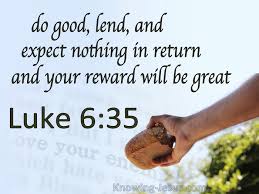
Leviticus 25:37 ESV /
You shall not lend him your money at interest, nor give him your food for profit.
Deuteronomy 23:20 ESV /
You may charge a foreigner interest, but you may not charge your brother interest, that the Lord your God may bless you in all that you undertake in the land that you are entering to take possession of it.
Deuteronomy 15:7-11 ESV / 500 helpful votes
“If among you, one of your brothers should become poor, in any of your towns within your land that the Lord your God is giving you, you shall not harden your heart or shut your hand against your poor brother, but you shall open your hand to him and lend him sufficient for his need, whatever it may be. Take care lest there be an unworthy thought in your heart and you say, ‘The seventh year, the year of release is near,’ and your eye look grudgingly on your poor brother, and you give him nothing, and he cry to the Lord against you, and you be guilty of sin. You shall give to him freely, and your heart shall not be grudging when you give to him, because for this the Lord your God will bless you in all your work and in all that you undertake. For there will never cease to be poor in the land. Therefore I command you, ‘You shall open wide your hand to your brother, to the needy and to the poor, in your land.’
Nehemiah 5:7 ESV /
I took counsel with myself, and I brought charges against the nobles and the officials. I said to them, “You are exacting interest, each from his brother.” And I held a great assembly against them
Leviticus 25:35-37 ESV /
“If your brother becomes poor and cannot maintain himself with you, you shall support him as though he were a stranger and a sojourner, and he shall live with you. Take no interest from him or profit, but fear your God, that your brother may live beside you. You shall not lend him your money at interest, nor give him your food for profit.
Proverbs 22:7 ESV /
The rich rules over the poor, and the borrower is the slave of the lender.
Exodus 22:25-27 ESV /
“If you lend money to any of my people with you who is poor, you shall not be like a moneylender to him, and you shall not exact interest from him. If ever you take your neighbor’s cloak in pledge, you shall return it to him before the sun goes down, for that is his only covering, and it is his cloak for his body; in what else shall he sleep? And if he cries to me, I will hear, for I am compassionate.
Leviticus 25:36 ESV /
Take no interest from him or profit, but fear your God, that your brother may live beside you.
Matthew 6:24 ESV /
“No one can serve two masters, for either he will hate the one and love the other, or he will be devoted to the one and despise the other. You cannot serve God and money.
Luke 6:38 ESV /
Give, and it will be given to you. Good measure, pressed down, shaken together, running over, will be put into your lap. For with the measure you use it will be measured back to you.”
Nehemiah 5:10-11 ESV /
Moreover, I and my brothers and my servants are lending them money and grain. Let us abandon this exacting of interest. Return to them this very day their fields, their vineyards, their olive orchards, and their houses, and the percentage of money, grain, wine, and oil that you have been exacting from them.”
Matthew 6:12 ESV /
And forgive us our debts, as we also have forgiven our debtors.
Ezekiel 18:8-9 ESV /
Does not lend at interest or take any profit, withholds his hand from injustice, executes true justice between man and man, walks in my statutes, and keeps my rules by acting faithfully—he is righteous; he shall surely live, declares the Lord God.
1 Samuel 2:7 ESV /
The Lord makes poor and makes rich; he brings low and he exalts.
Matthew 21:12-13 ESV /
And Jesus entered the temple and drove out all who sold and bought in the temple, and he overturned the tables of the money-changers and the seats of those who sold pigeons. He said to them, “It is written, ‘My house shall be called a house of prayer,’ but you make it a den of robbers.” (Notes – that’s because they were exchanging the Roman coins to Jewish coins on Interest);
Source – https://www.openbible.info/topics/usury
QURAN – INTEREST PROHIBITION – Surah Baqarah – 2:275 – 2:279 – Those who Persist will be in the Fire – they will be there forever;
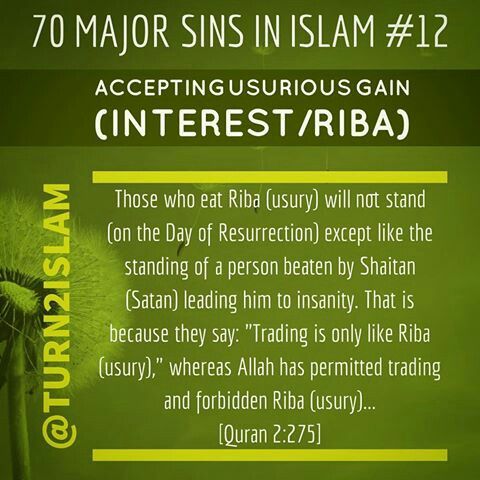
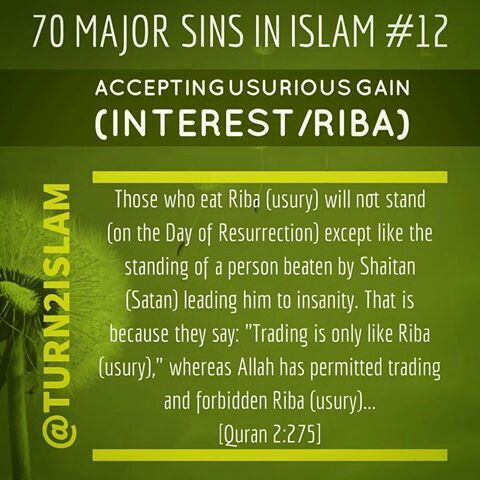
Surah Baqarah 2:275 -2:279; Those who consume interest will stand ˹on Judgment Day˺ like those driven to madness by Satan’s touch. That is because they say, “Trade is no different than interest.” But Allah has permitted trading and forbidden interest. Whoever refrains—after having received warning from their Lord—may keep their previous gains, and their case is left to Allah. As for those who persist, it is they who will be the residents of the Fire. They will be there forever. –
Allah has made interest fruitless and charity fruitful. And Allah does not like any ungrateful evildoer.
Indeed, those who believe, do good, establish prayer, and pay alms-tax will receive their reward from their Lord, and there will be no fear for them, nor will they grieve.
O believers! Fear Allah, and give up outstanding interest if you are ˹true˺ believers.
If you do not, then beware of a war with Allah and His Messenger! But if you repent, you may retain your principal—neither inflicting nor suffering harm.
HADEETH: Muslim (1598) narrated that Jaabir said: The Messenger of Allah (blessings and peace of Allah be upon him) cursed the one who consumes riba and the one who pays it, the one who writes it down and the two who witness it, and he said: they are all the same.

Shaykh Ibn ‘Uthaymeen (may Allah have mercy on him) said: That is, (they are all the same) in terms of being cursed, because they co-operated in that. End quote from Fataawa Noor ‘ala ad-Darb, 16/2
Imam al-Bukhaari (may Allah have mercy on him) referred to this hadith that was narrated by Imam Muslim in the title which he gave to a chapter of his Saheeh, which he called: Chapter on the one who consumes riba, the one who witnesses it and the one who writes it down.
Then he quoted two hadiths in this chapter, one of which was the hadith of ‘Aa’ishah: When the last part of al-Baqarah was revealed, the Prophet (blessings and peace of Allah be upon him) recited it, then he forbade trade in alcohol. The second hadith is the hadith of Samurah, according to which the Prophet (blessings and peace of Allah be upon him) said: “Last night, I dreamt that two men came to me and took me out to a sacred land, then we set out until we came to a river of blood in which a man was standing, and on the bank of the river there was another man in front of whom were some rocks. The man who was in the river came, and when he wanted to get out, the (other) man threw a rock in his mouth, and sent him back to where he had been. Every time he came and wanted to get out, he threw a rock into his mouth and sent him back to where he had been. I said: ‘What is this?’ He said: ‘The one who you saw in the river is the one who consumed riba.’
#Prohibition, #Riba, #Usury, #Bible, #Islam, #Legislation;
Discover more from bismillahschool.net
Subscribe to get the latest posts sent to your email.
 bismillahschool.net