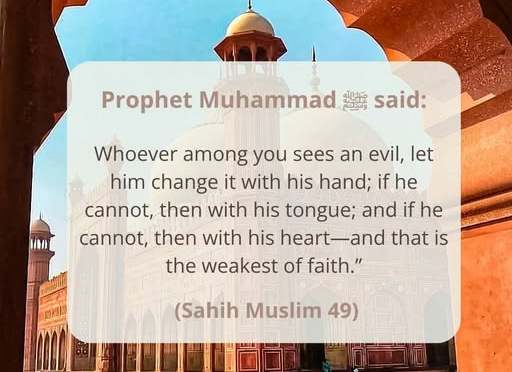
Abu Sa’id al-Khudri reported: The Messenger of Allah, peace and blessings be upon him, said, “Whoever among you sees evil, let him change it with his hand. If he cannot do so, then with his tongue. If he cannot do so, then with his heart, which is the weakest level of faith.”
Volume 6, Book 60, Number 105: Narrated Abu Said Al-Khudri: During the lifetime of the Prophet some people said, : O Allah’s Apostle! Shall we see our Lord on the Day of Resurrection?” The Prophet said, “Yes; do you have any difficulty in seeing the sun at midday when it is bright and there is no cloud in the sky?” They replied, “No.” He said, “Do you have any difficulty in seeing the moon on a full moon night when it is bright and there is no cloud in the sky?” They replied, “No.” The Prophet said, “(Similarly) you will have no difficulty in seeing Allah on the Day of Resurrection as you have no difficulty in seeing either of them. On the Day of Resurrection, a call-maker will announce, “Let every nation follow that which they used to worship.” Then none of those who used to worship anything other than Allah like idols and other deities but will fall in Hell (Fire), till there will remain none but those who used to worship Allah, both those who were obedient (i.e. good) and those who were disobedient (i.e. bad) and the remaining party of the people of the Scripture. Then the Jews will be called upon and it will be said to them, ‘Who do you use to worship?’ They will say, ‘We used to worship Ezra, the son of Allah.’ It will be said to them, ‘You are liars, for Allah has never taken anyone as a wife or a son. What do you want now?’ They will say, ‘O our Lord! We are thirsty, so give us something to drink.’ They will be directed and addressed thus, ‘Will you drink,’ whereupon they will be gathered unto Hell (Fire) which will look like a mirage whose different sides will be destroying each other. Then they will fall into the Fire. Afterwards the Christians will be called upon and it will be said to them, ‘Who do you use to worship?’ They will say, ‘We used to worship Jesus, the son of Allah.’ It will be said to them, ‘You are liars, for Allah has never taken anyone as a wife or a son,’ Then it will be said to them, ‘What do you want?’ They will say what the former people have said. Then, when there remain (in the gathering) none but those who used to worship Allah (Alone, the real Lord of the Worlds) whether they were obedient or disobedient. Then (Allah) the Lord of the worlds will come to them in a shape nearest to the picture they had in their minds about Him. It will be said, ‘What are you waiting for?’ Every nation have followed what they used to worship.’ They will reply, ‘We left the people in the world when we were in great need of them and we did not take them as friends. Now we are waiting for our Lord Whom we used to worship.’ Allah will say, ‘I am your Lord.’ They will say twice or thrice, ‘We do not worship any besides Allah.’ “
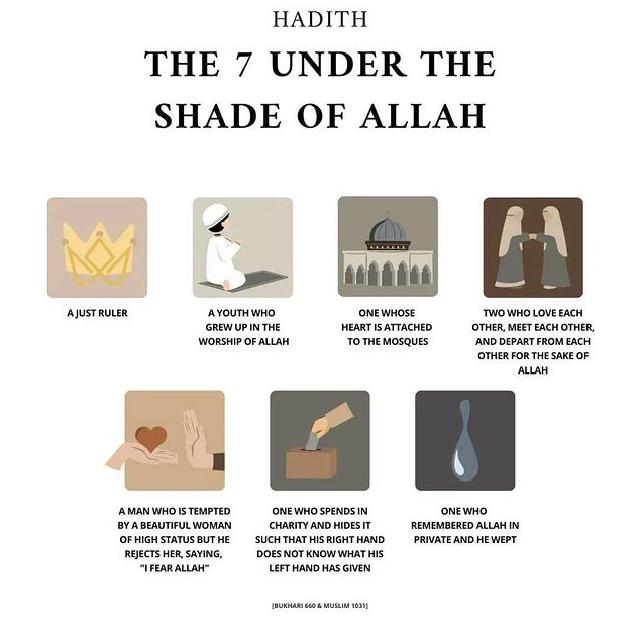
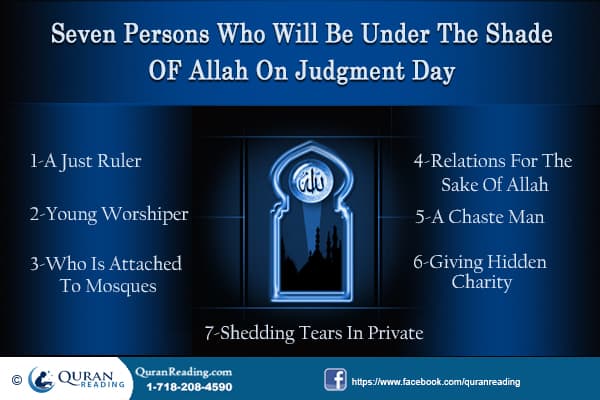
“There are seven whom Allah will shade in His Shade on the Day when there is no shade except His Shade: a Just ruler: a youth who grew up in the worship of Allah, the Mighty and Majestic; a man whose heart is attached to the mosques; two men who love each other for Allah’s sake, meeting for that and parting upon that; a man who is called by a woman of beauty and position (for illegal intercourse), but he says: ‘I fear Allah’; a man who gives in charity and hides it, such that his justify hand does not know that his right hand gives charity; and a man who remembered Allah in private and so his eyes shed tears.” (Bukhari and Muslim)
Prophet Muhammad (PBUH) said in His hadith:
Prophet (Sal Allahu alayihi wa Sallam/ peace from Allah be upon him) said in a hadith;“Take benefit of five before five: Your youth before your old age, your health before your sickness, your wealth before poverty, your free time before you are preoccupied, and your life before your death.” (Narrated by Ibn Abbas)
Numbers 12:3 Now the man Moses was very meek, more than all people who were on the face of the earth.
Exodus 10:3 So Moses and Aaron went in to Pharaoh and said to him, ‘Thus says the LORD, the God of the Hebrews, ‘How long will you refuse to humble yourself before me? Let my people go, that they may serve me.’
1 Samuel 2:7 The Lord makes poor and makes rich; he brings low and he exalts.
2 Samuel 22:28 You save a humble people, but your eyes are on the haughty to bring them down.
2 Chronicles 7:14 If my people who are called by my name humble themselves, and pray and seek my face and turn from their wicked ways, then I will hear from heaven and will forgive their sin and heal their land.
Psalm 95:6 Oh come, let us worship and bow down; let us kneel before the Lord, our Maker! (Notice they bow down and prostrate – just like the Muslims ( because they were Muslims/ eg/ worshipped God Alone);
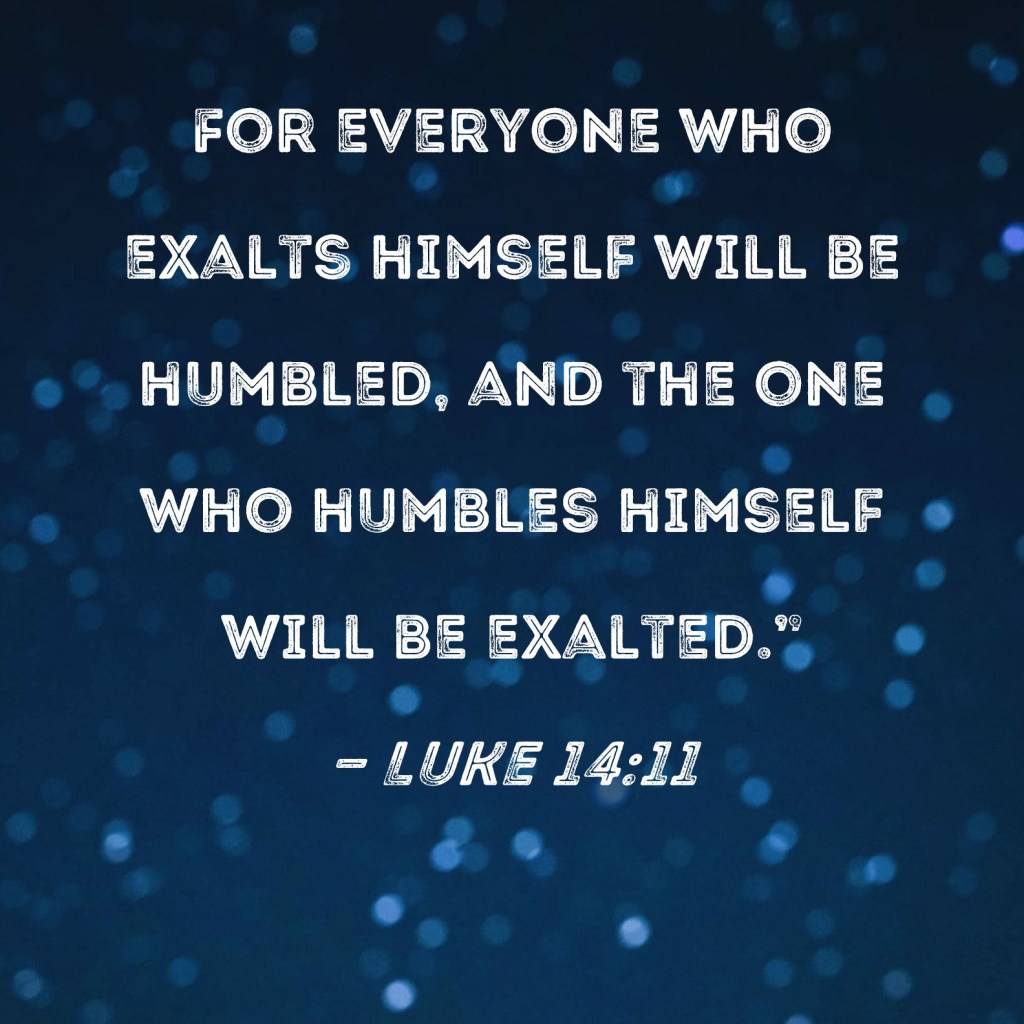
Matthew 23:10–12 Neither be called instructors, for you have one instructor, the Christ. The greatest among you shall be your servant. Whoever exalts himself will be humbled, and whoever humbles himself will be exalted.
Romans 12:3 For by the grace given to me I say to everyone among you not to think of himself more highly than he ought to think, but to think with sober judgment, each according to the measure of faith that God has assigned.
Colossians 3:18–19 Wives, submit to your husbands, as is fitting in the Lord. Husbands, love your wives, and do not be harsh with them.
1 Peter 3:3–4 Do not let your adorning be external—the braiding of hair and the putting on of gold jewelry, or the clothing you wear— but let your adorning be the hidden person of the heart with the imperishable beauty of a gentle and quiet spirit, which in God’s sight is very precious.
HUMILTY IN ISLAM – PRIDE BELONGS TO ALLAH (GOD ALLMIGHTY ALONE)
Abdullah narrated that the Messenger of Allah said: “Whoever has a mustard seed’s weight of pride (arrogance) in his heart, shall not be admitted into Paradise. And whoever has a mustard seed’s weight of faith in his heart, shall not be admitted into the Fire.”
“Verily, for all men and women who have surrendered themselves unto God, and all believing men and believing women, and all truly devout men and truly devout women, and all men and women who are true to their word, and all men and women who are patient in adversity, and all men and women who humble themselves… for them God has readied forgiveness of sins and a mighty reward” (Qur’an33:35).
At-Tirmidhi (1999), Abu Dawood (4091) and Ibn Maajah (59) narrated from ‘Abdullah ibn Mas‘ood that the Prophet (blessings and peace of Allah be upon him) said: “No one will enter Paradise in whose heart is an atom’s weight of arrogance and no one will enter Hell in whose heart is an atom’s weight of faith.” A man said: What if I like my clothes to look nice and my shoes to look nice? He said: “Verily Allah loves beauty; rather arrogance means rejecting the truth and looking down on people.”
PRIDE BELONGS TO ALLAH ALONE:
There is no doubt that Kibriyaa’ (Pride/Grandeur) is one of the Attributes of Allah, The Exalted, as stated in the Quran and Sunnah, and that Al-Mutakabbir (The Superior and Supreme in pride and grandeur) is one of His Names. Allah Says (what means): {And to Him belongs [all] grandeur within the heavens and the earth, and He is the Exalted in Might, the Wise.} [Quran 45:37] Al-Qurtubi said in his Tafseer book: “{to Him belongs [all] grandeur} means that to Him belongs greatness, majesty, immortality, dominion, power, and perfection.” [End of quote]
In the Sunnah, it was narrated on the authority of Abu Hurayrah that the Messenger of Allah, sallallaahu ‘alayhi wa sallam, said: “Allah, The Almighty, Says: “Pride is My Ridaa’ (cloak), and Greatness is My Izaar (lower garment), and whoever claims to share with Me either one of them, I will cast him into Hellfire.” [Ahmad, Abu Daawood and Ibn Maajah]
Moreover, the Prophet, sallallaahu ‘alayhi wa sallam, used to say in his Rukoo‘: “Subhaana Thil-Jabarooti wal-Malakooti wal-Kibriyaa’i wal-‘Athamah (which means: Glory be to the Lord of Might, Dominion, Grandeur, and Greatness).” [Ahmad, Abu Daawood, and An-Nasaa’i]
One of the Most Beautiful Names of Allah is Al-Mutakabbir, as stated in the Quran, where Allah Almighty Says about Himself (what means): {…the Exalted in Might, the Compeller, the Superior.} [Quran 59:23] [Al-Mutakabbir in this verse is translated as ‘the Superior’]
Briefly, the reported meaning of the divine name Al-Mutakabbir is as follows: “The One Who is Superior and Exalted Above all evil, Who is far Exalted above committing injustice against His slaves. To Him belongs all grandeur, and He is far Exalted above the attributes of His creation, and He shows His Superiority to the insolent created beings who dare to claim to share with Him the attribute of greatness, so He destroys them.”
Al-Munaawi said in Faydh Al-Qadeer: “Al-Mutakabbir means the One to Whom belongs all Kibriyaa’ (pride/grandeur), The Sovereign, or The Superior Who sees others as inferior to Him. He regards others in the same way a master regards his slaves, and it is inconceivable that this attribute should be ascribed to other than Allah, The Exalted (in this sense). To Him alone belong greatness and grandeur in all respects and from all aspects, and therefore this attribute cannot be used in reference to other than Allah, The Exalted, except in a context of dispraise.” [End of quote]
#Humility, #Pride, #Islam, #Paradise, #Bible, Quran Kareem, #Comparative religion;
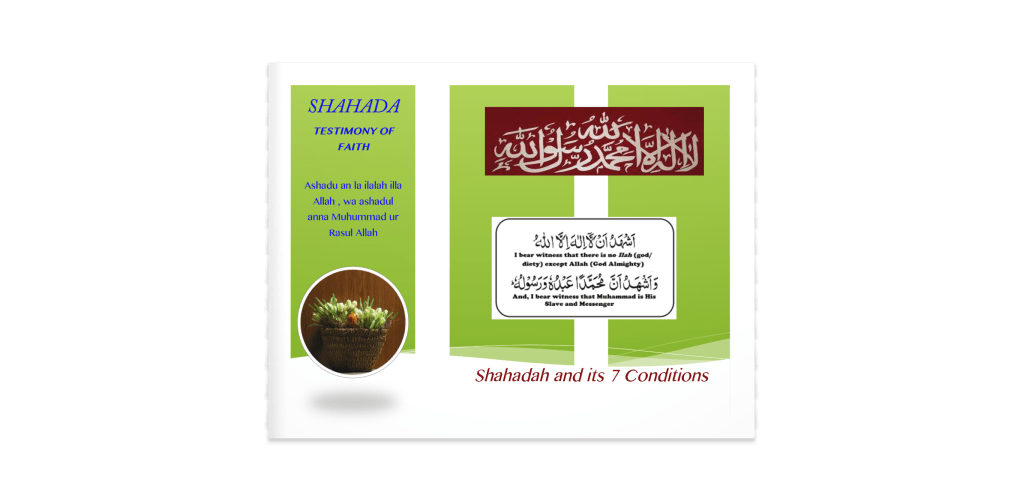
It was narrated from Mu’adh bin Jabal that theMessenger of Alkah()said:“There is no soul thatdied bearing witness to la ilaha ill Allah,and that lamthe Messenger of Allah,from the heart withcertainty,but Allah will forgive it.“(lbn Majah)
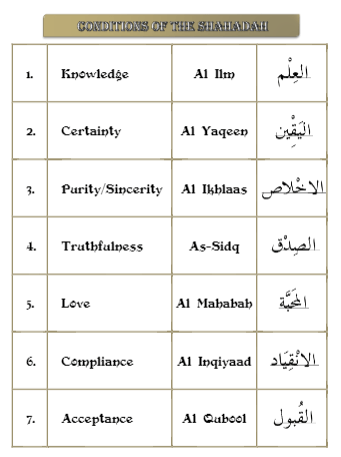
1-Al llm-Knowledge of what Shahadah mean (there is no god to be worshipped but Allah and Muhammad -saw-is hisMessenger)
2-Al Yaqueen-Certainty -you have to be sure of the Shahadah is true,having no doubt or suspicion
3 –Al Iklhas -Sincerity –to believe in your Heart and Testify with your tongue -and negate Shirk they reject the Taghut (evildeities and man made systems and believe in Allah alone)and Riyaa'(show off)
4-Truthfullness -AsSidq-whatis True is True and Falsehood is Falsehood
Alif Lam Mim.Do people think that they will be left alone because they say,We believe,and will not be tested.And We indeedtested those who were before them.And Allah will certainly make (it)known (the truth of)those who are true,and will certainlymake (it)known (the falsehood of)those who are liars,(although Allah knows all that before putting them to test).[29:1-4].|
5 –Love -Al Mahabb love for the Word of Tawhid –Loving Allah azza wa Jal -to be practicing Muslims -and abide by Allah’s
Law(Shariah)-and disliking Bidah (innovations in religion);
The firmest of lman’s ties are having loyalty in the cause of Allah,disloyalty in Allah,love in Allah and hatred for Allah’s Sake.”[At-
Tabarani,Abu Dawood &Al-Hakim].What further testifies to the fact that love in Allah is a condition of lman;
And of mankind are some who take (for worship)others besides Allah as rivals (to Allah).They love them as they love Allah.Butthose who believe,love Allah more(than anything else).C [2:165].
Narrated Ubada bin As-Samit:The Prophet (s)“Whoever getsup at night and says:—La ilaha illallah wahdahu la Sharika lahuLahu-lmulk,waLahu-Lhamd wahuwa ‘ala kullishaiin Qadir.Alhamdu liLHahi,wa subhanallahi,wa la-ilaha ilHal-lah wa-I-lahuakbar wa la hawla wala Quwata il-la-biHah.’(None has the rightto be worshipped but Allah.He is the Only One and has nopartners.For Him is the Kingdom and all the praises are duefor Him.He is Omnipotent.All the praises are for Allah.All theglories are for Allah.And none has the right to be worshippedbut Alah,And Allah is Great And there is neither Might nor Power Except with Allah).And then says:—Allahumma,Ighfir li(O Allah!Forgive me).Or invokes (Allah),he will be respondedto and ifhe performs ablution (and prays),his prayer will be accepted.
Hadith on Tawbah: Repentance accepted until deathbed/ last breath
Ibn Umar reported: The Prophet, peace and blessings be upon him, said, “Verily, Allah accepts the repentance of his servants, as long as they are not on their death bed.” Source: Sunan al-Tirmidhī 3537
Grade: Hasan (fair) according to Al-Tirmidhi عَنْ ابْنِ عُمَرَعَنْ النَّبِيِّ صَلَّى اللَّهُ عَلَيْهِ وَسَلَّمَ قَالَ إِنَّ اللَّهَ يَقْبَلُ تَوْبَ
(eg – just Prior to the Angel takingthe Breath/ removing the Soul with the Last Breath; )
Rizq/ Sustenance is from Allah – no one can die till Sustenance comes to them – “Then (Allah) sends to it an angel who is tasked to breathe soul into it. (The angel) is then commanded to write down four matters: the writing of the (developing child’s) rizq (sustenance), his life span, his actions, and whether he will be truly happy or miserable” (Sahih Bukhari & Muslim)b – eg you cannot die till your reach all your written Sustence from your Lord;
“Indeed, it is Allah who is the (continual) Provider, the firm possessor of strength.”
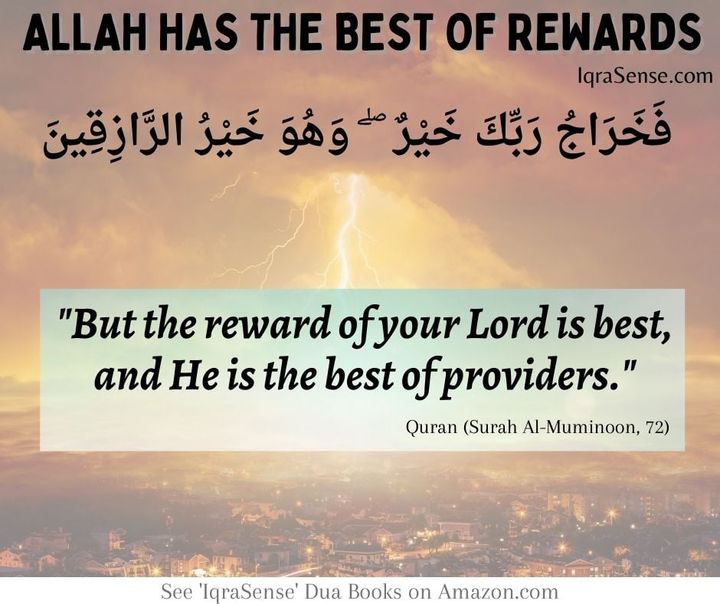
(Surah Adh-Dhariyat, 51:58) وَإِنَّ اللَّهَ لَهُوَ خَيْرُ الرَّازِقِينَ – And indeed, it is Allah who is the best of providers
ثم يرسل إليه الملك فينفخ فيه الروح، ويؤمر بأربع كلماتٍ: بكَتْبِ رزقه وأجله وعمله، وشقي أو سعيدٌ
#Rizq. #Sustenance, #provision, #Islam;
The significance of effort and the different types of Rizq
Allah has commanded for every capable individual to put in the right effort in search of provision despite it being pre-determined for everyone. This is also reflected in the way Allah has created birds and animals, their way of life, to survive and to procreate. The Prophet s.a.w. mentioned in a hadith:
لَوْ أَنَّكُمْ كُنْتُمْ تَوَكَّلُونَ عَلَى اللَّهِ حَقَّ تَوَكُّلِهِ لَرُزِقْتُمْ كَمَا يُرْزَقُ الطَّيْرُ تَغْدُو خِمَاصًا وَتَرُوحُ بِطَانًا“If you were to rely upon Allah with the reliance He is due, you would be given provision like the birds. It goes forth hungry in the morning and returns with a full belly at dusk.”
As a believer, one needs to be aware of the intricate relationship between faith and effort in the concept of finding Rizq. Limiting it to only faith that provision will come with no effort is insufficient. However, doing the opposite by making the necessary effort without acknowledging reliance on Allah s.w.t, is also misguided and will lead the person to an undesirable result.
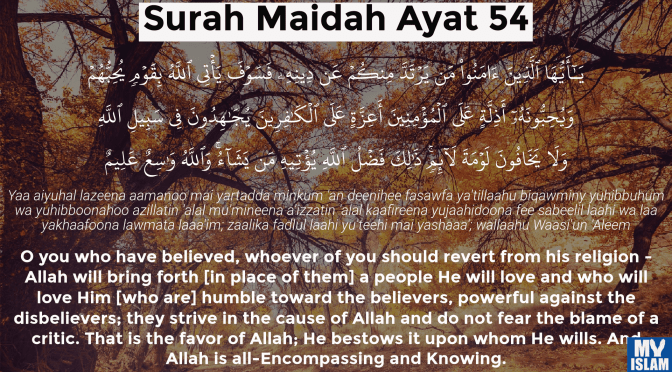
surah Maidah 5:54 – O believers! Whoever among you abandons their faith, Allah will replace them with others who love Him and are loved by Him. They will be humble with the believers but firm towards the disbelievers, struggling in the Way of Allah; fearing no blame from anyone. This is the favour of Allah. He grants it to whoever He wills. And Allah is All-Bountiful, All-Knowing. –
Whoever blasphemes the name of the Lord shall surely be put to death. All the congregation shall stone him. The sojourner as well as the native, when he blasphemes the Name, shall be put to death.
Leviticus 24:16 ESV / 257 – Whoever blasphemes the name of the Lord shall surely be put to death. All the congregation shall stone him. The sojourner as well as the native, when he blasphemes the Name, shall be put to death. Leviticus
20:13 ESV / 237 helpful votes If a man lies with a male as with a woman, both of them have committed an abomination; they shall surely be put to death; their blood is upon them.
John 8:3-11 ESV / 230 helpful votes The scribes and the Pharisees brought a woman who had been caught in adultery, and placing her in the midst they said to him, “Teacher, this woman has been caught in the act of adultery. Now in the Law, Moses commanded us to stone such women. So what do you say?” This they said to test him, that they might have some charge to bring against him. Jesus bent down and wrote with his finger on the ground. And as they continued to ask him, he stood up and said to them, “Let him who is without sin among you be the first to throw a stone at her.” ...
Those who accuse chaste women ˹of adultery˺ and fail to produce four witnesses, give them eighty lashes ˹each˺. And do not ever accept any testimony from them—for they are indeed the rebellious—
In the name of Allah/ God, the Gracious, the Merciful.
1. A chapter that We have revealed, and made obligatory, and revealed in it clear Verses, that you may take heed. 2. The adulteress and the adulterer—whip each one of them a hundred lashes, and let no pity towards them overcome you regarding God’s Law, if you believe in God and the Last Day. And let a group of believers witness their punishment.
3. The adulterer shall marry none but an adulteress or an idolatress; and the adulteress shall marry none but an adulterer or an idolater. That has been prohibited for the believers.
4. Those who accuse chaste women, then cannot bring four witnesses, whip them eighty lashes, and do not ever accept their testimony. For these are the immoral.
5. Except for those who repent afterwards, and reform; for God is Forgiving and Merciful.
6. As for those who accuse their own spouses, but have no witnesses except themselves, the testimony of one of them is equivalent to four testimonies, if he swears by God that he is truthful. 7. And the fifth time, that God’s curse be upon him, if he is a liar. 8. But punishment shall be averted from her, if she swears four times by God, that he is a liar. 9. And the fifth time, that God’s wrath be upon her, if he is truthful.
10. Were it not for God’s grace upon you, and His mercy, and that God is Conciliatory and Wise.
HADITH *
‘Abdullah b. ‘Abbas reported that ‘Umar b. Khattab sat on the pulpit of Allah’s Messenger (ﷺ) and said:
Verily Allah sent Muhammad (ﷺ) with truth and He sent down the Book upon him, and the verse of stoning was included in what was sent down to him. We recited it, retained it in our memory and understood it. Allah’s Messenger (ﷺ) awarded the punishment of stoning to death (to the married adulterer and adulteress) and, after him, we also awarded the punishment of stoning, I am afraid that with the lapse of time, the people (may forget it) and may say: We do not find the punishment of stoning in the Book of Allah, and thus go astray by abandoning this duty prescribed by Allah. Stoning is a duty laid down in Allah’s Book for married men and women who commit adultery when proof is established, or it there is pregnancy, or a confession.
حَدَّثَنِي أَبُو الطَّاهِرِ، وَحَرْمَلَةُ بْنُ يَحْيَى، قَالاَ حَدَّثَنَا ابْنُ وَهْبٍ، أَخْبَرَنِي يُونُسُ، عَنِ ابْنِ شِهَابٍ، قَالَ أَخْبَرَنِي عُبَيْدُ اللَّهِ بْنُ عَبْدِ اللَّهِ بْنِ عُتْبَةَ، أَنَّهُ سَمِعَ عَبْدَ اللَّهِ بْنَ عَبَّاسٍ، يَقُولُ قَالَ عُمَرُ بْنُ الْخَطَّابِ وَهُوَ جَالِسٌ عَلَى مِنْبَرِ رَسُولِ اللَّهِ صلى الله عليه وسلم إِنَّ اللَّهَ قَدْ بَعَثَ مُحَمَّدًا صلى الله عليه وسلم بِالْحَقِّ وَأَنْزَلَ عَلَيْهِ الْكِتَابَ فَكَانَ مِمَّا أُنْزِلَ عَلَيْهِ آيَةُ الرَّجْمِ قَرَأْنَاهَا وَوَعَيْنَاهَا وَعَقَلْنَاهَا فَرَجَمَ رَسُولُ اللَّهِ صلى الله عليه وسلم وَرَجَمْنَا بَعْدَهُ فَأَخْشَى إِنْ طَالَ بِالنَّاسِ زَمَانٌ أَنْ يَقُولَ قَائِلٌ مَا نَجِدُ الرَّجْمَ فِي كِتَابِ اللَّهِ فَيَضِلُّوا بِتَرْكِ فَرِيضَةٍ أَنْزَلَهَا اللَّهُ وَإِنَّ الرَّجْمَ فِي كِتَابِ اللَّهِ حَقٌّ عَلَى مَنْ زَنَى إِذَا أَحْصَنَ مِنَ الرِّجَالِ وَالنِّسَاءِ إِذَا قَامَتِ الْبَيِّنَةُ أَوْ كَانَ الْحَبَلُ أَوْ الاِعْتِرَافُ .
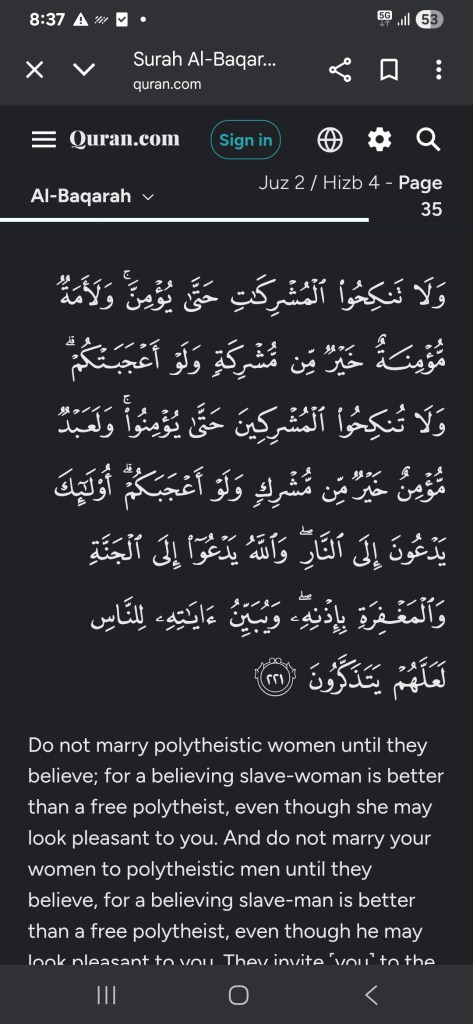
Do not marry polytheistic women until they believe; for a believing slave-woman is better than a free polytheist, even though she may look pleasant to you. And do not marry your women to polytheistic men until they believe, for a believing slave-man is better than a free polytheist, even though he may look pleasant to you. They invite ˹you˺ to the Fire while Allah invites ˹you˺ to Paradise and forgiveness by His grace.1 He makes His revelations clear to the people so perhaps they will be mindful. – Quran Kareem
Surah Maidah – table Spread 5:5 – Muslim men may marry Women from Alhul Kitab (people of the Book)- Christian and Jewish women – as they are Head of the Family – but not vice-versa (no Muslim woman can marry from Ahlul Kitab) – due to them still believeing in Allah azza wa Jal/ God AllMighty; this is also for Non Muslim women to Know if they Christian and/ or Jewish and Chaste marriage to a Muslim men is allowed – but not for any other beliefs – as well if someone does not propose to your right away- as you meet – they have Wring intention – as dating is not allowed in Islam. – so you are aware if some man may want to use and leave you;
Surah Maidah 5:5 – Today all good, pure foods have been made lawful for you. Similarly, the food of the People of the Book1 is permissible for you and yours is permissible for them. And ˹permissible for you in marriage˺ are chaste believing women as well as chaste women of those given the Scripture before you—as long as you pay them their dowries in wedlock, neither fornicating nor taking them as mistresses. And whoever rejects the faith, all their good deeds will be void ˹in this life˺ and in the Hereafter they will be among the losers.
“When the Lord your God brings you into the land that you are entering to take possession of it, and clears away many nations before you, the Hittites, the Girgashites, the Amorites, the Canaanites, the Perizzites, the Hivites, and the Jebusites, seven nations more numerous and mightier than you, and when the Lord your God gives them over to you, and you defeat them, then you must devote them to complete destruction. You shall make no covenant with them and show no mercy to them. You shall not intermarry with them, giving your daughters to their sons or taking their daughters for your sons, for they would turn away your sons from following me, to serve other gods. Then the anger of the Lord would be kindled against you, and he would destroy you quickly.
Now in Islam we do not say Prophet Solomon’s Heart turned after other “gods” – however the pirbicple is there; technically if you look at most Bible Verses and Quran Kareem you will realize the Source of Revelation is the same (Allah- saw- God AllMighty)
2 Corinthians 6:14-16 it reads:
14 Do not be unequally yoked together with unbelievers. For what fellowship has righteousness with lawlessness? And what communion has light with darkness? 15 And what accord has Christ with Belial? Or what part has a believer with an unbeliever? 16 And what agreement has the temple of God with idols? For you[b] are the temple of the living God. As God has said: I will dwell in them And walk among them. I will be their God, And they shall be My people. NKJV
#marriage # believers #not with #polytheists #Islam; #Bible
Jacob Marries Leah and Rachel (Marriage in general)
New American Standard Bible 1995 – Jacob and Rachel marriage – but he way he married Leah first (did not remove her Veil)- so then later on after many more years married Rachel, the mother of Yusuf/ Joseph (aleihis Salam) – as she was the younger sister; hence Lifting the Veil in marriage idea; The Veil; some jewish weddings still have the Face cover in weddings in present day;
?????????
There is a custom practiced during Jewish weddings known as the “bedeken”, or the “veiling”. Before the wedding ceremony, the groom goes to the room where his bride is sitting on a throne, and he covers her face with a veil. Her face remains covered during the entire chupah ceremony. Yet, at the end, it was Leah who became Jacob’s primary wife. Rachel died at a young age, so that most of Jacob’s married life was actually spent with Leah. In addition to this, it was Leah who mothered most of Jacob’s children, the future tribes of Israel and it was she, not Rachel, who ultimately was buried with Jacob in the Cave of Machpela in Hebron.
One of the traditional explanations for this custom is that it commemorates the event that occurred during Jacob’s wedding ceremony. Since Jacob’s bride was veiled, he did not realize that he was marrying the wrong woman. But if that is the reason, shouldn’t the custom be that the groom uncovers his bride’s face to make sure that he is marrying the bride of his choice? Why are we commemorating at each of our weddings this terrible episode that occurred to poor Jacob?
Genesis 29 15-28 – Prophet Yaqub/ Jacob(Alayhis Salam) marriages with Leah, then Rachel
After Jacob had stayed with him for a whole month, 15 Laban said to him, “Just because you are a relative of mine, should you work for me for nothing? Tell me what your wages should be.” 16 Now Laban had two daughters; the name of the older was Leah, and the name of the younger was Rachel. 17 Leah had weak[a] eyes, but Rachel had a lovely figure and was beautiful. 18 Jacob was in love with Rachel and said, “I’ll work for you seven years in return for your younger daughter Rachel.”
19 Laban said, “It’s better that I give her to you than to some other man. Stay here with me.” 20 So Jacob served seven years to get Rachel, but they seemed like only a few days to him because of his love for her. 21 Then Jacob said to Laban, “Give me my wife. My time is completed, and I want to make love to her.” 22 So Laban brought together all the people of the place and gave a feast. 23 But when evening came, he took his daughter Leah and brought her to Jacob, and Jacob made love to her. 24 And Laban gave his servant Zilpah to his daughter as her attendant.
25 When morning came, there was Leah! So Jacob said to Laban, “What is this you have done to me? I served you for Rachel, didn’t I? Why have you deceived me?”26 Laban replied, “It is not our custom here to give the younger daughter in marriage before the older one. 27 Finish this daughter’s bridal week; then we will give you the younger one also, in return for another seven years of work.”
28 And Jacob did so. He finished the week with Leah, and then Laban gave him his daughter Rachel to be his wife. 29 Laban gave his servant Bilhah to his daughter Rachel as her attendant. 30 Jacob made love to Rachel also, and his love for Rachel was greater than his love for Leah. And he worked for Laban another seven years. – but he lifted the Marriage Veil the second time *(yes women mostly used to cover their faces in public)
Notes: back then Men had to pay and work for women in or for marriage – there is “no free lunch” – so well that technically explains the Failure of most marriages today – where women split bills 50/50 – or pay too many bills – well How do you expect they make Good wives and mothers withh al that Stress – therefore the moral and societal decadence has somethings to do with the No Family/ mixed family structure of modern times.





 said in his Tafseer book: “{to Him belongs [all] grandeur} means that to Him belongs greatness, majesty, immortality, dominion, power, and perfection.” [End of quote]
 that the Messenger of Allah, sallallaahu ‘alayhi wa sallam, said: “Allah, The Almighty, Says: “Pride is My Ridaa’ (cloak), and Greatness is My Izaar (lower garment), and whoever claims to share with Me either one of them, I will cast him into Hellfire.” [Ahmad, Abu Daawood and Ibn Maajah]












 bismillahschool.net