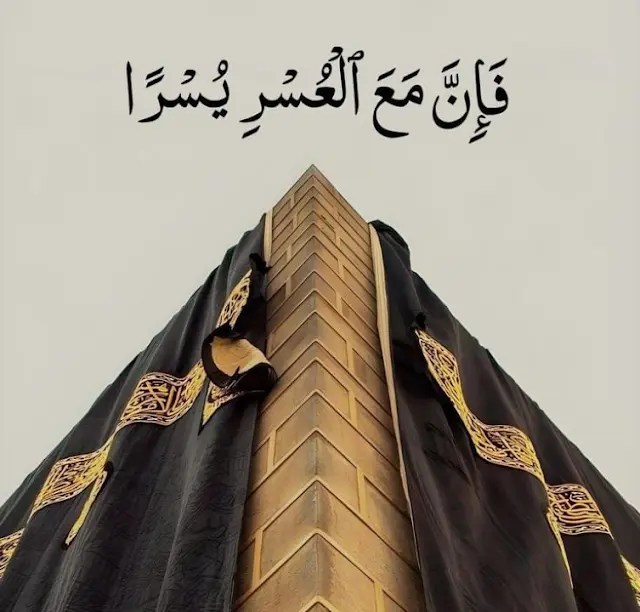
فَإِنَّ مَعَ الْعُسْرِ يُسْرًا. “Fa inna ma’al usri yusran” (Indeed, with hardship comes ease.) — Surah Ash-Sharh (94:6) Explanation: This powerful verse from the Qur’an offers deep comfort and reassurance. It reminds us that no hardship lasts forever, and ease always accompanies difficulty—not just after it, but with it. Allah emphasizes that when a person goes through trials or struggles in life, relief and blessings are also part of that journey, even if they are not immediately visible. It teaches believers to remain hopeful, patient, and strong during tough times. The verse suggests that challenges are not punishments but opportunities for growth, faith, and eventual ease. Spiritual Lesson: Every test has a purpose. Allah is always preparing relief. Trust in His plan, for ease is already on its way.Show less
Surah Ash-Sharh (Arabic text: الشرح) is the 94th chapter of the Qur’an, it is also referred to as Surah Inshirah. The surah titled in English means “The Expansion” or “The Opening-Up of the Heart” and it consists of 8 verses.
1. Have We not opened your breast for you (O Muhammad ())? 2. And removed from you your burden, 3. Which weighed down your back? 4. And raised high your fame?
5. So verily, with the hardship, there is relief, 6. Verily, with the hardship, there is relief (i.e. there is one hardship with two reliefs, so one hardship cannot overcome two reliefs). 7. So when you have finished (from your occupation), then stand up for Allah’s worship (i.e. stand up for prayer). 8. And to your Lord (Alone) turn (all your intentions and hopes and) your invocations.
#Surah #Opening of the #Heart, #Quran Kareem, #Islam
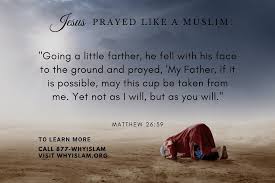
Qur’an Verses Translation – Prophets -Moses and Jesus
153. The People of the Scripture challenge you to bring down to them a book from the sky. They had asked Moses for something even greater. They said, “Show us God plainly.” The thunderbolt struck them for their wickedness. Then they took the calf for worship, even after the clear proofs had come to them. Yet We pardoned that, and We gave Moses a clear authority.
154. And We raised the Mount above them in accordance with their covenant, and We said to them, “Enter the gate humbly”, and We said to them, “Do not violate the Sabbath”, and We received from them a solemn pledge.
155. But for their violation of their covenant, and their denial of God’s revelations, and their killing of the prophets unjustly, and their saying, “Our minds are closed.” In fact, God has sealed them for their disbelief, so they do not believe, except for a few.
156. And for their faithlessness, and their saying against Mary a monstrous slander.
157. And for their saying, “We have killed the Messiah, Jesus, the son of Mary, the Messenger of God.” In fact, they did not kill him, nor did they crucify him, but it appeared to them as if they did. Indeed, those who differ about him are in doubt about it. They have no knowledge of it, except the following of assumptions. Certainly, they did not kill him. 158. Rather, God raised him up to Himself. God is Mighty and Wise.
159. There is none from the People of the Scripture but will believe in him before his death, and on the Day of Resurrection he will be a witness against them.
In this world, the believer is like a stranger passing through a land that he does not live in, his goal is to go home and his concern is to return to it. With this in mind, he takes only that amount of provision as would allow him to reach his destination, he does not compete with the people living in that land for nobility or honour and neither does he despair at any humiliation he faces from them. [The Journey of the Strangers | pg. 90]
Sura Al-Fatiha (“The Opening”) is the first chapter of the Quran. Its verses are a prayer for God’s guidance and stress the Lordship and Mercy of God (Allah in Arabic). This chapter has a special role in daily prayers (Salat), being recited at the start of each unit of prayer, or rak’ah.
English translation of Surah Al-Fatiha
In the name of Allah, the Most Gracious, the Most Merciful:
All Praise is due to Allah, Lord of the Universe
The Most Gracious, the Most Merciful.
Owner of the Day of Judgement.
You alone do we worship, and You alone we turn to for help
Guide us to the straight path;
The path of those on whom You have bestowed your grace, not (the way) of those who have earned Your anger, nor of those who went astray.
“Then We revealed to you [Muhammad], ‘Follow the creed of Abraham, a man of pure faith who was not an idolater.’” (Quran, 16:123)
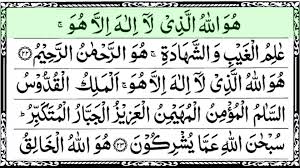
End of surah Hashr; 59 22 – He is Allah, other than whom there is no deity, Knower of the unseen and the witnessed. He is the Entirely Merciful, the Especially Merciful. 23- He is Allah, other than whom there is no deity, the Sovereign, the Pure, the Perfection, the Bestower of Faith, the Overseer, the Exalted in Might, the Compeller, the Superior. Exalted is Allah above whatever they associate with Him. 24He is Allah, the Creator, the Inventor, the Fashioner; to Him belong the best names. Whatever is in the heavens and earth is exalting Him. And He is the Exalted in Might, the Wise.
Surah Al Ala (teh Most High/ God) In the name of God, the Gracious, the Merciful. 1. Praise the Name of your Lord, the Most High. 2. He who creates and regulates. 3. He who measures and guides. 4. He who produces the pasture. 5. And then turns it into light debris. 6. We will make you read, so do not forget. 7. Except what God wills. He knows what is declared, and what is hidden. 8. We will ease you into the Easy Way. 9. So remind, if reminding helps. 10. The reverent will remember. 11. But the wretched will avoid it. 12. He who will enter the Gigantic Fire. 13. Where he will neither die, nor live. 14. Successful is he who purifies himself. 15. And mentions the name of his Lord, and prays. 16. But you prefer the present life. 17. Though the Hereafter is better, and more lasting. 18. This is in the former scriptures. 19. The Scriptures of Abraham and Moses. #Quran Kareem; #Islam; surah Hashr/ Gathering (Judgement Day);
Welcome. This website publishes the daily court lists for the Superior Court of Justice (Ontario) and the Ontario Court of Justice.
The daily court lists include the case name, time, room number and reason for the court appearance. For criminal matters in the Ontario Court of Justice, the docket number will also be displayed under the Docket Line column. For civil, criminal and family matters in the Superior Court of Justice, matters in the Small Claims Court and family matters in the Ontario Court of Justice, the Method of Attendance will display how a particular case will be heard (e.g. by videoconference, teleconference, attendance or hybrid). Definitions of each of the appearance methods are found in the FAQ section of this site.
NEW – The Daily Court Lists website now posts case information for two days. You are on the page that will take you to information about today’s cases. To see case information for tomorrow, please see Tomorrow’s court lists (dockets). Note that case information changes at 8 am each day (i.e. at 8 am, the cases listed under “today’s court lists” will be updated to show the current day’s cases).
Important: If you have been served with a summons, or otherwise notified that you are required to attend court, you must attend court, even if your name does not appear on a list. Failure to attend may result in a warrant for your arrest, dismissal of your case or the case proceeding in your absence. You may be able to attend court by video (over the internet) or over the telephone, rather than in person.
To get started, please read the terms and conditions that apply to using the website and, if you agree, click on “I AGREE”
A peace bond won’t appear on your criminal record. It will appear on your criminal record and judicial matters check and vulnerable sector record check for as long as it is in effect.
Criminal record checks
A peace bond doesn’t appear on your criminal record. And, entering into a peace bond doesn’t give you a criminal record. One of the reasons you may agree to a peace bond is to avoid a criminal record or conviction.
But, be aware if you don’t follow the conditions of your peace bond, you may be charged with a criminal offence. If you’re found guilty, you could go to jail, and get a criminal record.
Sahih International: Wherever you may be, death will overtake you, even if you should be within towers of lofty construction. But if good comes to them, they say, “This is from Allah “; and if evil befalls them, they say, “This is from you.” Say, “All [things] are from Allah.” So what is [the matter] with those people that they can hardly understand any statement?
In the name of God, the Gracious, the Merciful.
1. Blessed is He in whose hand is the sovereignty, and Who has power over everything. 2. He who created death and life—to test you—as to which of you is better in conduct. He is the Almighty, the Forgiving. – surah Mulk/ The Domnion (of the Heavens and the Earth)
‘Allāh takes the souls at the time of their death, and those that do not die [He takes] during their sleep. Then He keeps those for which He has decreed death and releases the others for a specified term. Indeed, in that are signs for a people who give thought.’ [Al-Zumar, 39:42]
Narrated by Al-Suddī concerning the saying of the Most High:
وَالَّتِي لَمْ تَمُتْ فِي مَنَامِهَاۖ
‘And those that do not die, [He takes] during their sleep,’
He [al-Suddī] said: ‘Their souls are taken in their sleep such that the souls of the living meet the souls of those who have passed away. They reminisce and remind one another [of events that have transpired].’
He said; ‘The souls of the living then return to their bodies so that they may fulfil the remainder of their lives in this dunyā. While the souls of the dead desire to return to their [abandoned bodies] except that they are blocked from doing so.’
[Imām Ibn al-Qayyim said:] This is one of the two opinions concerning this verse. It is that the soul that is prevented [from returning to the body] belongs only to those whose souls have been taken from [their bodies] due to death. While the souls that are returned are those that leave their bodies while asleep [such that they awaken in this dunyà]. Therefore, according to this opinion, its meaning is thatthe souls of the dead are taken [by the angel of death] and held, unable to return to their physical bodies before the Day of Judgement. The souls of those in slumber are also taken but are returned to their bodies such that the rest of their lives are fulfilled [i.e., their preappointed number of years in this dunyà is completed, at which point] their souls are taken again [for the final time, and they die].
The second opinion regarding this verse is that both types of soul, the ones that are held [from returning to their bodies] and those that are returned, are taken similar to one who enters sleep [i.e. expecting to return]. However, those among them whose lives in this dunyā have been completed are then held, disallowed to return to their bodies [such that they die in their sleep]. While those whose lives have not been fulfilled [i.e., they still have time left in this dunyà], their souls are returned to their bodies such that they are able to complete their course. This [opinion] is the stance of Shaykh al-Islām (Ibn Taymiyyah) [may Allāh have mercy on him and purify his soul], He said: ‘The Qurʾān and the Sunnah testify to this.’ He [also] said: ‘Indeed, the Exalted mentions His taking of the souls of those that He has decreed death upon from among the souls that have been taken in sleep [i.e. in His saying:
فَيُمْسِكُ الَّتِي قَضَىٰ عَلَيْهَا الْمَوْتَ ‘Then He keeps those for which He has decreed death’
referring to those that die in their sleep]. As for the ones whose souls have been taken due to their time of death [while wakeful], they have not been described here, rather they are a separate third party.’1
[Imām Ibn al-Qayyim said:] However, the correct opinion is the first one. This is because the Exalted relates two times that souls are taken: the major taking of the soul at death, and the minor taking of the soul during sleep.
Hence, He has divided the souls into two parties:
A party upon whom death has been decreed and thus [their souls] have been held with Him, taken from their bodies in finality.
Another party whose course of life remains, such that their souls are returned to their bodies to fulfil it.
1. Every Soul Shall Taste Death
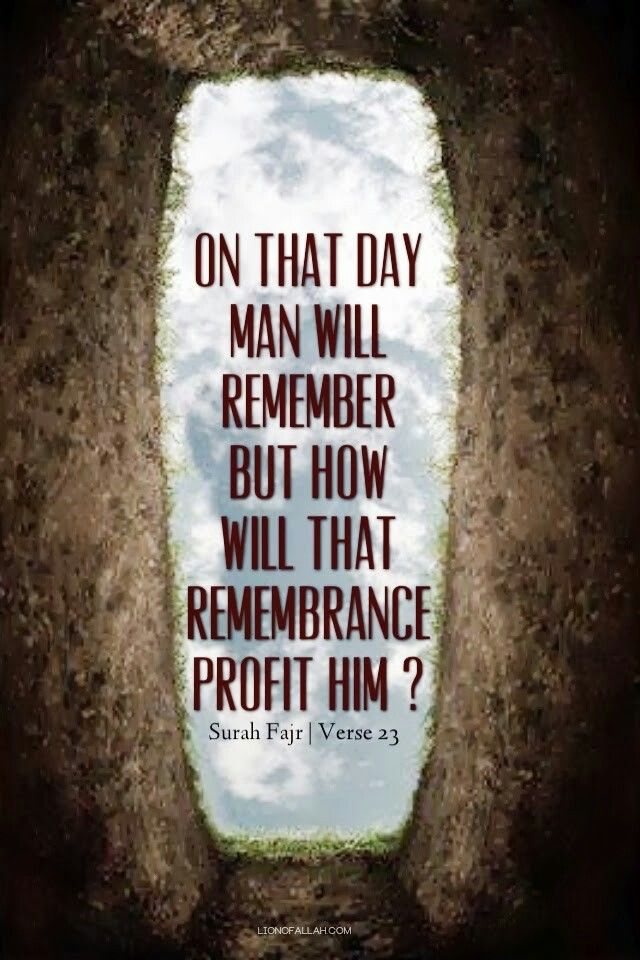
“Every self will taste death. You will be paid your wages in full on the Day of Rising. Anyone who is distanced from the Fire and admitted to the Garden, has triumphed. The life of this world is only the enjoyment of delusion.” (Quran, 3:185)
Here, Allah reminds us that we all, collectively as a human race, have a shared destiny with death – none can escape it. What remains for us to do, then, is to ensure we are truly living lives worthy of worshipping and loving Allah. We musn’t fall into the trap of believing this temporal world is worth risking our relationship with Allah.
2. Allah Will Never Delay A Soul When Its Time Has Come
“And spend [in the way of Allah ] from what We have provided you before death approaches one of you and he says, ‘My Lord, if only You would delay me for a brief term so I would give charity and be among the righteous’. But never will Allah delay a soul when its time has come. And Allah is Acquainted with what you do.” (Quran, 63:10-11)
The Quran reminds us time and time again to never take this life for granted – and to never overestimate how long we have on this earth. We must continously strive towards becoming better Muslims, lest we regret it when it is too late.
3. No Soul Perceives In What Land It Will Die
“Indeed, Allah [alone] has knowledge of the Hour and sends down the rain and knows what is in the wombs. And no soul perceives what it will earn tomorrow, and no soul perceives in what land it will die. Indeed, Allah is Knowing and Acquainted.” (Quran, 31:34)
To truly understand tawheed, the Oneness of Allah, will be a lifelong journey – and this verse is a powerful reminder of how much at mercy we are with Allah. None of us can know when our time with death has come, and we must truly believe, accept, and embrace whatever Allah has Planned for us.
4. When Their Specifed Time Has Come, They Cannot Delay It For A Single Hour
“When their specified time arrives, they cannot delay it for a single hour nor can they bring it forward.” (Quran, 16:61)
Here again, we are reminded of our fate with death – none of us can change it. As much as we like to believe we are in control of our lives – even our health, we must submit to Allah’s Will at all times and accept death as a blessing and a preordained end to our life here on earth.
5. Oh Soul At Rest, Return To Your Lord
“O soul that are at rest! Return to your Lord, well-pleased (with him), well-pleasing (Him), So enter among My servants, And enter into My garden.” (Quran, 89:27-30)
Finally, despite our innate fears around death, we must be assured that to embrace death is perhaps the only true comfort we have in this world – we are finally returing to Allah and inshallah, will be blessed with His Glad-Tidings. All we can do is pray for the strength to welcome our death as the last of Allah’s blessings here on earth.
* 5 hadeeth about Death
1. What is death like to believers?
“The gift to a believer is death.” (Al-Tirmidhi, Hadith 1609)
“Allah accepts the repentance of the servant so long as his spirit has not arrived at his throat.” (Al-Tirmidhi)
3. The death of one who seeks knowledge
“When death comes to the seeker of knowledge whilst he is in that state [of seeking knowledge], he dies as a martyr.” (al-Targhib wa al-Tarhib, v. 1, p. 97, no. 16)
4. The remembrance of death
“The most sagacious one from among you is he who remembers death the most, and the most prudent one from among you is he who is the most prepared for it.” – (Alam al-Din, no. 333)
5. What is the destination after death?
“Do not abuse the dead, for they have reached the result of what they have done.” – (Sahih Bukhari)
6. Things that last beyond death
“When a man dies, his good deeds come to an end, except three: Ongoing charity, beneficial knowledge, and a righteous son who will pray for him.” – (Sahih Muslim, 3084)
7. What can save me from an evil death?
“Indeed charity extinguishes the Lord’s anger and protects against the evil death.” – (At-Tirmidhi, 664)
8. Death is an end to comfort
“Remember often the destroyer of all pleasures.” – (At-Tirmidhi)
Death will come for us all, let’s attempt to be ready when it does.
#Death, #Islam #Quran #Verses #Hadeeth (sayings of Prophet Muhammad – sal Alllahu alayhi wa Sallam)



 ))? 2. And removed from you your burden, 3. Which weighed down your back? 4. And raised high your fame?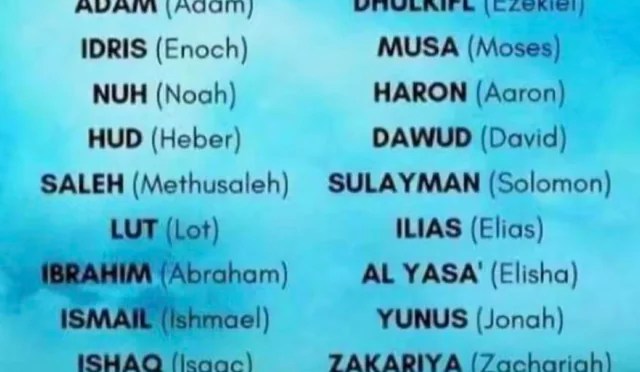

















 bismillahschool.net