From useful utilities to handy archivers and transcoders, here are our favorite free yet powerful macOS apps you can download today.
There’s something of a misconception when it comes to the Mac: that Mac apps cost more, just like the computer itself. While powerful tools like Photoshop or Final Cut Pro certainly have price tags commensurate with their robust feature sets, many of the greatest Mac apps won’t cost you anything more than the time they take to download them.
A quick note before we begin. Apple has changed its security settings in macOS, so you’ll need to allow your system to open a couple of these apps. A dialogue box may pop up telling you a certain app “is an application downloaded from the Internet. Are you sure you want to open it?” Click Open to proceed with the installation.
KINDLE BOOKS
Sometimes you just want to curl up with your Mac and read a good book. With the Kindle app for Mac you can do just that. Like iBooks, but for all of your Kindle books, comics, and Kindle Unlimited subscriptions, you’ll be able to access all fo your Amazon.com purchases right on your desktop. With a full-screen mode, five font options, a dark theme, and adjustable point sizes, brightness, and page widths, you can customize your reading experience just the way you like it. There’s also a built-in dictionary and easy annotating, and Amazon’s Whispersync tech will let you pick up right where you left off on any device. Except, you know, from an actual book.
SPARK – free email app
IDG
Apple’s default email client gets better with each macOS revision, but if you’re looking for something different, Spark will be a refreshing change of pace. Smart, stylish, and speedy, Spark will help you get control over your inbox with powerful filters that help you focus on the messages that need your attention. It works with Gmail, iCloud, Outlook, and just about any other email address, and its companion iOS apps will keep all of them perfectly synced. With a deceptively powerful interface and a slew of advanced features, Spark just might ignite your passion for email again. Or at least make you not hate it as much.
A‘oothu bi kalimaatil-laahit-taammaati min sharri maa khalaq. “I seek protection in the perfect words of Allah from every evil that He has created.”(Recite three times)
As forest fires continue to ravage Northwestern Ontario, communities are being evacuated, and the smoke is impacting areas hundreds of kilometres away.
As of last night, there were 185 wildland fires in Northern Ontario. The majority are in Northwestern Ontario, where there are 148 active fires, including 69 that aren’t under control.
Communities have been evacuated, and roads are closed in impacted areas.
The communities that have been evacuated, according to OPP, are Armstrong, Collins First Nation, Gakijiwanong Anishinaabe Nation (Lac La Croix First Nation), Gull Bay First Nation, Lac des Mille Lacs First Nation, and Whitesand First Nation. A fire has devastated Namaygoosisagagun First Nation, a remote community located west of Armstrong and northwest of Lake Nipigon.
In the past couple of days, over a handful of fires in the northwest have seen significant growth, including fires merging in some areas.
Anishnabek Nation says a fast-moving fire went through the community, extensively damaging or destroying homes and community buildings.
Surah Ali ‘Imran [3:129]: Explains that to Allah belongs all that is in the heavens and the earth, and He forgives and punishes according to His supreme will, yet He remains All-Forgiving and Most Merciful. [1, 2]
To Allah ˹alone˺ belongs whatever is in the heavens and whatever is on the earth. He forgives whoever He wills, and punishes whoever He wills. And Allah is All-Forgiving, Most Merciful.
Surah An-Nisa [4:48]: States that while Allah does not forgive the sin of associating others with Him (shirk), He forgives any other sins for whom He wills. [1, 2]
This demonstrates that His forgiveness is vast, yet balanced by justice and sincere repentance. To explore the full context and reflections of these verses, you can read more on Quran.com. [1, 2]
The verse serves as a theological reminder that ultimate judgment, forgiveness, and mercy rest exclusively with the Creator. Historically, scholars note this verse was revealed during the aftermath of the Battle of Uhud to remind the faithful that the authority over all affairs, including the fate of transgressors, belongs entirely to God rather than human prerogative
Miqdam bin Madikarib said: “I heard the Messenger of Allah (ﷺ) say: ‘A human being fills no worse vessel than his stomach. It is sufficient for a human being to eat a few mouthfuls to keep his spine straight. But if he must (fill it), then one third of food, one third for drink and one third for air.’” حَدَّثَنَا هِشَامُ بْنُ عَبْدِ الْمَلِكِ الْحِمْصِيُّ، حَدَّثَنَا مُحَمَّدُ بْنُ حَرْبٍ، حَدَّثَتْنِي أُمِّي، عَنْ أُمِّهَا، أَنَّهَا سَمِعَتِ الْمِقْدَامَ بْنَ مَعْدِيكَرِبَ، يَقُولُ سَمِعْتُ رَسُولَ اللَّهِ ـ صلى الله عليه وسلم ـ يَقُولُ “ مَا مَلأَ آدَمِيٌّ وِعَاءً شَرًّا مِنْ بَطْنٍ حَسْبُ الآدَمِيِّ لُقَيْمَاتٌ يُقِمْنَ صُلْبَهُ فَإِنْ غَلَبَتِ الآدَمِيَّ نَفْسُهُ فَثُلُثٌ لِلطَّعَامِ وَثُلُثٌ لِلشَّرَابِ وَثُلُثٌ لِلنَّفَسِ ” . Grade: Sahih – Sunah Ibn Majah 3349;
#food; #Limits; #Islam;Hadith – food – a third, drink a third; air a third;
Were Allah not to check people by means of others, there would have been demolished the monasteries, churches, synagogues, and mosques in which the name of Allah is often mentioned. Surat Al-Hajj 22:40
Ibn Khuwaiz said: Included in this verse is the prohibition of demolishing the churches of non-Muslim citizens, their temples, and their houses of worship. Source: Tafseer Al-Qurtubi 22:40
This legal requirement is part of the tolerance, compassion, and good will that Islam teaches concerning other religious groups. The Prophet defined Islam as safety and security for people in general.
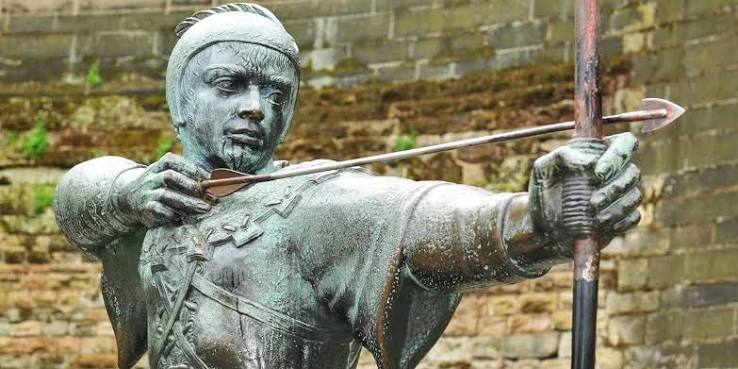
Although there has been plenty of speculation about an actual Robin Hood, historians largely agree that there was no single, living person behind the character, just a vastly unequal society of wealthy landowners and impoverished peasants that inspired his creation. The stories began as an oral tradition in the 12th Century, but the first written accounts didn’t arrive until two centuries later, in ballads that showed him as a celebrated figure even then.
In those first written accounts, he wasn’t the noble Sir Robin of Locksley as later versions made him. He wasn’t noble at all, but a yeoman, a rung above a peasant. There was no Maid Marian in the story until the 16th Century. And while he was perfectly nice to the poor, helping them was not his main purpose. His enemies were the corrupt clergy and the land-owning nobles who took advantage of their underlings.
In an afterword to her revisionist novel, The Traitor of Sherwood Forest (2025), medieval historian Amy S Kaufman describes the Robin Hood of the early legends as “a morally grey medieval trickster,” and a “violent, irreverent rogue”. Disney was right about one thing: the first ballads suggest that Robin was as sly as a fox.
A major change in the story came in the 16th Century. King Henry VIII was a fan and sometimes dressed up as Robin Hood. During the reign of the monarch who split from the Catholic Church, Robin’s devotion to the Virgin Mary vanished from the legend.
As the upper classes embraced him, in influential chronicles of the time the character no longer hated the nobility, but became noble himself. Positioned as a morally upright nobleman battling his disreputable equals, he stopped questioning the power structure of society. He was enlisted to help the good King Richard return to the throne that had been usurped by his evil brother, Prince John, a trope that persists through Disney’s depiction of John as a greedy, power-hungry lion.
WHERE IS SHERWOOD FOREST?
Sherwood Forest is a famous Royal Forest and National Nature Reserve located in Nottinghamshire, England. Centered around the village of Edwinstowe, the reserve is roughly 17 miles (27 km) north of Nottingham and 28 miles (45 km) south of Sheffield. [1, 2]
The forest covers an area of about 1,045 acres (424 hectares) and is known worldwide for its historical links to the legendary outlaw, Robin Hood. If you are planning to visit, here are a few key details about the area:
The Major Oak: This is the most famous tree in the forest, estimated to be around 800 to 1,000 years old. According to local folklore, it served as the main hideout for Robin Hood and his band of merry men.
1. Blessed is He in whose hand is the sovereignty, and Who has power over everything.
2. He who created death and life—to test you—as to which of you is better in conduct. He is the Almighty, the Forgiving.
3. He who created seven heavens in layers. You see no discrepancy in the creation of the Compassionate. Look again. Can you see any cracks?
4. Then look again, and again, and your sight will return to you dazzled and exhausted.
5. We have adorned the lower heaven with lanterns, and made them missiles against the devils; and We have prepared for them the punishment of the Blaze.
6. For those who reject their Lord, there is the torment of Hell. What an evil destination!
7. When they are thrown into it, they will hear it roaring, as it seethes.
8. It almost bursts with fury. Every time a batch is thrown into it, its keepers will ask them, “Has no warner come to you?”
9. They will say, “Yes, a warner did come to us, but we disbelieved, and said, ‘God did not send down anything; you are very much mistaken.’”
10. And they will say, “Had we listened or reasoned, we would not have been among the inmates of the Blaze.”
11. So they will acknowledge their sins. So away with the inmates of the Blaze.
12. As for those who fear their Lord in secret—for them is forgiveness and a great reward.
13. Whether you keep your words secret, or declare them—He is Aware of the inner thoughts.
14. Would He not know, He Who created? He is the Refined, the Expert.
15. It is He who made the earth manageable for you, so travel its regions, and eat of His provisions. To Him is the Resurgence.
16. Are you confident that the One in heaven will not cause the earth to collapse beneath you as it spins?
17. Or are you confident that the One in Heaven will not unleash against you a violent storm? Then you will know what My warning is like.
18. Those before them also denied the truth; and how was My disapproval?
19. Have they not seen the birds above them, spreading their wings, and folding them? None holds them except the Compassionate. He is Perceiver of everything.
20. Or who is this who is a force for you to protect you against the Compassionate? The disbelievers are in nothing but delusion.
21. Or who is this that will provide for you, if He withholds His provision? Yet they persist in defiance and aversion.
22. Is he who walks bent on his own design better guided, or he who walks upright on a straight path?
23. Say, “It is He who produced you; and made for you the hearing, and the vision, and the organs. But rarely do you give thanks.”
24. Say, “It is He who scattered you on earth, and to Him you will be rounded up.”
25. And they say, “When will this promise be fulfilled, if you are truthful?”
26. Say, “Knowledge is with God, and I am only a clear warner.”
27. But when they see it approaching, the faces of those who disbelieved will turn gloomy, and it will be said, “This is what you used to call for.”
28. Say, “Have you considered? Should God make me perish, and those with me; or else He bestows His mercy on us; who will protect the disbelievers from an agonizing torment?”
29. Say, “He is the Compassionate. We have faith in Him, and in Him we trust. Soon you will know who is in evident error.”
30. Say, “Have you considered? If your water drains away, who will bring you pure running water?”
#Surah Al Mulk #Dominion; #Translation; #verses; #Quran Kareem #Islam
Surat al-Mulk is one of the great Surahs of the Quran which we are encouraged in authentic reports to recite frequently, and there are reports which say that it will protect the one who recites it from the punishment of the grave .
Abu Dawud (1400) and al-Tirmidhi (2891 – and he classed it as hasan) narrated from Abu Hurayrah that the Prophet (blessings and peace of Allah be upon him) said: “There is a Surah of the Quran, with thirty verses, that interceded for a man until he was forgiven; it is ‘Surah Tabarak Alladhi bi yadihi’l-mulk (Blessed is He in Whose Hand is the dominion)’ [Al-Mulk 67:1].” It was also classed as hasan by al-Albani in Sahih at-Tirmidhi.
Al-Manawi (may Allah have mercy on him) said: “He recited it frequently, thus it kept asking Allah (to forgive him) until he was forgiven. This is encouragement to everyone to recite it regularly so as to attain its intercession.” (Fayd al-Qadir, 2/574)
Shaykh ‘Abd al-Muhsin al-‘Abbad (may Allah preserve him) said: “This hadith highlights its virtue and tells us that it will intercede on the Day of Resurrection for its companion, i.e., the one who recites it.” (Sharh Sunan Abi Dawud, 8/7)
In the virtue mentioned, that Surat al-Mulk will intercede for the one who recites it, there is nothing to limit recitation thereof to night or day; rather what may be understood from this hadith is that what is meant by reciting Surat al-Mulk is paying particular attention to it, memorizing it, understanding it, and reciting it frequently, especially in prayer.
With regard to the report narrated by an-Nasai in as-Sunan al-Kubra (10547) and in ‘Aml al-Yawm wa’l-Laylah (711), and by Abu Tahir al-Mukhlis in al-Mukhlisiyyat (228), via ‘Arfajah ibn ‘Abd al-Wahid from ‘Asim ibn Abi’n-Nujud from Zirr from ‘Abdullah ibn Mas‘ud, who said: “Whoever recites Surah Tabarak Alladhi bi yadihi’l-mulk (Blessed is He in Whose Hand is the dominion) [al-Mulk 67:1] every night, Allah will protect him thereby from the punishment of the grave”, and at the time of the Messenger of Allah (blessings and peace of Allah be upon him) we used to call it al-Mani`ah (that which protects), and that in the Book of Allah there is a Surah, everyone who recites it every night has done a great deal and has done well – its isnad is layyin (weak). ‘Arfajah ibn ‘Abd al-Wahid is dubious, and no one regarded him as trustworthy. Al-Hafiz said in at-Taqrib (389): “He is acceptable, i.e., if there is any corroborating evidence, otherwise his hadith is layyin – as was stated in the introduction.
The Prophet ﷺ said: “Whoever is distressed by the night (i.e., can’t sleep), is miserly with wealth (i.e., reluctant to spend), and is cowardly in facing the enemy (i.e., reluctant to fight), should say often: ‘Subhan Allah wa bi-hamdihi’ (Glorified is Allah with His praise). For indeed it is more beloved to Allah than a mountain of gold and silver spent in the path of Allah.” [Reference: Al-Mu’jam al-Awsat by Tabarani, Hadith #6482 (graded Sahih by Albani)].
“If you combine these five meanings in your heart while supplicating to Allah, mention them with your tongue, and then ask Him for your need… be glad, be glad, be glad! By Allah, He won’t send you back disappointed:
1. Praising and thanking Him 2. Seeking forgiveness, turning to Him in repentance 3. Needy, humble, and broken 4. Certain, having good thoughts, and trusting Him 5. Submitting, entrusting, and surrendering
Narrated Abu Huraira: Allah’s Messenger ﷺ said, “Whoever says, ‘Subhan Allah wa bihamdihi,’ one hundred times a day, will be forgiven all his sins (minor sins) even if they were as much as the foam of the sea. Reference : Sahih al-Bukhari 6405; In-book reference : Book 80, Hadith 100
#Praising Allah azza wa Jal; in all HIS Glory and Majestory – SubhanAllahi wa bihamdihi Hadith;