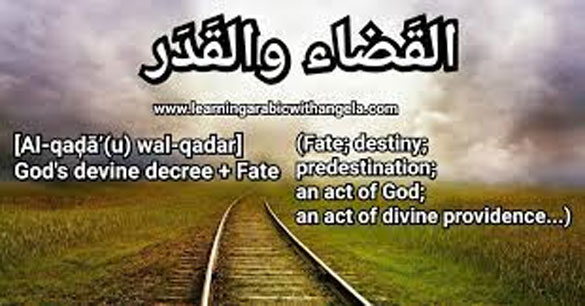
Jami` at-Tirmidhi 2139’Salman narrated that the Messenger of Allah (peace be upon him) said:”Nothing turns back the Decree except supplication, and nothing increases the life-span except righteousness.”
حَدَّثَنَا مُحَمَّدُ بْنُ حُمَيْدٍ الرَّازِيُّ، وَسَعِيدُ بْنُ يَعْقُوبَ، قَالاَ حَدَّثَنَا يَحْيَى بْنُ الضُّرَيْسِ، عَنْ أَبِي مَوْدُودٍ، عَنْ سُلَيْمَانَ التَّيْمِيِّ، عَنْ أَبِي عُثْمَانَ النَّهْدِيِّ، عَنْ سَلْمَانَ، قَالَ قَالَ رَسُولُ اللَّهِ صلى الله عليه وسلم “ لاَ يَرُدُّ الْقَضَاءَ إِلاَّ الدُّعَاءُ وَلاَ يَزِيدُ فِي الْعُمُرِ إِلاَّ الْبِرُّ ” الحكم: حسنه أو صححه الشيخ الألباني (في [صحيح الجامع] 7687).
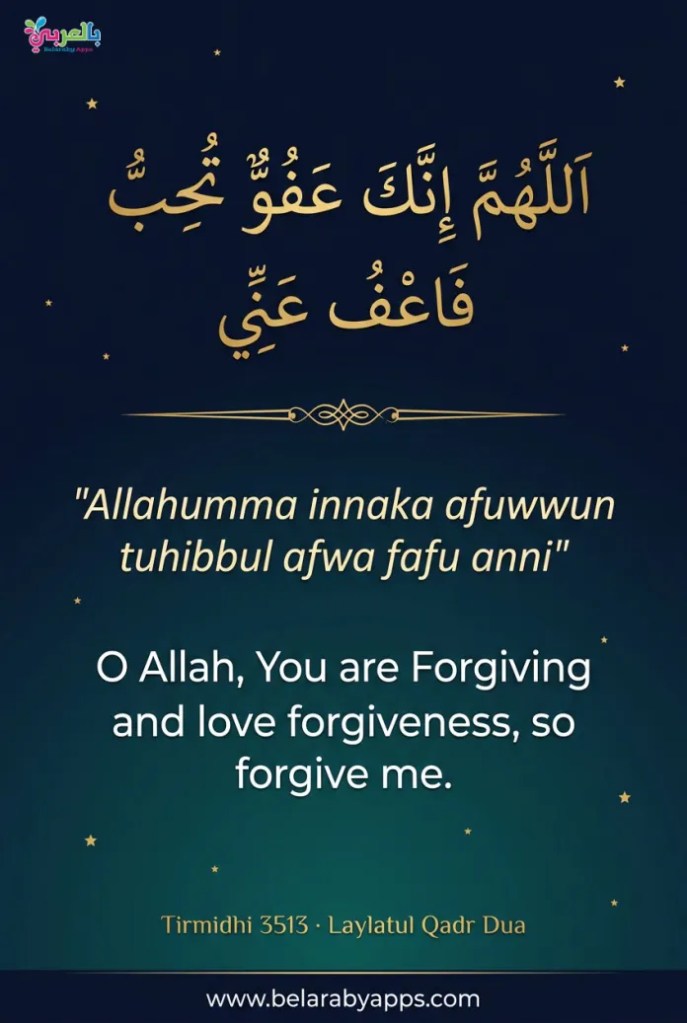
Meaning– O Allah, You are Most Forgiving and You love to forgive, so forgive me.
Arabic Root: From the root ayn-fa-waw (ع ف و), which has the following classical Arabic connotations: to forgive, pardon, to pass over, forgo, absolve, to obliterate all traces, efface, remove, to kill-off, allow to die, to turn away from punishing, not see, annul, to make unapparent, imperceptible, to give spontaneously, to give without constraint, to give more than what is due.
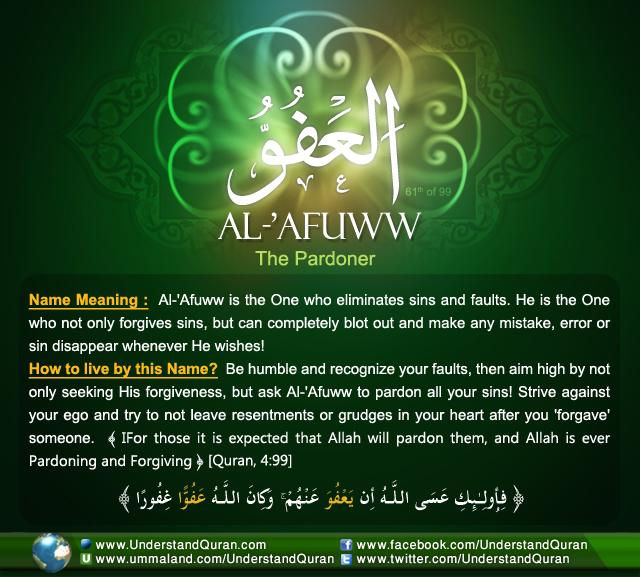
This name compared to other names of forgiveness: Allah سُبْحَٰنَهُۥ وَتَعَٰلَىٰ loves to forgive His servants. We can see from the previous attributes that much has been said about His forgiveness. He is At-Tawwab (The Ever-Relenting), Ar-Rahman (The Beneficent), Ar-Raheem (The Merciful), Al-Ghaffar (The Forgiver), and Al-Gafoor (The Great Forgiver).Now, we expand to this list by adding another name, Al-Afuw, The Effacer of Sins. He is the one who erases all traces of sin. Forgiveness implies concealment, but the mark of sin still exists on the servant’s record. Al-Afuww suggests much more than just forgiving but eliminating it entirely. The view of scholars is the prior names are names of maghfirah (seeking forgiveness) which is different from seeking afw. For example, maghfirah is like forgiving but not forgetting. ‘afw is purification, being reborn, and having a clean slate.
As a name of Allah سُبْحَٰنَهُۥ وَتَعَٰلَىٰ, Al-Afuw is mentioned for a total of five times in the Qur’an.
in tubdoo khairann aw tukhfoohu aw ta’foo ‘an sooo’in fa innal laaha kaana ‘afuwwan Qadeeraa
ABUL ALA MAUDUDI TRANSLATION: “(Even though you have the right to speak evil if you are wronged), if you keep doing good -whether openly or secretly -or at least pardon the evil (then that is the attribute of Allah). Allah is All-Pardoning and He has all the power to chastise.”— (Qur’an 4:149)
Zaalika wa man ‘aaqaba bimisli maa ‘ooqiba bihee summa bughiya ‘alaihi la yansurannahul laah; innal laaha la ‘Afuwwun Ghafoor
English Translation: “That [is so]. And whoever responds [to injustice] with the equivalent of that with which he was harmed and then is tyrannized – Allah will surely aid him. Indeed, Allah is Pardoning and Forgiving.”— (Qur’an 22:60)
#Duah, #prayer, Last 10 Nights of #Ramadan; AL Afuw – the Effacer of Sins (erases all traces of sin); #Forgiveness; #Repentance;
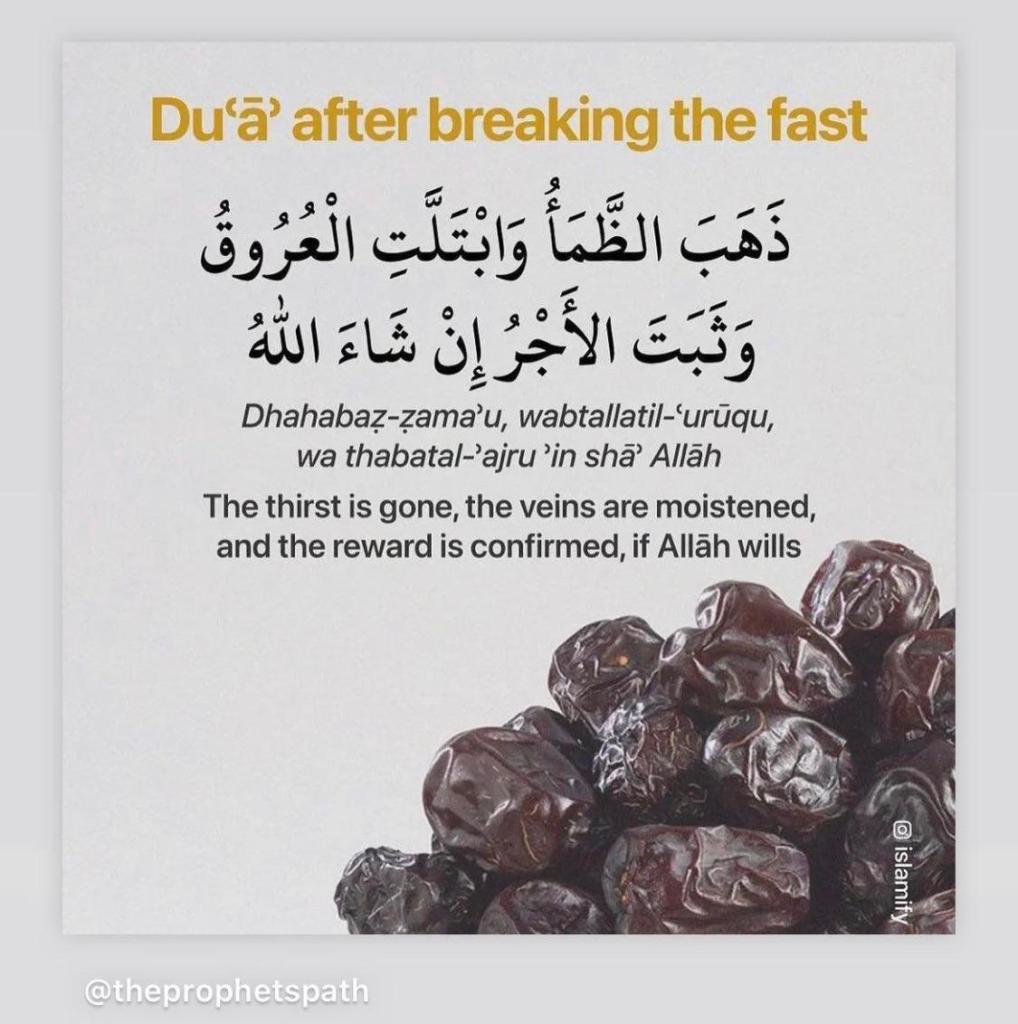
‘Umar said: The Messenger of Allah (peace and blessings of Allah be upon him) used to say when breaking his fast: “Thahaba al-thama wa’btalat al-‘uruq wa thabata al-ajr in sha Allah (Thirst is gone, the veins are moistened and the reward is certain if Allah wills).” (Narrated by Abu Dawud, 2357; al-Daraqutni, 25. Ibn Hajar said in al-Talkhis al-Habir (2/202): al-Daraqutni said, its isnad is sahih.)
Like Alhamdulillah, this phrase or expression is meant to be said in every situation. It is to acknowledge and be thankful to Allah (سُبْحَٰنَهُۥ وَتَعَٰلَىٰ) for the life you have, whichever way it unfolds. The exact meaning of Alhamdulillah ala kulli hal is, “All praise and thanks are only for Allah in all circumstances.”
When something happened that pleased him, the Prophet (ﷺ) used to say:
Alḥamdu lillāhi ‘lladhi bi ni`matihi tatimmuṣ-ṣāliḥāt. And if something happened that displeased him, he used to say: Alḥamdu lillāhi `alā kulli ḥāl. When something happened that pleased him, the Prophet (ﷺ) used to say: Praise is to Allah Who by His blessings all good things are perfected. And if something happened that displeased him, he used to say: Praise is to Allah in all circumstances. Hisn al-Muslim 218
It was narrated from Abu Hurairah that the Prophet (ﷺ) said: “A grateful eater is equal to a patient fasting person.” (Sunan Ibn Majah Book 7, Hadith 1764)
PROPHET YUNUS DUA HADITH Ibrahim bin Muhammad bin Sa`d narrated from his father, from Sa`d that the Messenger of Allah (ﷺ) said: “The supplication of Dhun-Nun (Prophet Yunus) when he supplicated, while in the belly of the whale was: ‘There is none worthy of worship except You, Glory to You, Indeed, I have been of the transgressors. (La ilaha illa anta subhanaka inni kuntu minath-thalimin)’ So indeed, no Muslim man supplicates with it for anything, ever, except Allah responds to him.” Sahih (Authentic) Jami at-Tirmidhi 3505; Notes; There is No one/ nothing Worthy of Worship except Allah/ God AllMighty – as the Path to Jannah/ Paradise;
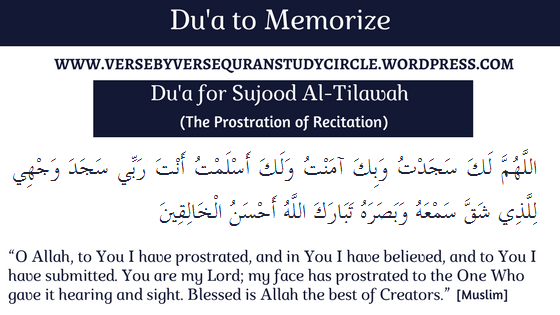
I have prostrated my face to the One Who created it, and gave it hearing and sight by His might and His power. Glory is to Allah, the Best of creators. [Hisnul 50] [At-Tirmizi 2/474, Ahmad 6/30, Al-Hakim]




 bismillahschool.net