Narrated Anas bin Malik: Hudhaifa bin Al-Yaman came to `Uthman at the time when the people of Sham and the people of Iraq were Waging war to conquer Arminya and Adharbijan. Hudhaifa was afraid of their (the people of Sham and Iraq) differences in the recitation of the Qur’an, so he said to `Uthman, “O chief of the Believers! Save this nation before they differ about the Book (Qur’an) as Jews and the Christians did before.” So `Uthman sent a message to Hafsa saying, “Send us the manuscripts of the Qur’an so that we may compile the Qur’anic materials in perfect copies and return the manuscripts to you.” Hafsa sent it to `Uthman. `Uthman then ordered Zaid bin Thabit, `Abdullah bin AzZubair, Sa`id bin Al-As and `AbdurRahman bin Harith bin Hisham to rewrite the manuscripts in perfect copies. `Uthman said to the three Quraishi men, “In case you disagree with Zaid bin Thabit on any point in the Qur’an, then write it in the dialect of Quraish, the Qur’an was revealed in their tongue.” They did so, and when they had written many copies, `Uthman returned the original manuscripts to Hafsa. `Uthman sent to every Muslim province one copy of what they had copied, and ordered that all the other Qur’anic materials, whether written in fragmentary manuscripts or whole copies, be burnt.
Reference – Sahid al Bukhari 4987, Book 66; Hadith 9; #Tashhkent copy;
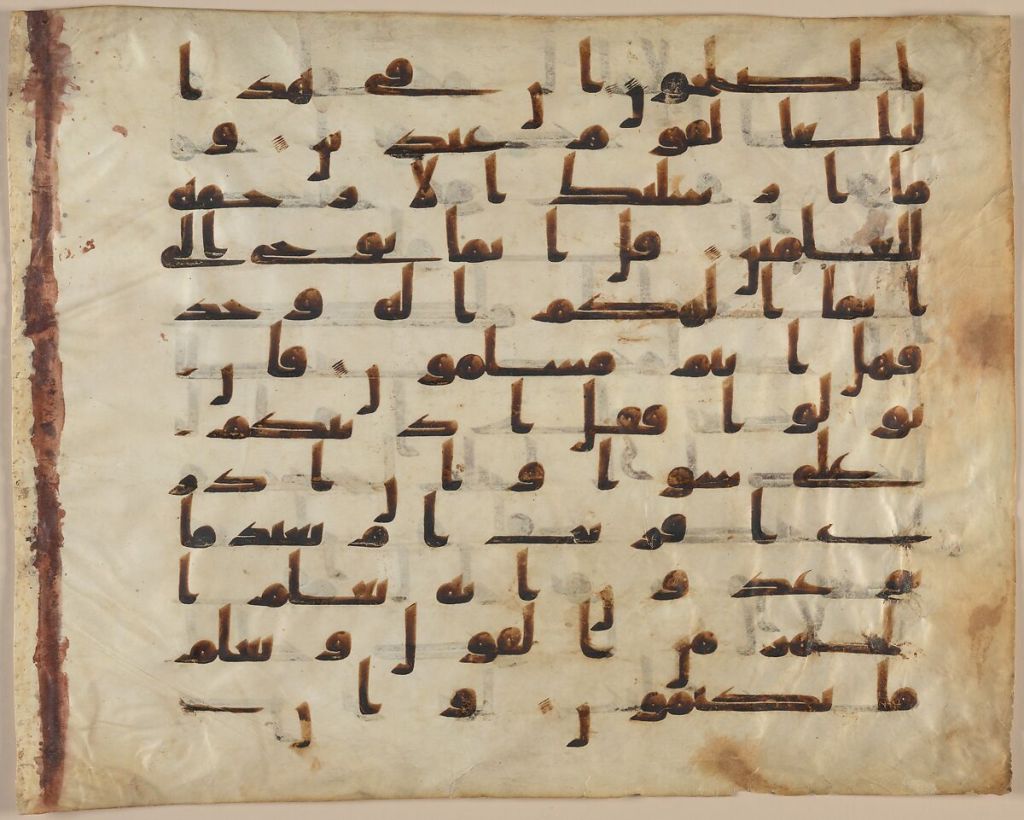
Folio from the “Tashkent Qur’an”
late 8th–early 9th century
Magnificent in size, this folio comes from one of the oldest surviving Qur’an manuscripts in existence. It is written in an early version of the kufic script with no diacritical marks (tashkeel) to distinguish the letters, and with very limited illumination. Based on the form of the script, and the illuminations that do survive on other pages from this Qur’an, the book has been attributed to Cairo, Egypt; Damascus, Syria; or Sana’a, Yemen. About one third of the original manuscript is housed in the Hast-Imam Library in Tashkent, Uzbekistan.
At that time, there were no printing presses. Books had to be written manually by specialized scribes and making a copy required a similar effort. The Quran was dictated word by word and letter by letter by the Prophet himself to specialized scribes.[1] The Prophet passed away in 632 AD. Afterwards, Abu Bakr, the first leader of the Muslims, gathered the original scripts of the scribes into one book, and then some time later, when the Muslim empire stretched from East to West, Uthman, the son-in-law of the Prophet and the third Caliph, ordered five copies of the original to be made and distributed to all parts of the Muslim world some twenty years later.[2]
Today, we have three manuscripts of Quran which are traced back to the Prophet’s son-in-law, the Caliph Uthman.
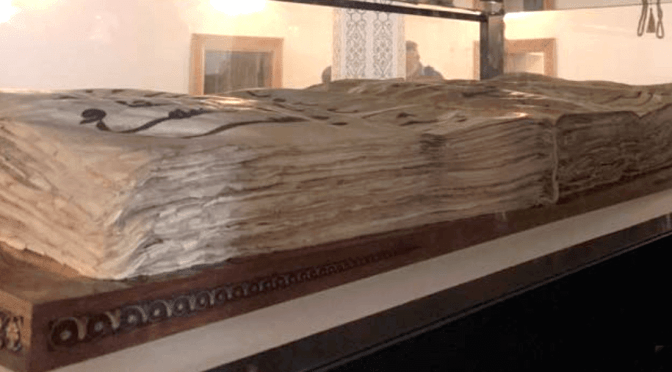
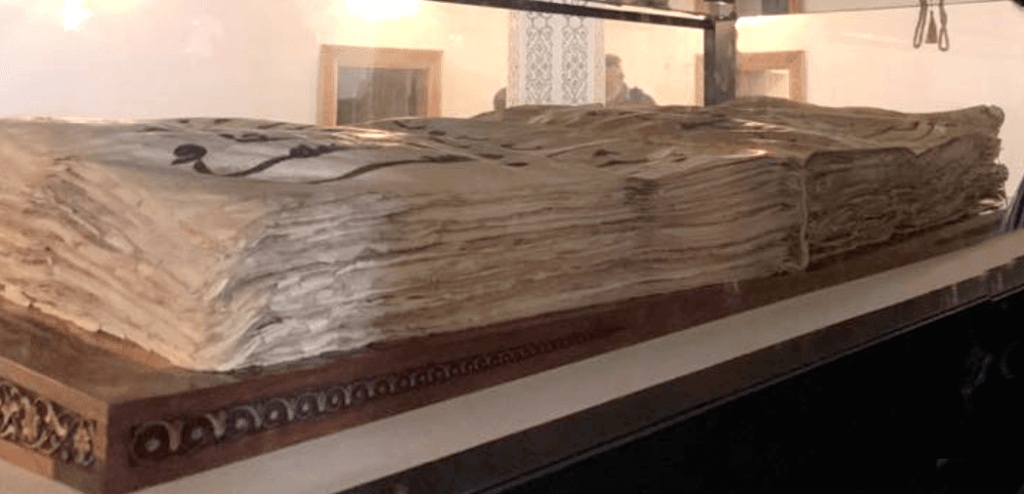
(1) The Samarqand Manuscript located in Tashkent, Uzbekistan. It is written on a parchment from gazelle skin. According to Memory of the World Program, UNESCO, an arm of the United Nations, ‘it is the definitive version, known as the Mushaf of Uthman, superseding all other versions.’[3]
Figure 1 This manuscript, held by the Muslim Board of Uzbekistan, is the earliest existent written version of the Quran. It is the definitive version, known as the Mushaf of Othman, superseding all other versions. Image courtesy of Memory of the World Register, UNESCO.
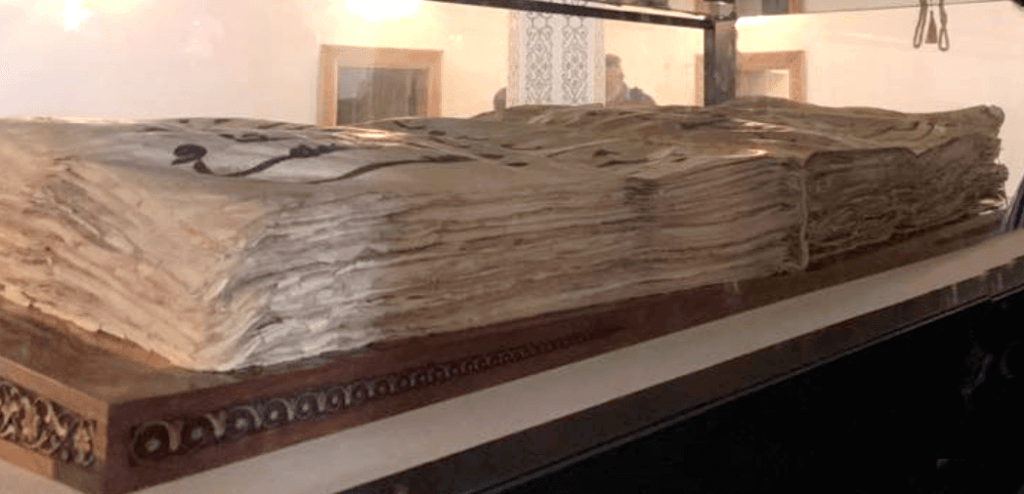
Figure 2 The Holy Quran of Othman in its glass-fronted safe. Image courtesy of Memory of the World Register, UNESCO.
79 –So woe to those who write the “scripture” with their own hands, then say, “This is from Allah,” in order to exchange it for a small price. Woe to them for what their hands have written and woe to them for what they earn.
77. Do they not know that God knows what they conceal and what they reveal? 78. And among them are uneducated who know the Scripture only through hearsay, and they only speculate.
79. So woe to those who write the Scripture with their own hands, and then say, “This is from God,” that they may exchange it for a little price. Woe to them for what their hands have written, and woe to them for what they earn.
80. And they say, “The Fire will not touch us except for a number of days.” Say, “Have you received a promise from God—God never breaks His promise—or are you saying about God what you do not know?”
(2:78) Among them are also the unlettered folk who do not know about the Scriptures but cherish baseless wishes and merely follow their conjectures.[89]
89. This was the state of the Jewish masses. They were ignorant of the Scriptures, unaware of the principles of faith as enunciated by God in His Book, unaware of the rules of conduct that He had laid down, and of the teachings which are of fundamental importance for man’s salvation. Because they lacked this knowledge, they fabricated a whole religion out of their desires and fancies, living in a paradise built on false hopes and illusions.
Ala-Maududi
(2:79) Woe, then, to those who write out the Scriptures with their own hands and then, in order to make a trifling gain, claim: “This is from Allah.”[90] Woe to them for what their hands have written and woe to them for what they thus earn.
90. These observations relate to their rabbis. They were not content with misinterpreting the Word of God. They also interjected into it their readings of the Scriptures and their explanatory comments thereof, stories from their national history, superstitious ideas and fancies, philosophical doctrines and legal rules. The result was that the Divine and the human became inextricably mixed. They claimed, nevertheless, that the entire thing was divine! Every historical anecdote, the interpretation of every commentator, the doctrine of every theologian, and the legal deduction of every jurist that managed to find its way into the Bible became the ‘Word of God’. It was thus obligatory to believe in all that, and every deviation from it became tantamount to deviation from the true faith.
Ala-Maududi
(2:80) They say: “The Fire will certainly not touch us except for a limited number of days.”[91] Say (to them): “Have you received a promise from Allah – for Allah never breaks His promise – or do you attribute to Allah something about which you have no knowledge?”
91. This is a misconception entertained by all Jews, laymen as well as rabbis. They felt sure that no matter what they did, they would remain immune from hell-fire just by virtue of being Jews! The worst they could conceive of was the possibility of a transient punishment before they were transported to heaven.
#Chaging the Torah; #Quran Kareem, #Corruption of the Scholars/ Rabbis;
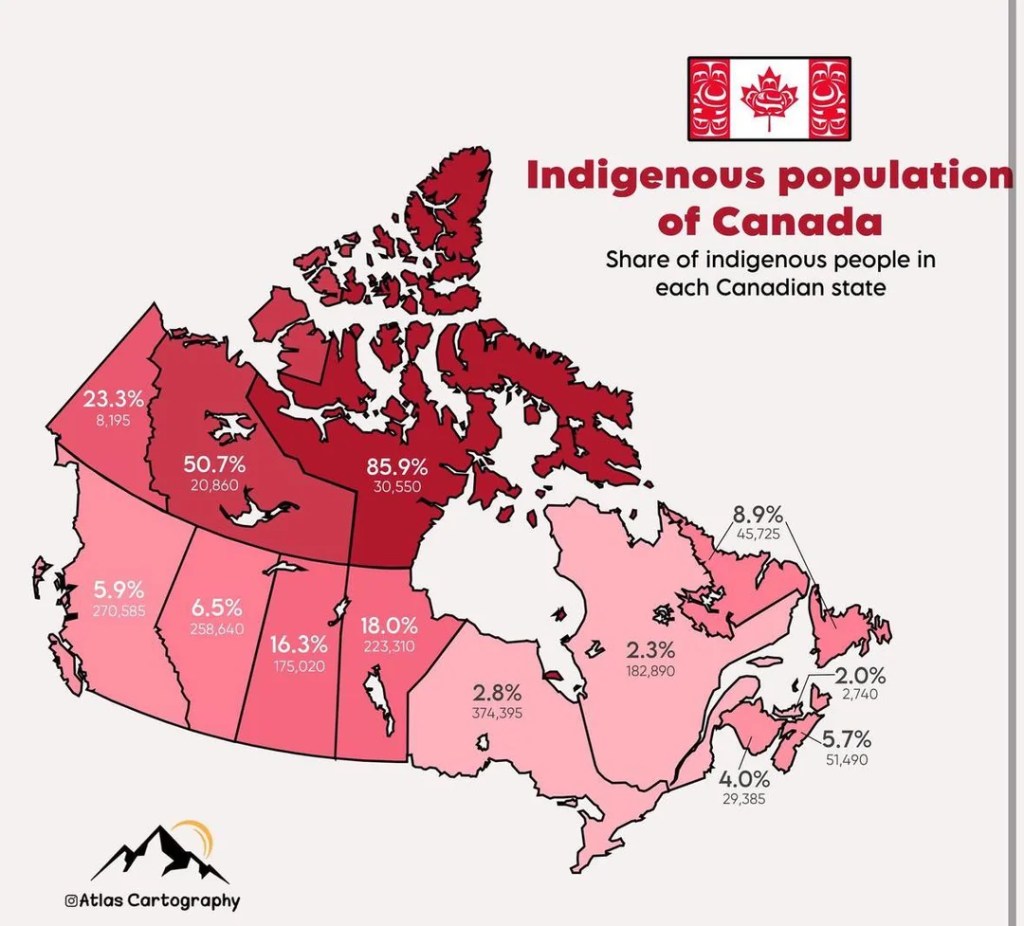
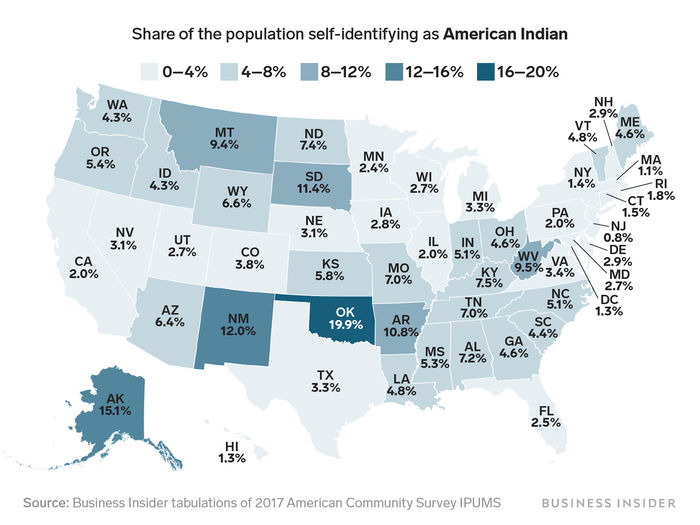
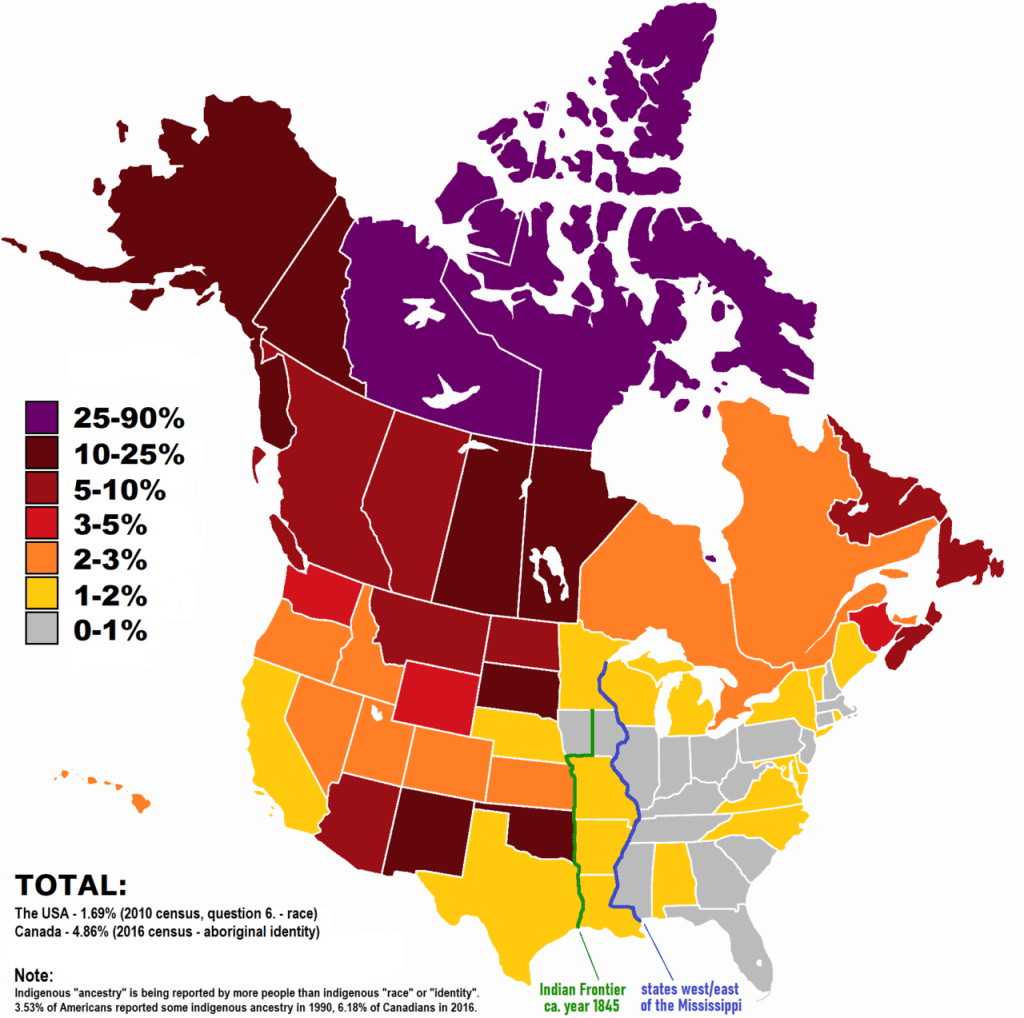
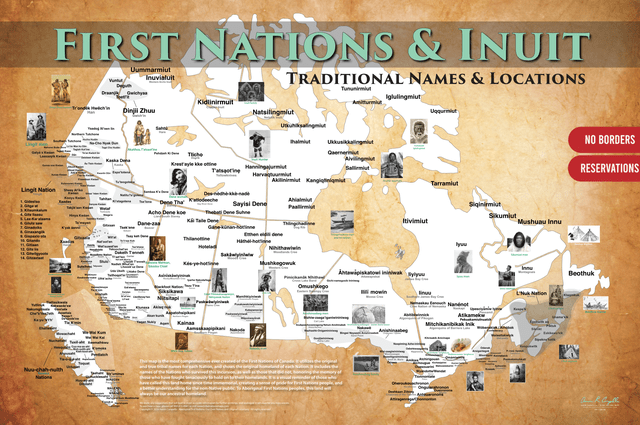
Native people of Canada – or First Nations people – represent 5 percent of Canadian people (with different rates within different provinces)- with a rate of population growth; however – what exactly happened with the other 95 percent?!Excluding the Land possession – Doesn’t this sound like Genocide to anyone with a brain the size of a mustard grain?!
According to the 2021 Census, there were 1.8 million Indigenous people, representing 5.0% of the total Canadian population, up from 4.9% in 2016.
National Indigenous History Month and National Indigenous Peoples Day are opportunities to learn more about the unique cultures, traditions and experiences of First Nations people, Métis, and Inuit. This is also a time to honour the history, achievements, and resilience of Indigenous peoples, who have been living on this land since time immemorial and whose presence continues to impact the evolution of the country. Using 2021 Census of Population data, let’s shed some light on these populations (https://thecanadianencyclopedia.ca/en/article/genocide-and-indigenous-peoples-in-canada)
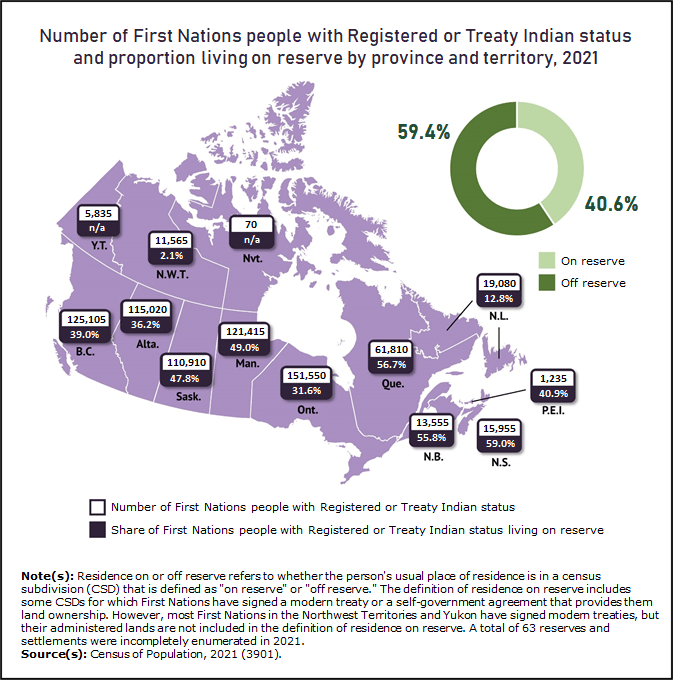
Forced Living in Reserves without the Right to Leave – Historical Facts
From 1885 into the 1940s, a pass system controlled Indigenous people’s movement, requiring those living on reserve to get written permission from an “Indian agent” (government officials) when needed to leave their community.
Reserves Today
Reserves are still vital land bases for Indigenous people across Canada, which continue to be classified as federal land but as self-governed by Indigenous people of their community.
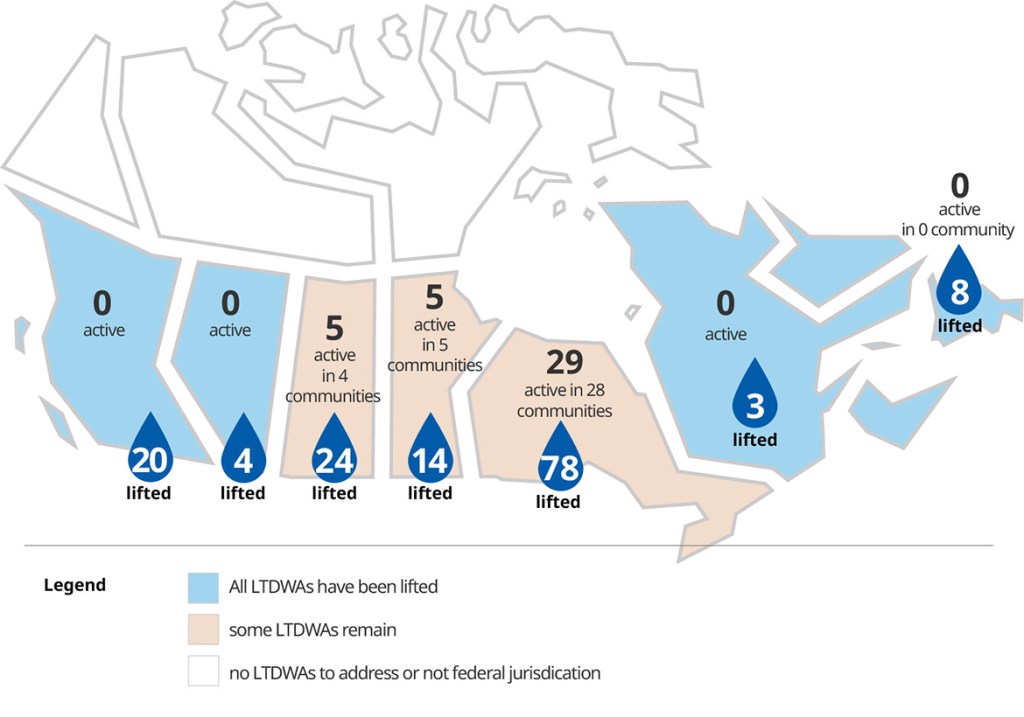
Some reserves have the most concerning conditions in Canada, such as isolated communities with high poverty rates, substance addiction, suicide, unemployment, and mortality.
It is widely acknowledged that the cultural genocide and social disruption over generations by displacements, discriminatory legislation, and political neglect results in long-term hardships and hinder the re-establishment of social networks and stable communities.
According to the 2021 Census, there were 1.8 million Indigenous people, representing 5.0% of the total Canadian population, up from 4.9% in 2016.
However, this growth was not as fast as in previous years. For example, from 2011 to 2016, the Indigenous population grew by 18.9%, more than double the 2021 growth rate.
For the first time, the Census enumerated more than 1 million (1,048,405) First Nations people living in Canada.
The Language Issues:
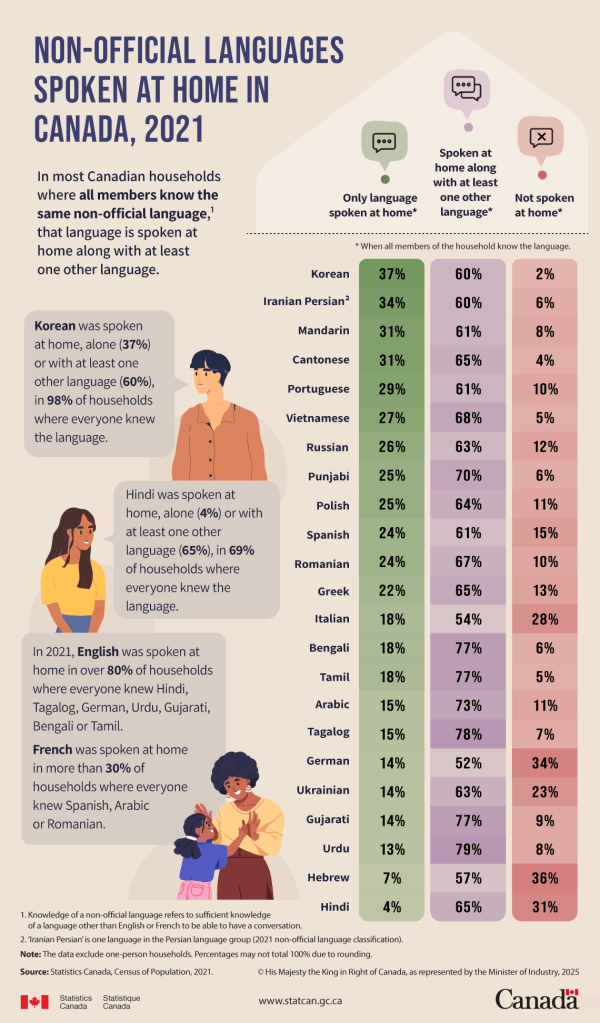
English and French are the two “Offiicial” languages of Canada, enjoying equal status, rights, and privileges in all federal government institutions, parliament, and courts. Established by the Official Languages Act (1969) and the Charter of Rights and Freedoms (1982), this policy guarantees Canadians the right to receive federal services in either language
Isn’t it Strange that No Native Languages are official Languages – also Colonization Effect – and again every person may speak their Language – and I guess we use English for convenience; but then again technically speaking Canada should have a goverment language – which may happen to be English – due to colonization – and no official language as technically speaking – Canada and US have majority immigrant populations – so the majority of populations in major urban centers speak a Different language at home.
#Canada ; #genocide; #history; #Colonization; #boiling water advisories; #sucide rates; #poverty; #forced Sterilizations, #Language Issues and #History;
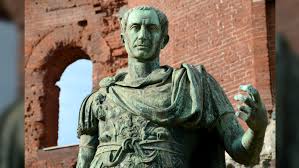
Gaius Julius Caesar himself in his “Commentaries on the Gallic wars” (58 to 51 B.C.) gives the following numbers: out of 3 million Gauls, one third was killed and another third was enslaved.
Plutarch, a Roman philosopher of the 1st century A.D., in his “Life of Caesar” confirms Caesar’s figures: one million enslaved and another millon murdered during the Gallic wars.
But French demographers, given Gaul’s agricultural and economic wealth capable to sustain a much bigger population, estimate the population of Gaul right before Caesar’s wars at about 10 to 12 million people.
Therefore, what we don’t know for sure is whether one million here becomes one tenth, and 8 to 10 million Gauls survived the conquest as free men. But it’s very likely.
What is certain is that, in a very fertile and wealthy country like Gaul/France there was a demographic come back of the Gaulish population (in a preindustrial society more than 90% lived in rural areas until the 1800’s).
Ceasar exaggerated these figures in order to enhance his victory.
Source: Sophie Hulot. César génocidaire ? Le massacre des Usipètes et des Tenctères (55 av. J.-C.). Revue des études anciennes, Université Bordeaux Montaigne, 2018, 120 (1), pp.73-99. ffhal-01944519ff
National Geographic – Caesar’s Gaul campaign
Caesar made the political prime time at around age 40 by forging the First Triumvirate with Pompey the Great, noted general and statesman, and Marcus Licinius Crassus, one of Rome’s richest men. In 59 B.C., Caesar was elected consul.
He knew he needed a great military victory to win lasting glory beyond politics, so he set out to conquer the long-defiant Gauls—Celts who lived in modern-day France. Caesar’s seven-year Gaul campaign ended triumphantly in 51 B.C.The Gaul leader Vercingetorix was paraded in chains through Rome before being ritually strangled. In all, Caesar’s campaign killed or enslaved more than a million Gauls, a crushing victory that deepened the growing rivalry with Pompey, who had taken Caesar’s place as consul.
Caesar’s ambitious power grabs through political reform alienated many senators. When he declared himself dictator for life in 45 B.C., he sealed his fate. Threatened by Caesar’s tyranny, a group of conspirators—led by Brutus—plotted against him. On the Ides of March (March 15), 44 B.C., Caesar was assassinated, stabbed 23 times.
Though the conspirators eliminated Caesar himself, they neither thwarted his plans nor saved the republic. His designated heir, Octavian, outlasted Caesar’s antagonists and became the first Roman emperor. In keeping with Caesar’s eternal quest for glory, in death he acquired one last title and tribute.
Month of July named after a Genocidal maniac;
July was renamed for Julius Caesar, who was born that month. Before that, it was called Quintilis in Latin, meaning the fifth month in the ancient Roman calendar. However, Marc Anthony changed the name to July after Caesar’s assassination.
Julius Caesar himself introduced the Julian Calendar in 46 BC, adding 67 additional days by putting two intercalary months between November and December. According to Cicero, he probably did this after returning from an African military campaign in late Quntilis (July). This solved some leap-year problems.
History of the Month of August
What’s in a name? The name of this month was not always August; previously, the Romans referred to it as Sextilis. This was back in the days of Romulus in 753 BC, when there were originally ten months (… Sept, Oct, Nov, Dec). In 8 B.C., the Roman Senate decided to honor their first Emperor, Augustus Caesar, by changing the month’s name to Augustus.
Now, Augustus wasn’t his name; it was a description of his importance. He was born Gaius Octavius, though he is known in the history books as Gaius Julius Caesar Octavianus or Octavius to his friends. The title Augustus in Latin comes from augere, “to increase,” and was granted to him in 27 B.C. by the Roman Senate.
It meant “venerable” or “consecrated,” signifying his religious role in the Roman cultus. We use the term in English to describe someone auspicious, grand, or lordly… or with imperial qualities. The Greek equivalent is Sebaste (Σεβαστή).
He was elected to the College of Pontiffs and later joined his great-uncle, Julius Caesar, on the battlefield. The General (and Dictator) was so impressed that he changed his will and named the boy his prime beneficiary. As Caesar had no legitimate heir, this adoption meant Octavius would succeed him.
Octavius took the name Gaius Julius Caesar, though Roman tradition required that he append the surname Octavianus (or Octavian) to denote his biological family. He is alternatively known as Octavius, Octavian, or Augustus.
Indigenous peoples of the Americas have a historically high frequency of blood type O, with some communities showing nearly universal O type blood, such as the Navajo and Quechua. This genetic trait is linked to an Ancestral Informative Marker (AIM) related to the G542A mutation, which emerged in Beringia during the migration into the Americas from Asia. Scientists continue to study why this genetic uniformity exists, exploring theories about founder effects, adaptation to diseases like malaria, and unique evolutionary histories.
High Frequency of Type O Blood
Near Universal Presence:Type O blood is a defining feature of many Indigenous populations in the Americas.
Examples:Studies have found nearly 100% Type O blood in certain Quechua communities in Peru, while other groups like the Navajo in Arizona and the Yanomami in the Amazon have very high frequencies (99% and 92% respectively).
Genetic Origins
Beringian Migration:The O blood type gene, specifically the O1V542 allele, is thought to have been selected in the Native American ancestral population during their migration from Asia through Beringia.
Ancestral Informative Marker (AIM):The G542A mutation, found in the ABO gene, is a unique marker in Native American populations and helps trace their genetic origins.
Scientific Theories and Research
Founder Effect:A single founding population could have carried this blood type, leading to its high frequency through genetic drift and isolation.
Disease Resistance:Type O blood is associated with resistance to severe malaria, suggesting a possible evolutionary advantage against this ancient disease in the Americas.
Continued Study:Research continues to investigate the biological and historical reasons behind this genetic uniformity, which offers insights into the peopling of the Americas and human evolution.
Because group O blood can be received by anyone in a blood transfusion, it was originally thought that this was the ancestral blood type, but more recent work suggests that there are several different mutations that can deactivate the A or B genes to turn them into O. This makes a firm evolutionary timeline much harder to establish and there are several competing theories that contradict each other.
What they agree on is that AB is the most recent and didn’t occur until the 16th Century when group A populations from Europe and group B populations from Asia began to mix. The other blood groups are tens of thousands of years old with B being more recent than A. The oldest group is either group A or one of the forms of group O.
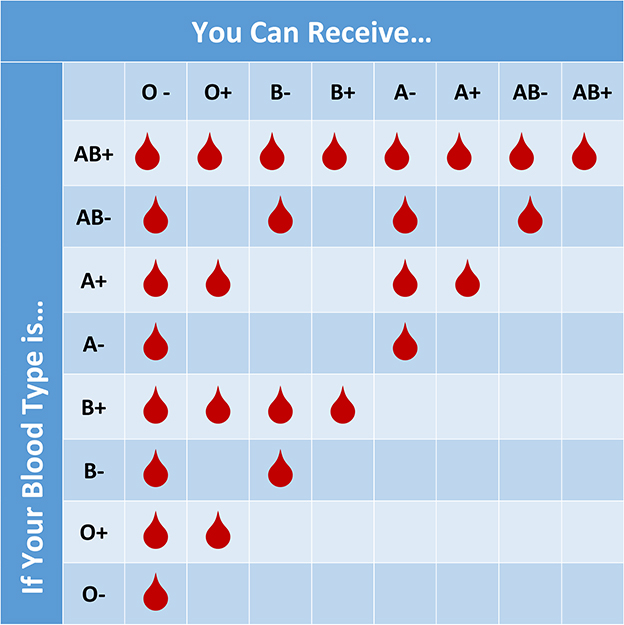
Type O blood lacks A and B antigens, with O-positive being the most common overall type and O-negative being the universal blood donor for emergencies, as its red blood cells can be given to any patient regardless of their blood type. O-positive blood is also in high demand because it can be given to the majority of the population (those with a positive blood type).
Characteristics of Type O Blood
Antigens:Type O red blood cells do not have the A or B antigens on their surface.
Rh Factor:
O-positive:Has the Rh factor present on the red blood cells, making it a positive blood type.
O-negative: Lacks the Rh factor, making it a negative blood type.
Importance of Type O Blood
Universal Donor (O-negative):O-negative blood is crucial for emergency situations when a patient’s blood type is unknown, as it can be given to anyone.
High Demand:Both O-positive and O-negative blood types are in high demand.
O-positive: It is the most common blood type in the population and can be transfused to any patient with a positive blood type (A+, B+, AB+, O+).
O-negative: It is in constant demand for critical care, emergency resuscitation, and for immune-deficient newborns.
Who can receive O blood?
O-negative recipients: can only receive blood from O-negative donor;
O-positive recipients: can receive blood from O-positive or O-negative donors.
How Blood Type Is Determined And Why You Need To Know – Red Cross – US
Blood types are determined by the presence or absence of certain antigens – substances that can trigger an immune response if they are foreign to the body. Since some antigens can trigger a patient’s immune system to attack the transfused blood, safe blood transfusions depend on careful blood typing and cross-matching. Do you know what blood type is safe for you if you need a transfusion?
There are four major blood groups determined by the presence or absence of two antigens, A and B, on the surface of red blood cells. In addition to the A and B antigens, there is a protein called the Rh factor, which can be either present (+) or absent (–), creating the 8 most common blood types (A+, A-, B+, B-, O+, O-, AB+, AB-).
What Is A Universal Blood Donor?
Universal donors are those with an O negative blood type. Why? O negative blood can be used in transfusions for any blood type.
Type O is routinely in short supply and in high demand by hospitals – both because it is the most common blood type and because type O negative blood is the universal blood type needed for emergency transfusions and for immune deficient infants.
Approximately 45 percent of Caucasians are type O (positive or negative), but 51 percent of African-Americans and 57 percent of Hispanics are type O. Minority and diverse populations, therefore, play a critical role in meeting the constant need for blood.
Types O negative and O positive are in high demand. Only 7% of the population are O negative. However, the need for O negative blood is the highest because it is used most often during emergencies. The need for O+ is high because it is the most frequently occurring blood type (37% of the population).
The universal red cell donor has Type O negative blood. The universal plasma donor has Type AB blood. For more about plasma donation, visit the plasma donation facts.
Nearly 16 million blood components are transfused each year in the U.S.”
Am Learning about different Languages – including Gaelic Spelling – since it seems to be unknown and a bit Aracheaic – as it was repressed under the Crown for hundreds of years; @Language revival; similar history with native Languages in North America; like Ojbwe, cree and the Like – Kids used to be forbidden to speak their own language at school;
IRISH LANGUAGE OVERVIEW
The query “irish officially recognized language 19” does not correspond to a single factual event, but the year 1922 is significant as it was the year the first Irish Constitution was enacted, which established Irish as a “national language” and a “first official language”. This status was reaffirmed in the 1937 Constitution and has been maintained in the Republic of Ireland since.
KEY POINTS:
1922:The first Irish Constitution recognized the Irish language as the “national language” and a “first official language”.
Status:Irish remains the national and first official language of the Republic of Ireland. English is recognized as the second official language.
Official Languages Act (2003):This legislation further solidified the status of the Irish language, requiring public bodies to provide services in Irish.
European Union:Irish was made an official language of the EU in 2007 and gained full working language status in 2022.
Written Irish is first attested in Ogham inscriptions from the 4th century AD,[25] a stage of the language known as Primitive Irish. These writings have been found throughout Ireland and the west coast of Great Britain.
Old Irish
Primitive Irish underwent a change into Old Irish through the 5th century. Old Irish, dating from the 6th century, used the Latin alphabet and is attested primarily in marginalia to Latin manuscripts. During this time, the Irish language absorbed some Latin words, some via Old Welsh, including ecclesiastical terms: examples are easpag (bishop) from episcopus, and Domhnach (Sunday, from dominica).
Middle Irish
By the 10th century, Old Irish had evolved into Middle Irish, which was spoken throughout Ireland, the Isle of Man and parts of Scotland. It is the language of a large corpus of literature, including the Ulster Cycle. From the 12th century, Middle Irish began to evolve into modern Irish in Ireland, Scottish Gaelic in Scotland, and Manx on the Isle of Man.
Modern Irish, sometimes called Late Modern Irish, as attested in the work of such writers as Geoffrey Keating, is said to date from the 17th century, and was the medium of popular literature from that time on.[26][27]
Decline
From the 18th century on, the language lost ground in the east of the country. The reasons behind this shift were complex but came down to a number of factors:
Discouragement of its use by the Anglo-Irish administration.
A sign for the Department of Culture, Arts and Leisure in Northern Ireland, in English, Irish and Ulster Scots.
Before the partition of Ireland in 1921, Irish was recognised as a school subject and as “Celtic” in some third level institutions. Between 1921 and 1972, government in Northern Ireland was devolved. During those years, the political party holding power in the Stormont Parliament, the Ulster Unionist Party (UUP), was hostile to the language as it was almost exclusively used by nationalists.[71] In broadcasting, reporting minority cultural issues was prohibited and Irish was excluded from radio and television for almost the first fifty years of the devolved government.[72]
The status of Irish has often been used as a bargaining chip during government formation in Northern Ireland, prompting protests from organisations and groups such as An Dream Dearg.[75]
IRISH, LANGUAGE, HISTORY, REPRESSION, SOUNDS;
LANGUAGE REPRESSION IN EX SOVIET UNION – USSR
The USSR significantly repressed local languages through deliberate language policies that promoted Russification and Cyrillicization, especially in the late 1930s, to foster political unity and eliminate nationalist sentiments. Early efforts included shifting away from Arabic and Latin scripts to Cyrillic for Turkic and other languages, severing cultural ties and enhancing control. Later policies mandated Russian as a compulsory school subject, suppressed local media and publications, and purged non-Russian national elites accused of fostering division.
Early Soviet Period (Post-1917):
“Korenizatsiia” (Indigenization):Initially, the Soviet government promoted some national languages and scripts (e.g., Latin for Turkic languages) to foster support and identity among ethnic groups, a policy known as korenizatsiia.
Break from Religious Scripts:This included abolishing the Arabic script in the Caucasus and Central Asia, designed to distance Muslim populations from their religious heritage.
Shift Towards Russification and Cyrillicization (Late 1930s Onward): Mandatory Cyrillicization:By 1939–1940, the policy reversed, mandating Cyrillic for languages like Tatar, Kazakh, Uzbek, and Azerbaijani, thereby increasing assimilation with Russian.
Political Motivation:This change was driven by a desire to build a unified Soviet state, counter perceived threats from nationalist movements, and solidify control.
Purge of National Elites:Local leaders who championed their languages and cultures were purged between 1933 and 1938, with accusations that they were agents of foreign powers aiming to dismember the USSR.
Russification in Education and Culture:
Russian Language Education:Russian became compulsory in all Soviet schools, reflecting its dominance in administration, politics, and commerce.
Suppression of Media:The state tightly controlled printing presses and typewriters to prevent the spread of unauthorized publications in non-Russian languages.
Prohibition of “Samizdat”:The illegal circulation of literature and texts outside official channels (samizdat) was severely suppressed.
Long-Term Consequences:
Decline of Non-Russian Languages:The policies led to a decline in the use of many native languages, particularly among younger generations, and a widespread adoption of Russian as a second language.
Late Soviet Period Nuances:Despite these efforts, in the final decades of the USSR, non-Russian languages continued to thrive for their native speakers, coexisting with the almost universal use of Russian in public life, though there were attempts in the late 1970s to remove native languages from official status in some republics, which led to protests.
SOVIET UNION – LANGUAGE SUPPRESSION
CANADA – INDIGENOUS LANGUAGES – SUPPRESSION – INDIAN ACT
Language repression in Canada involved colonial policies like the Indian Act and the residential school system, which forcibly prohibited Indigenous languages and punished children for speaking them, leading to widespread cultural loss and intergenerational trauma. This systemic suppression aimed to assimilate Indigenous peoples into Canadian society, resulting in the endangerment and potential extinction of many Indigenous languages today. Efforts to counter this legacy include the Indigenous Languages Act of 2019, funding for revitalization programs, and community-led initiatives to restore pride and pass languages to future generations.
The Historical Context of Language Repression
Residential Schools:A primary tool of assimilation was the residential school system, which removed Indigenous children from their families and communities.
Prohibition and Punishment:Students were forbidden to speak their mother tongues and faced severe punishment for doing so.
Cultural Genocide:This was a deliberate attempt to destroy Indigenous cultures by silencing their languages, which is a form of cultural genocide.
Indian Act:This legislation and associated colonial policies further reinforced the ban on Indigenous languages and traditions, contributing to their decline.
IMPACT OF LANGUAGE REPRESSION
Endangered Languages:The systemic repression has led to a crisis where many of the original sixty-plus Indigenous languages are now endangered or at risk of extinction.
Intergenerational Trauma:The fear of punishment, the loss of fluency, and the shame associated with not being able to speak one’s language has contributed to significant intergenerational trauma and negative health outcomes.
Cultural Loss:Many words, traditions, and knowledge systems embedded in Indigenous languages have been lost or silenced.
Revitalization and Reclamation Efforts
REVITALIZATION AND RECLAMATION EFFORTS:
Indigenous Languages Act:In 2019, Canada passed the Indigenous Languages Act to support the preservation, revitalization, and strengthening of Indigenous languages.
Funding and Resources: Government funding and community-led initiatives provide resources for language programs, such as immersion schools, educational materials, and digital resources.
Community Involvement:Elders, language speakers, educators, and communities are actively working to revitalize languages through “language nests,” classrooms, and online platforms.
Promoting Pride and Healing: These efforts aim to restore cultural pride, rebuild self-esteem, and ease the intergenerational trauma caused by past policie








 bismillahschool.net