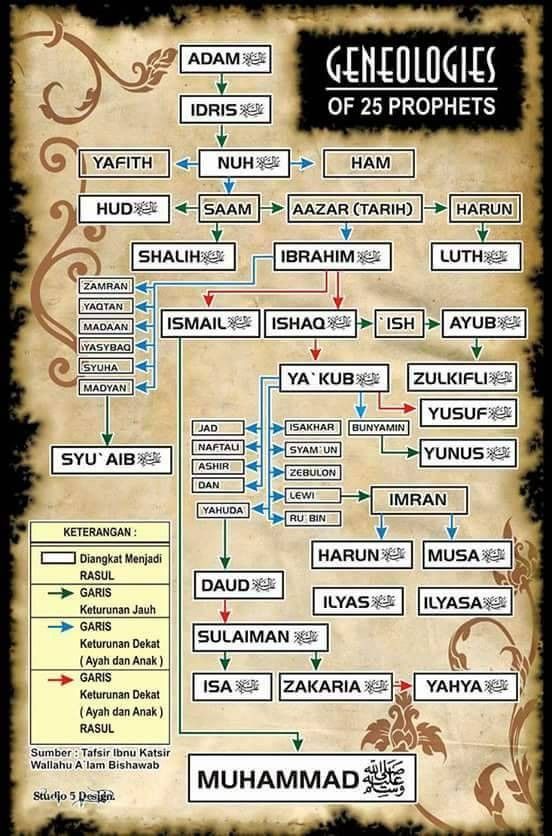
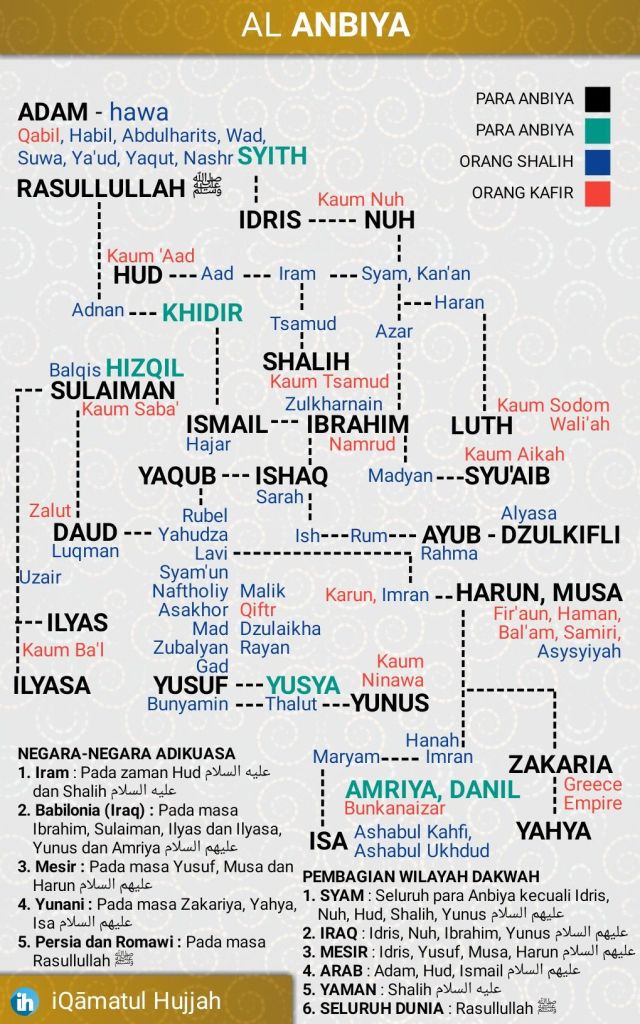
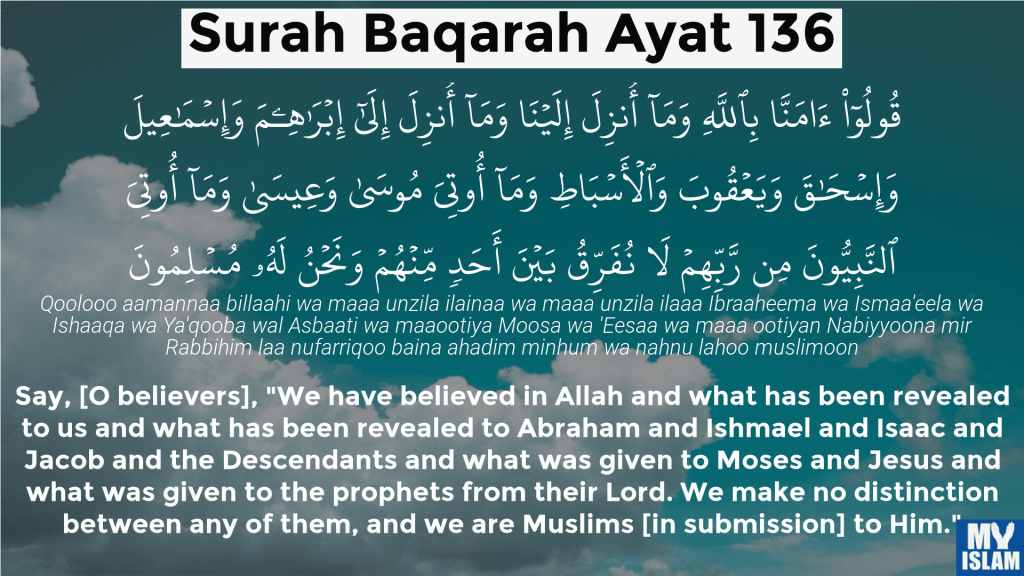
Surah Baqarah 136 – Say, ˹O believers,˺ “We believe in Allah and what has been revealed to us; and what was revealed to Abraham, Ishmael, Isaac, Jacob, and his descendants; and what was given to Moses, Jesus, and other prophets from their Lord. We make no distinction between any of them. And to Allah we all submit.”
“We have sent you with the Truth as a bearer of good news and warning– every community has been sent a warner.” (Qur’an 35:24) (News of Paradise for the Believers and HellFire for the Disbelievers);
All prophets in Islam came with the message of Tawhid (Oneness of God – wroshipping God Alone). It was only a difference in the Shariah (commandments and laws) of each Divine religion that set it apart from the others. It should be noted that all prophets propagated the same message of Islam throughout all ages, Tawhid, which is the core of all Divine religions. Allah Almighty mentions in the Qur’an:
“We sent a messenger to every community, saying, ‘Worship God and shun false gods.’”(Qur’an 16:36)
“We have sent revelation to you [Prophet] as We did to Noah and the prophets after him, to Abraham, Ishmael, Isaac, Jacob, and the Tribes, to Jesus, Job, Jonah, Aaron, and Solomon- to David We gave the book [of Psalms]- to other messengers We have already mentioned to you, and also to some We have not. To Moses God spoke directly.” (Qur’an 4:163-164)
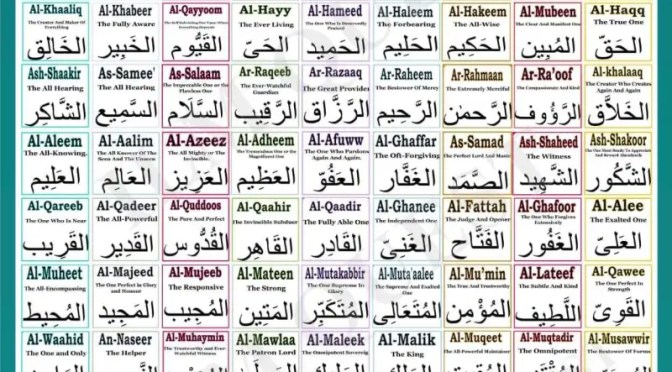
Allah’s Messenger (ﷺ) said, “Allah has ninety-nine Names, one-hundred less one; and he who memorized them all by heart will enter Paradise.” To count something means to know it by heart. (sahih Al Bukhari 7392; Book 97 Hadith 21;
حَدَّثَنَا أَبُو الْيَمَانِ، أَخْبَرَنَا شُعَيْبٌ، حَدَّثَنَا أَبُو الزِّنَادِ، عَنِ الأَعْرَجِ، عَنْ أَبِي هُرَيْرَةَ، أَنَّ رَسُولَ اللَّهِ صلى الله عليه وسلم قَالَ “ إِنَّ لِلَّهِ تِسْعَةً وَتِسْعِينَ اسْمًا مِائَةً إِلاَّ وَاحِدًا، مَنْ أَحْصَاهَا دَخَلَ الْجَنَّةَ ”. {أَحْصَيْنَاهُ} حَفِظْنَاهُ.
The first pillar of īmān (faith) in Islam is Belief in Allah. As Muslims, we believe in Allah according to His beautiful Names and Attributes, which have been revealed in the Noble Qur’an and authentic Sunnah. Allah has mentioned His Names repeatedly throughout the Qur’an to help us know Him, understand His perfection, and draw closer to Him through worship and supplication.
Learning and reflecting upon the Names of Allah (Al-Asmā’ al-Ḥusnā – The Most Beautiful Names) is among the most noble acts of worship. There is nothing more sacred and blessed than knowing our Creator and living by the guidance these Names provide.
How can we truly worship, love, fear, hope in, and place our trust in Allah if we do not know Him through His Names and Attributes?
Allah says in the Qur’an:
“Allah has the Most Beautiful Names. So call upon Him by them, and keep away from those who abuse His Names. They will be punished for what they used to do.” (Quran 7:180)
“Allah – there is no god ˹worthy of worship˺ except Him. He has the Most Beautiful Names.” (Quran 20:8)
“He is Allah: the Creator, the Inventor, the Shaper. He ˹alone˺ has the Most Beautiful Names. Whatever is in the heavens and the earth ˹constantly˺ glorifies Him. And He is the Almighty, All-Wise.” (Quran 59:24)
Prophet Muhammad ﷺ said:
“Indeed, Allah has ninety-nine Names, one hundred less one, whoever encompasses them (iḥṣā’ahā) will enter Paradise.” (Ṣaḥīḥ al-Bukhārī 2736)
“Verily, there are ninety-nine Names of Allah; whoever preserves them (aḥṣāhā) will enter Paradise. Allah is Witr (One/Odd) and loves what is odd.” (Ṣaḥīḥ Muslim 2677a)
4 “You shall not make for yourself an image in the form of anything in heaven above or on the earth beneath or in the waters below. 5 You shall not bow down to them or worship them; for I, the Lord your God, am a jealous God, punishing the children for the sin of the parents to the third and fourth generation of those who hate me, 6 but showing love to a thousand generations of those who love me and keep my commandments.
7“You shall not misuse the name of the Lord your God, for the Lord will not hold anyone guiltless who misuses his name.
Now in Quran we do not believe God punishes kids for parents sins or vice-versa; but some of the Bible Verses were changed from the original – Bible comes from the Word Biblos in Greek – and it literally means Book – it is Collection of Books/ Writings- not the literal Word of God – because they do not have a complete original Revelation unlike Quran Kareem);
The Greatest Commandment – Matthew 22:34-40
34 Hearing that Jesus had silenced the Sadducees, the Pharisees got together. 35 One of them, an expert in the law, tested him with this question: 36 “Teacher, which is the greatest commandment in the Law?”
37 Jesus replied: “‘Love the Lord your God with all your heart and with all your soul and with all your mind.’[c]38 This is the first and greatest commandment. 39 And the second is like it: ‘Love your neighbor as yourself.’[d]40 All the Law and the Prophets hang on these two commandments.”
Note: Jesus taught to worship God Alone (it was only later around 325 CE – Coucil of Nicea – a Few Hundred years after Jesus where they made the “trinity” the concept of the “son” or God a State religion and changed many of the texts available in Hewbrew and Aramaic); Jesus and the Prophets were upon Monotheism not the “trinity”;
The Lord’s Prayer (Traditional Version)
Our Father, who art in heaven, hallowed be thy Name;
thy Kingdom come, thy Will be done, on earth as it is in heaven.
Give us this day our daily bread;
and forgive us our trespasses, as we forgive those who trespass against us;
and lead us not into temptation, but deliver us from evil. Amen.
Here the word Father/ Abba means Creator of All; so Jesus was teaching to worship the Father/ God Alone – and make his name Hollowed – Glorified – and the rest if Obvious.
Key aspects of the opening line
“Our Father”: Highlights a relationship with God as a loving, personal parent, and emphasizes a community of faith (“Our”) rather than just “My” relationship.
“who art in heaven”: Acknowledges God’s transcendence and holiness, separating Him from earthly limitations, while still being present.
“hallowed be thy Name”: Calls for reverence and respect for God’s sacred name.
Significance
It serves as a perfect model for prayer, teaching believers what to pray for and how to approach God, focusing on His glory first, then needs
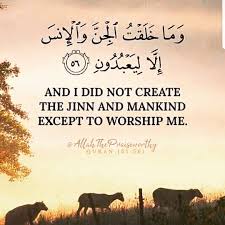
Surah Adh-Dhariat – surah 51:56-57 I did not create jinn and humans except to worship Me. I seek no provision from them, nor do I need them to feed Me.
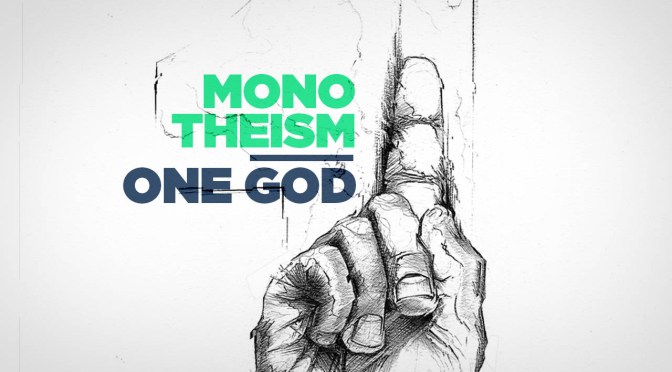
Monotheism in Islam, known as Tawhid, is the core principle asserting God (Allah) is indivisibly One, without partners or equals, demanding worship of Him alone and rejecting polytheism (shirk) as the gravest sin. It’s a strict, pure monotheism emphasizing God’s incomparability, uniqueness, and sovereignty, described through His beautiful names, with no intermediaries, forming the foundation of the Islamic faith and worldview.
Key Aspects of Tawhid/ Monotheism:
Absolute Oneness (Wahdaniyyah): Allah is one and unique; He has no partners, children, spouses, or divisions within His essence.
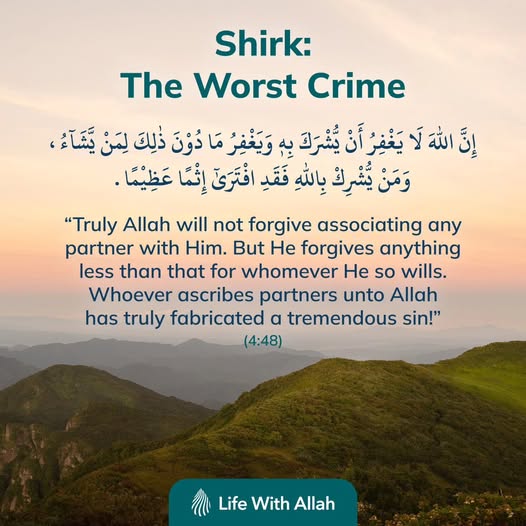
Rejection of Shirk: Attributing divinity or partners to God (polytheism, idolatry) is the unforgivable sin in Islam.
No Intermediaries:Muslims worship Allah directly, without clergy or intermediaries, fostering a personal relationship with God.
Description by Attributes: God is known through His attributes (like Ar-Rahmān – The Entirely Merciful, Ar-Rahīm – The Especially Merciful) and His “99 Names,” not through physical forms or icons.
Creator & Sustainer:Allah is the sole creator and sustainer of the universe, which operates under His unified command.
Surah Nisa’/ Women ayah 48: Indeed, Allah does not forgive associating others with Him ˹in worship˺,1 but forgives anything else of whoever He wills. And whoever associates others with Allah has indeed committed a grave sin.
48. God does not forgive association with Him, but He forgives anything less than that to whomever He wills. Whoever associates anything with God has devised a monstrous sin.
49. Have you not considered those who claim purity for themselves? Rather, God purifies whom He wills, and they will not be wronged a whit. 50. See how they devise lies against God. That alone is an outright sin.
51. Have you not considered those who were given a share of the Book? They believe in superstition and evil powers, and say of those who disbelieve, “These are better guided on the way than the believers.” 52. Those are they whom God has cursed. Whomever God curses, you will find no savior for him.
53. Or do they own a share of the kingdom? Then they would not give people a speck. 54. Or do they envy the people for what God has given them of His grace? We have given the family of Abraham the Book and wisdom, and We have given them a great kingdom.
Jesus in Quran Kareem – monotheism Verses/ Ayaat:
Surah Al-Ma’idah (5:72): “The Messiah, son of Mary, said, ‘O Children of Israel, worship Allah—my Lord and your Lord.’Whoever associates others with Allah in worship will surely be forbidden Paradise by Allah. Their home will be the Fire, and the wrongdoers will have no helpers”.
Surah Maryam (19:36): “And indeed, Allah is my Lord and your Lord, so worship Him. That is the Straight Path”.
Surah Al-Ma’idah (5:117): Jesus denies ever telling people to worship him or his mother as gods, stating, “I never told them anything except what You ordered me to say: ‘Worship Allah—my Lord and your Lord!’
SURAH MAIDAH / The Table Spread:
Verses emphasize belief in God Alone and Not taking Jesus as a Partner to God (Idolatry);
16. God guides with it whoever follows His approval to the ways of peace, and He brings them out of darkness into light, by His permission, and He guides them in a straight path.
17. They disbelieve those who say, “God is the Christ, the son of Mary.” Say, “Who can prevent God, if He willed, from annihilating the Christ son of Mary, and his mother, and everyone on earth?” To God belongs the sovereignty of the heavens and the earth and what is between them. He creates whatever He wills, and God has power over everything.
18. The Jews and the Christians say, “We are the children of God, and His beloved.” Say, “Why then does He punish you for your sins?” In fact, you are humans from among those He created. He forgives whom He wills, and He punishes whom He wills. To God belongs the dominion of the heavens and the earth and what lies between them, and to Him is the return.
19. O People of the Book! Our Messenger has come to you, making things clear to you—after a cessation of messengers—so that you cannot say, “No preacher has come to us, and no warner.” In fact, a preacher has come to you, and a warner; and God is Capable of everything.
Allah the Most Exalted said: “Did they then feel secure against the Plan of Allah? None feels secure from the Plan of Allah except the people who are lost.” He the Almighty said: “Who despairs of the Mercy of his Lord except those who are astray?”
Narrated Ibn Abbas (May Allah be pleased with him) (7:99) (15:56) Allah’s Messenger (May the peace and blessing of Allah be upon him) was asked concerning major sins then he (May the peace and blessing of Allah be upon him) said, “(1) Associating others with Allah; (2) To lose hope of relief from Allah and (3) Thinking oneself secure from the Plan of Allah,” Abdur-Razzaq reports from Ibn Mas’ud (May Allah be pleased with him) that the Prophet (May the peace and blessing of Allah be upon him) said: The greatest of the major sins is Shirk -associating others with Allah, thinking oneself secure from the Plan of Allah, to despair of the Mercy of Allah, and lose hope of Allah’s Relief” .
The Oneness of Allah; Allah the Almighty said: “And I (Allah) created not the Jinns and men except they should worship Me (Alone).” (51:56)
And He stated: “And verily, We have sent among every Ummah (community, nation) a Messenger (proclaiming): ‘Worship Allah (Alone), and avoid (or keep away from) Taghut (all false deities etc. i.e. do not worship Taghut besides Allah).’ ” (16:36) And He said: “And your Lord has decreed that you worship none but Him. And that you be dutiful to your parents. If one of them or both of them attain old age in your life, say not to them a word of disrespect, nor shout at them but address them in terms of honour. And lower unto them the wing of submission and humility through mercy, and say: ‘My Lord! Bestow on them Your Mercy as they did bring me up when I was small.’
” Allah (swt ), says: ” And those who live in awe for fear of their Rabb(Lord) ; And those who believe in the Signs of their Rabb, And those who join not anyone [in worship] as partners with their Rabb; And those who give that which they give [i.e. charity] with their hearts full of fear [whether their charity has been accepted or not], because they are sure to return to their Rabb” (Qur’an 23:57-60)
Mu’adh bin Jabal (May Allah be pleased with him) reported: I was riding a pillion with the Prophet ﷺ on a donkey. He ﷺ said, “O Mu’adh, do you know what is the right of Allah upon His slaves, and what is the Right of His slaves upon Allah?” I said: “Allah and His Messenger know better”. Upon this the Messenger of Allah ﷺ said, “Allah’s Right upon His slaves is that they should worship Him Alone and associate nothing with Him; and His slaves’ right upon Him is that He should not punish who does not associate a thing with Him”. He (Mu’adh) added: I said to the Messenger of Allah: “Shall I give the glad tidings to people?” He ﷺ said, “Do not tell them this good news for they will depend on it alone”. Al-Bukhari and Muslim. وعن معاذ بن جبل ، رضي الله عنه ، قال: كنت ردف النبي ﷺ ، على حمار فقال: ” يا معاذ هل تدري ما حق الله على عباده، وما حق العباد على الله. ؟ قلت: الله ورسوله أعلم. قال:”فإن حق الله على العباد أن يعبدوه، ولا يشركوا به شيئاً، وحق العباد على الله أن لا يعذب من لا يشرك به شيئاً، فقلت، يا رسول الله أفلا أبشر الناس؟ قال لا تبشرهم فيتكلوا” ((متفق عليه)) #KitabTawheed #monotheism #islam #Bismillah School
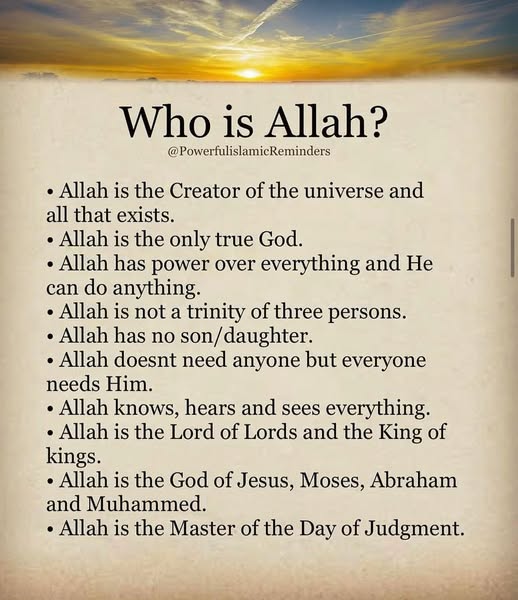
Who is #Allah #God #Islam #Bible – Hebrew, Aramaic, Arabic; Illustration of #Translation- most people aren’t aware of;
Say, ˹O believers,˺ “We believe in Allah and what has been revealed to us; and what was revealed to Abraham, Ishmael, Isaac, Jacob, and his descendants; and what was given to Moses, Jesus, and other prophets from their Lord. We make no distinction between any of them. And to Allah we all submit.” – Surah Baqarah 2:136
Encyclopedia Britannia:
Etymologically, the name Allah is probably a contraction of the Arabic al-Ilāh, “the God.” The name’s origin can be traced to the earliest Semitic writings in which the word for god was il, el, or eloah, the latter two used in the Hebrew Bible (Old Testament). Allah is the standard Arabic word for God and is used by Arabic-speaking Christians and Jews as well as by Muslims. The association of the word specifically with Islam comes from the special status of Arabic as the language of Islam’s holy scripture, the Qurʾān: since the Qurʾān in its original language is considered to be the literal word of God, it is believed that God described himself in the Arabic language as Allāh (which is written as الله). The Arabic word thus holds special significance for Muslims, regardless of their native tongue, because the Arabic word was spoken by God himself.
Allah is the pivot of the Muslim faith. The Qurʾān stresses above all Allah’s singularity and sole sovereignty, a doctrinal tenet indicated by the Arabic term tawḥīd (“oneness”). He never sleeps or tires, and, while transcendent, he perceives and reacts to everything in every place through the omnipresence of his divine knowledge. He creates ex nihilo and is in no need of a consort, nor does he have offspring. Three themes preponderate in the Qurʾān: (1) Allah is the Creator, Judge, and Rewarder; (2) he is unique (wāḥid) and inherently one (aḥad); and (3) he is omnipotent and all-merciful. Allah is the “Lord of the Worlds,” the Most High; “nothing is like unto him,” and this in itself is to the believer a request to adore Allah as the Protector and to glorify his powers of compassion and forgiveness.









 bismillahschool.net