
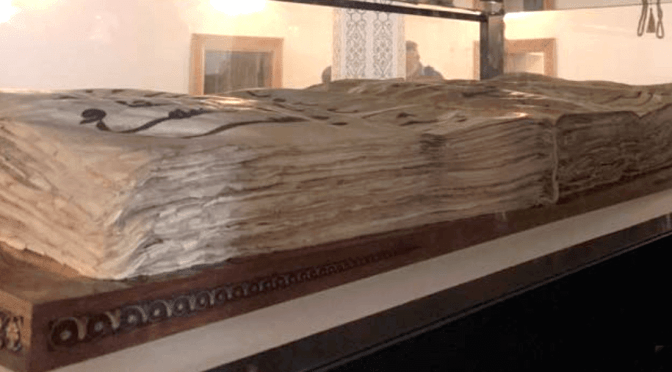
Times of Uthman (RadiAllahu Anhu)
Narrated Anas bin Malik: Hudhaifa bin Al-Yaman came to `Uthman at the time when the people of Sham and the people of Iraq were Waging war to conquer Arminya and Adharbijan. Hudhaifa was afraid of their (the people of Sham and Iraq) differences in the recitation of the Qur’an, so he said to `Uthman, “O chief of the Believers! Save this nation before they differ about the Book (Qur’an) as Jews and the Christians did before.” So `Uthman sent a message to Hafsa saying, “Send us the manuscripts of the Qur’an so that we may compile the Qur’anic materials in perfect copies and return the manuscripts to you.” Hafsa sent it to `Uthman. `Uthman then ordered Zaid bin Thabit, `Abdullah bin AzZubair, Sa`id bin Al-As and `AbdurRahman bin Harith bin Hisham to rewrite the manuscripts in perfect copies. `Uthman said to the three Quraishi men, “In case you disagree with Zaid bin Thabit on any point in the Qur’an, then write it in the dialect of Quraish, the Qur’an was revealed in their tongue.” They did so, and when they had written many copies, `Uthman returned the original manuscripts to Hafsa. `Uthman sent to every Muslim province one copy of what they had copied, and ordered that all the other Qur’anic materials, whether written in fragmentary manuscripts or whole copies, be burnt.
حَدَّثَنَا مُوسَى، حَدَّثَنَا إِبْرَاهِيمُ، حَدَّثَنَا ابْنُ شِهَابٍ، أَنَّ أَنَسَ بْنَ مَالِكٍ، حَدَّثَهُ أَنَّ حُذَيْفَةَ بْنَ الْيَمَانِ قَدِمَ عَلَى عُثْمَانَ وَكَانَ يُغَازِي أَهْلَ الشَّأْمِ فِي فَتْحِ إِرْمِينِيَةَ وَأَذْرَبِيجَانَ مَعَ أَهْلِ الْعِرَاقِ فَأَفْزَعَ حُذَيْفَةَ اخْتِلاَفُهُمْ فِي الْقِرَاءَةِ فَقَالَ حُذَيْفَةُ لِعُثْمَانَ يَا أَمِيرَ الْمُؤْمِنِينَ أَدْرِكْ هَذِهِ الأُمَّةَ قَبْلَ أَنْ يَخْتَلِفُوا فِي الْكِتَابِ اخْتِلاَفَ الْيَهُودِ وَالنَّصَارَى فَأَرْسَلَ عُثْمَانُ إِلَى حَفْصَةَ أَنْ أَرْسِلِي إِلَيْنَا بِالصُّحُفِ نَنْسَخُهَا فِي الْمَصَاحِفِ ثُمَّ نَرُدُّهَا إِلَيْكِ فَأَرْسَلَتْ بِهَا حَفْصَةُ إِلَى عُثْمَانَ فَأَمَرَ زَيْدَ بْنَ ثَابِتٍ وَعَبْدَ اللَّهِ بْنَ الزُّبَيْرِ وَسَعِيدَ بْنَ الْعَاصِ وَعَبْدَ الرَّحْمَنِ بْنَ الْحَارِثِ بْنِ هِشَامٍ فَنَسَخُوهَا فِي الْمَصَاحِفِ وَقَالَ عُثْمَانُ لِلرَّهْطِ الْقُرَشِيِّينَ الثَّلاَثَةِ إِذَا اخْتَلَفْتُمْ أَنْتُمْ وَزَيْدُ بْنُ ثَابِتٍ فِي شَىْءٍ مِنَ الْقُرْآنِ فَاكْتُبُوهُ بِلِسَانِ قُرَيْشٍ فَإِنَّمَا نَزَلَ بِلِسَانِهِمْ فَفَعَلُوا حَتَّى إِذَا نَسَخُوا الصُّحُفَ فِي الْمَصَاحِفِ رَدَّ عُثْمَانُ الصُّحُفَ إِلَى حَفْصَةَ وَأَرْسَلَ إِلَى كُلِّ أُفُقٍ بِمُصْحَفٍ مِمَّا نَسَخُوا وَأَمَرَ بِمَا سِوَاهُ مِنَ الْقُرْآنِ فِي كُلِّ صَحِيفَةٍ أَوْ مُصْحَفٍ أَنْ يُحْرَقَ.;
Reference – Sahid al Bukhari 4987, Book 66; Hadith 9; #Tashhkent copy;
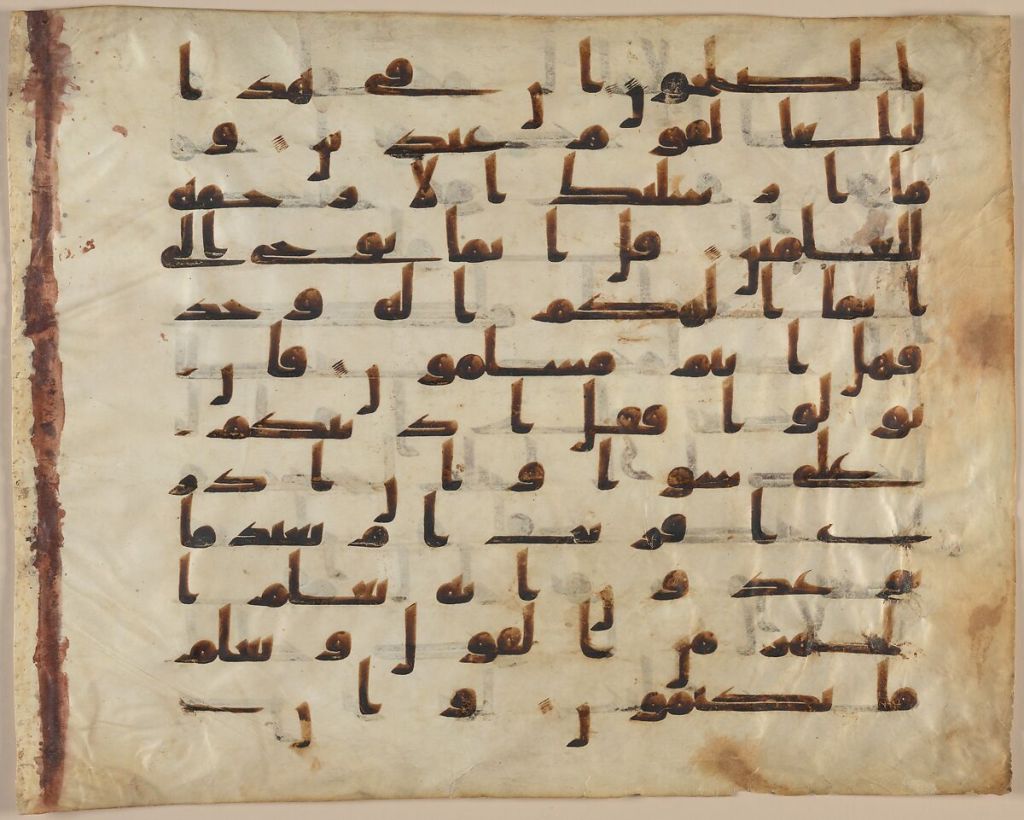
Folio from the “Tashkent Qur’an”
late 8th–early 9th century
Magnificent in size, this folio comes from one of the oldest surviving Qur’an manuscripts in existence. It is written in an early version of the kufic script with no diacritical marks (tashkeel) to distinguish the letters, and with very limited illumination. Based on the form of the script, and the illuminations that do survive on other pages from this Qur’an, the book has been attributed to Cairo, Egypt; Damascus, Syria; or Sana’a, Yemen. About one third of the original manuscript is housed in the Hast-Imam Library in Tashkent, Uzbekistan.
https://www.metmuseum.org/art/collection/search/454661
At that time, there were no printing presses. Books had to be written manually by specialized scribes and making a copy required a similar effort. The Quran was dictated word by word and letter by letter by the Prophet himself to specialized scribes.[1] The Prophet passed away in 632 AD. Afterwards, Abu Bakr, the first leader of the Muslims, gathered the original scripts of the scribes into one book, and then some time later, when the Muslim empire stretched from East to West, Uthman, the son-in-law of the Prophet and the third Caliph, ordered five copies of the original to be made and distributed to all parts of the Muslim world some twenty years later.[2]
Today, we have three manuscripts of Quran which are traced back to the Prophet’s son-in-law, the Caliph Uthman.
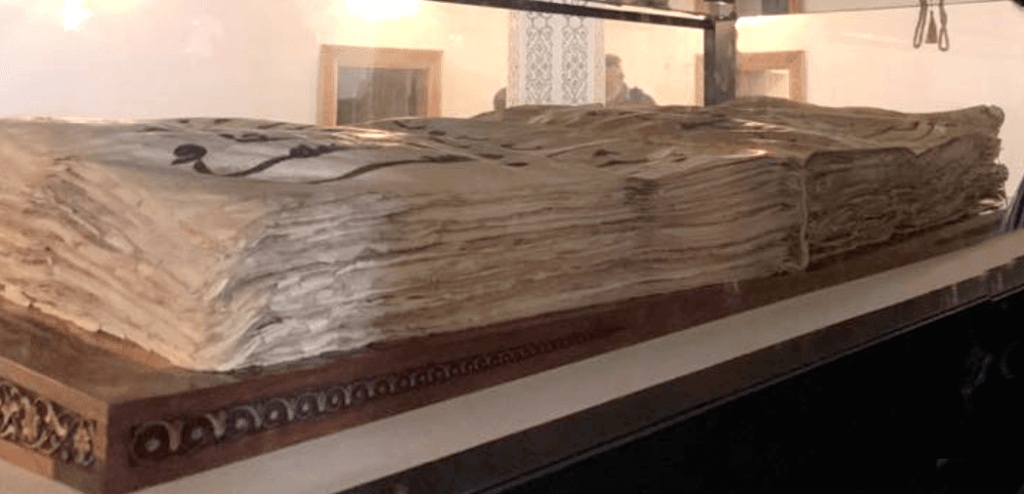
(1) The Samarqand Manuscript located in Tashkent, Uzbekistan. It is written on a parchment from gazelle skin. According to Memory of the World Program, UNESCO, an arm of the United Nations, ‘it is the definitive version, known as the Mushaf of Uthman, superseding all other versions.’[3]
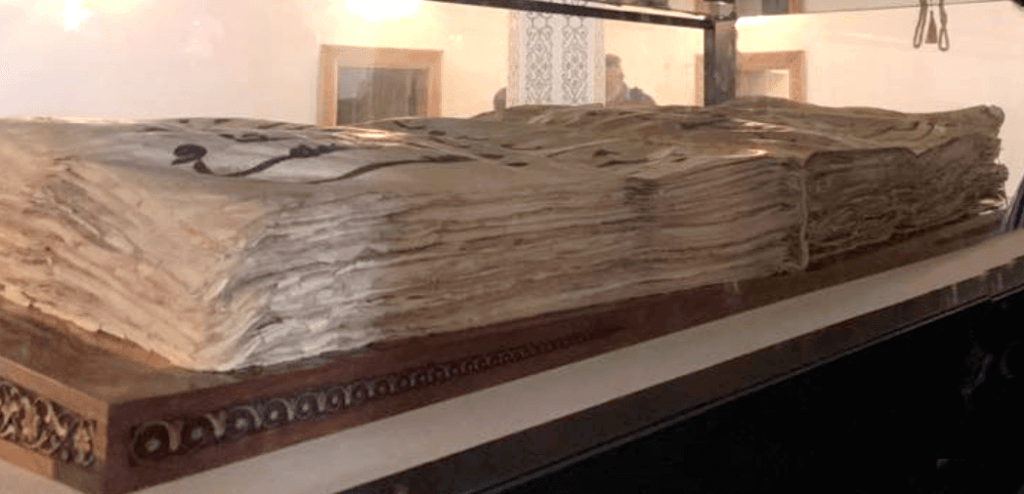
Figure 1 This manuscript, held by the Muslim Board of Uzbekistan, is the earliest existent written version of the Quran. It is the definitive version, known as the Mushaf of Othman, superseding all other versions. Image courtesy of Memory of the World Register, UNESCO.
Figure 2 The Holy Quran of Othman in its glass-fronted safe. Image courtesy of Memory of the World Register, UNESCO.
(2) The Topkapi Palace Museum.[5]
(3) The third manuscript is kept in Al-Hussein Mosque, Cairo, Egypt and can be seen below.
https://guidetoislam.com/en/articles/preservation-of-the-holy-quran-1482
#Preservation of Quran Kareem- #Hadith; #Islamic; #History; #Uthmani Quranic script; #Tashkent copy; #Uzbekistan;
 bismillahschool.net