It has been reported by Imām Muslim in his Saheeh from some of the wives of the Prophet (salallāhu ‘alaihi wasallam) that he said: “Whoever comes to a fortune-teller and asks him regarding an affair, his prayer will not be accepted for forty days.”[mfn] Muslim, 2230.[/mfn]
Abu Hurairah (radiAllahu ‘anhu) also narrated that the Prophet (salallāhu ‘alaihi wasallam) said: “Whoever comes to a fortune-teller and believes in that which he says then he has disbelieved in that which was revealed to Muhammad (salallāhu ‘alaihi wasallam).” [mfn]Reported by Abu Dāwud (3904) and authenticated by Sheikh al-Albāni in Saheeh ibn Mājah (522).[/mfn]
It is also reported from ‘Imrān bin Hussayn marfoo’an, i.e., it is considered as a saying of the Prophet (salallāhu ‘alaihi wasallam), where he said: “He is not from us who seeks omens or has omens interpreted for him, or the one who practices fortune-telling or has his fortune told, or the one who practices magic or the one for whom magic is done. And whoever approaches a fortune-teller and believes in that which he has said, then he has disbelieved in that which was revealed upon Muhammad (salallāhu ‘alaihi wasallam).”[mfn]Reported by al-Bazzār with a good chain of narration, cited by al-Haythami in Majma’ az-Zawā’id (5/201). Graded saheeh by Al-Albani in Saheeh At-Targheeb (3041)[/mfn].
Imām at-Tabarāni also reported the above from the Hadeeth of ibn Abbās, in al-Awsat with a good chain of narration but without the saying, “Whoever goes to a fortune-teller…”
Imām al-Baghawi said in Sharh as-Sunnah (12/182), “The ‘Arrāf is the one who claims knowledge of the affairs by using preceding or impending signs and using them to point out the locations of stolen items. It is said that this person is a kāhin (soothsayer/fortune teller), and he is the one who informs regarding the hidden affairs that will occur in the future. It is also said that the kāhin is the one who informs regarding that which is in the hearts.”
Abul ‘Abbās ibn Taymiyyah said in Majmoo’ al Fatāwa (35/173), “The ‘Arrāf is another term used for the kāhin (soothsayer/fortune teller), and for the munajjim (astrologer), the rammāl (diviner) and others like them who claim knowledge of the unseen using these means.”
Ibn ‘Abbās said regarding those who write down the Abā Jād and those who look into the stars: “I do not believe that those who do this will have any share of reward with Allah.”[mfn]Reported by ‘Abdur Razzāq in his Musannaf (26/11, no. 19,805) and ibn Abi Shaybah in his Musannaf (5/240, no. 25,648).[/mfn]
The term mentioned in the hadith refers to a well-known practice during the era of ignorance, performed by the people of that time. This form of Al-Nushra(breaking a Spell with a similar spell) is indeed an act associated with Satan, making it impermissible.
The spell’s impact can only be nullified by the sorcerer who cast it. Seeking the assistance of sorcerers and consulting them is strictly forbidden. As the Prophet, peace be upon him, declared, “Whoever approaches a sorcerer and believes in what he says has disbelieved in what was revealed to Muhammad.”
Kitaab At-Tawheed, Chapter: 25 What has Been Said About An-Nushrah 1
It is reported on the authority of Jabir (ra ) that Allah’s Messenger (saas ) was asked about an-nushrah (Unbinding sorcery with a similar spell) -and he said: “It is one of the works of Satan.” (Narrated by Ahmad with a good Sanad and by Abu Dawood Who said: “Ahmad was asked about these matters and he answered that Ibn Mas’ood detested all such things.”)Who said: “Ahmad was asked about these matters and he answered that Ibn Mas’ood detested all such things.”) Because an-nushrah was one of the actions of the Jahiliyyah, and the Companions had no desire or liking for the Jahiliyyah or its deeds, they asked the Prophet (saas ) about an-nushrah. He (saas ) replied that it is one of the works of Satan, and it is well-known that Satan orders not except that which is corrupt and detestable to the Believer. As for that which is permissible and not from the works of Satan, there is ar-ruqyah, seeking refuge (with Allah swt ) and the use of all permissible medicines (i.e. those which do not contain forbidden substances such as alcohol, pig fat etc.) and the Hadith is not a forbiddance of these things.
Muhammad Ibn `Abdul Wahhaab said: “Ibn Al-Qayyim said: “An-Nushrah is counteracting the effects of magic and it consists of two kinds: 1. Counteracting magic with its like and this is the work of the devil. 2. An-Nushrah by means of ar-ruqyah, seeking refuge with Allah (swt ), permissible medicines and making supplications to Allah (swt ) – these are all permitted forms of an-nushrah. Important Note It might be said, with some justification, that these words of Ibn Al-Qayyim sum up the message of this chapter.
tawheed; #Kitab at Tawheed; Bismillah School; #monotheism #magic #disbelief; #Islam
ياأيها النبي إذا جاءك المؤمنات يبايعنك على أن لايشركن بالله شيئا ولا يسرقن ولا يزنين ولا يقتلن أولادهن ولا يأتين ببهتان يفترينه بين أيديهن وأرجلهن ولا يعصينك في معروف فبايعهن واستغفر لهن الله إن الله غفور رحيم سورة: الممتحنة – آية: ( 12 ) – جزء: ( 28 ) – صفحة: ( 551 )
Almuntakhab Fi Tafsir Alquran Alkarim
O you the Prophet: If emigrating women who conformed to Islam come to you and pledge before Allah their vows to you that: they will not incorporate with Allah other deities, they will not steal, nor will they commit adultery nor infanticide, they will not speak or utter slanders nor relate falsehood, they will not conceive an illegitimate child and make the husband believe it is his, nor will they disobey you in matters crowned with equity; then you accept their pledge and invoke on their behalf Allahs forgiveness, for He is indeed Ghafurun and Rahimun
Tafseer Tafheem-ul-Quran by Syed Abu-al-A’la Maududi
(60:12) O Prophet, when believing women come to you and pledge *18 to you that they will not associate aught with Allah in His Divinity, that they will not steal, *19 that they will not commit illicit sexual intercourse, that they will not kill their children, *20 that they will not bring forth a calumny between their hands and feet, *21 and that they will not disobey you in anything known to be good, *22 then accept their allegiance *23 and ask Allah to forgive them. Surely Allah is Most Forgiving, Most Compassionate.
O Prophet, when the believing women come to you pledging to you meaning
*18) As we have explained above, this verse was sent down some time before the conquest of Makkah. After the conquest the Quraish stated coming to the Holy Prophet in large numbers to take the oath of allegiance. From the men he took the oath himself on Mount Safa, As for the woman he appointed Hadrat ‘Umar to administer the oath to them on his behalf and to ask them to pledge that they would refrain from the things mentioned in this verse. (Ibn Jarir, on the authority Of Ibn ‘Abbas; Ibn Abi Hatim, on the authority of Qatadah). Then. on his return to Madinah he ordered the Muslim women of Madinah to be gathered together in a house and he sent Hadrat Umar to take the oath from them. (Ibn Jarir, Ibn Marduyah, Bazzar, Ibn Hibban, on the authority of Umm ‘Atiyyah Ansariah). On the ‘Id day also, after his address to men, he went to the assembly of women and in his sermon to than he recited this verse and asked them to pledge that they would refrain from the things mentioned in it. (Bukhari on the authority of Ibn `Abbas’s tradition). Apart from these occasions. at different other tithes also, the women came before the Holy Prophet individually as well as collectively to take the oath of allegiance, as mentioned in several Ahadith.
*19) In Makkah, when the oath of allegiance was being administered, Hind bint `Utbah. wife of Abu Sufyan, asked the Nabi- Prophet its explanation and said: “Messenger of Allah, Abu Sufyan is rather stingy. Will it be sinful if I take out something from his wealth without his permission to meet my own and my children’s needs?” The Holy Prophet replied: “Nay, but only ,lastly and lawfully; i.e. take only that much as may actually suffice for your needs.” (Ibn al–‘Arabi, Ahkam al-Qur’an).
*20) This also includes abortion, whether ii is abortion of the legitimate or of the illegitimate foetus. *21) This implies two kinds of calumny: (1) a woman’s accusing other women of having illicit relations with other men and her spreading such stories among the people, for the women are generally prone to spreading such things; and (2) a woman’s delivering a child by somebody else and making her husband believe that it is his. Abu Da’ud has related a tradition from Abu Hurairah saying that he heard the Holy Prophet say: “The woman who brings such a child into a family as does not actually belong to it, has no connection with Allah, and Allah will never admit her to Paradise.”
*22) In this brief sentence two important points of the law have been stated: First, that obedience even to the Holy Prophet (upon whom be Allah s peace) has boon restricted to “in what is good”, although about the Holy Prophet no one could imagine that he would order somebody 10 do an evil From this it automatically follows that no one in the world can be obeyed outside the bounds of Divine law. For when obedience to Allah’s Messenger-himself is conditional upon “in what is good”. who else can have a position to demand unconditional obedience and require the people to obey and follow each of his commands laws, rules or customs, which are opposed to the law of Allah? The Nabi- Prophet (upon whom be Allah’s peace) has stated this principle, thus: “There is no obedience in the disobedience of Allah; obedience is only in what is good and right.” (Muslim, Abu Da’ud, Nasa’i). Our great doctors have derived this very theme from this verse, Hadrat ‘Abdur Rehman bin Zaid bin Aslam says: “Allah has not said that they should not disobey you (the Holy Prophet) but that they should not disobey you in what is good. Then, when Allah Almighty has made obedience even to the Holy Prophet himself conditional upon this, how can another person have the right that he should be obeyed in anything but what is good?” (Ibn Jarir).
Imam Abu Bakr al-Jassas writes: “Allah knew that His Prophet never enjoined anything but what was good. Still He restricted obedience to him only in what is good, so that no one ever may find a provision to obey the kings when they enjoined something outside the obedience of AIIah. The Holy Prophet (upon whom be Allah’s peace) has said: ‘He who obeys a creature in disobedience to the Creator, Allah appoints the. same c creature over him in power’ . ” (Ahkam al-Qur an). ‘Allama Alusi says: “This command refutes the view of those ignorant people who think that obedience to the ruler is absolutely necessary. Allah has restricted even obedience to His Messenger only in what is good, whereas the Messenger never enjoins anything but what is good. This is meant to wam the people that obedience to no one is lawful in disobedience to the Creator. ” (Ruh al-Ma ani). Thus, this command in fact, is the foundation stone of the rule of law in Islam. The rule is that anything which is opposed to the law of Islam is a crime, and no one has the right to enjoin any such thing on any one. Anyone who enjoins anything against the law, is a culprit; and the one who obeys such a command is . also a culprit. No subordinate can escape the punishment on the basis of the excuse that his superior officer had ordered him to do something which was a crime in the law.
Abu Huraira reported: A man asked the Messenger of Allah, peace and blessings be upon him, “Who is most deserving of my good company?” The Prophet said, “Your mother.” The man asked, “Then who?” The Prophet said “Your mother.” The man asked again, “Then who?” The Prophet said, “Your mother.” The man asked again, “Then who?” The Prophet said, “Your father.”
Source: Ṣaḥīḥ al-Bukhārī 5971, Ṣaḥīḥ Muslim 2548
Grade: Muttafaqun Alayhi (authenticity agreed upon) according to Al-Bukhari and Muslim
For your Lord has decreed that you worship none but Him, and honour your parents. If one or both of them reach old age in your care, never say to them even ‘ugh,’ nor yell at them. Rather, address them respectfully. Surat al-Isra’ 17:23
We have commanded people to honour their parents. Their mothers bore them through hardship upon hardship, and their weaning takes two years. So be grateful to Me and your parents. To Me is the final return. But if they pressure you to associate with Me what you have no knowledge of, do not obey them. Still keep their company in this world courteously, and follow the way of those who turn to Me in devotion. Then to Me you will all return, and then I will inform you of what you used to do.
Surat Luqman 31:14-15
Shaykh al-Islam Ibn Taymiyyah writes:
لَيْسَ لِأَحَدِ الْأَبَوَيْنِ أَنْ يُلْزِمَ الْوَلَدَ بِنِكَاحِ مَنْ لَا يُرِيدُ وَأَنَّهُ إذَا امْتَنَعَ لَا يَكُونُ عَاقًّا وَإِذَا لَمْ يَكُنْ لِأَحَدِ أَنْ يُلْزِمَهُ بِأَكْلِ مَا يَنْفِرُ عَنْهُ مَعَ قُدْرَتِهِ عَلَى أَكْلِ مَا تَشْتَهِيهِ نَفْسُهُ كَانَ النِّكَاحُ كَذَلِكَ وَأَوْلَى It is not for either parent to require the child to marry someone they do not want, and if the child refuses they are not being disobedient. If it is not for anyone to require someone to eat what they detest, despite their ability to eat what they desire themselves, then marriage is likewise even more so. – Source: Majmū’ al-Fatāwá 32/30
Abu Huraira reported: A man asked the Messenger of Allah, peace and blessings be upon him, “Who is most deserving of my good company?” The Prophet said, “Your mother.” The man asked, “Then who?” The Prophet said “Your mother.” The man asked again, “Then who?” The Prophet said, “Your mother.” The man asked again, “Then who?” The Prophet said, “Your father.” Source: Ṣaḥīḥ al-Bukhārī 5971, Ṣaḥīḥ Muslim 2548 Grade: Muttafaqun Alayhi (authenticity agreed upon) according to Al-Bukhari and Muslim
This First Person article is the experience of Sara DuBreuil, a producer with CBC Montreal. For more information about CBC’s First Person stories, please see the FAQ.
I never imagined that I would need therapy to process my daughter’s birth.
From the moment my husband, Matt, and I found out we were expecting a girl, we named her Cecilia and started daydreaming about meeting her. I couldn’t wait for her to be placed on my chest and have that first snuggle. I believed my daughter’s birth day would be the best day of my life. But that’s not how it played out.
Up to 45 per cent of new mothers report experiencing a traumatic childbirth, according to a 2018 study published in The Journal of Perinatal Education.
It’s difficult to pin down the exact number of women in Canada who’ve been traumatized during childbirth. “It often goes unacknowledged, undertreated and underdiagnosed”, said Rosa Caporicci, a licensed psychotherapist specializing in reproductive mental health. She is also the person I turned to for help recovering from my own experience.
I’ve decided to speak out about my birth trauma in hopes of normalizing the experience for other parents.
A difficult entry into the world
The day Cecilia was born, June 14, began with an incredible sunrise. I asked Matt to photograph it because we were just hours away from meeting our girl, and I wanted to document the beautiful morning.
I started pushing not long after that and that’s when, in the blink of an eye, everything changed.
Cecilia’s heart rate dropped, and the doctor said they had to get her out immediately. She had swallowed a significant amount of meconium, which is a baby’s first stool. If it’s released while still in the womb, it can cause health problems. Also, Cecilia’s umbilical cord was around her neck.
Seconds after birth, Cecilia was surrounded by a team of doctors and nurses who cleared her lungs before moving her to the neonatal intensive care unit (NICU). My strongest memories from Cecilia’s birth day are not beautiful. They are painful.
The angels said, “O Mary, God has chosen you, and has purified you. He has chosen you over all the women of the world.
43. “O Mary, be devoted to your Lord, and bow down, and kneel with those who kneel.”
44. These are accounts from the Unseen, which We reveal to you. You were not with them when they cast their lots as to which of them would take charge of Mary; nor were you with them as they quarreled.
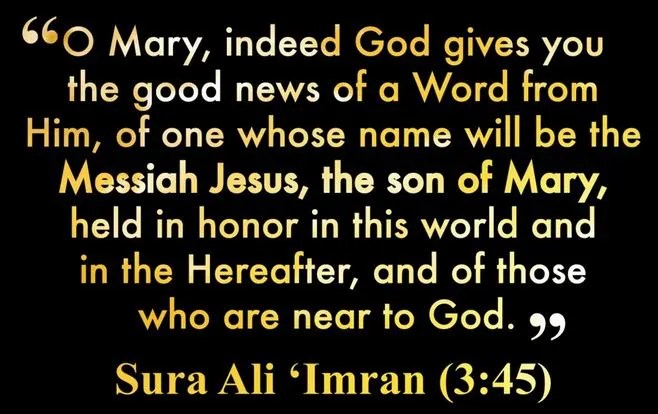
45. The Angels said, “O Mary, God gives you good news of a Word from Him. His name is the Messiah, Jesus, son of Mary, well-esteemed in this world and the next, and one of the nearest.
46. He will speak to the people from the crib, and in adulthood, and will be one of the righteous.”
47. She said, “My Lord, how can I have a child, when no man has touched me?” He said, “It will be so. God creates whatever He wills. To have anything done, He only says to it, ‘Be,’ and it is.”
48. And He will teach him the Scripture and wisdom, and the Torah and the Gospel.
49. A messenger to the Children of Israel: “I have come to you with a sign from your Lord. I make for you out of clay the figure of a bird; then I breathe into it, and it becomes a bird by God’s leave. And I heal the blind and the leprous, and I revive the dead, by God’s leave. And I inform you concerning what you eat, and what you store in your homes. In that is a sign for you, if you are believers.”
50. “And verifying what lies before me of the Torah, and to make lawful for you some of what was forbidden to you. I have come to you with a sign from your Lord; so fear God, and obey me.”
51. “God is my Lord and your Lord, so worship Him. That is a straight path.”
Jesus in Quran Kareem – surah Maryam Verses
16. And mention in the Scripture Mary, when she withdrew from her people to an eastern location. 17. She screened herself away from them, and We sent to her Our spirit, and He appeared to her as an immaculate human. 18. She said, “I take refuge from you in the Most Merciful, should you be righteous.” 19. He said, “I am only the messenger of your Lord, to give you the gift of a pure son.” 20. She said, “How can I have a son, when no man has touched me, and I was never unchaste?” 21. He said, “Thus said your Lord, `It is easy for Me, and We will make him a sign for humanity, and a mercy from Us. It is a matter already decided.’“ 22. So she carried him, and secluded herself with him in a remote place. 23. The labor-pains came upon her, by the trunk of a palm-tree. She said, “I wish I had died before this, and been completely forgotten.” 24. Whereupon he called her from beneath her: “Do not worry; your Lord has placed a stream beneath you. 25. And shake the trunk of the palm-tree towards you, and it will drop ripe dates by you.” 26. “So eat, and drink, and be consoled. And if you see any human, say, ‘I have vowed a fast to the Most Gracious, so I will not speak to any human today.’“ 27. Then she came to her people, carrying him. They said, “O Mary, you have done something terrible. 28. O sister of Aaron, your father was not an evil man, and your mother was not unchaste.” 29. So she pointed to him. They said, “How can we speak to an infant in the crib?” 30. He said, “I am the servant of God. He has given me the Scripture, and made me a prophet. 31. And has made me blessed wherever I may be; and has enjoined on me prayer and charity, so long as I live. 32. And kind to my mother, and He did not make me a disobedient rebel. 33. So Peace is upon me the day I was born, and the day I die, and the Day I get resurrected alive.” 34. That is Jesus son of Mary—the Word of truth about which they doubt. 35. It is not for God to have a child—glory be to Him. To have anything done, He says to it, “Be,” and it becomes. 36. “God is my Lord and your Lord, so worship Him. That is a straight path.”
150. Those who disbelieve in God and His messengers, and want to separate between God and His messengers, and say, “We believe in some, and reject some,” and wish to take a path in between.
151. These are the unbelievers, truly. We have prepared for the unbelievers a shameful punishment.
152. As for those who believe in God and His messengers, and make no distinction between any of them—He will give them their rewards. God is Forgiver and Merciful.
153. The People of the Scripture challenge you to bring down to them a book from the sky. They had asked Moses for something even greater. They said, “Show us God plainly.” The thunderbolt struck them for their wickedness. Then they took the calf for worship, even after the clear proofs had come to them. Yet We pardoned that, and We gave Moses a clear authority.
154. And We raised the Mount above them in accordance with their covenant, and We said to them, “Enter the gate humbly”, and We said to them, “Do not violate the Sabbath”, and We received from them a solemn pledge.
155. But for their violation of their covenant, and their denial of God’s revelations, and their killing of the prophets unjustly, and their saying, “Our minds are closed.” In fact, God has sealed them for their disbelief, so they do not believe, except for a few.
156. And for their faithlessness, and their saying against Mary a monstrous slander.
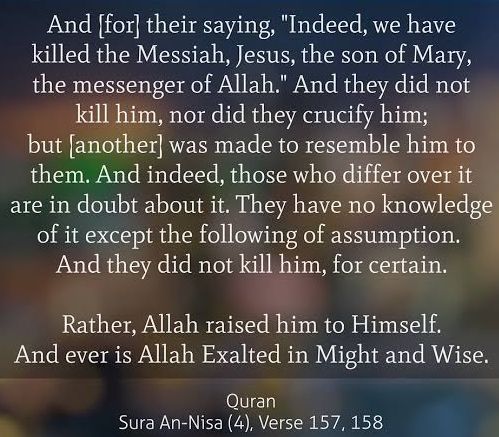
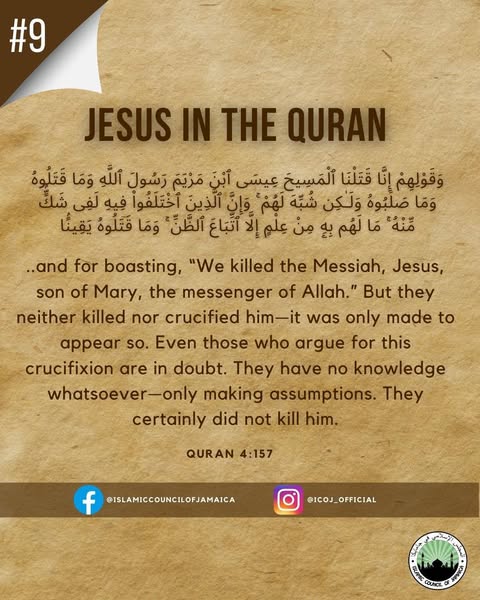
157. And for their saying, “We have killed the Messiah, Jesus, the son of Mary, the Messenger of God.” In fact, they did not kill him, nor did they crucify him, but it appeared to them as if they did. Indeed, those who differ about him are in doubt about it. They have no knowledge of it, except the following of assumptions. Certainly, they did not kill him.
158. Rather, God raised him up to Himself. God is Mighty and Wise.
159. There is none from the People of the Scripture but will believe in him before his death, and on the Day of Resurrection he will be a witness against them.
160. Due to wrongdoing on the part of the Jews, We forbade them good things that used to be lawful for them; and for deterring many from God’s path.
161. And for their taking usury, although they were forbidden it; and for their consuming people’s wealth dishonestly. We have prepared for the faithless among them a painful torment.
162. But those among them firmly rooted in knowledge, and the believers, believe in what was revealed to you, and in what was revealed before you; and the observers of prayers, and the givers of charity, and the believers in God and the Last Day—upon these We will bestow an immense reward.
Ontario’s police watchdog says it found no grounds to lay a criminal charge against a Thunder Bay officer who approved the cancellation of a domestic disturbance call hours before a woman was found dead in a home.
The Special Investigations Unit has released a report on its investigation into the death of 21-year-old Jenna Ostberg, who the agency said was found without vital signs in a closet in her boyfriend’s bedroom on Dec. 30, 2023.
Ostberg and her boyfriend were arguing in his room around 2 a.m. that morning, prompting his mother to send him to another room and call 911 to report an “unwanted visitor,” the watchdog said.
The woman wanted Ostberg removed from the home because there was a court condition preventing the couple from seeing each other after a domestic assault incident earlier that year, the SIU said.
#Death #Suicide #Investigation #Native #Community #Thunder Bay
Surah Ahzab 33:56; Indeed, Allah showers His blessings upon the Prophet, and His angels pray for him. O believers! Invoke Allah’s blessings upon him, and salute him with worthy greetings of peace. – Quran Kareem
#Salam upon Nabi Muhammad (Sal Allahu Alayhi wa Salllam)
















 bismillahschool.net