
https://archive.org/details/prayer-guide

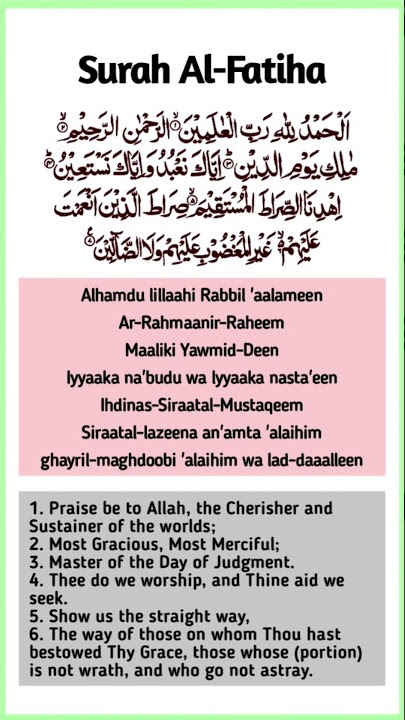
#Prayer #Guides #Islam #Steps


On the authority of Abu Hurayrah (may Allah be pleased with him), that the Messenger of Allah (peace be upon him) said:
“Let him who believes in Allah and the Last Day speak good, or keep silent; and let him who believes in Allah and the Last Day be generous to his neighbour; and let him who believes in Allah and the Last Day be generous to his guest.” Related by Bukhari & Muslim
On the authority of Abu Dharr Jundub ibn Junadah, and Abu ‘Abd-ir-Rahman Mu’adh bin Jabal (may Allah be pleased with them) that the Messenger of Allah (peace and blessing of Allah be upon him) said:
“Be conscious of Allah wherever you are. Follow the bad deed with a good one to erase it, and engage others with beautiful character.” Related by Tirmidhi
#Manners, #Speech, #Islam, #Hadith

Abu Huraira reported: The Prophet, peace and blessings be upon him, said, “Allah did not send any prophet but that he cared for sheep.” The companions asked, “And you as well?” The Prophet said, “Yes. I was a shepherd with a modest wage on behalf of the people of Mecca.” Source: Ṣaḥīḥ al-Bukhārī 2262 Grade: Sahih (authentic) according to Al-Bukhari
عَنْ أَبِي هُرَيْرَةَ عَنْ النَّبِيِّ صَلَّى اللَّهُ عَلَيْهِ وَسَلَّمَ قَالَ مَا بَعَثَ اللَّهُ نَبِيًّا إِلَّا رَعَى الْغَنَمَ فَقَالَ أَصْحَابُهُ وَأَنْتَ فَقَالَ نَعَمْ كُنْتُ أَرْعَاهَا عَلَى قَرَارِيطَ لِأَهْلِ مَكَّةَ
2262 صحيح البخاري كتاب الإجارة باب رعي الغنم على قراريط
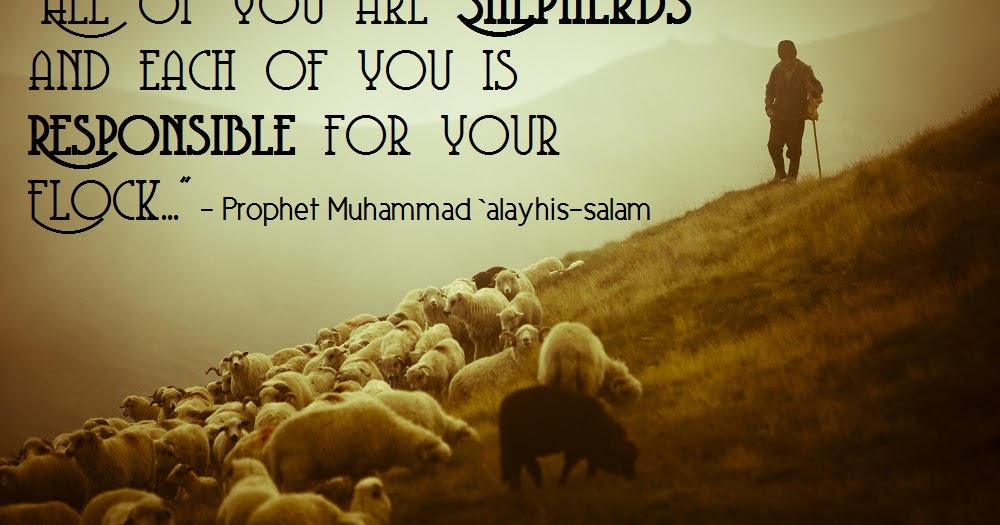
Abdullah ibn Umar, may Allah be pleased with them both, reported: The Messenger of Allah ﷺ said, “Every one of you is a shepherd and is responsible for his flock. The leader of people is a guardian and is responsible for his subjects. A man is the guardian of his family and he is responsible for them. A woman is the guardian of her husband’s home and his children and she is responsible for them. The servant of a man is a guardian of the property of his master and he is responsible for it. Surely, every one of you is a shepherd and is responsible for his flock.” [Sahih Bukhari 6719, Sahih Muslim 1829]
#Prophets, #Sheppards, #Islam, #Family, #Leaders, #Guardians;
Code To Learn offers coding opportunities in many programming languages. We use MakeCode, EarSketch (Python), Weavly, and quite frequently LYNX!
LYNX is a text-based, cloud-based coding environment that is the natural next step for kids that are ready to move on from using blocks to code but might not be quite ready to use more complex programming languages like Python or JavaScript.
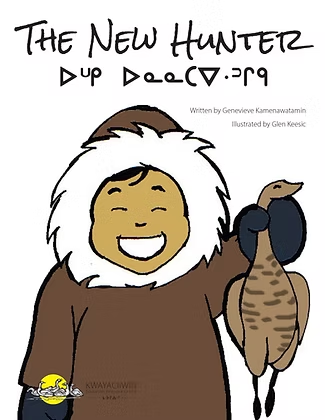
LYNX is Canadian-made by the company founded by Seymour Papert—the father of educational computing. It is available in Canadian English, French, Ojibwe, Mi’kmaw, Oji-Cree, Mohawk, with other Indigenous languages to come. Check out LYNXcoding.club
In addition to the project offerings, the LYNX team is:
training FNMI students in LYNX Coding in their own language
creating LYNX Coding in Indigenous Languages
developing educational materials to support provincial curricula
#Coding; #programs; #Kids; #Education; #Canada;
Surah An Nisaa/ Women:170. O people! The Messenger has come to you with the truth from your Lord, so believe—that is best for you. But if you disbelieve, to God belongs everything in the heavens and the earth. God is Omniscient and Wise.
171. O People of the Scripture! Do not exaggerate in your religion, and do not say about God except the truth. The Messiah, Jesus, the son of Mary, is the Messenger of God, and His Word that He conveyed to Mary, and a Spirit from Him. So believe in God and His messengers, and do not say, “Three.” Refrain—it is better for you. God is only one God. Glory be to Him—that He should have a son. To Him belongs everything in the heavens and the earth, and God is a sufficient Protector.
172. The Messiah does not disdain to be a servant of God, nor do the favored angels. Whoever disdains His worship, and is too arrogant—He will round them up to Himself altogether.
114. Jesus son of Mary said, “O God, our Lord, send down for us a table from heaven, to be a festival for us, for the first of us, and the last of us, and a sign from You; and provide for us; You are the Best of providers.”
115. God said, “I will send it down to you. But whoever among you disbelieves thereafter, I will punish him with a punishment the like of which I never punish any other being.”

116. And God will say, “O Jesus son of Mary, did you say to the people, `Take me and my mother as gods rather than God?’“ He will say, “Glory be to You! It is not for me to say what I have no right to. Had I said it, You would have known it. You know what is in my soul, and I do not know what is in Your soul. You are the Knower of the hidden.
117. I only told them what You commanded me: that you shall worship God, my Lord and your Lord. And I was a witness over them while I was among them; but when You took me to Yourself, You became the Watcher over them—You are Witness over everything.
118. If You punish them, they are Your servants; but if You forgive them, You are the Mighty and Wise.”
119. God will say, “This is a Day when the truthful will benefit from their truthfulness.” They will have Gardens beneath which rivers flow, wherein they will remain forever. God is pleased with them, and they are pleased with Him. That is the great attainment.
120. To God belongs the sovereignty of the heavens and the earth and what lies in them, and He has power over everything.
#Monotheism; #Islam; #Jesus Verses; #Message;
https://ciel.utsc.utoronto.ca/ojibwe-textbook/lesson/1?dialect=southwestern
Source: Ethnologue
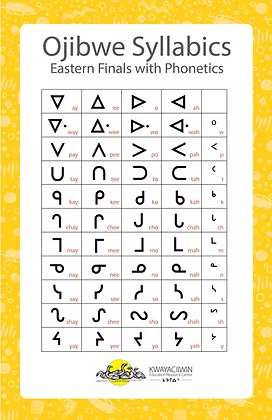
In about 1830 James Evans, a Wesleyan missionary, devised a way to write the Ojibwe language of Rice Lake with the Latin alphabet. His goal was to produce a dictionary of Ojibwe to help him to learn the language better, and to help him teach English to the Ojibwe people.
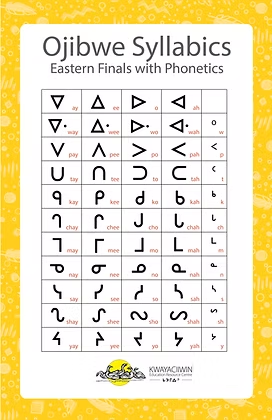
In about 1840, while working at Norway House in Hudson’s Bay, Evans invented a syllabic script for the Ojibwe language, based partly on Pitman shorthand, which had been published in 1837. It is thought that his idea to create a syllabic script was based on the Cherokee script.
Evans’ syllabary for Ojibwe consisted of just nine symbols, each of which could be written in four different orientations to indicate different vowels. This was sufficient to write Ojibwe. Evans translated parts of the Bible and other religious works into Ojibwe, and later Cree, and printed them using type carved from wood, or made from melted-down linings of tea chests.
Evans later adapted it to write Cree. The script proved popular with Ojibwe and Cree speakers, and within about 10 years, many of them had learnt to read and write it, learning mainly from family or friends. As paper was scarce at the time, they wrote on birch bark with soot from burnt sticks, or carved messages in wood, and nicknamed James Evans ‘The man who made birch bark talk’.

The Ojibwe script continued to be widely used until the 1950s and 1960s, when the integration policies of Department of Indian and Northern Affairs led to a decline in use to the script among Ojibwe children taught to write in the Roman alphabet.
Main source: Murdoch, John Stewart, Syllabics: A Successful Educational Innovation (University of Manitoba, 1981).
Ojibwe is a language of verbs. Most of the information in a sentence is carried by verbs, and verbs also tend to carry out functions that are covered by other parts of speech in other languages. For example, Nimbakade – I am hungry. This is a verb. Ojibwe doesn’t really have adjectives. To express that someone or something is in a given state or has a certain property, you almost always use a verb.
Traditional analysis of the grammar of Ojibwe (and related languages) suggests that there are four major categories of verbs in the language. Each category has its own set of prefixes and suffixes. It adds up to a lot to memorize, but don’t worry, we will take you through it step by step, one lesson at a time.
To understand the four categories, it helps to know that Ojibwe nouns come in two kinds, or “genders.” These genders are not male and female as you might be familiar with in certain European languages, but rather animate and inanimate. Animate generally refers to living things and people, while inanimate refers to non-living objects. However, there are many exceptions. For example, in many dialects, the word for rock is animate. Some speakers of the language attribute spiritual significance to this, and some don’t. In this course, we won’t get too much into the philosophy, but we will teach this simply as a property of the language. It is similar to how in Spanish “table” is feminine but “book” is masculine. As you learn Ojibwe nouns, you will have to memorize whether they are animate or inanimate. As you’ll see, this distinction also affects what verbs you can use with different nouns. We’ll talk much more about this in time.
These pronouns are fairly equivalent to their English translations, but they actually aren’t used that much in Ojibwe in ordinary conversation. This is because verbs take prefixes to indicate 1st 2nd and 3rd person, so you don’t need to add a pronoun on top of that. Here are the verb forms with prefixes:
| bare pronoun | verb prefix | full verb | translation |
|---|---|---|---|
| niin | nim- | nimbakade | I am hungry. |
| giin | gi- | gibakade | You are hungry. |
| wiin | —– | bakade | S/he is hungry. |
Here are two more examples. The dictionary forms for these verbs are maajaa and nibaa. Note that these are also the third-person singular forms (this only applies to VAI verbs – the other verb classes have their own dictionary forms, again the most minimal forms with no prefixes or suffixes).
| bare pronoun | full verb | translation |
|---|---|---|
| niin | nimaajaa | I leave |
| giin | gimaajaa | you leave |
| wiin | maajaa | s/he leaves |
| niin | ninibaa | I sleep |
| giin | ginibaa | you sleep |
| wiin | nibaa | s/he sleeps |
| niin | ningiishkaabaagwe | I am thirsty |
| giin | gigiishkaabaagwe | you are thirsty |
| wiin | giishkaabaagwe | s/he is thirsty |
Finally, the preverbs in this lesson. A preverb is a kind of prefix that comes before the main verb, modifying its meaning. Here we use wii-, which is a kind of future tense marker. OPD labels it as pv tns, a preverb of tense. You use this when indicating that someone will probably do something, that they want to do something or are volunteering to do it, like when you say “I’ll get it” when the house phone rings. It is less definite than the other future tense marker ga, which indicates more certainty that something will happen – as in giga-waabamin. The hyphen at the end of wii- reminds you that it comes before the verb, and it is common to use that hyphen in writing but not always. The preverb comes before the main verb, but after the prefix indicating person. So we have:
Grammatical rule: For VAI verbs ending in -o or -i, that final short vowel is deleted for the first-person niin and second-person singular giin forms, but it remains for third person wiin. We will illustrate this for two VAI verbs whose citation forms are the third person singular: wiisini and giigido. The first-person prefix for verbs starting in g is nin-. So we have:
Particles are little words that fulfill specific grammatical functions. Again, the OPD distinguishes many different kinds, and we will tell you the part of speech as listed in the OPD, but we will not delve deeply into the meaning of those categories. For now, we will discuss na and enya’, both of which are classified as pc disc, or discourse particles.
Na is an important word that marks yes/no questions. To turn a statement into a question, you simply add na as the second word of the sentence. It may also be ina, if following a hard pronounced consonant. So we have:
| Gibakade. | You are hungry. |
| Gibakade na? | Are you hungry? |
| Niwii-wiisin omaa. | I want to eat here. |
| Giwii-wiisin na omaa? | Do you want to eat here? |




 bismillahschool.net