



Introduction
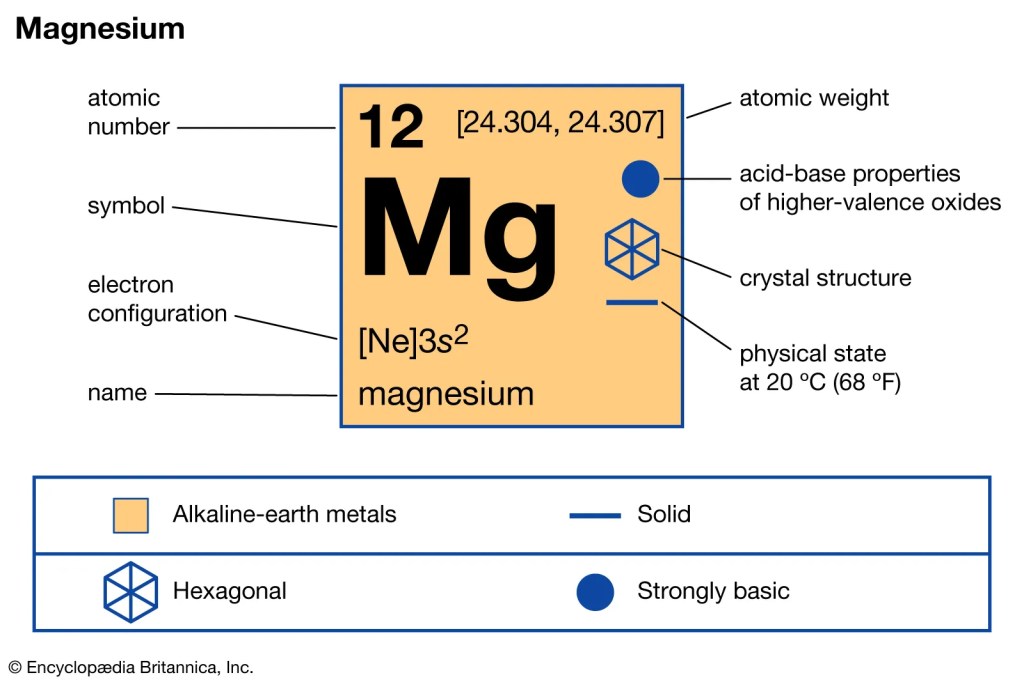
Magnesium, an abundant mineral in the body, is naturally present in many foods, added to other food products, available as a dietary supplement, and present in some medicines (e.g., antacids, laxatives). Magnesium is a cofactor in more than 300 enzyme systems that regulate diverse biochemical reactions in the body, including protein synthesis, muscle and nerve function, blood glucose control, and blood pressure regulation [1-3]. Magnesium is required for energy production, oxidative phosphorylation, and glycolysis. It contributes to the structural development of bone and is required for the synthesis of DNA, RNA, and the antioxidant glutathione. Magnesium also plays a role in the active transport of calcium and potassium ions across cell membranes, a process that is important to nerve impulse conduction, muscle contraction, and normal heart rhythm [3].
An adult body contains approximately 25 grams magnesium, with 50% to 60% present in the bones and most of the rest in soft tissues [4]. Less than 1% of total magnesium is in blood serum, and these levels are kept under tight control. Normal serum magnesium concentrations range between 0.75 and 0.95 millimoles/liter(mmol/L) [1,5]. Hypomagnesemia is defined as a serum magnesium level less than 0.75 mmol/L [6]. Magnesium homeostasis is largely controlled by the kidneys, which typically excrete about 120 milligrams (mg) magnesium into the urine each day [2]. Urinary excretion is reduced when magnesium status is low [1].
Assessing magnesium status
Because most of the magnesium in the body is found inside cells or in bone, it is difficult to assess magnesium status. Measuring serum magnesium concentration is the most commonly used method for assessment, but serum levels do not accurately reflect total body magnesium levels or concentrations in specific tissues. Comprehensively evaluating magnesium status may require the use of both laboratory tests and a clinical assessment.
Assessing magnesium status is difficult because most magnesium is inside cells or in bone [3]. The most commonly used and readily available method for assessing magnesium status is measuring serum magnesium concentration, even though serum levels have little correlation with total body magnesium levels or concentrations in specific tissues [6]. Other methods for assessing magnesium status include measuring magnesium concentrations in erythrocytes, saliva, and urine; measuring ionized magnesium concentrations in blood, plasma, or serum; and conducting a magnesium-loading (or tolerance) test. No single method is considered satisfactory [7]. Some experts [4] but not others [3] consider the tolerance test (in which urinary magnesium is measured after parenteral infusion of a dose of magnesium) to be the best method to assess magnesium status in adults. To comprehensively evaluate magnesium status, both laboratory tests and a clinical assessment might be required [6].
Recommended Intakes
The Food and Nutrition Board at the National Academies of Sciences, Engineering, and Medicine has established Recommended Dietary Allowances and Adequate Intakes for magnesium. These values range from 310 to 420 mg for adults and from 30 to 410 mg for infants, children, and adolescents, depending on age, sex, and life stage.
Intake recommendations for magnesium and other nutrients are provided in the Dietary Reference Intakes (DRIs) developed by the Food and Nutrition Board (FNB) at the National Academies of Sciences, Engineering, and Medicine [1]. DRI is the general term for a set of reference values used to plan and assess nutrient intakes of healthy people. These values include the following:
- Recommended Dietary Allowance (RDA): Average daily level of intake sufficient to meet the nutrient requirements of nearly all (97%–98%) healthy individuals; often used to plan nutritionally adequate diets for individuals
- Adequate Intake (AI): Intake at this level is assumed to ensure nutritional adequacy; established when evidence is insufficient to develop an RDA
- Estimated Average Requirement (EAR): Average daily level of intake estimated to meet the requirements of 50% of healthy individuals; usually used to assess the nutrient intakes of groups of people and to plan nutritionally adequate diets for them; can also be used to assess the nutrient intakes of individuals
- Tolerable Upper Intake Level (UL): Maximum daily intake unlikely to cause adverse health effects
Table 1 lists the current RDAs for magnesium [1]. For infants from birth to 12 months, the FNB established AIs for magnesium that are equivalent to the mean intake of magnesium in healthy, breastfed infants, with added solid foods for ages 7 to 12 months.
| Age | Male | Female | Pregnancy | Lactation |
|---|---|---|---|---|
| 0–6 months | 30 mg* | 30 mg* | ||
| 7–12 months | 75 mg* | 75 mg* | ||
| 1–3 years | 80 mg | 80 mg | ||
| 4–8 years | 130 mg | 130 mg | ||
| 9–13 years | 240 mg | 240 mg | ||
| 14–18 years | 410 mg | 360 mg | 400 mg | 360 mg |
| 19–30 years | 400 mg | 310 mg | 350 mg | 310 mg |
| 31–50 years | 420 mg | 320 mg | 360 mg | 320 mg |
| 51+ years | 420 mg | 320 mg |
Download this table as a CSV file
*Adequate Intake (AI)
Sources of Magnesium
Food
Good sources of magnesium include green leafy vegetables, legumes, nuts, seeds, whole grains, and certain beverages. Magnesium may also be added to some breakfast cereals and other fortified foods. In general, approximately 30% to 40% of the magnesium obtained from food and beverages is absorbed by the body.
Magnesium is widely distributed in plant and animal foods and in beverages. Green leafy vegetables (e.g., spinach), legumes, nuts, seeds, and whole grains, are good sources [1,3]. In general, foods that contain dietary fiber provide magnesium. Magnesium is also added to some breakfast cereals and other fortified foods. Some types of food processing, such as refining grains in ways that remove the nutrient-rich germ and bran, substantially lower the magnesium content [1]. Selected food sources of magnesium are listed in Table 2.
Tap, mineral, and bottled waters can also be sources of magnesium, but the amount of magnesium in water varies by source and brand (ranging from 1 mg/L to >120 mg/L) [8].
Approximately 30% to 40% of the dietary magnesium consumed is typically absorbed by the body [2,9].
| Food | Milligrams (mg) per serving | Percent DV* |
|---|---|---|
| Pumpkin seeds, roasted, 1 ounce | 156 | 37 |
| Chia seeds, 1 ounce | 111 | 26 |
| Almonds, dry roasted, 1 ounce | 80 | 19 |
| Spinach, boiled, ½ cup | 78 | 19 |
| Cashews, dry roasted, 1 ounce | 74 | 18 |
| Peanuts, oil roasted, ¼ cup | 63 | 15 |
| Cereal, shredded wheat, 2 large biscuits | 61 | 15 |
| Soymilk, plain or vanilla, 1 cup | 61 | 15 |
| Black beans, cooked, ½ cup | 60 | 14 |
| Edamame, shelled, cooked, ½ cup | 50 | 12 |
| Peanut butter, smooth, 2 tablespoons | 49 | 12 |
| Potato, baked with skin, 3.5 ounces | 43 | 10 |
| Rice, brown, cooked, ½ cup | 42 | 10 |
| Yogurt, plain, low fat, 8 ounces | 42 | 10 |
| Breakfast cereals, fortified with 10% of the DV for magnesium, 1 serving | 42 | 10 |
| Oatmeal, instant, 1 packet | 36 | 9 |
| Kidney beans, canned, ½ cup | 35 | 8 |
| Banana, 1 medium | 32 | 8 |
| Milk, 1 cup | 27 | 6 |
| Salmon, Atlantic, farmed, cooked, 3 ounces | 26 | 6 |
| Halibut, cooked, 3 ounces | 24 | 6 |
| Raisins, ½ cup | 23 | 5 |
| Bread, whole wheat, 1 slice | 23 | 5 |
| Avocado, cubed, ½ cup | 22 | 5 |
| Chicken breast, roasted, 3 ounces | 22 | 5 |
| Beef, ground, 90% lean, pan broiled, 3 ounces | 20 | 5 |
| Broccoli, chopped and cooked, ½ cup | 12 | 3 |
| Rice, white, cooked, ½ cup | 10 | 2 |
| Apple, 1 medium | 9 | 2 |
| Carrot, raw, 1 medium | 7 | 2 |
Download this table as a CSV file
*DV = Daily Value. The U.S. Food and Drug Administration (FDA) developed DVs to help consumers compare the nutrient contents of foods and dietary supplements within the context of a total diet. The DV for magnesium is 420 mg for adults and children age 4 years and older [11]. FDA does not require food labels to list magnesium content unless magnesium has been added to the food. Foods providing 20% or more of the DV are considered to be high sources of a nutrient, but foods providing lower percentages of the DV also contribute to a healthful diet.
The U.S. Department of Agriculture’s (USDA’s) FoodData Central [10] lists the nutrient content of many foods and provides comprehensive list of foods containing magnesium arranged by nutrient content and by food name.
Dietary supplements
Supplements can contain a variety of different forms of magnesium, and the absorption of these forms varies. In general, forms of magnesium that dissolve well in liquid have higher absorption than other forms, and the aspartate, citrate, lactate, and chloride forms of magnesium tend to have higher bioavailability than magnesium oxide and magnesium sulfate.
Medicines
Magnesium is found in some remedies for heartburn and acid indigestion, and it is a key ingredient in certain laxatives.
Magnesium Intakes and Status
Many people in the United States consume less than the recommended amounts of magnesium, with men age 71 years and older and adolescent males and females having the highest risk of low magnesium intakes. Survey data suggest that the average intakes of magnesium from food alone are higher among people who take dietary supplements that contain magnesium than among those who do not. There is no current data on magnesium status among people who live in the United States, as magnesium status is not routinely evaluated in national surveys, hospitals, or clinics.
Magnesium Deficiency
Loss of appetite, nausea, vomiting, fatigue, and weakness are some of the early signs and symptoms of magnesium deficiency. As the condition progresses, people with magnesium deficiency may experience numbness, muscle contractions and cramps, seizures, abnormal heart rhythms, coronary spasms, and other symptoms. In severe cases, magnesium deficiency can cause hypocalcemia or hypokalemia. While certain health conditions and the use of certain medications can cause symptomatic magnesium deficiency, it is uncommon in healthy people.
Groups at Risk of Magnesium Inadequacy
Certain groups of people are more likely than others to have magnesium inadequacy. These include people with gastrointestinal diseases, type 2 diabetes, or alcohol dependence and older adults.
Magnesium and Health
Habitually low intakes of magnesium induce changes in biochemical pathways that can increase the risk of illness over time. This section focuses on four diseases and disorders in which magnesium might be involved: hypertension and cardiovascular disease, type 2 diabetes, osteoporosis, and migraine headaches.
Hypertension and cardiovascular disease
Results from clinical trials suggest that magnesium supplementation only marginally lowers blood pressure. Although some prospective studies have reported that people with higher intakes and/or serum levels of magnesium have lower risks of sudden cardiac death, ischemic heart disease, and stroke, more research is needed to understand the effects of magnesium from food and dietary supplements on cardiovascular disease.
Type 2 diabetes
Several meta-analyses of prospective cohort studies have reported that individuals who have higher magnesium intakes tend to have a lower risk of type 2 diabetes. However, only a few small clinical trials have evaluated using supplemental magnesium to control type 2 diabetes, and these trials have reported conflicting results. According to the American Diabetes Association, there is currently not enough evidence to recommend using magnesium to improve glycemic control in people with diabetes.
Osteoporosis
Magnesium is essential for bone health, and some studies have found that higher intakes of magnesium are associated with increased bone mineral density. Other studies have reported finding low serum magnesium levels among women with osteoporosis. However, more research is needed to determine whether magnesium supplements can help prevent or manage osteoporosis.
Migraine headaches
Low levels of serum and tissue magnesium appear to be associated with the occurrence of migraine headaches. Some research has suggested that the regular use of magnesium supplements may reduce the frequency of migraines. Although the data are limited, the American Academy of Neurology and the American Headache Society have concluded that magnesium is probably effective for migraine prevention.
Health Risks from Excessive Magnesium
Although the risk of acquiring too much magnesium from food is low among healthy people, high doses of magnesium from dietary supplements or medications can cause diarrhea, nausea, and abdominal cramping. Very high doses of magnesium can lead to magnesium toxicity, which can cause hypotension, vomiting, difficulty breathing, irregular heartbeat, cardiac arrest, and other signs and symptoms. A few cases of fatal hypermagnesemia have been reported. The Tolerable Upper Intake Level for supplemental magnesium is 350 mg for adults, and it ranges from 65 to 350 mg for children and adolescents, depending on age.
Interactions with Medications
Magnesium may interact with certain medications, such as oral bisphosphonates, tetracyclines, and quinolone antibiotics. In addition, some medications, including diuretics and proton pump inhibitors, can affect magnesium status.
Magnesium and Healthful Diets
In general, a person’s nutritional needs should be met primarily through the diet, including fortified foods. Dietary supplements may be useful in cases where it is not possible to meet the needs for specific nutrients through food alone, especially during certain life stages. The Dietary Guidelines for Americans offers a general description of healthy dietary patterns.
References
- Institute of Medicine (IOM). Food and Nutrition Board. Dietary Reference Intakes: Calcium, Phosphorus, Magnesium, Vitamin D and Fluoride. Washington, DC: National Academy Press, 1997.
- Rude RK. Magnesium. In: Coates PM, Betz JM, Blackman MR, Cragg GM, Levine M, Moss J, White JD, eds. Encyclopedia of Dietary Supplements. 2nd ed. New York, NY: Informa Healthcare; 2010:527-37.
- Rude RK. Magnesium. In: Ross AC, Caballero B, Cousins RJ, Tucker KL, Ziegler TR, eds. Modern Nutrition in Health and Disease. 11th ed. Baltimore, Mass: Lippincott Williams & Wilkins; 2012:159-75.
- Volpe SL. Magnesium. In: Erdman JW, Macdonald IA, Zeisel SH, eds. Present Knowledge in Nutrition. 10th ed. Ames, Iowa; John Wiley & Sons, 2012:459-74.
- Elin RJ. Assessment of magnesium status for diagnosis and therapy. Magnes Res 2010;23:1-5. [PubMed abstract]
- Gibson, RS. Principles of Nutritional Assessment, 2nd ed. New York, NY: Oxford University Press, 2005.
- Witkowski M, Hubert J, Mazur A. Methods of assessment of magnesium status in humans: a systematic review. Magnesium Res 2011;24:163-80. [PubMed abstract]
- Azoulay A, Garzon P, Eisenberg MJ. Comparison of the mineral content of tap water and bottled waters. J Gen Intern Med 2001;16:168-75. [PubMed abstract]
- Fine KD, Santa Ana CA, Porter JL, Fordtran JS. Intestinal absorption of magnesium from food and supplements. J Clin Invest 1991;88:396-402. [PubMed abstract]
- U.S. Department of Agriculture, Agricultural Research Service. FoodData Central, 2019.
- U.S. Food and Drug Administration. Food Labeling: Revision of the Nutrition and Supplement Facts Labels. 2016.
- Ranade VV, Somberg JC. Bioavailability and pharmacokinetics of magnesium after administration of magnesium salts to humans. Am J Ther 2001;8:345-57. [PubMed abstract]
- Firoz M, Graber M. Bioavailability of US commercial magnesium preparations. Magnes Res 2001;14:257-62. [PubMed abstract]
- Mühlbauer B, Schwenk M, Coram WM, Antonin KH, Etienne P, Bieck PR, Douglas FL. Magnesium-L-aspartate-HCl and magnesium-oxide: bioavailability in healthy volunteers. Eur J Clin Pharmacol 1991;40:437-8. [PubMed abstract]
- Lindberg JS, Zobitz MM, Poindexter JR, Pak CY. Magnesium bioavailability from magnesium citrate and magnesium oxide. J Am Coll Nutr 1990;9:48-55. [PubMed abstract]
- Walker AF, Marakis G, Christie S, Byng M. Mg citrate found more bioavailable than other Mg preparations in a randomized, double-blind study. Mag Res 2003;16:183-91. [PubMed abstract]
- Spencer H, Norris C, Williams D. Inhibitory effects of zinc on magnesium balance and magnesium absorption in man. J Am Coll Nutr 1994;13:479-84. [PubMed abstract]
- Guerrera MP, Volpe SL, Mao JJ. Therapeutic uses of magnesium. Am Fam Physician 2009;80:157-62. [PubMed abstract]
- Phillips’®. Phillips’ Milk of Magnesia. 2020.
- Rolaids®. 2012.
- Tums®. 2012.
- U.S. Department of Agriculture, Agricultural Research Service. Usual Nutrient Intake from Food and Beverages, by Gender and Age, What We Eat in America, NHANES 2013-2016; 2019.
- Bailey RL, Fulgoni III VL, Keast DR, Dwyer JD. Dietary supplement use is associated with high intakes of minerals from food sources. Am J Clin Nutr 2011;94:1376-81. [PubMed abstract]
- Rosanoff A, Weaver CM, Rude RK. Suboptimal magnesium status in the United States: are the health consequences underestimated? Nutr Rev 2012;70:153-64. [PubMed abstract]
- Chaudhary DP, Sharma R, Bansal DD. Implications of magnesium deficiency in type 2 diabetes: a review. Biol Trace Elem Res 2010;134:119–29. [PubMed abstract]
- Tosiello L. Hypomagnesemia and diabetes mellitus. A review of clinical implications. Arch Intern Med 1996;156:1143-8. [PubMed abstract]
- Rivlin RS. Magnesium deficiency and alcohol intake: mechanisms, clinical significance and possible relation to cancer development (a review). J Am Coll Nutr 1994;13:416–23. [PubMed abstract]
- Ford ES, Mokdad AH. Dietary magnesium intake in a national sample of U.S. adults. J Nutr 2003;133:2879-82. [PubMed abstract]
- Musso CG Magnesium metabolism in health and disease. Int Urol Nephrol 2009;41:357-62. [PubMed abstract]
- Barbagallo M, Belvedere M, Dominguez LJ. Magnesium homeostasis and aging. Magnes Res 2009;22:235-46. [PubMed abstract]
- Dickinson HO, Nicolson D, Campbell F, Cook JV, Beyer FR, Ford GA, Mason J. Magnesium supplementation for the management of primary hypertension in adults. Cochrane Database of Systematic Reviews 2006: CD004640. [PubMed abstract]
- Kass L, Weekes J, Carpenter L. Effect of magnesium supplementation on blood pressure: a meta-analysis. Eur J Clin Nutr 2012;66:411-8. [PubMed abstract]
- Champagne CM. Dietary interventions on blood pressure: the Dietary Approaches to Stop Hypertension (DASH) trials. Nutr Rev 2006;64:S53-6. [PubMed abstract]
- U.S. Food and Drug Administration. RE: Petition for a qualified health claim for magnesium and reduced risk of high blood pressure (hypertension) (docket No. FDA-2016-Q-3770). January 10, 2022.
- Peacock JM, Ohira T, Post W, Sotoodehnia N, Rosamond W, Folsom AR. Serum magnesium and risk of sudden cardiac death in the Atherosclerosis Risk in Communities (ARIC) study. Am Heart J 2010;160:464-70. [PubMed abstract]
- Chiuve SE, Korngold EC, Januzzi Jr JL, Gantzer ML, Albert CM. Plasma and dietary magnesium and risk of sudden cardiac death in women. Am J Clin Nutr 2011;93:253-60. [PubMed abstract]
- Joosten MM, Gansevoort RT, Mukamal KJ, van der Harst P, Geleijnse JM, Feskens EJM, Navis G, Bakker SJL. Urinary and plasma magnesium and risk of ischemic heart disease. Am J Clin Nutr 2013;97:1299-306. [PubMed abstract]
- Del Gobbo LC, Imamura F, Wu JHY, Otto MCdO, Chiuve SE, Mozaffarian D. Circulating and dietary magnesium and risk of cardiovascular disease: a systematic review and meta-analysis of prospective studies. Am J Clin Nutr 2013;98:160-73. [PubMed abstract]
- Larsson SC, Orsini N, Wolk A. Dietary magnesium intake and risk of stroke: a meta-analysis of prospective studies. Am J Clin Nutr 2012;95:362-6. [PubMed abstract]
- Song Y, Liu S. Magnesium for cardiovascular health: time for intervention. Am J Clin Nutr 2012;95:269-70. [PubMed abstract]
- Larsson SC, Wolk A. Magnesium intake and risk of type 2 diabetes: a meta-analysis. J Intern Med 2007;262:208-14. [PubMed abstract]
- Rodriguez-Moran M, Simental Mendia LE, Zambrano Galvan G, Guerrero-Romero F. The role of magnesium in type 2 diabetes: a brief based-clinical review. Magnes Res 2011;24:156-62. [PubMed abstract]
- Simmons D, Joshi S, Shaw J. Hypomagnesaemia is associated with diabetes: not pre-diabetes, obesity or the metabolic syndrome. Diabetes Res Clin Pract 2010;87:261-6. [PubMed abstract]
- Schulze MB, Schulz M, Heidemann C, Schienkiewitz A, Hoffmann K, Boeing H. Fiber and magnesium intake and incidence of type 2 diabetes: a prospective study and meta-analysis. Arch Intern Med 2007;167:956–65. [PubMed abstract]
- Dong J-Y, Xun P, He K, Qin L-Q. Magnesium intake and risk of type 2 diabetes: meta-analysis of prospective cohort studies. Diabetes Care 2011;34:2116-22. [PubMed abstract]
- Evert AB, Boucher JL, Cypress M, Dunbar SA, Franz MJ, Mayer-Davis EJ, Neumiller JJ, Nwankwo R, Verdi CL, Urbanski P, Yancy WS Jr. Nutrition therapy recommendations for the management of adults with diabetes. Diabetes Care 2013;36:3821-42. [PubMed abstract]
- Lima MDL, Cruz T, Pousada JC, Rodrigues LE, Barbosa K, Canguco V. The effect of magnesium supplementation in increasing doses on the control of type 2 diabetes. Diabetes Care 1998;21:682-6. [PubMed abstract]
- Rodriquez-Moran M, Guerrero-Romero F. Oral magnesium supplementation improves insulin sensitivity and metabolic control in type 2 diabetic subjects: a randomized double-blind controlled trial. Diabetes Care 2003;26:1147-52. [PubMed abstract]
- de Valk HW, Verkaaik R, van Rijn HJ, Geerdink RA, Struyvenberg A. Oral magnesium supplementation in insulin-requiring Type 2 diabetic patients. Diabet Med 1998;15:503-7 [PubMed abstract]
- Rude RK, Singer FR, Gruber HE. Skeletal and hormonal effects of magnesium deficiency. J Am Coll Nutr 2009;28:131–41. [PubMed abstract]
- Tucker KL. Osteoporosis prevention and nutrition. Curr Osteoporos Rep 2009;7:111-7. [PubMed abstract]
- Mutlu M, Argun M, Kilic E, Saraymen R, Yazar S. Magnesium, zinc and copper status in osteoporotic, osteopenic and normal post-menopausal women. J Int Med Res 2007;35:692-5. [PubMed abstract]
- Aydin H, Deyneli O, Yavuz D, Gözü H, Mutlu N, Kaygusuz I, Akalin S. Short-term oral magnesium supplementation suppresses bone turnover in postmenopausal osteoporotic women. Biol Trace Elem Res 2010;133:136-43. [PubMed abstract]
- Sun-Edelstein C, Mauskop A. Role of magnesium in the pathogenesis and treatment of migraine. Expert Rev Neurother 2009;9:369–79 [PubMed abstract]
- Schürks M, Diener H-C, Goadsby P. Update on the prophylaxis of migraine. Cur Treat Options Neurol 2008;10:20–9. [PubMed abstract]
- Holland S, Silberstein SD, Freitag F, Dodick DW, Argoff C, Ashman E. Evidence-based guideline update: NSAIDs and other complementary treatments for episodic migraine prevention in adults. Neurology 2012;78:1346-53. [PubMed abstract]
- Natural Medicines Comprehensive Database. Magnesium. 2013.
- Kutsal E, Aydemir C, Eldes N, Demirel F, Polat R, Taspnar O, Kulah E. Severe hypermagnesemia as a result of excessive cathartic ingestion in a child without renal failure. Pediatr Emerg Care 2007;23:570-2. [PubMed abstract]
- McGuire JK, Kulkarni MS, Baden HP. Fatal hypermagnesemia in a child treated with megavitamin/megamineral therapy. Pediatrics 2000;105:E18. [PubMed abstract]
- Onishi S, Yoshino S. Cathartic-induced fatal hypermagnesemia in the elderly. Intern Med 2006;45:207-10. [PubMed abstract]
- Dunn CJ, Goa KL. Risedronate: A review of its pharmacological properties and clinical use in resorptive bone disease. Drugs 2001;61:685-712. [PubMed abstract]
- Arayne MS, Sultana N, Hussain F. Interactions between ciprofloxacin and antacids–dissolution and adsorption studies. Drug Metabol Drug Interact 2005;21:117-29. [PubMed abstract]
- Sarafidis PA, Georgianos PI, Lasaridis AN. Diuretics in clinical practice. Part II: electrolyte and acid-base disorders complicating diuretic therapy. Expert Opin Drug Saf 2010;9:259-73. [PubMed abstract]
- U.S. Food and Drug Administration. Proton Pump Inhibitor Drugs (PPIs): Drug Safety Communication—Low Magnesium Levels Can Be Associated With Long-Term Use. March 2, 2011.
Disclaimer
This fact sheet by the National Institutes of Health (NIH) Office of Dietary Supplements (ODS) provides information that should not take the place of medical advice. We encourage you to talk to your health care providers (doctor, registered dietitian, pharmacist, etc.) about your interest in, questions about, or use of dietary supplements and what may be best for your overall health. Any mention in this publication of a specific product or service, or recommendation from an organization or professional society, does not represent an endorsement by ODS of that product, service, or expert advice.
Updated: January 6, 2026 History of changes to this fact sheet
#Magnesium, #defficiency, #symptoms, #food and nutritional #supplements, #NIH, #health;



















 bismillahschool.net