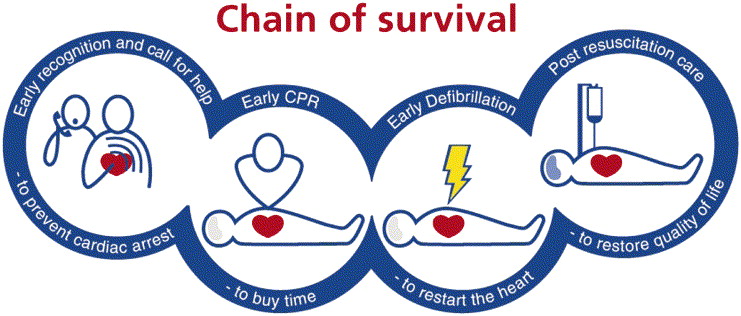
The Cardiac Chain of Survival is a sequence of critical steps that must be performed in order to improve the chances of survival for someone experiencing a sudden cardiac arrest. The most common adult chain of survival includes: 1. Early Recognition and Emergency Response (calling 911), 2. Early CPR (to keep oxygen flowing), 3. Rapid Defibrillation (using an AED to restart the heart), 4. Advanced Life Support (by EMS), and 5. Integrated Post-Cardiac Arrest Care (hospital care for recovery).
LINKS OF THE CHAIN OF SURVIVAL
Early Recognition and Activation of the Emergency Response:The first step is to recognize the signs of cardiac arrest and immediately call emergency services (like 911).
Early CPR (Cardiopulmonary Resuscitation): Performing high-quality CPR, especially chest compressions, helps to keep vital organs like the brain supplied with oxygen until more advanced care is available.
Rapid Defibrillation:Using an Automated External Defibrillator (AED) to deliver an electric shock to the heart can restart its normal rhythm.
Effective Advanced Life Support (ALS): Emergency Medical Services (EMS) arrive and provide more advanced medical care, including administering medications and continuing resuscitation efforts.
Integrated Post-Cardiac Arrest Care: After the heart is restarted, integrated care in a hospital setting is crucial for recovery and managing potential complications.
Why the Chain of Survival is Important
Each link in the chain is interdependent; if one link is broken or delayed, the chances of survival are significantly reduced. By providing timely, coordinated care, the chain of survival improves outcomes for people who experience sudden cardiac arrest.
The hymen has a reputation for being an indicator of sexual activity — like a hard, seal-like covering that blocks your vagina — but it usually has no connection to whether a female has had sex. In reality, it’s soft and elastic and doesn’t necessarily block your vaginal opening. It can break from everyday activities, inserting a tampon or having sex. –
What happens when a woman’s hymen breaks?
Some know when their hymen breaks, while others don’t. Like other tissues in your body, your hymen is flexible and can stretch. It doesn’t usually tear the first time it’s pressed on. Rather, it breaks as a result of being worn down. It’s not like the instant pain you’d feel if you tore a muscle or broke a bone.
Some people experience pain or light bleeding when their hymen breaks, but most will feel nothing. Since it’s a flexible piece of tissue, it stretches and thins over time from day-to-day activities or from using tampons. If you bleed when your hymen breaks, you may believe it’s your period or spotting.
Indigenous peoples of the Americas have a historically high frequency of blood type O, with some communities showing nearly universal O type blood, such as the Navajo and Quechua. This genetic trait is linked to an Ancestral Informative Marker (AIM) related to the G542A mutation, which emerged in Beringia during the migration into the Americas from Asia. Scientists continue to study why this genetic uniformity exists, exploring theories about founder effects, adaptation to diseases like malaria, and unique evolutionary histories.
High Frequency of Type O Blood
Near Universal Presence:Type O blood is a defining feature of many Indigenous populations in the Americas.
Examples:Studies have found nearly 100% Type O blood in certain Quechua communities in Peru, while other groups like the Navajo in Arizona and the Yanomami in the Amazon have very high frequencies (99% and 92% respectively).
Genetic Origins
Beringian Migration:The O blood type gene, specifically the O1V542 allele, is thought to have been selected in the Native American ancestral population during their migration from Asia through Beringia.
Ancestral Informative Marker (AIM):The G542A mutation, found in the ABO gene, is a unique marker in Native American populations and helps trace their genetic origins.
Scientific Theories and Research
Founder Effect:A single founding population could have carried this blood type, leading to its high frequency through genetic drift and isolation.
Disease Resistance:Type O blood is associated with resistance to severe malaria, suggesting a possible evolutionary advantage against this ancient disease in the Americas.
Continued Study:Research continues to investigate the biological and historical reasons behind this genetic uniformity, which offers insights into the peopling of the Americas and human evolution.
Because group O blood can be received by anyone in a blood transfusion, it was originally thought that this was the ancestral blood type, but more recent work suggests that there are several different mutations that can deactivate the A or B genes to turn them into O. This makes a firm evolutionary timeline much harder to establish and there are several competing theories that contradict each other.
What they agree on is that AB is the most recent and didn’t occur until the 16th Century when group A populations from Europe and group B populations from Asia began to mix. The other blood groups are tens of thousands of years old with B being more recent than A. The oldest group is either group A or one of the forms of group O.
Type O blood lacks A and B antigens, with O-positive being the most common overall type and O-negative being the universal blood donor for emergencies, as its red blood cells can be given to any patient regardless of their blood type. O-positive blood is also in high demand because it can be given to the majority of the population (those with a positive blood type).
Characteristics of Type O Blood
Antigens:Type O red blood cells do not have the A or B antigens on their surface.
Rh Factor:
O-positive:Has the Rh factor present on the red blood cells, making it a positive blood type.
O-negative: Lacks the Rh factor, making it a negative blood type.
Importance of Type O Blood
Universal Donor (O-negative):O-negative blood is crucial for emergency situations when a patient’s blood type is unknown, as it can be given to anyone.
High Demand:Both O-positive and O-negative blood types are in high demand.
O-positive: It is the most common blood type in the population and can be transfused to any patient with a positive blood type (A+, B+, AB+, O+).
O-negative: It is in constant demand for critical care, emergency resuscitation, and for immune-deficient newborns.
Who can receive O blood?
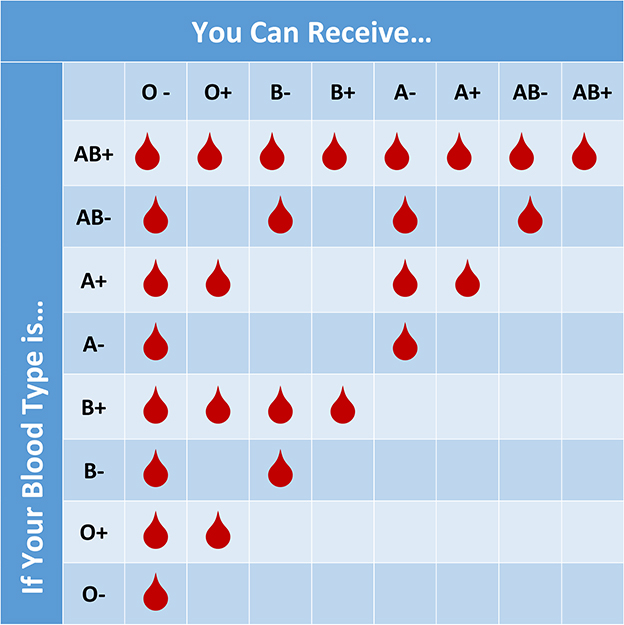
O-negative recipients: can only receive blood from O-negative donor;
O-positive recipients: can receive blood from O-positive or O-negative donors.
How Blood Type Is Determined And Why You Need To Know – Red Cross – US
Blood types are determined by the presence or absence of certain antigens – substances that can trigger an immune response if they are foreign to the body. Since some antigens can trigger a patient’s immune system to attack the transfused blood, safe blood transfusions depend on careful blood typing and cross-matching. Do you know what blood type is safe for you if you need a transfusion?
There are four major blood groups determined by the presence or absence of two antigens, A and B, on the surface of red blood cells. In addition to the A and B antigens, there is a protein called the Rh factor, which can be either present (+) or absent (–), creating the 8 most common blood types (A+, A-, B+, B-, O+, O-, AB+, AB-).
What Is A Universal Blood Donor?
Universal donors are those with an O negative blood type. Why? O negative blood can be used in transfusions for any blood type.
Type O is routinely in short supply and in high demand by hospitals – both because it is the most common blood type and because type O negative blood is the universal blood type needed for emergency transfusions and for immune deficient infants.
Approximately 45 percent of Caucasians are type O (positive or negative), but 51 percent of African-Americans and 57 percent of Hispanics are type O. Minority and diverse populations, therefore, play a critical role in meeting the constant need for blood.
Types O negative and O positive are in high demand. Only 7% of the population are O negative. However, the need for O negative blood is the highest because it is used most often during emergencies. The need for O+ is high because it is the most frequently occurring blood type (37% of the population).
The universal red cell donor has Type O negative blood. The universal plasma donor has Type AB blood. For more about plasma donation, visit the plasma donation facts.
Nearly 16 million blood components are transfused each year in the U.S.”
Two people were injured by a bear in the area of Peoples Road near Fifth Line East yesterday afternoon. According to a release from the Sault Ste. Marie Police Service, the victims may have inadvertently come between a bear and its cubs. The pair sustained serious but non-life-threatening injuries and were transported to the hospital.
The bear has yet to be located as of Thursday morning and the Ministry of Natural Resources is managing the incident.
Sault Police are reminding community members using walking trails to remain alert, keep dogs on a leash, and make plenty of noise while walking to alert bears to your presence so they can avoid you.
Not every bear encounter is an emergency situation. Call 911 if the bear poses an immediate threat to personal safety and exhibits threatening or aggressive behaviour. For non-emergency encounters call the toll-free Bear Wise reporting line at 1-866-514-2327.
For more information on preventing and reporting encounters with black bears please visit this page.
The Algoma Veterinary Clinic is reporting a confirmed case of West Nile Virus killed a horse in East Algoma.
West Nile Virus is a neurological condition that can affect the spinal column or the brain, and is usually spread by the bite of a mosquito that has fed on an infected bird.
Clinic owner and veterinarian Dr. Keith Good says the horse succumbed to the virus and died about a week-and-a-half ago. Due to privacy concerns, he couldn’t say exactly where the horse was located when it died.
“This one here developed weakness in its hind end. It got to the point where it had trouble standing,” Good said. “It didn’t really have seizures, but there were obvious neurological signs.”
Good said there’s a vaccine available to horse owners that provides protection from the virus. “It requires two doses at least three weeks apart, and then probably another week to develop full protection,” he said.
The virus can’t be transmitted from horse to horse, or from horse to human.
“It’s kind of a moot point at this time of the year, because by the time we get horses that have never been vaccinated before protected, mosquitoes will probably be gone for the season.” “Even infected horses have so little virus in their bloodstream that mosquitoes don’t usually pick it up from a horse,” Good said. “The transmission is from birds to horses.”
It’s the first time the clinic has seen a confirmed case of West Nile Virus in a horse since 2017.
#science #ptsd # treatments – Trauma Explained – with Dr. Anthony Kaveh
Your trauma is engrained in the mysterious stellate ganglion. Learn how numbing those nerves can relieve PTSD, long COVID, and traumatic brain injury (TBI). 💛 Learn about Dr. Kaveh’s transformational Ketamine clinic: https://www.clarus-health.com 🫀 Exclusive access to Dr. Kaveh’s live streams + more: / @medicalsecrets
0:00 – introduction 0:48 – the stellate ganglion 1:36 – blocking the stellate ganglion 2:00 – PTSD and the stellate ganglion 2:40 – Long COVID and the stellate ganglion 3:47 – Emotional and infectious trauma link 4:00 – Traumatic brain injury and stellate ganglion 4:54 – How I do the stellate ganglion block 6:11 – Color doppler mode on ultrasound 7:13 – Numbing the nerve 8:33 – C4 level blockade 8:49 – Evaluating immediate changes of SGB 9:37 – A message of hope Many patients are told their trauma symptoms are “all in their head.” But science shows otherwise. Trauma is encoded in the body—and a critical nerve in the neck, the stellate ganglion, may hold the key. In this video, I explain how the stellate ganglion transmits fight-or-flight responses and how blocking it with a stellate ganglion block (SGB) can help patients with PTSD, long COVID, and traumatic brain injury. You’ll learn why trauma is not just psychological, how it gets stored physically in the nervous system, and why this breakthrough aligns with what many already know from The Body Keeps the Score: trauma is written into our bodies. You’ll learn:
What the stellate ganglion is and how it controls fight-or-flight responses
How SGB has been used for nearly 100 years in pain medicine
Why SGB reduces PTSD symptoms like hypervigilance, nightmares, and intrusive thoughts
How SGB may reset the immune system in long COVID and restore brain function in TBI
Why emotional trauma, infectious trauma, and physical trauma may all converge here
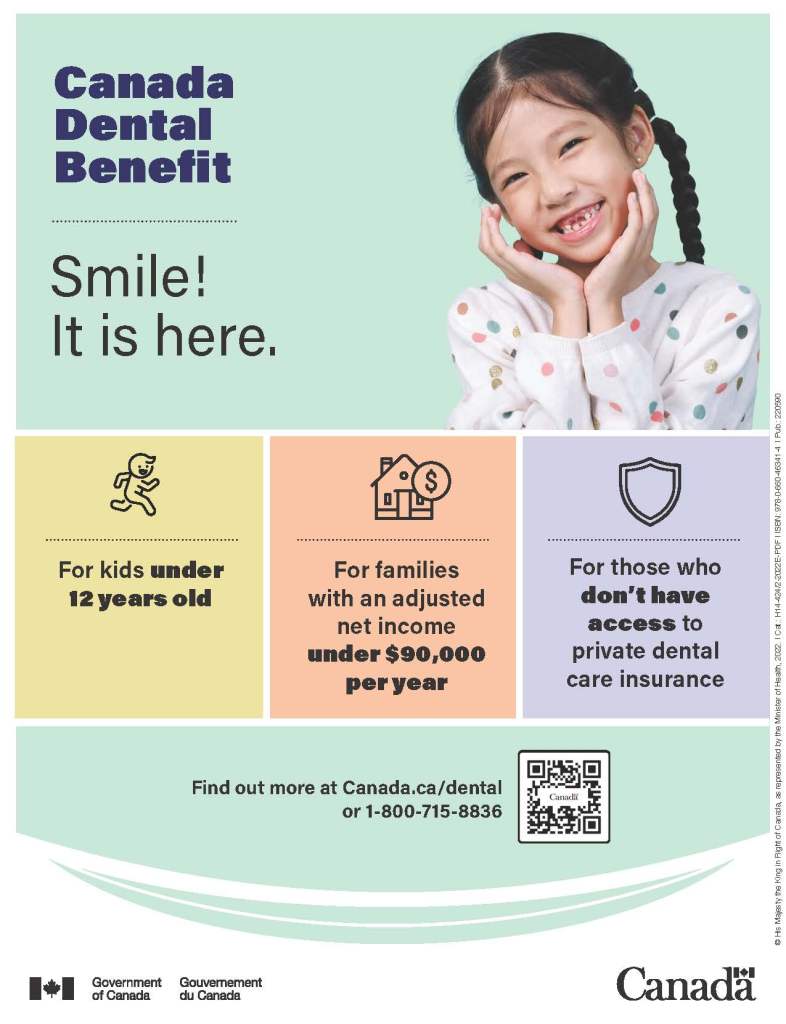
The Canadian Dental Care Plan (CDCP) provides dental care coverage to Canadian residents who have an adjusted family net income below $90,000 and who don’t have access to dental insurance. For eligible Canadian residents, the CDCP will help cover the cost of various oral health care services.
Your family net income (line 23600 of your tax return plus line 23600 of your spouse’s or common-law partner’s tax return)Minusany universal child care benefit (UCCB) and registered disability savings plan (RDSP) income received (line 11700 and line 12500 of your or your spouse’s or common-law partner’s tax return)Plusany UCCB and RDSP amounts repaid (line 21300 and line 23200 of your or your spouse’s or common-law partner’s tax return)
The Day (The Ressurection) when neither wealth will be of any use (to any one) nor sons, [ 88] except to one who will come to Allah with a sound heart, [ Surah As Shuarah – the Poets 26:89]
This verse has declared that wealth and children will not be of any help to a person on the Day of Judgment. This declaration is subjected to exception in the words, “except to one who will come to Allah with sound heart”
Of the most significant effects of persistent sinning that remains unchecked, is that it hardens the heart. As The Prophet ﷺ said, “Verily, when the servant commits a sin a black spot appears upon his heart. If he abandons the sin, seeks forgiveness, and repents, then his heart will be polished. If he returns to the sin, the blackness will be increased until it overcomes his heart. It is the covering that Allah has mentioned: ‘No, but on their hearts is a covering because of what they have earned’.” [Tirmidhi]
Al-Nu’man ibn Bashir reported: The Messenger of Allah, peace and blessings be upon him, said:
Verily, in the body is a piece of flesh which, if sound, the entire body is sound, and if corrupt, the entire body is corrupt. Truly, it is the heart. Source: Ṣaḥīḥ al-Bukhārī 52, Grade: Muttafaqun Alayhi
We said, “O Messenger of Allah, we know truthful in speech. What is a heart swept clean?” The Prophet said:
هُوَ التَّقِيُّ النَّقِيُّ لا إِثْمَ فِيهِ وَلا بَغْيَ وَلا حَسَدَ
One that is Godfearing and pure, in which there is neither sin, nor transgression, nor envy. We said, “Who shows a sign of it?” The Prophet said: الَّذِي يَشْنَأُ الدُّنْيَا وَيُحِبُّ الآخِرَةَ One who despises worldliness and loves the Hereafter. We said, “And who shows a sign of it?” The Prophet said: A believer with good character.Source: Shu’ab al-Imān 4462, Grade: Sahih
مُؤْمِنٌ فِي خُلُقٍ حَسَنٍ
Anas ibn Malik reported: The Messenger of Allah, peace and blessings be upon him, said to me:
Young man, if you are able every morning and evening to remove any rancor from your heart towards anyone, do so.
Abu Huraira reported: A man came to the Messenger of Allah, peace and blessings be upon him, and he complained about the hardness of his heart. The Prophet said:
Abu Dharr reported: The Messenger of Allah, peace and blessings be upon him, said:
Wealth is in the heart and poverty is in the heart. Whoever is wealthy in his heart will not be harmed no matter what happens in the world. Whoever is impoverished in his heart will not be satisfied no matter how much he has in the world. Verily, he will only be harmed by the greed of his own soul.
We will quote here some of the effects of sin, as described by Ibn Al-Qayyim (may Allah have mercy on him):
Being deprived of knowledge for knowledge is light that Allah causes to reach the heart, and sin extinguishes that light. When Ash-Shafi`i sat before Malik and read to him, he admired him because of the intelligence, alertness and understanding that he saw in him. He said, “I think that Allah has caused light to enter your heart, so do not extinguish it with the darkness of sin.”
Being deprived of provision. In Musnad Ahmad it is narrated that Thawban (may Allah be pleased with him) said: “The Messenger of Allah (peace and blessings of Allah be upon him) said: ‘A man is deprived of provision because of the sins that he commits.’” (Narrated by Ibn Majah, 4022, classed as sound by Al-Albani in Sahih Ibn Majah)
Sense of alienation that comes between a person and his Lord, and between him and other people. One of the Salaf (righteous predecessors) said: “If I disobey Allah, I see that in the attitude of my riding beast and my wife.”
Things become difficult for him, so that he does not turn his attention towards any matter but he finds the way blocked or he finds it difficult. By the same token, for the one who fears Allah, things are made easy for him.
The sinner will find darkness in his heart, which he will feel just as he feels the darkness of night. So this darkness affects his heart as the physical darkness affects his vision. For obedience is light and disobedience is darkness. The stronger the darkness grows, the greater becomes his confusion, until he falls into innovation, misguidance and other things that lead to doom, without even realizing, like a blind man who goes out in the darkness of the night, walking alone
This darkness grows stronger until it covers the eyes, then it grows stronger until it covers the face, which appears dark and is seen by everyone. `Abdullah ibn `Abbas said: “Good deeds make the face light, give light to the heart, and bring about ample provision, physical strength and love in people’s hearts. Bad deeds make the face dark, give darkness to the heart, and bring about physical weakness, a lack of provision and hatred in people’s hearts.”
Deprivation of worship and obedience. If sin brought no punishment other than that it prevents a person from doing an act of worship which is the opposite of sin, and cuts off access to other acts of worship, that would be bad enough. So the sin cuts off a third way and a fourth way and so on, and because of the sin he is cut off from many acts of worship, each of which would have been better for him than this world and everything in it. So he is like a man who eats food that is bound to cause a lengthy sickness, and thus he is deprived of many other foods that are better than that. And Allah is the One Whose help we seek.
Sin breeds sin until it dominates a person and he cannot escape from it.
Sin weakens a person’s willpower. It gradually strengthens his will to commit sin and weakens his will to repent until there is no will in his heart to repent at all… so he seeks forgiveness and expresses repentance, but it is merely words on the lips, like the repentance of the liars, whose hearts are still determined to commit sin and persist in it. This is one of the most serious diseases that are most likely to lead to doom.
He will become desensitized and will no longer find sin abhorrent, so it will become his habit, and he will not be bothered if people see him committing the sin or talk about him.
For the leaders of immorality, this is the ultimate shamelessness in which they find great pleasure, such that they feel proud of their sin and will speak of it to people who do not know that they have done it, saying, “O so and so, I did such and such.” Such people cannot be helped and the path to repentance is blocked for them in most cases. The Prophet (peace and blessings of Allah be upon him) said: “All of my ummah (followers) will be fine except for those who commit sin openly, and that includes cases where Allah conceals a person’s sin, but the following morning he exposes himself and says, ‘O So and so, I did such and such last night, so he shamelessly exposes himself when all night his Lord had concealed his sin.” (Narrated by Al-Bukhari, 5949 and Muslim, 2744).
When there are many sins they leave a mark on the heart of the person who commits them, so he becomes one of the negligent. As one of the Salaf said, concerning the verse–
{Nay! But on their hearts is the Ran (covering of sins and evil deeds) which they used to earn.} [Al-Mutaffifin 83:14 – interpretation of the meaning] – this means sin after sin.
How this starts is that the heart gets stained by sin, and if the sin increases then the stain grows bigger until it becomes the Ran (covering of sin and evil deeds), then it increases until it becomes a seal, and the heart becomes covered and sealed. If that happens after a person had been guided and had understood, then his heart is turned upside down, and at that point the devil gains control over him and directs him as he wants.
“Have you seen he who has taken as his god his [own] desire, and Allah has sent him astray due to knowledge and has set a seal upon his hearing and his heart and put over his vision a veil? So who will guide him after Allah ? Then will you not be reminded?” (45:23)
Young man, that is my Sunnah. Whoever revives my Sunnah has loved me, and whoever loves me will be with me in Paradise. Source: Sunan al-Tirmidhī 2678, Grade: Hasan
REPENTANCE: The Prophet ﷺ said, that Allah said in a Hadith Qudsi, “O son of Adam, so long as you call upon Me and ask of Me, I shall forgive you for what you have done, and I shall not mind. O son of Adam, were your sins to reach the clouds of the sky and were you then to ask forgiveness of Me, I would forgive you. O son of Adam, were you to come to Me with sins nearly as great as the earth and were you then to face Me, ascribing no partner to Me, I would bring you forgiveness nearly as great as it.”
Sahih International: And it has already come down to you in the Book that when you hear the verses of Allah [recited], they are denied [by them] and ridiculed; so do not sit with them until they enter into another conversation. Indeed, you would then be like them. Indeed Allah will gather the hypocrites and disbelievers in Hell all together – Surah Nisa(The Women) – 4:10;
The most important thing to remember is that the conception of knowledge (Al-Ilm) in Islam is the Guiding Light (Huda) separating right from wrong (Al furqan). Therefore, in the same way the sun brings light to our eyes to see the world around us, Al-Ilm (Knowledge) is the source of guidance to see the signs of Allah (SWT) around us.
“We will show them Our signs in the universe and in their own selves, until it becomes manifest to them that this (the Quran) is the truth” (Quran; 41:53).
Based on this Quranic verse, Allah (SWT) exhorts Muslims to observe and study the universe in order to find some of His signs. For that reason, many verses of the Noble Quran invite Muslims to study nature and seek knowledge, and this has been interpreted to mean encouragement for scientific inquiry.
The importance of seeking knowledge is repeatedly emphasized in the Noble Quran with frequent injunctions, such as “God will exalt those of you who believe and those who have knowledge to high degrees” (Quran58:11), “O my Lord! Increase me in knowledge” (Quran 20:114), and “As God has taught him, so let him write” (Quran 2:282). Such Quranic verses provide a forceful stimulus for the Islamic community to strive for education and knowledge, and range from previously unknown facts about the universe to the wonders on Earth, such as the benefits of pomegranate.
Moreover, I consider this Quranic verse “And of knowledge, you mankind have been given only a little” (Quran 17:85) as an inspiration for the acquisition of new knowledge. In this perspective, according to Mr. Shamsher Ali, there are around 750 verses in the Noble Quran dealing with natural phenomena [1]. For some Muslim writers, the study of science stems from Al-Tawheed [2], which means that there is a complete harmony between the signs of Allah (SWT) in nature, scientifically proven, and His words in the Noble Quran. Indeed, the Quran, which was revealed fourteen centuries ago, mentioned scientific facts only recently discovered. These are just some of the many scientific facts found in the Quran:
1. Water
In Surah Al-Anbya, it was revealed: “We made every living thing from water, will they not believe?” (Quran, 21:30) and it was only after the discovery of the microscope that it was concluded that all living things consist mostly of water – while in the deserts of Arabia, the last thing a man could guess is that all of life ultimately came from water.
2. Universe: The Big Bang Theory
In Surah Al-Anbya, Allah (SWT) also states: “Have those who disbelieved not considered that the heavens and the earth were a joined entity, and We separated them” (Quran, 21:30). In 1929, American astronomer Edwin Hubble proposed the Hubble’s Law according to which all entities in space are moving away from the Earth at speeds proportional to their distance i.e. the greater the distance from earth, the faster they are moving. Soon after this, he discovered that galaxies are moving away from each other as well which means that the universe is expanding overall.
This laid the basis for the Big Bang Theory which states that around 12-15 billion years ago the universe came into existence from one single extremely hot and dense point, due to an explosion of this point the universe came into being. The universe, since then, has been expanding from this single point. In 1965, radio astronomers Arno Penzias and Robert Wilson won the Noble Prize for the discovery that confirmed the Big Bang theory [3]. When looking at the verse cited above, while acknowledging Allah Knows best, it remains astounding that the Quran had already revealed that “the heavens and the earth were a joined entity, and We separated them”.
3. Universe: The Big Crunch Theory
Again, in Surah Al-Anbya, Allah (SWT) says: “The Day when We will fold the heaven like the folding of a [written] sheet for the records. As We began the first creation, We will repeat it. [That is] a promise binding upon Us. Indeed, We will do it” (Quran, 21:104). This fits in with the theory of Big Crunch which talks about how the universe will be pulled back into the black holes and again form a tiny mass [4].
4. Embryology
In Surah Al-Mu’minun, Allah (SWT) says “We created man from an extract of clay. Then We made him as a drop in a place of settlement, firmly fixed. Then We made the drop into an alaqah (leech, suspended thing, and blood clot), then We made the alaqah into a mudghah (chewed substance)…” (Quran 23:12-14).
Science has only proved this with the help of the latest technology. It is Professor Emeritus Keith L. Moore who is one of the world’s most well-known scientists in the fields of anatomy and embryology, who said that “It is clear to me that these statements must have come to Muhammad from God, because almost all of this knowledge was not discovered until many centuries later” [6].
5. The Sky’s Protection
In Surah Al-Anbya, Allah (SWT) says: “And We made the sky a protected ceiling, but they, from its signs, are turning away” (Quran 21:32). It is a scientific fact that the sky, with all of its gasses, protects the earth and life that is present on it from the harmful rays of the sun. If there was no protective layer, life on earth would cease to exist as the temperature on earth would be freezing at -270.556°C, the same as the temperature in space.
6. Iron within Meteorites
In Surah Al-Hadid it is written that: “We sent down Iron with its great inherent strength and its many benefits for humankind” (Quran 57:25). According to M. E. Walrath, iron is not natural to the earth. Scientists state that billions of years ago, the earth was struck by meteorites. It was within these meteorites that iron was present and due to explosion on earth, we now have iron available to us [7]. The Quran, as stated above, has already enlightened us of this fact by stating “We sent down iron with its great inherent strength…”.
7. The Meeting of the Seas
In Surah Ar-Rahman, it states “He released the two seas, meeting [side by side], Between them is a barrier [so] neither of them transgresses” (Quran, 55:19-20). Science has discovered that in places where two different seas meet, there is a barrier that divides them which helps both the seas maintain their own temperature, salinity, as well as density [8].
8. Sun Moving in Orbit
In Surah Al-Anbya, it states “And it is He who created the night and the day and the sun and the moon; all [heavenly bodies] in an orbit are swimming” (Quran, 21:33). Although it was only a widespread belief in the 20th century amongst the astronomers, today it is a well-established fact that the Sun, the Moon, and all the other bodies in the Universe are moving in an orbit and constantly moving, not stationary [9] as commonly thought before.
In Surah An-Naba, Allah (SWT) states: “Have We not made the earth a resting place? And the mountains as stakes?” (Quran, 78:6-7). In a book by geophysicist Frank Press called ‘Earth’ (1986), he explains how the mountains are like stakes and are buried deep within the earth’s surface [10]. Mt. Everest which has a height of approximately 9 km above sea level has a root deeper than 125 km – thus only reinforcing the Quranic revelation of the importance and strength of mountains on our earth.
10. Expansion of the Universe
In Surah Adh-Dhariyat, Allah (SWT) says “And the heaven We constructed with strength, and indeed, We are [its] expander” (Quran, 51:47). According to the prominent physicist Stephen Hawking in his book ‘A Brief History of Time’, “The discovery that the universe is expanding was one of the great intellectual revolutions of the 20th century” [11], although centuries before the Quran had already revealed to us that in regards to the universe, “We are its expander”.
11. Pain Receptors
In Surah An-Nisa, it is stated that “We shall send those who reject our revelations to the (hell) fire. When their skins have been burned away, We shall replace them with new ones so that they may continue to feel the pain: God is almighty, all-wise” (Quran, 4:56).
For a long time it was thought that the sense of feeling and pain was dependent on the brain. However, it has been discovered that there are pain receptors present in the skin. Without these pain receptors, a person would not be able to feel pain [12] – another example of the scientific miracles of the Holy Quran.
12. Internal Waves in the Oceans
In Surah An-Nur, Allah (SWT) has revealed: “Or [they are] like darknesses within an unfathomable sea which is covered by waves, upon which are waves, over which are clouds – darknesses, some of them upon others. When one puts out his hand [therein], he can hardly see it. And he to whom Allah has not granted light – for him there is no light” (Quran, 24:40).
Incredibly, oceanographers have stated that unlike the belief that waves only occur on the surface, there are waves that take place internally in the oceans, below the surface of the water. Invisible to the human eye, these can only be detected through special equipment [13].
13. Frontal Lobe
In Surah Al-Alaq, in the story of a man named Abu Jahl who was a cruel oppressive tribal leader in the times of the Prophet Mohammad (peace and blessings of Allah be upon him), Allah revealed a verse to warn him. Therein Allah (SWT) says: “No indeed! if he does not stop, We will seize him by the forehead, his lying, sinful forehead” (Quran, 96:15-16).
According to a book titled ‘Essentials of Anatomy and Physiology,’ it is clearly stated that the forehead or frontal area of the brain is responsible for motivation and the foresight to plan and initiate movements. All this takes place in the prefrontal area of the brain. The part of the brain that is responsible for movement and planning is said to be seized if he does not stop. Other studies have proved that it is this prefrontal region that is responsible for the function of lying [14].
Another study at the University of Pennsylvania in which volunteers were questioned during a computerized interrogation showed that the volunteers who were lying had increased activity in their prefrontal and premotor cortices [15]. Subhanallah, there is a deeper meaning behind why the Quran stated: “We will seize him by the forehead”.
The most important thing to remember is that the conception of knowledge (Al-Ilm) in Islam is the Guiding Light (Huda) separating right from wrong (Al furqan). Therefore, in the same way the sun brings light to our eyes to see the world around us, Al-Ilm is the source of guidance to see the signs of Allah (SWT) around us. More such facts that are already mentioned in the Quran and will be proven in the future by mankind as Allah (SWT) says in the Quran in Surah Ar-Rahman, “So which of the favors of your Lord would you deny?”
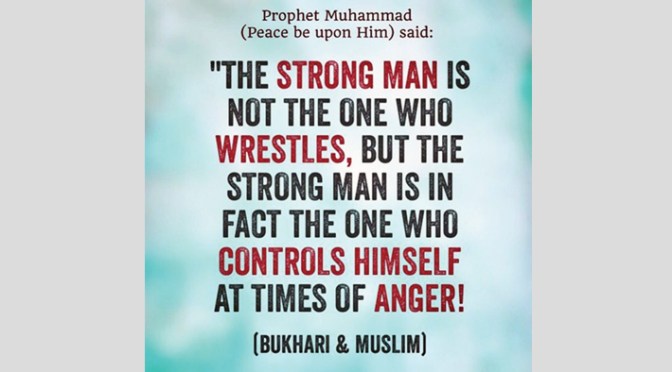
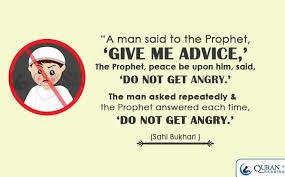
Abdullah ibn Mas’ud reported: The Messenger of Allah, peace and blessings be upon him, said, “Whom do you consider to be a fighter among you?” We said, “One whom men cannot wrestle down.” The Prophet said, “It is not so. Rather, it is one who controls himself when angry.”
Source: Ṣaḥīḥ Muslim 2608
Abu Huraira reported: The Messenger of Allah, peace and blessings be upon him, said, “The strongest are not the best wrestlers. Verily, the strongest are those who control themselves when angry.”
Source: Ṣaḥīḥ al-Bukhārī 6114, Ṣaḥīḥ Muslim 2609
Imam Ibn ‘Abdul Barr commented, “This is evidence that striving against oneself is a more difficult task and is better than striving against the enemy.”
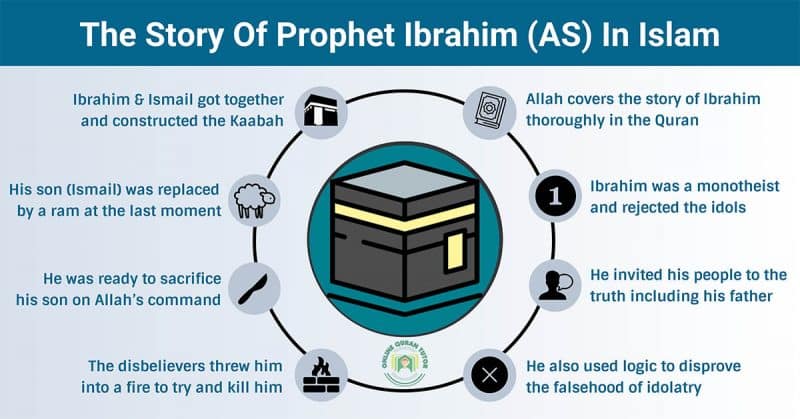
Are you ˹O Prophet˺ not aware of the one who argued with Abraham about his Lord because Allah had granted him kingship? ˹Remember˺ when Abraham said, “My Lord is the One Who has power to give life and cause death.” He argued, “I too have the power to give life and cause death.” Abraham challenged ˹him˺, “Allah causes the sun to rise from the east. So make it rise from the west.” And so the disbeliever was dumbstruck. And Allah does not guide the wrongdoing people. – surah Al Baqarah 2: 258 (Prophet Ibrahim on the Power of Allah) in a Dilogue with Nimrud (Nimrod in the Bible)
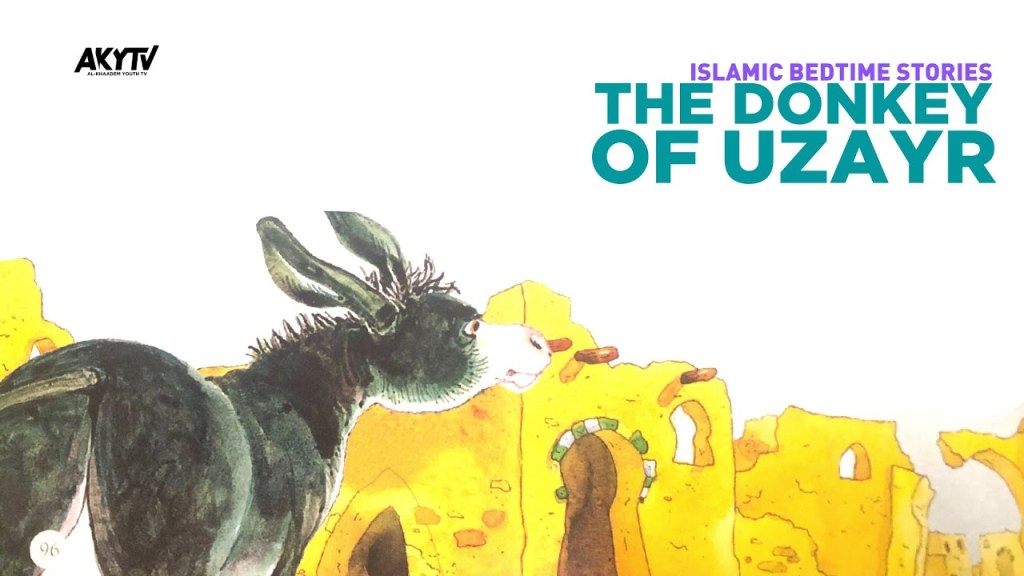
Or ˹are you not aware of˺ the one who passed by a city which was in ruins. He wondered, “How could Allah bring this back to life after its destruction?” So Allah caused him to die for a hundred years then brought him back to life. Allah asked, “How long have you remained ˹in this state˺?” He replied, “Perhaps a day or part of a day.” Allah said, “No! You have remained here for a hundred years! Just look at your food and drink—they have not spoiled. ˹But now˺ look at ˹the remains of˺ your donkey! And ˹so˺ We have made you into a sign for humanity. And look at the bones ˹of the donkey˺, how We bring them together then clothe them with flesh!”1 When this was made clear to him, he declared, “˹Now˺ I know that Allah is Most Capable of everything.” (prophet Uzair/ Ezra -aleihis Salam/ Ezra) – surah Baqarah 2-260;
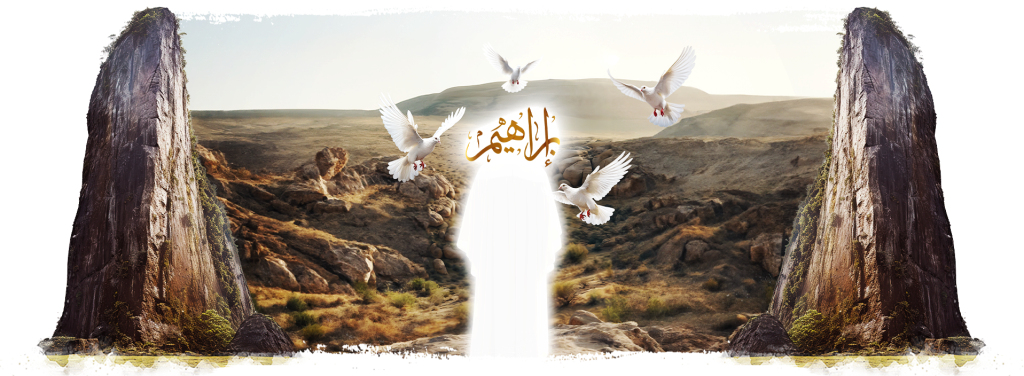
And ˹remember˺ when Abraham said, “My Lord! Show me how you give life to the dead.” Allah responded, “Do you not believe?” Abraham replied, “Yes I do, but just so my heart can be reassured.” Allah said, “Then bring four birds, train them to come to you, ˹then cut them into pieces,˺ and scatter them on different hilltops. Then call them back, they will fly to you in haste. And ˹so you will˺ know that Allah is Almighty, All-Wise.”
“Indeed, Ibrahim was a whole ummah by himself devout to Allah, unswervingly upright, and he was not of the associators, (Those who associate others with Allah) (He was) thankful for Allah’s Graces. He selected him, and He guided him to a straight Path. And We gave him good in this world, and in the Hereafter he shall be of the righteous. Then, We have inspired you (O Muhammad ﷺ saying): “Follow the way of Ibrahim with exclusive devotion to Allah. and he was not of the Mushrikun (polytheists, idolaters, disbelievers, etc.)”
And ˹on Judgment Day˺ Allah will say, “O Jesus, son of Mary! Remember My favour upon you and your mother: how I supported you with the holy spirit1 so you spoke to people in ˹your˺ infancy and adulthood. How I taught you writing, wisdom, the Torah, and the Gospel. How you moulded a bird from clay—by My Will—and breathed into it and it became a ˹real˺ bird—by My Will. How you healed the blind and the lepers—by My Will. How you brought the dead to life—by My Will. How I prevented the Children of Israel from harming you when you came to them with clear proofs and the disbelievers among them said, “This is nothing but pure magic.”
˹Remember˺ when the angels proclaimed, “O Mary! Allah gives you good news of a Word1 from Him, his name will be the Messiah,2 Jesus, son of Mary; honoured in this world and the Hereafter, and he will be one of those nearest ˹to Allah˺. – surah Al Imran 3:48
And Allah will teach him writing and wisdom, the Torah and the Gospel,
and ˹make him˺ a messenger to the Children of Israel ˹to proclaim,˺ ‘I have come to you with a sign from your Lord: I will make for you a bird from clay, breathe into it, and it will become a ˹real˺ bird—by Allah’s Will. I will heal the blind and the leper and raise the dead to life—by Allah’s Will. And I will prophesize what you eat and store in your houses. Surely in this is a sign for you if you ˹truly˺ believe. – surah Al Imran 3:49
And I will confirm the Torah revealed before me and legalize some of what had been forbidden to you. I have come to you with a sign from your Lord, so be mindful of Allah and obey me. surah Al Imran 3:50














 bismillahschool.net