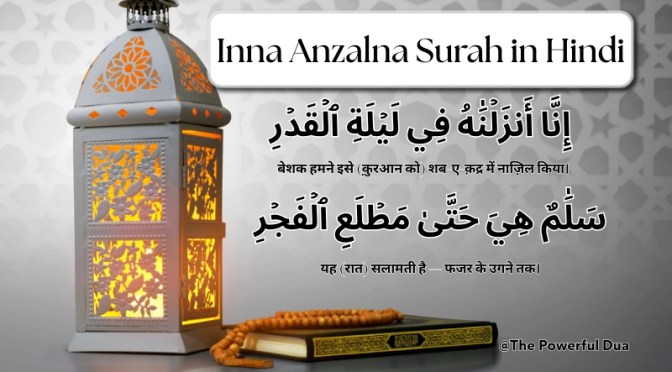
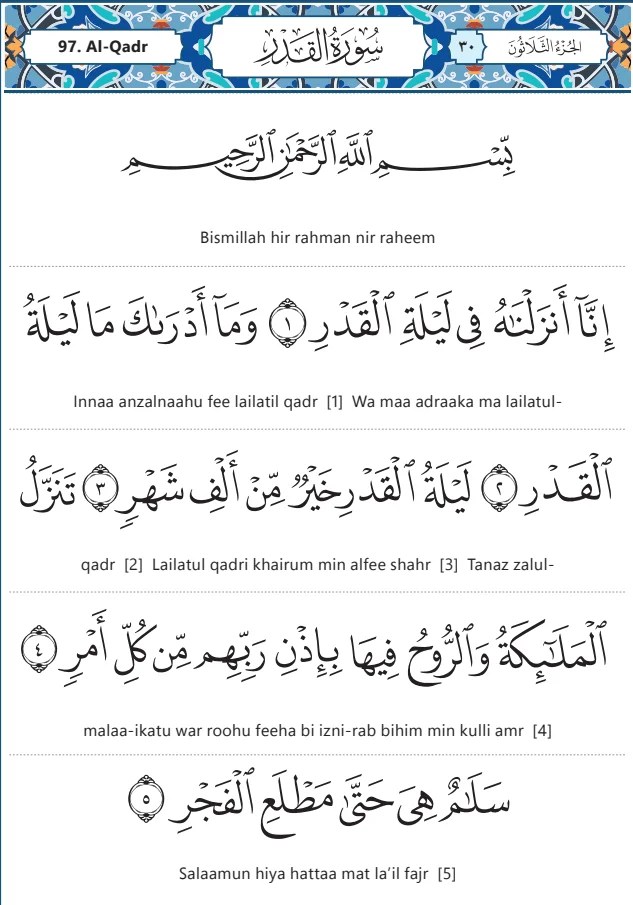
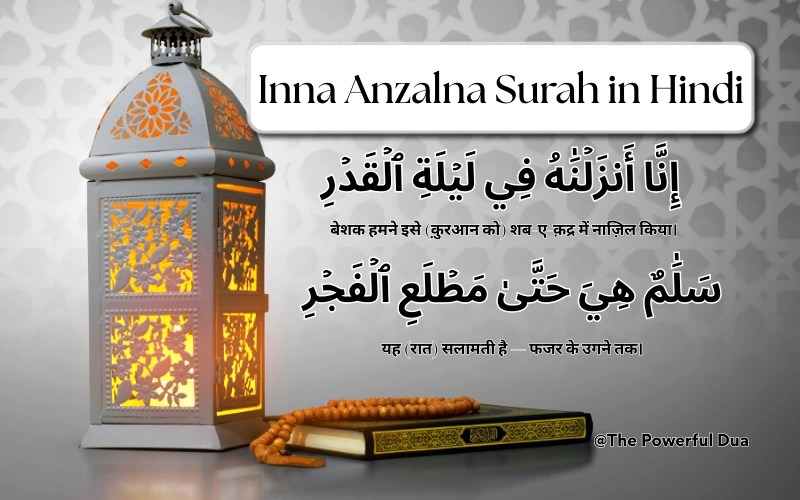
إِنَّا أَنْزَلْنَاهُ فِي لَيْلَةِ الْقَدْرِ Innā anzalnāhu fī laylati-l-qadr Indeed, We sent it down on the Night of Decree.
2. وَمَا أَدْرَاكَ مَا لَيْلَةُ الْقَدْرِ Wa mā adrāka mā laylatu-l-qadr And what can make you know what is the Night of Decree?
3. لَيْلَةُ الْقَدْرِ خَيْرٌ مِنْ أَلْفِ شَهْرٍ Laylatu-l-qadri khayrun min alfi shahr The Night of Decree is better than a thousand months.
4. تَنَزَّلُ الْمَلَائِكَةُ وَالرُّوحُ فِيهَا بِإِذْنِ رَبِّهِمْ مِنْ كُلِّ أَمْرٍ Tanazzalu-l-malā’ikatu wa-r-rūḥu fīhā bi’idhni rabbihim min kulli amr The angels and the Spirit descend therein by permission of their Lord for every matter.
5. سَلَامٌ هِيَ حَتَّىٰ مَطْلَعِ الْفَجْرِ Salāmun hiya ḥattā maṭla’il-fajr Peace it is until the emergence of dawn.
Believe in Allah(God AllMighty) – doing Good and forbidding Evil, Paradise and Hellfire – and helping people believe in the afterlife and improve themselves to achieve best in afterlife;
(And of Ibrahim (Abraham) who fulfilled (or conveyed) all that (Allah ordered him to do or convey)) (53:37) -meaning, he was truthful and he was obedient to Allah’s legislation. Also, Allah said,
(Verily, Ibrahim was an Ummah (or a nation), obedient to Allah, Hanif (i.e. to worship none but Allah), and he was not one of those who were Al-Mushrikin (polytheists), (He was) thankful for His (Allah’s) favors. He (Allah) chose him and guided him to a straight path. And We gave him good in this world, and in the Hereafter he shall be of the righteous. Then, We have sent the revelation to you (O Muhammad saying): “Follow the religion of Ibrahim Hanif (Islamic Monotheism ـ to worship none but Allah) and he was not of the Mushrikin.) (16:120-123)
(Say (O Muhammad ): “Truly, my Lord has guided me to a straight path, a right religion, the religion of Ibrahim, Hanifan, and Ibrahim (to worship none but Allah, alone) and he was not of Al-Mushrikin.”/ not of Idolaters) (6:161) and,
(Ibrahim was neither a Jew nor a Christian, but he was a true Muslim Hanifan (Islamic Monotheism ـ to worship none but Allah alone) and he was not of Al-Mushrikin. Verily, among mankind who have the best claim to Ibrahim are those who followed him, and this Prophet (Muhammad ) and those who have believed (Muslims). And Allah is the Wali (Protector and Helper) of the believers) (3:67-68).
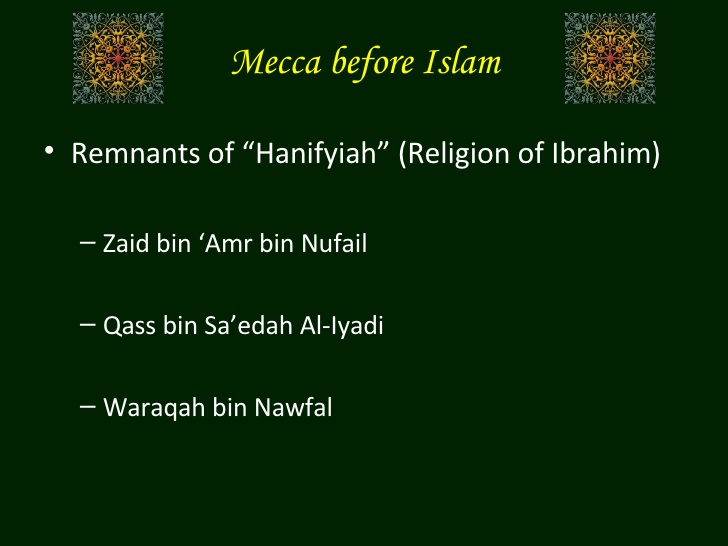
Zayd ibn Amr ibn Nufayl (died 605) was a monotheist and poet who lived in Mecca shortly before Islam.
The Promise of Paradise: The Prophet ﷺ said of Zaid: “He will be raised on the Day of Resurrection as a single nation [or like a nation], between me and ‘Isa (Jesus).”
Zaid bin ‘Amr ibn Nufail (رضي الله عنه) Being Upon Pure Monotheism (Al-Haneef)
Narrated ‘Abdullah bin ‘Umar (رضي الله عنه): The Prophet (ﷺ) met Zaid bin ‘Amr bin Nufail in the bottom of (the valley of) Baldah before any Divine Inspiration came to the Prophet (ﷺ). A meal was presented to the Prophet (ﷺ) but he refused to eat from it. (Then it was presented to Zaid) who said, “I do not eat anything which you slaughter in the name of your stone idols. I eat none but those things on which Allah’s Name has been mentioned at the time of slaughtering.”
Zaid bin ‘Amr used to criticize the way Quraysh used to slaughter their animals, and used to say, “Allah has created the sheep and He has sent the water for it from the sky, and He has grown the grass for it from the earth; yet you slaughter it in other than the Name of Allah. He used to say so, for he rejected that practice and considered it as something abominable.” [319]
Narrated ‘Abdullah bin ‘Umar (رضي الله عنه):
Zaid bin ‘Amr bin Nufail (رضي الله عنه) went to Shaam, inquiring about a true religion to follow. He met a Jewish religious scholar and asked him about their religion. He said, “I intend to embrace your religion, so tell me something about it.” The Jew said, “You will not embrace our religion unless you receive your share of Allah’s Anger.” Zaid (رضي الله عنه) said, “I do not run except from Allah’s Anger, and I will never bear a bit of it if I have the power to avoid it. Can you tell me of some other religion?” He said,“I do not know any other religion except the Haneef.” Zaid enquired, “What is Haneef?” He said, “Haneef is the religion of the Prophet) Ibraheem (عَلَيْهِ ٱلسَّلَامُ) who was neither a Jew nor a Christian, and he used to worship none but Allah (Alone)”
Then Zaid went out and met a Christian religious scholar and told him the same as before. The Christian said,“You will not embrace our religion unless you get a share of Allah’s Curse.”Zaid replied, “I do not run except from Allah’s Curse, and I will never bear any of Allah’s Curse and His Anger if I have the power to avoid them. Will you tell me of some other religion?”He replied, “I do not know any other religion except Haneef.”
Zaid enquired, “What is Haneef?” He replied, “Haneef is the religion of the Prophet) Ibraheem who was neither a Jew nor a Christian and he used to worship none but Allah (Alone)” When Zaid heard their Statement about the religion of) Ibraheem, he left that place, and when he came out, he raised both his hands and said, “O Allah! I make you my Witness that I am on the religion of Abraham.” [321]
Narrated Asma bint Abi Bakr (رضى الله عنها): “I saw Zaid bin ‘Amr bin Nufail (رضي الله عنه) standing with his back against the Ka’bah and saying, “O people of Quraysh! By Allah, none amongst you is on the religion of Abraham [322] except me.”He used to preserve the lives of little girls- If somebody wanted to kill his daughter he would say to him, “Do not kill her for I will feed her on your behalf.”
So he would take her, and when she grew up nicely, he would say to her father, “Now if you want her, I will give her to you, and if you wish, I will feed her on your behalf.” [323]
[319] Sahih Al-Bukhari 3826.;[321] Sahih Al-Bukhari 3827;[322] Prophet Ibraheem (عَلَيْهِ ٱلسَّلَامُ); [323] Sahih Al-Bukhari 3828.
Family
He was the son of Amr ibn Nufayl, a member of the Adi clan of the Quraysh tribe.[1]: 296 Zayd’s mother had previously been married to his grandfather, Nufayl ibn Abduluzza, so her son from this marriage, al-Khattab ibn Nufayl, was at the same time Zayd’s maternal half-brother and paternal half-uncle.[2]: 101
Zayd married Fatima bint Baaja from the Khuza’a tribe, and their son was Sa’id ibn Zayd.[1]: 296 A subsequent wife, Umm Kurz Safiya bint al-Hadrami, bore his daughter Atiqa.[3]: 186
Religious beliefs- Wikepedia Reference
Abandonment of idols
According to the Islamic historians Ibn Ishaq and Ibn Sa’d, Zayd became disillusioned with the traditional religion of Arabia, for the stone that the people worshipped “could neither hear nor see nor hurt nor help”[2]: 99 and “the worship of stone or hewn wood is nothing.”[1]: 296 He pledged with three friends that they would seek the true religion of Abraham, which they called al-Hanafiya. The other three men eventually converted to Christianity.[2]: 99 Another of his friends was Abdul-Muttalib.[4]
Zayd travelled to Syria to question both Jews and Christians about their beliefs, but he was not happy with the answers of either group. According to later Muslim historians, he had “the religion of Abraham, following the natural form” and “worshipped Allah alone with no partner.”[1]: 296 [5]Amir ibn Rabi’a, an ally of al-Khattab, later said that Zayd had told him that he believed in the future coming of a prophet.[1]: 296, 302
Monotheistic beliefs
Three points of Zayd’s religious beliefs are mentioned in traditional Islamic sources. First, he did not worship idols and he rebuked the Quraysh for doing so.[2]: 99 Asma bint Abi Bakr heard him declaring outside the Kaaba: “O Quraysh, none of you is following Abraham’s religion except me.“[2]: 99, 100 [1]: 297 He composed this poem:
Am I to worship one lord or a thousand? If there are as many as you claim, I renounce al-Lat and al-Uzza, both of them, as any strong-minded person would. I will not worship al-Uzza and her two daughters … I will not worship Hubal, though he was our lord in the days when I had little sense.[2]: 100
Second, he modified his diet. He did not eat carrion, blood or anything that had been slaughtered for an idol.[2]: 99 He told the Quraysh: “Allah has created the sheep and he has sent the rain and the grass for it; yet you don’t mention Allah’s name when you slaughter it.”[6]
Third, he opposed infanticide. He rescued infant girls who were about to be buried alive and brought them up in his own house. When the girls had grown older, he would offer their fathers a choice between taking their daughters back or leaving them to be supported at Zayd’s expense.[1]: 297–298
Journeys and Death
Finding it impossible to stay in Makkah, he left the Hijaaz and went as far as Mosul in the north of Iraq and from there southwest into Syria. Throughout his journeys, he always questioned monks and rabbis about the religion of Ibrahim. He found no satisfaction until he came upon a monk in Syria who told him that the religion he was seeking did not exist any longer but the time was now near when God would send forth, from his own people whom he had left, a Prophet who would revive the religion of Ibrahim. The monk advised him that should he see this Prophet he should have no hesitation in recognizing and following him.
Zayd retraced his steps and headed for Makkah intending to meet the expected Prophet. As he was passing through the territory of Lakhm on the southern border of Syria he was attacked by a group of nomad Arabs and killed before he could arrive at Meccah. According to Islamic sources, before he died, he raised his eyes to the heavens and said:
O Lord, if You have prevented me from attaining this good, do not prevent my son from doing so.
His son Sa’id bin Zayd was one of the first converts to Islam, and amongst the special group of 10 people that were promised Jannah in a famous hadith.
You were altogether on the right path, Ibn Amr; You have escaped Hell’s burning oven by serving the one and only God and abandoning vain idols … for the mercy of God reaches men though they be seventy valleys deep below the earth.[2]: 103
#Zayd bin Amr bin Nufail, #Story, #Abraham, #Haneef, #monotheism, #taking care of orphans, #Muslim diet, #abandoning idolatry; #faith;
SUPPORT LOCAL WELFARE We operate four food banks across Canada, serving over 112,000 people in 2024 alone. Hot meals go out to Toronto’s homeless every weekend, and seniors receive meal delivery twice weekly across the GTA. A long-term care facility is underway for seniors on the verge of homelessness.
This is what your Zakat funds. Give locally, help your neighbours in the holiest month. SUPPORT GLOBAL WELFARE Since 2005, we’ve built 3,800 water wells across Pakistan, serving 321,000 people. Over 1,000 children attend our schools right now because of monthly sponsors. 75 deaf students receive specialized education that would otherwise be impossible for them.
Emergency relief reaches Gaza, Yemen, and Sudan through established partners. Your Zakat and Sadaqah Jariyah work across crisis zones and sustainable projects.
Support Women & Children In Need
When a drought strikes, women and children are the ones that are most at risk. This is why MWC supports pregnant women suffering in Tharparkar, a desert region of Pakistan.
Why Your Support Matters?
Your support will allow us to continue our lifesaving work in the desert region of Tharparkar. Here’s what we’ve achieved and aim to build upon with your support:
Enhanced hygiene and disease prevention education to boost community health and support Pakistan’s healthcare system.
Focused maternal and child health initiatives to promote safer pregnancies and lower mortality rates.
Improved prenatal care contributing to healthier mothers and babies.
Nutritional education to help reshape dietary choices and reduce malnutrition.
Overcoming Challenges
Despite limited healthcare, harsh environmental conditions and other obstacles, we have implemented nutritional improvement initiatives, enhanced access to healthcare services, and provided specialized care for safe childbirth and prenatal care.
#Muslim welfare center; #Zakat; #Islam; #charity; women prenatal and natal care, #children care;
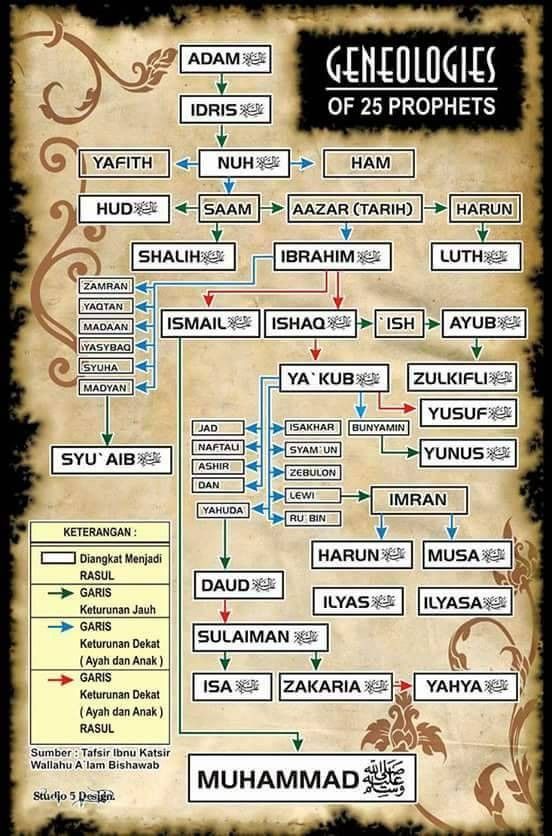
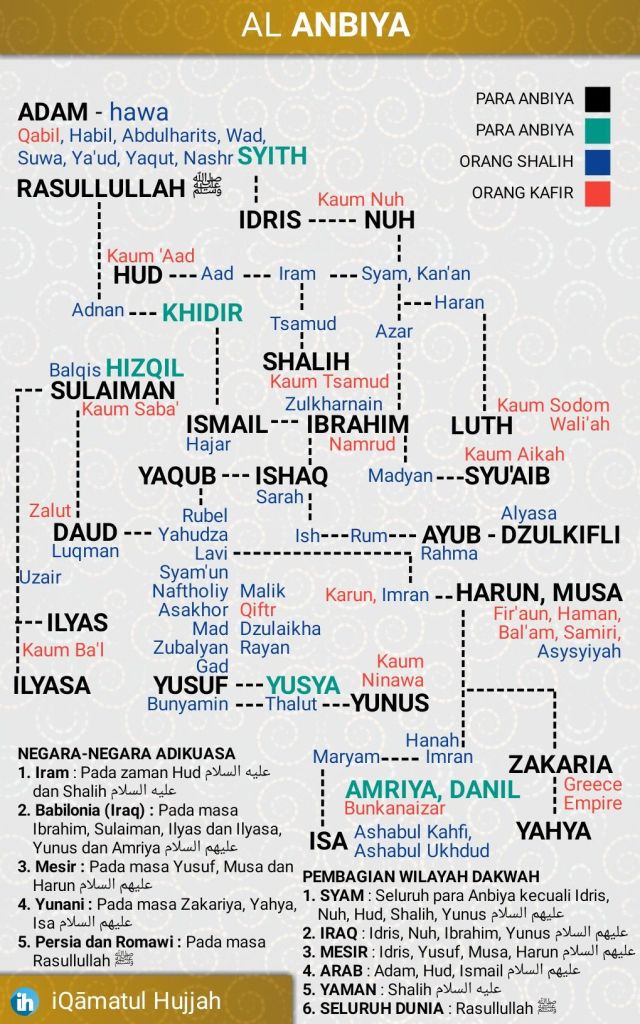
Surah Baqarah 136 – Say, ˹O believers,˺ “We believe in Allah and what has been revealed to us; and what was revealed to Abraham, Ishmael, Isaac, Jacob, and his descendants; and what was given to Moses, Jesus, and other prophets from their Lord. We make no distinction between any of them. And to Allah we all submit.”
“We have sent you with the Truth as a bearer of good news and warning– every community has been sent a warner.” (Qur’an 35:24) (News of Paradise for the Believers and HellFire for the Disbelievers);
All prophets in Islam came with the message of Tawhid (Oneness of God – wroshipping God Alone). It was only a difference in the Shariah (commandments and laws) of each Divine religion that set it apart from the others. It should be noted that all prophets propagated the same message of Islam throughout all ages, Tawhid, which is the core of all Divine religions. Allah Almighty mentions in the Qur’an:
“We sent a messenger to every community, saying, ‘Worship God and shun false gods.’”(Qur’an 16:36)
“We have sent revelation to you [Prophet] as We did to Noah and the prophets after him, to Abraham, Ishmael, Isaac, Jacob, and the Tribes, to Jesus, Job, Jonah, Aaron, and Solomon- to David We gave the book [of Psalms]- to other messengers We have already mentioned to you, and also to some We have not. To Moses God spoke directly.” (Qur’an 4:163-164)
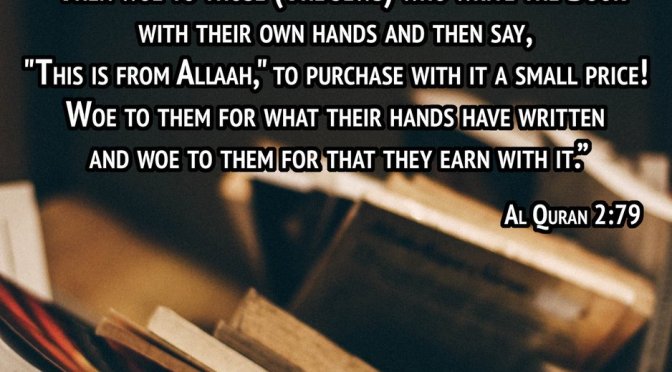
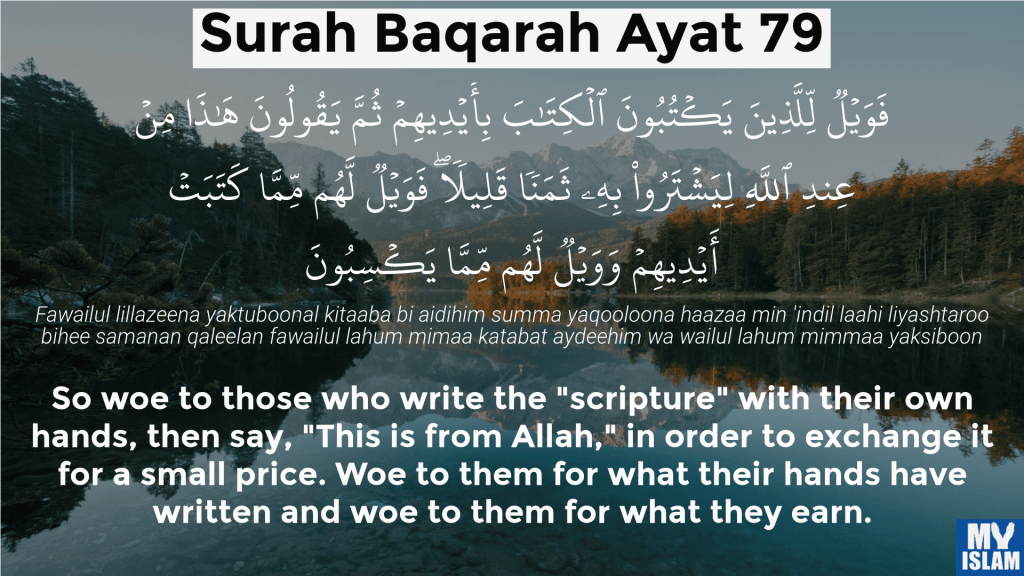
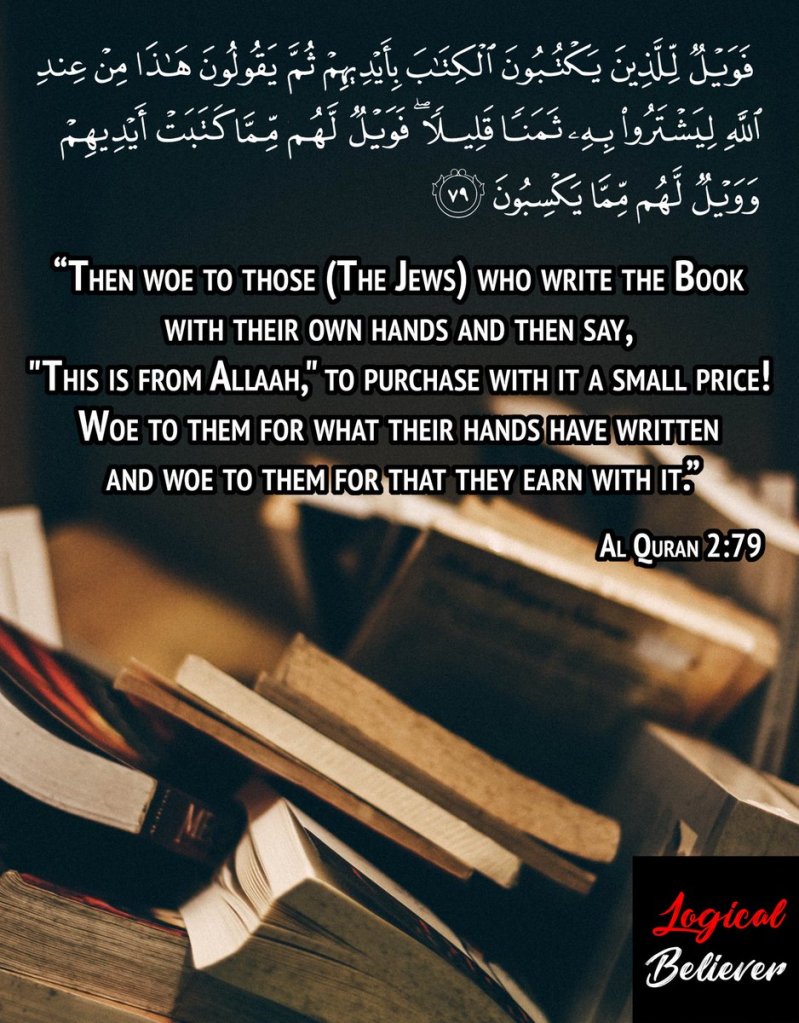
79 –So woe to those who write the “scripture” with their own hands, then say, “This is from Allah,” in order to exchange it for a small price. Woe to them for what their hands have written and woe to them for what they earn.
77. Do they not know that God knows what they conceal and what they reveal? 78. And among them are uneducated who know the Scripture only through hearsay, and they only speculate.
79. So woe to those who write the Scripture with their own hands, and then say, “This is from God,” that they may exchange it for a little price. Woe to them for what their hands have written, and woe to them for what they earn.
80. And they say, “The Fire will not touch us except for a number of days.” Say, “Have you received a promise from God—God never breaks His promise—or are you saying about God what you do not know?”
(2:78) Among them are also the unlettered folk who do not know about the Scriptures but cherish baseless wishes and merely follow their conjectures.[89]
89. This was the state of the Jewish masses. They were ignorant of the Scriptures, unaware of the principles of faith as enunciated by God in His Book, unaware of the rules of conduct that He had laid down, and of the teachings which are of fundamental importance for man’s salvation. Because they lacked this knowledge, they fabricated a whole religion out of their desires and fancies, living in a paradise built on false hopes and illusions.
Ala-Maududi
(2:79) Woe, then, to those who write out the Scriptures with their own hands and then, in order to make a trifling gain, claim: “This is from Allah.”[90] Woe to them for what their hands have written and woe to them for what they thus earn.
90. These observations relate to their rabbis. They were not content with misinterpreting the Word of God. They also interjected into it their readings of the Scriptures and their explanatory comments thereof, stories from their national history, superstitious ideas and fancies, philosophical doctrines and legal rules. The result was that the Divine and the human became inextricably mixed. They claimed, nevertheless, that the entire thing was divine! Every historical anecdote, the interpretation of every commentator, the doctrine of every theologian, and the legal deduction of every jurist that managed to find its way into the Bible became the ‘Word of God’. It was thus obligatory to believe in all that, and every deviation from it became tantamount to deviation from the true faith.
Ala-Maududi
(2:80) They say: “The Fire will certainly not touch us except for a limited number of days.”[91] Say (to them): “Have you received a promise from Allah – for Allah never breaks His promise – or do you attribute to Allah something about which you have no knowledge?”
91. This is a misconception entertained by all Jews, laymen as well as rabbis. They felt sure that no matter what they did, they would remain immune from hell-fire just by virtue of being Jews! The worst they could conceive of was the possibility of a transient punishment before they were transported to heaven.
#Chaging the Torah; #Quran Kareem, #Corruption of the Scholars/ Rabbis;
93. And We made a covenant with you, and raised the Mount above you: “Take what We have given you firmly, and listen.” They said, “We hear and disobey.” And their hearts became filled with the love of the calf because of their disbelief. Say, “Wretched is what your faith commands you to do, if you are believers.”
94. Say, “If the Final Home with God is yours alone, to the exclusion of all other people, then wish for death if you are sincere.”
95. But they will never wish for it, because of what their hands have forwarded. God is aware of the evildoers.
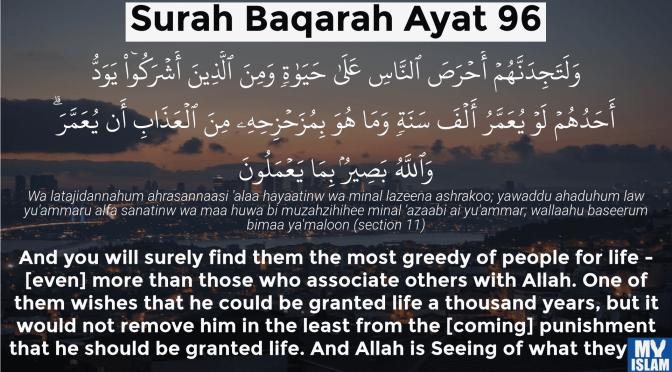
96. You will find them, of all mankind, the most eager for life, even more than the polytheists. Every one of them wishes he could live a thousand years; but to be granted a long life will not nudge him from the punishment. God is Seeing of what they do.
97. Say, “Whoever is hostile to Gabriel—it is he who revealed it to your heart by God’s leave, confirming what preceded it, and guidance and good news for the believers.”
98. Whoever is hostile to God, and His angels, and His messengers, and Gabriel, and Michael—God is hostile to the faithless.
99. We have revealed to you clear signs, and none rejects them except the sinners.
#Jews; #Eager/ Love of the Dunia/ Temporary Life; #Quran Kareem; #Life of 1,000 years;
SUMMARY: People drank alcohol before it was prohibited and were killed as martyrs on the same day.
Narrated Jabir: Some people drank alcoholic beverages in the morning (of the day) of the Uhud battle and on the same day they were killed as martyrs, and that was before wine was prohibited.
This hadith is about a group of people who drank alcohol in the morning of the Battle of Uhud, before it was prohibited. They were then killed as martyrs on that same day. This hadith teaches us that even though drinking alcohol was not yet prohibited, it still led to their death and they were still considered martyrs. It also shows us that even if something is not explicitly forbidden, we should still be careful with our actions and think about how they will affect us in the long run. We should also strive to do good deeds so that we can be rewarded for them in this life or the hereafter.
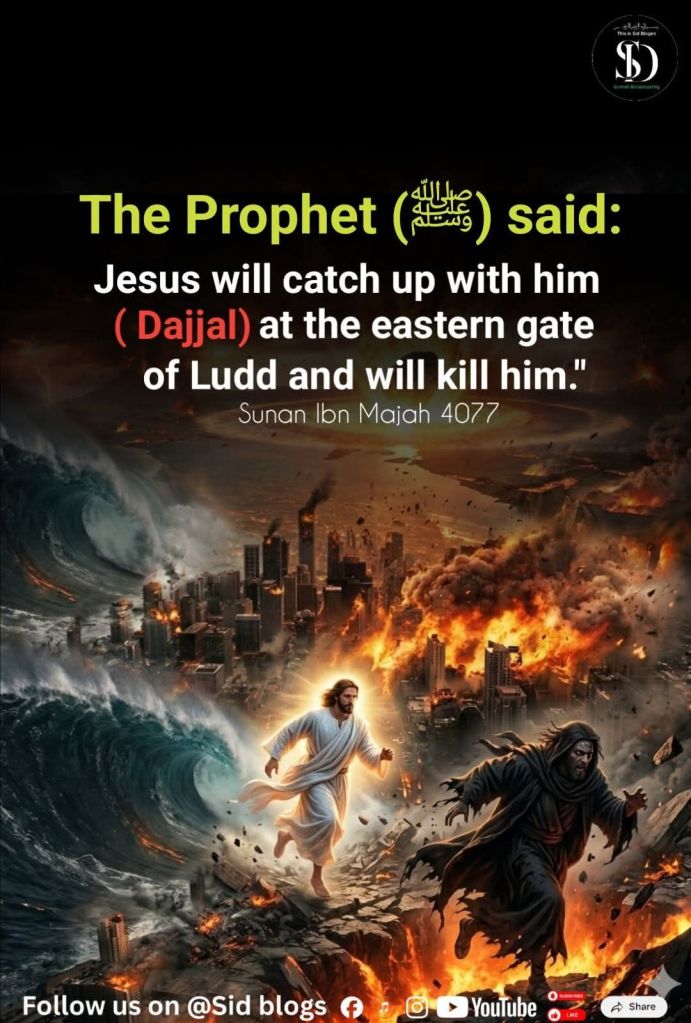
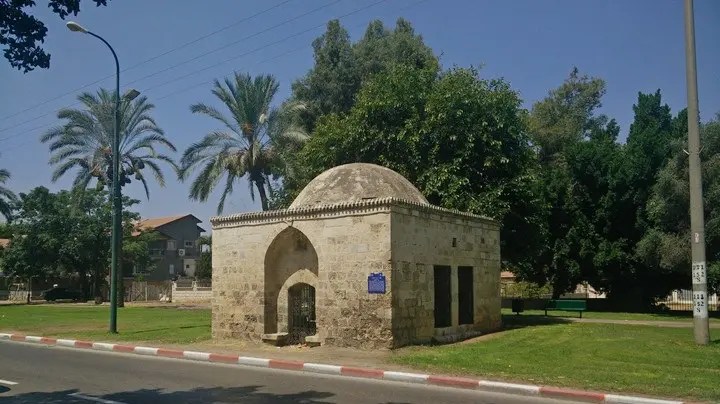
The Gate of Ludd (Bab al-Ludd) is traditionally identified with the outskirts of the ancient city of Lod (or Lydda), located about 15 km southeast of Tel Aviv in modern-day Israel, near Ben Gurion Airport. In Islamic eschatology, this is prophesied as the site where Nabi Eesa/Jesus Christ (Isa) will defeat the Antichrist (Dajjal);
Nawwas bin Sam’an Al-Kilabi said: “The Messenger of Allah (ﷺ) mentioned Dajjal, one morning, as something despised but also alarming, until we thought that he was in the stand of date-palm trees. When we came to the Messenger of Allah (ﷺ) in the evening, he saw that (fear) in us, and said: ‘What is the matter with you?’ We said: ‘O Messenger of Allah, you mentioned Dajjal (AntiChrist) this morning, and you spoke of him as something despised but also alarming, until we thought that he was in the stand of date-palm trees.’ He said: ‘There are things that I fear more for you than the Dajjal. If he appears while I am among you, I will contend with him on your behalf, and if he appears when I am not among you, then each man must fend for himself, and Allah will take care of every Muslim on my behalf. He (Dajjal) will be a young man with curly hair and a protuberant eye; I liken him to ‘Abdul-‘Uzza bin Qatan. Whoever among you sees him, let him recite the first Verses of Surat Al-Kahf over him. He will emerge from Khallah, between Sham and Iraq, and will wreak havoc right and left. O slaves of Allah, remain steadfast.’ We said:‘O Messenger of Allah, how long will he stay on earth?’ He said: ‘Forty days, one day like a year, one day like a month, one day like a week, and the rest of his days like your days.’ We said: ‘O Messenger of Allah, on that day which is like a year, will the prayers of one day suffice us?’ He said: ‘Make an estimate of time (and then observe prayer).’ We said: ‘How fast will he move through the earth?’ He said: ‘Like a rain cloud driving by the wind.’ He said: ‘He will come to some people and call them, and they will respond and believe in him. Then he will command the sky to rain and it will rain, and he will command the earth to produce vegetation and it will do so, and their flocks will come back in the evening with their humps taller, their udders fuller and their flanks fatter than they have ever been. Then he will come to some (other) people and call them, and they will reject him, so he will turn away from them and they will suffer drought and be left with nothing. Then he will pass through the wasteland and will say: “Bring forth your treasures,” then go away, and its treasures will follow him like a swarm of bees. Then he will call a man brimming with youth and will strike him with a sword and cut him in two. He will put the two pieces as far apart as the distance between an archer and his target. Then he will call him and he will come with his face shining, laughing. While they are like that, Allah will send ‘Eisa bin Maryam (Jesus Christ), who will come down at the white minaret in the east of Damascus, wearing two Mahrud[garment dyed with Wars and then Saffron], resting his hands on the wings of two angels. When he lowers his head, beads of perspiration will fall from it. Every disbeliever who smells the fragrance of his breath will die, and his breath will reach as far as his eye can see. Then he will set out and catch up with him (the Dajjal) at the gate of Ludd, and will kill him. Then the Prophet of Allah ‘Eisa will come to some people whom Allah has protected, and he will wipe their faces and tell them of their status in Paradise. While they are like that, Allah will reveal to him: “O ‘Eisa, I have brought forth some of My slaves whom no one will be able to kill, so take My slaves to Tur in safety.” Then Gog and Magog will emerge and they will, as Allah describes, “swoop down from every mound.”[21:96] The first of them will pass by lake Tiberias and drink from it, then the last of them will pass by it and will say: “There was water here once.” The Prophet of Allah, ‘Eisa and his companions will be besieged there until the head of an ox would be dearer to any one of them than one hundred Dinar are to any one of you today. Then, the Prophet of Allah, ‘Eisa and his companions will supplicate Allah. Then Allah will send a worm in their necks and the next morning they will all die as one. The Prophet of Allah ‘Eisa and his companions will come down and they will not find even the space of a hand span that is free of their stink, stench and blood. They will pray to Allah, and He will send birds with necks like the necks of Bactrian camels, which will pick them up and throw them wherever Allah wills. Then Allah will send rain which will not leave any house of clay or hair, and it will wash the earth until it leaves it like a mirror (or a smooth rock). Then it will be said to the earth: “Bring forth your fruits and bring back your blessing.” On that day a group of people will eat from a (single) pomegranate and it will suffice them, and they will seek shelter beneath its skin. Allah will bless a milch- camel so that it will be sufficient for a large number of people, and a milch-cow will be sufficient for a whole tribe and a milch-ewe will be sufficient for a whole clan. While they are like that, Allah will send a pleasant wind which will seize them beneath their armpits and will take the soul of every Muslim, leaving the rest of the people fornicating like donkeys, and upon them will come the Hour.'”
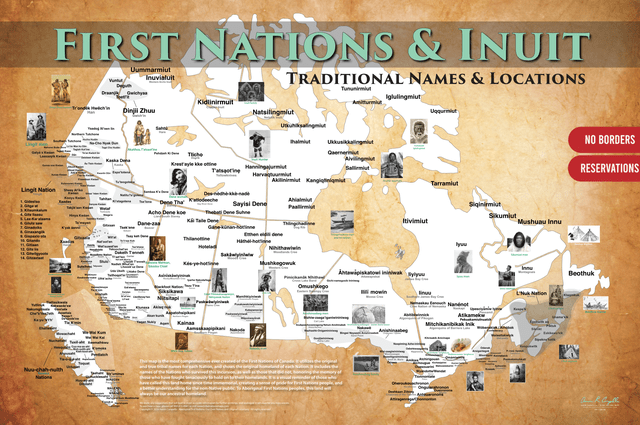
Native people of Canada – or First Nations people – represent 5 percent of Canadian people (with different rates within different provinces)- with a rate of population growth; however – what exactly happened with the other 95 percent?!Excluding the Land possession – Doesn’t this sound like Genocide to anyone with a brain the size of a mustard grain?!
According to the 2021 Census, there were 1.8 million Indigenous people, representing 5.0% of the total Canadian population, up from 4.9% in 2016.
National Indigenous History Month and National Indigenous Peoples Day are opportunities to learn more about the unique cultures, traditions and experiences of First Nations people, Métis, and Inuit. This is also a time to honour the history, achievements, and resilience of Indigenous peoples, who have been living on this land since time immemorial and whose presence continues to impact the evolution of the country. Using 2021 Census of Population data, let’s shed some light on these populations (https://thecanadianencyclopedia.ca/en/article/genocide-and-indigenous-peoples-in-canada)
Forced Living in Reserves without the Right to Leave – Historical Facts
From 1885 into the 1940s, a pass system controlled Indigenous people’s movement, requiring those living on reserve to get written permission from an “Indian agent” (government officials) when needed to leave their community.
Reserves Today
Reserves are still vital land bases for Indigenous people across Canada, which continue to be classified as federal land but as self-governed by Indigenous people of their community.
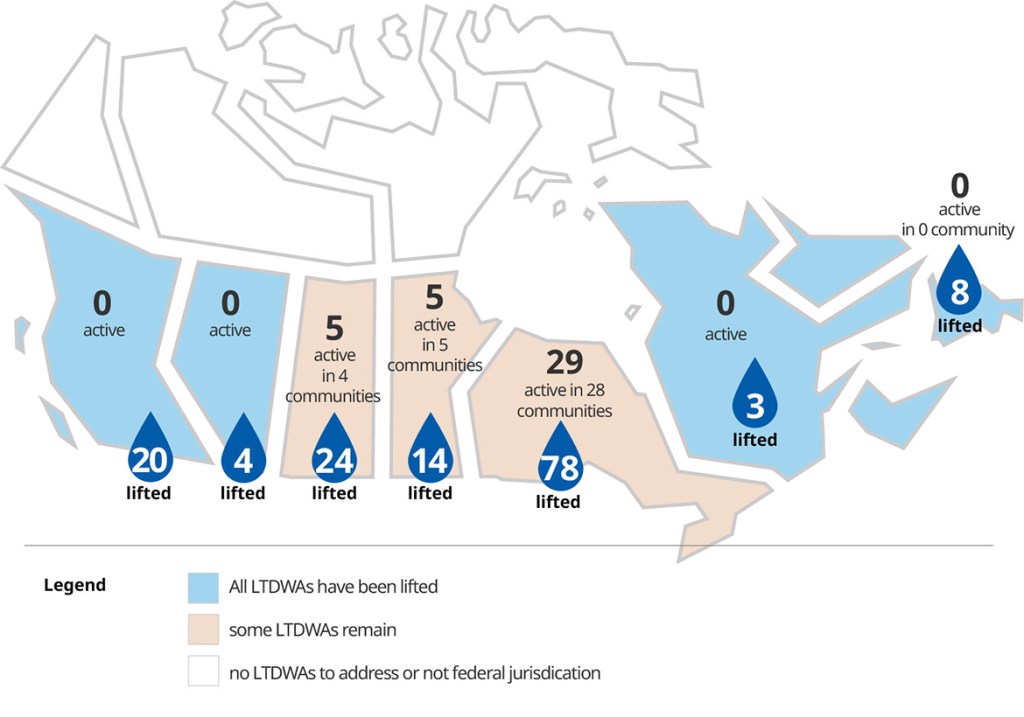
Some reserves have the most concerning conditions in Canada, such as isolated communities with high poverty rates, substance addiction, suicide, unemployment, and mortality.
It is widely acknowledged that the cultural genocide and social disruption over generations by displacements, discriminatory legislation, and political neglect results in long-term hardships and hinder the re-establishment of social networks and stable communities.
According to the 2021 Census, there were 1.8 million Indigenous people, representing 5.0% of the total Canadian population, up from 4.9% in 2016.
However, this growth was not as fast as in previous years. For example, from 2011 to 2016, the Indigenous population grew by 18.9%, more than double the 2021 growth rate.
For the first time, the Census enumerated more than 1 million (1,048,405) First Nations people living in Canada.
The Language Issues:
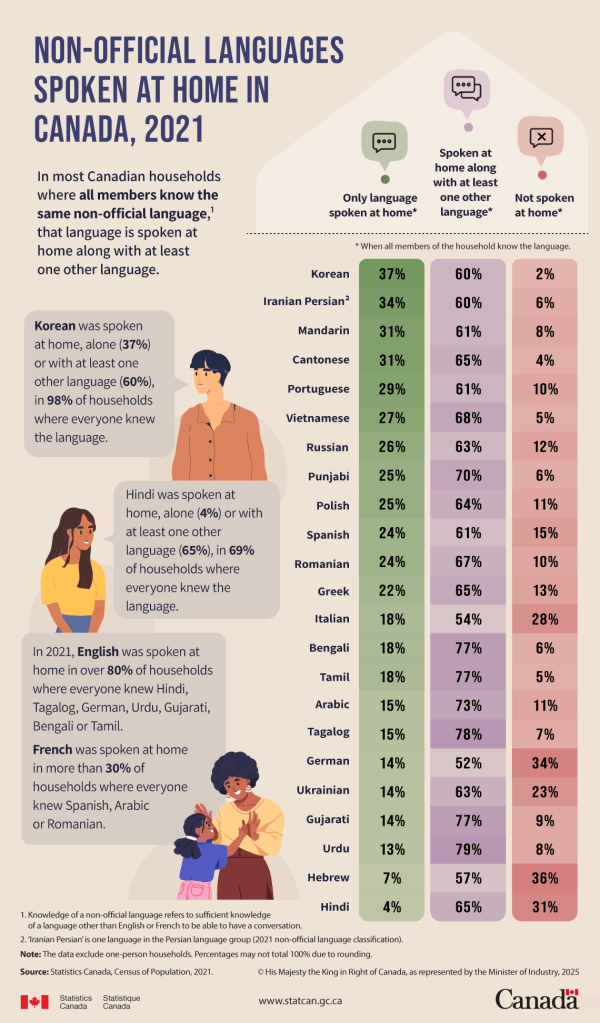
English and French are the two “Offiicial” languages of Canada, enjoying equal status, rights, and privileges in all federal government institutions, parliament, and courts. Established by the Official Languages Act (1969) and the Charter of Rights and Freedoms (1982), this policy guarantees Canadians the right to receive federal services in either language
Isn’t it Strange that No Native Languages are official Languages – also Colonization Effect – and again every person may speak their Language – and I guess we use English for convenience; but then again technically speaking Canada should have a goverment language – which may happen to be English – due to colonization – and no official language as technically speaking – Canada and US have majority immigrant populations – so the majority of populations in major urban centers speak a Different language at home.
#Canada ; #genocide; #history; #Colonization; #boiling water advisories; #sucide rates; #poverty; #forced Sterilizations, #Language Issues and #History;
Why Quran is the Word of God – Last Revelation on Monotheism
The Word Bible – comes from the Greek Word “Biblos”
biblos (βίβλος) means “book,” “scroll,” or specifically the inner bark of the papyrus plant used to make writing materials. Derived from the Phoenician city of Byblos (a major papyrus exporter), it is the root for words like “bible,” “bibliography,” and “bibliophile; it is basically a Collection of Manuscripts written by Scholars/ Scribes- mostly from Greek and Latin Texts – while most of the Prophets spoke Hebrew and Aramaic
A (Church) History of Burning the Bible Manuscripts
Based on the historical evidence, the claim that Constantine burned scriptures or ordered the destruction of “non-canonical” books is false; this action was carried out by his predecessor, Diocletian, during the “Great Persecution” (303–313 AD).
Here is the breakdown of the historical facts regarding Constantine and the scriptures:
Diocletian, Not Constantine, Burned Scriptures: The Emperor Diocletian launched a massive effort in 303 AD to destroy Christian sacred texts and burn churches.
Constantine Ordered Copies, Not Destruction: Upon converting, Constantine actually financed the production of new copies of the Scriptures. He tasked Eusebius of Caesarea with producing 50 copies of the Bible for the churches in Constantinople to replace those destroyed in the earlier persecution.
No Role in Canonization: Constantine did not select the books of the Bible at the Council of Nicaea (325 AD). The canon was largely established by the church before his reign and finalized by later councils in the late 4th century. ( and here again church authorities decided which Testaments to include or Not to include in the recognized version of the Bible);
Other accounts, letters, and revelations—e.g., the Didachē (Teaching of the Twelve Apostles), Gospel of Peter, First Letter of Clement, Letter of Barnabas, Apocalypse (Revelation) of Peter, Shepherd of Hermas—exist, but through a complex process the canon was fixed for both the Eastern and Western churches in the 4th century. The canon contained four Gospels (Matthew, Mark, Luke, and John), Acts, 21 letters, and one book of a strictly revelatory character, Revelation. These were not necessarily the oldest writings, not all equally revelatory, and not all directed to the church at large. (https://www.britannica.com/topic/biblical-literature/New-Testament-canon-texts-and-versions)
Targeted “Heretical” Writings: While he did not burn the New Testament, Constantine did order the destruction of books written by heretical groups, such as the Arians, to force religious conformity, but this was a separate, targeted action
Arianism, during the time of Emperor Constantine (early 4th century), was a Christological doctrine proposing that Jesus Christ was created by God the Father and was therefore not co-eternal or of the same substance as God. It was proposed by Arius, a presbyter from Alexandria, and became a major theological controversy that threatened the unity of the Roman Empire, prompting Constantine to convene the Council of Nicaea in 325 AD (it meant basically that God/ “Father” is the Creator – and Jesus was Created by God and a Prophet – not of the same substance as God (means no “trinity”/ church introduced idolatry; majority of Christians/ believers at the time Did not believe in “trinity” – but were thereatened by death under Constantine and the church if they publicly decleared God is One (no partners and no son- pure monotheism)- God is One with No Partners)
Roman Empire (303 AD):The first major destruction of Christian books occurred under Emperor Diocletian, who ordered the burning of Christian scriptures to try and destroy the faith itself.
Other Incidents: In 1731, Archbishop Leopold Anton von Firmian ordered the burning of Protestant Bibles in Salzburg. In 1849, 3,000 copies of a Catholic Italian translation were burned in Florence because they were considered Protestant-influenced.
Nazi Germany (1933): In a non-Church context, 70 tonnes of Watch Tower literature and Bibles were burned in Nazi Germany.
Bible – a Collection of Books/ Manuscripts
The New Testament has over 5,800 Greek manuscripts, 10,000 Latin, and 9,300 in other languages, totaling over 25,000, dating from c. 125 to the 15th century. Old Testament Hebrew manuscripts are fewer, with the Dead Sea Scrolls significantly increasing that count to include copies of every book except Esther. (Wikipedia) -None of which perfectly agree with each other;
So Yes – there are Stories/ Concepts Narrated – but we cannot confirm 100 percent the events because the testaments differ with each other – other than God being one entity who created everything in the Heavens and the earth and nothing happens except by Divine Will – and there will be a death, life in the grave, Ressurection Paradise or Hellfire – as a common theme among all these writings; but specific events or word there is no Original text from God’s Books – such as the Torah of Moses, David’s Psalms, the Gospel of Jesus – which only explains why Quran Kareem was sent to clarify the right version of past events and bring people back to monotheism;
Key Manuscript Counts:
New Testament: > 5,800 Greek (catalogued)
New Testament: > 10,000 Latin, > 9,300 other languages (Syriac, Coptic, etc.)
Old Testament: The Masoretic Text is the standard, with thousands of fragments from the Dead Sea Scrolls.
Original Language Breakdown:
Hebrew: The majority of the 39 Old Testament books.
Aramaic: Approximately 268 verses, including parts of Daniel and Ezra.
Greek: All 27 New Testament books (Koine Greek) and the 7 deuterocanonical books.
Latin: Not an original language, but the Vulgate translation was completed by Jerome in the 5th century.
NIV – Translation of the Bible
NIV – Version Information
The New International Version (NIV) is a completely original translation of the Bible developed by more than one hundred scholars working from the best available Hebrew, Aramaic, and Greek texts. (None the Original Torah of Moses, David’s Psalms, Jesus Gospel)
The initial vision for the project was provided by a single individual – an engineer working with General Electric in Seattle by the name of Howard Long. Long was a lifelong devotee of the King James Version, but when he shared it with his friends he was distressed to find that it just didn’t connect. Long saw the need for a translation that captured the truths he loved in the language that his contemporaries spoke.
For 10 years, Long and a growing group of like-minded supporters drove this idea. The passion of one man became the passion of a church, and ultimately the passion of a whole group of denominations. And finally, in 1965, after several years of preparatory study, a trans-denominational and international group of scholars met in Palos Heights, Illinois, and agreed to begin work on the project – determining to not simply adapt an existing English version of the Bible but to start from scratch with the best available manuscripts in the original languages. Their conclusion was endorsed by a large number of church leaders who met in Chicago in 1966.
As proved in the previous paragraphs, all the testaments have been changed, and many testaments in Hebrew and Aramaic have been burnt by the church as well – all the Original prophetic testaments have been changed – therefore Allah/ God AllMighty revealed the Qur’an Kareem (Noble Quran/ Recitation) from Angel Garbriel to Prophet Muhammad to bring humanity back to Monotheism until the Day of Ressurection with no changes;
Islam is a continuation of the message received by previous prophets, such as Noah, Abraham, David, Moses and Jesus, peace be upon them all. Therefore, the Quran maintains the pure teachings of previous revelations, including the Torah and the Gospel. The Quran describes that all the prophets taught people to believe in the One God, the Creator. The messengers also instructed them to spend their lives with God-consciousness, doing good deeds and avoiding sins. Moreover, they warned their fellow humans of accountability in the afterlife, a subject which the Quran returns to again and again.
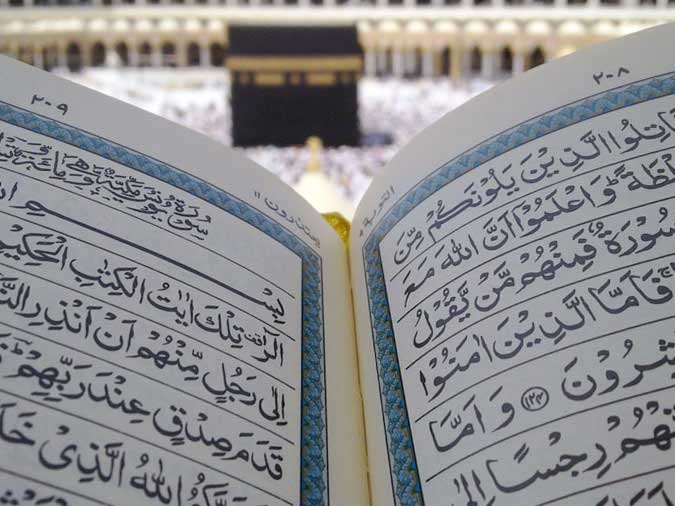
Since its revelation, the Quran (also spelled ‘Koran’) has remained preserved in its exact, primary text. While numerous translations of the Quran exist, they are all based on the single, original Arabic script, making the Quran unique from previous scriptures in its pure authenticity.
Quran’s Message
The distinctive approach of the Quran is that its spiritual message includes practical injunctions aimed at the general welfare of individuals, society and the environment in which we live.
The Quran’s message is eternal and universal, transcending our differences in race, color, ethnicity and nationality. It provides guidance on every facet of human life – from economics and the ethics of trade to marriage, divorce, parenting, gender issues and inheritance.
Say, ˹O believers,˺ “We believe in Allah and what has been revealed to us; and what was revealed to Abraham, Ishmael, Isaac, Jacob, and his descendants; and what was given to Moses, Jesus, and other prophets from their Lord. We make no distinction between any of them. And to Allah we all submit.”
Monotheism is a prominent theme of the Quran, affirming that God is One without any partners. In a concisely-worded Quranic chapter, God commands, “Say, ‘He is God the One, God the eternal. He begot no one nor was He begotten. No one is comparable to Him’” (112:1-4).
#Bible – Collection of Manuscpripts (Writings of Scholars about Real Events and some teachings of God) – #Not word of God; #Burning of Manuscripts, #Quran, #Word of God; #Islam; #monotheism;

















 bismillahschool.net