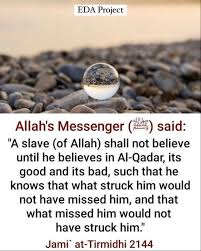
Jabir bin ‘Abdullah narrated that the Messenger of Allah (s.a.w) said:’A slave (of Allah) shall not believe until he believes in Al-Qadar, its good and its bad, such that he knows that what struck him would not have missed him, and that what missed him would not have struck him.”
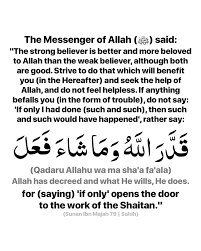
Abu Huraira reported: The Messenger of Allah, peace and blessings be upon him, said, “The strong believer is more beloved to Allah than the weak believer, but there is goodness in both of them. Be eager for what benefits you, seek help from Allah, and do not be frustrated. If something befalls you, then do not say: If only I had done something else! Rather say: Allah has decreed what He wills. Verily, the phrase ‘if only’ opens the way for the work of Satan.” Source: Ṣaḥīḥ Muslim 2664 Grade: Sahih (authentic) according to Muslim
Al-Nawawi said, “His statement, ‘It opens the way for the work of Satan,’ means he casts into the heart opposition to the divine decree, and Satan tempts him with it.” Source: Sharḥ Ṣaḥīḥ Muslim 16/216
#Qadr of Allah; #Fate #Islam; #Divine Destiny; #Good and Bad;
Verily, the creation of each one of you is brought together in his mother’s womb for forty days as a drop, then he is a clot for a similar period, then a morsel for a similar period, then there is sent to him the angel who blows the spirit into him and he is commanded regarding four matters: to write down his provision, his life span, his deeds, and whether he is blessed or damned. By Allah, other than whom there is no God, one of you acts like the people of Paradise until he is but an arm’s length from it, and what is written overtakes him so he acts like the people of Hellfire and he enters it. Verily, one of you acts like the people of Hellfire until he is but an arm’s length from it, and what is written overtakes him so he acts like the people of Paradise and he enters it.
Ka’ab ibn Malik (R.A) said, “When I greeted the Messenger of Allah, whose face was glittering with happiness, for whenever Allah’s Messenger ﷺ was happy, his face used to glitter, as if it was a piece of the moon, and we used to recognize it (i.e. his happiness) from his face.” Once Al-Baraa (R.A) was asked whether the Prophet Muhammad ﷺ face was like the sword to which he replied: No, it was like the moon.
On the authority of Umm Ma‘bad ‘Atikah bint Khalid al-Khuza‘iyyah (ra) who said:’I saw a man of visible radiance and purity, beautiful appearance, bright faced, with neither protruding ribs nor a small head, handsome and fair. His eyes were deep black and large, and his eyelashes were lush. His voice was mellow and soft. The whiteness of his eyes was bright and his pupils were very black. His eyebrows were beautifully arched and connected. His neck was long, his beard densely full. When he was silent, he appeared dignified. When he spoke, he was eminent and crowned with magnificence. His speech was sweet, his words precise, neither too little nor too much. Like a string of pearls flowing down gradually. He was the most striking and beautiful of people when seen from afar and the fairest of them when seen up close. He was medium height, neither unagreeably tall nor scornfully short; a branch between two branches. Among the three he was the most radiant in appearance, the finest of them in stature. He was surrounded by companions. When he spoke, they listened attentively. When he gave orders, they hastened to fulfil them. Honoured, served and surrounded by followers. He neither frowned, nor criticised’. [Al-Baihaqi and al-Hakim]
#Prophet Muhammad(Sal Allahu Alayhi wa Sallam) – Appearance; #Islam; #Hadith
Ka’ab ibn Malik (R.A) said, “When I greeted the Messenger of Allah, whose face was glittering with happiness, for whenever Allah’s Messenger ﷺ was happy, his face used to glitter, as if it was a piece of the moon, and we used to recognize it (i.e. his happiness) from his face.” Once Al-Baraa (R.A) was asked whether the Prophet Muhammad ﷺ face was like the sword to which he replied: No, it was like the moon.
Seal of Prophethood
The Prophet ﷺ had the seal of prophethood between his shoulders. The seal was something distinct on his body like a birth mark. Jabir ibn Samurah (R.A) said: “And I saw the seal near his shoulder, it was the size of a pigeon’s egg and its color was the same as that of his body.”
DESCRIPTION OF UMM MA’BAD AL KHUZA’IYYAH
In the name of Allāh, ar-Raḥmān (the most merciful), ar-Raḥīm (the bestower of mercy).
During the hijrah, the Prophet ﷺ passed by an elderly non-Muslim woman called Umm Ma’bad al-Khuzā’iyyah. He stopped at her place to seek provisions and rest. Her husband was away tending to his flock whilst the Prophet ﷺ visited. When he returned, she described the physical features and appearance of the Prophet ﷺ in great detail:
On the authority of Umm Ma‘bad ‘Atikah bint Khalid al-Khuza‘iyyah (ra) who said:’I saw a man of visible radiance and purity, beautiful appearance, bright faced, with neither protruding ribs nor a small head, handsome and fair. His eyes were deep black and large, and his eyelashes were lush. His voice was mellow and soft. The whiteness of his eyes was bright and his pupils were very black. His eyebrows were beautifully arched and connected. His neck was long, his beard densely full. When he was silent, he appeared dignified. When he spoke, he was eminent and crowned with magnificence. His speech was sweet, his words precise, neither too little nor too much. Like a string of pearls flowing down gradually.
He was the most striking and beautiful of people when seen from afar and the fairest of them when seen up close. He was medium height, neither unagreeably tall nor scornfully short; a branch between two branches. Among the three he was the most radiant in appearance, the finest of them in stature. He was surrounded by companions. When he spoke, they listened attentively. When he gave orders, they hastened to fulfil them. Honoured, served and surrounded by followers. He neither frowned, nor criticised’.[Al-Baihaqi and al-Hakim]
الت أم معبد الخزاعية عن رسول الله ﷺ وهي تصفه لزوجها:
Footnotes: [1] Her words have been narrated in various books of ḥadīth and sīrah including: at-Tabarāni in “al-Mu’jam al-Kabīr”; al-Ḥākim in “al-Mustadrak”; Ibn Kathīr in “al-Bidāyah wan-Nihāyah”; Ibn Hishām in his “Sīrah”; Ibn al-Qayyim in “Zād al-Ma’ād”; and al-Mubārakphuri in “ar-Rahīq al-Makhtūm”.
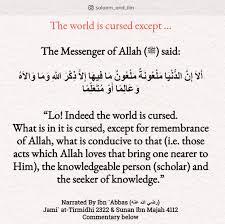
Abu Huraira reported: The Messenger of Allah, peace and blessings be upon him, said, “Is not the world cursed and everything in it? Except for the remembrance of Allah and what facilitates it, the scholar or the student.” Source: Sunan al-Tirmidhī 2322
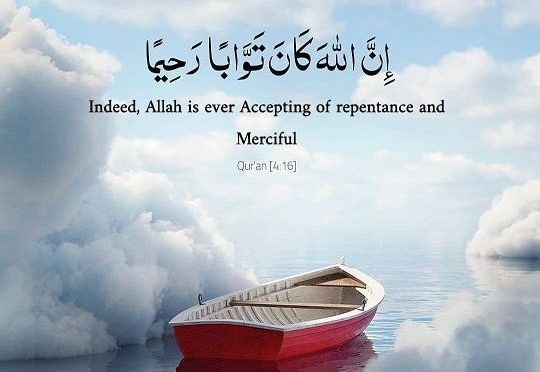
bn Umar reported: The Prophet, peace and blessings be upon him, said, “Verily, Allah accepts the repentance of his servants, as long as they are not on their death bed.”
Source: Sunan al-Tirmidhī 3537; Grade: Hasan (fair) according to Al-Tirmidhi عَنْ ابْنِ عُمَرَعَنْ النَّبِيِّ صَلَّى اللَّهُ عَلَيْهِ وَسَلَّمَ قَالَ إِنَّ اللَّهَ يَقْبَلُ تَوْبَةَ الْعَبْدِ مَا لَمْ يُغَرْغِرْ 3537 سنن الترمذي كتاب الدعوات باب في فضل التوبة والاستغفار وما ذكر من رحمة الله لعباده; 5/507 المحدث الترمذي خلاصة حكم المحدث حسن في سنن الترم
Prophet Muhammad (ﷺ) said: Regret is repentance, And the one who repents is like one who did not sin. [Al-Jaami’ as-Sagheer (6803)]
– Hadith; Narrated Abu Dhar: The Prophet (ﷺ) asked me at sunset, “Do you know where the sun goes (at the time of sunset)?” I replied, “Allah and His Apostle know better.” He said, “It goes (i.e. travels) till it prostrates Itself underneath the Throne and takes the permission to rise again, and it is permitted and then (a time will come when) it will be about to prostrate itself but its prostration will not be accepted, and it will ask permission to go on its course but it will not be permitted, but it will be ordered to return whence it has come and so it will rise in the west. And that is the interpretation of the Statement of Allah: “And the sun Runs its fixed course For a term (decreed). that is The Decree of (Allah) The Exalted in Might, The All- Knowing.” (36.38) – Sahih al-Bukhari 3199
Hadith on Signs: FAITH OF NO BENEFIT AFTER SEEING 3 SIGNS:
Abu Huraira reported: The Messenger of Allah, peace and blessings be upon him, said, “When three signs appear, no soul will benefit from its faith if it did not already believe or earn good by its faith: the rising of the sun from the west, the False Messiah, and the beast from the earth.” Source: Ṣaḥīḥ Muslim 158 SUN WILL BE LOWERED IN JUDGEMENT DAY- 1 MILE: Abu Umamah reported: The Messenger of Allah, peace and blessings be upon him, said, “The sun will be lowered on the Day of Resurrection to the distance of a mile and its heat will be increased by as much. It will boil skulls just like the boiling of pots. They will sweat by the measure of their sins. Among them are those to whom it will reach their ankles, among them are those to whom it will reach their shins, among them are those to whom it will reach their midsections, and among them are those who are subsumed in sweat.” Source: Musnad Aḥmad 22186
Now [among the best of righteous deeds which] We have enjoined upon man [is] goodness towards his parents; yet [even so,] should they endeavour to make thee ascribe divinity, side by side with Me, to something which thy mind cannot accept [as divine], obey then, not: [for] it is unto Me that you all must return, whereupon I shall make you [truly] understand [the right and wrong of] all that you were doing [in life] – Surah Al Ankabut – 29:8;
For your Lord has decreed that you worship none but Him. And honour your parents. If one or both of them reach old age in your care, never say to them ˹even˺ ‘ugh,’ nor yell at them. Rather, address them respectfully. – Surah – Al Isra 17:23
KEEP COMPANY OF YOUR MOTHER
Abu Huraira reported: A man asked the Messenger of Allah, peace and blessings be upon him, “Who is most deserving of my good company?” The Prophet said, “Your mother.” The man asked, “Then who?” The Prophet said “Your mother.” The man asked again, “Then who?” The Prophet said, “Your mother.” The man asked again, “Then who?” The Prophet said, “Your father.”
Source: Ṣaḥīḥ al-Bukhārī 5971, Ṣaḥīḥ Muslim 2548
Grade: Muttafaqun Alayhi (authenticity agreed upon) according to Al-Bukhari and Muslim
Regarding the narrations which shows the poisoning by Jewish woman:
حَدَّثَنَا عَبْدُ اللَّهِ بْنُ يُوسُفَ، حَدَّثَنَا اللَّيْثُ، قَالَ حَدَّثَنِي سَعِيدٌ، عَنْ أَبِي هُرَيْرَةَ ـ رضى الله عنه ـ قَالَ لَمَّا فُتِحَتْ خَيْبَرُ أُهْدِيَتْ لِلنَّبِيِّ صلى الله عليه وسلم شَاةٌ فِيهَا سُمٌّ فَقَالَ النَّبِيُّ صلى الله عليه وسلم ” اجْمَعُوا إِلَىَّ مَنْ كَانَ هَا هُنَا مِنْ يَهُودَ ”. فَجُمِعُوا لَهُ فَقَالَ ” إِنِّي سَائِلُكُمْ عَنْ شَىْءٍ فَهَلْ أَنْتُمْ صَادِقِيَّ عَنْهُ ”. فَقَالُوا نَعَمْ. قَالَ لَهُمُ النَّبِيُّ صلى الله عليه وسلم ” مَنْ أَبُوكُمْ ”. قَالُوا فُلاَنٌ. فَقَالَ ” كَذَبْتُمْ، بَلْ أَبُوكُمْ فُلاَنٌ ”. قَالُوا صَدَقْتَ. قَالَ ” فَهَلْ أَنْتُمْ صَادِقِيَّ عَنْ شَىْءٍ إِنْ سَأَلْتُ عَنْهُ ” فَقَالُوا نَعَمْ يَا أَبَا الْقَاسِمِ، وَإِنْ كَذَبْنَا عَرَفْتَ كَذِبَنَا كَمَا عَرَفْتَهُ فِي أَبِينَا. فَقَالَ لَهُمْ ” مَنْ أَهْلُ النَّارِ ”. قَالُوا نَكُونُ فِيهَا يَسِيرًا ثُمَّ تَخْلُفُونَا فِيهَا. فَقَالَ النَّبِيُّ صلى الله عليه وسلم ” اخْسَئُوا فِيهَا، وَاللَّهِ لاَ نَخْلُفُكُمْ فِيهَا أَبَدًا ـ ثُمَّ قَالَ ـ هَلْ أَنْتُمْ صَادِقِيَّ عَنْ شَىْءٍ إِنْ سَأَلْتُكُمْ عَنْهُ ”. فَقَالُوا نَعَمْ يَا أَبَا الْقَاسِمِ. قَالَ ” هَلْ جَعَلْتُمْ فِي هَذِهِ الشَّاةِ سُمًّا ”. قَالُوا نَعَمْ. قَالَ ” مَا حَمَلَكُمْ عَلَى ذَلِكَ ”. قَالُوا أَرَدْنَا إِنْ كُنْتَ كَاذِبًا نَسْتَرِيحُ، وَإِنْ كُنْتَ نَبِيًّا لَمْ يَضُرَّكَ.
When Khaibar was conquered, a roasted poisoned sheep was presented to the Prophet (ﷺ) as a gift (by the Jews). The Prophet (ﷺ) ordered, “Let all the Jews who have been here, be assembled before me.” The Jews were collected and the Prophet (ﷺ) said (to them), “I am going to ask you a question. Will you tell the truth?” They said, “Yes.” The Prophet (ﷺ) asked, “Who is your father?” They replied, “So-and-so.” He said, “You have told a lie; your father is so-and-so.” They said, “You are right.” He said, “Will you now tell me the truth, if I ask you about something?” They replied, “Yes, O Abu Al-Qasim; and if we should tell a lie, you can realize our lie as you have done regarding our father.” On that he asked, “Who are the people of the (Hell) Fire?” They said, “We shall remain in the (Hell) Fire for a short period, and after that you will replace us.” The Prophet (ﷺ) said, “You may be cursed and humiliated in it! By Allah, we shall never replace you in it.” Then he asked, “Will you now tell me the truth if I ask you a question?” They said, “Yes, O Abu Al-Qasim.” He asked, “Have you poisoned this sheep?” They said, “Yes.” He asked, “What made you do so?” They said, “We wanted to know if you were a liar in which case we would get rid of you, and if you are a prophet then the poison would not harm you.”
It is narrated to us by Ibrahim b. Hashim from Ja’far b. Muhammad from Abdullah b. Maymoon Al-Qaddah that Abu Abdullah ع said:
حدثنا ابراهيم بن هاشم عن جعفر بن محمد عن عبد الله بن ميمون القداح عن ابى عبد الله عليه السلام قال سمت اليهودية النبي صلى الله عليه وآله في ذراع قال وكان رسول الله صلى الله عليه وآله يحب الذراع والكتف ويكره الورك لقربها من المبال قال لما اوتى بالشوا اكل من الذراع وكان يحبها فاكل ما شاء الله ثم قال الذراع يا رسول الله صلى الله عليه وآله انى مسموم فتركه وما ذاك ينتقض به سمه حتى مات صلى الله عليه وآله.
‘A Jewess poisoned the Prophet (saws) in a forearm (of a grilled sheep). And the Messenger of Allah (saws) used to love the forearm and the shoulder, and disliked the thighs due to its vicinity from the urinary tract’. He then said: ‘When she came with the grill, he ate from the forearm, and he loved it, so he ate whatever Allah so Desired. Then the forearm said, ‘O Messenger of Allah (saws), I am poisoned’. So, he left it, and the poison did not cease to infringe with Him until He passed away’
Basair al-darajat, pg 523
حدثنا احمد بن محمد عن الحسين بن سعيد عن القاسم بن محمد عن على عن ابى بصير عن ابى عبد الله عليه السلام قال سم رسول الله صلى الله عليه وآله يوم خيبر فتكلم اللحم فقال يارسول الله صلى الله عليه وآله انى مسموم قال فقال النبي صلى الله عليه وآله عند موته اليوم قطعت مطاياى الاكلة التى اكلت بخيبر وما من نبى ولا وصى والا شهيد.
It is narrated to us by Ahmad b. Muhammad from Al-Hussain b. Saeed from Al-Qasim b. Muhammad from Ali from Abi Baseer that Abu Abdullah عليه السلام said: ‘The Messenger of Allah (saws) was poisoned on the day of Khaybar. The meat spoke and said, ‘O Messenger of Allah (saws) ! I am poisoned’. He [the Imam] said: ‘The Prophet (saws) said during his passing: ‘My insides is being cut by the meal which I ate at Khaybar, and there is no Prophet nor a succesor except that he is a martyr’’
Basair al-darajat, pg 523
#poisoning of Nabi(sal Allahu alayhi wa Salaam); #hadith;
Narrated `Aisha:
The Prophet (ﷺ) in his ailment in which he died, used to say, “O `Aisha! I still feel the pain caused by the food I ate at Khaibar, and at this time, I feel as if my aorta is being cut from that poison.” – Sahih al Bukhari 4428;
وَقَالَ يُونُسُ عَنِ الزُّهْرِيِّ، قَالَ عُرْوَةُ قَالَتْ عَائِشَةُ ـ رضى الله عنها ـ كَانَ النَّبِيُّ صلى الله عليه وسلم يَقُولُ فِي مَرَضِهِ الَّذِي مَاتَ فِيهِ “ يَا عَائِشَةُ مَا أَزَالُ أَجِدُ أَلَمَ الطَّعَامِ الَّذِي أَكَلْتُ بِخَيْبَرَ، فَهَذَا أَوَانُ وَجَدْتُ انْقِطَاعَ أَبْهَرِي مِنْ ذَلِكَ السَّمِّ ”.
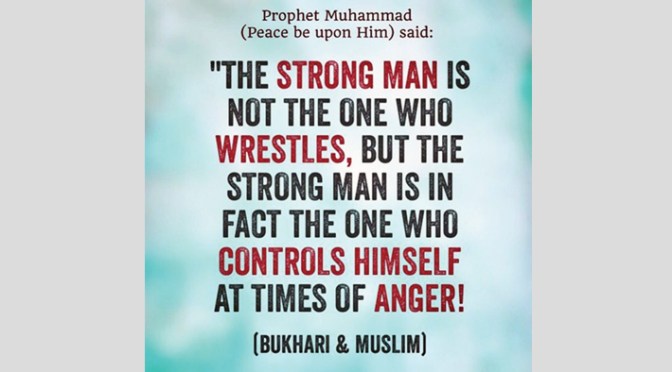
Abdullah ibn Mas’ud reported: The Messenger of Allah, peace and blessings be upon him, said, “Whom do you consider to be a fighter among you?” We said, “One whom men cannot wrestle down.” The Prophet said, “It is not so. Rather, it is one who controls himself when angry.”
Source: Ṣaḥīḥ Muslim 2608
Abu Huraira reported: The Messenger of Allah, peace and blessings be upon him, said, “The strongest are not the best wrestlers. Verily, the strongest are those who control themselves when angry.”
Source: Ṣaḥīḥ al-Bukhārī 6114, Ṣaḥīḥ Muslim 2609
Imam Ibn ‘Abdul Barr commented, “This is evidence that striving against oneself is a more difficult task and is better than striving against the enemy.”
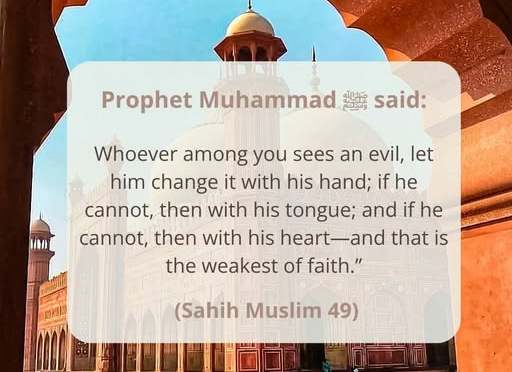
Abu Sa’id al-Khudri reported: The Messenger of Allah, peace and blessings be upon him, said, “Whoever among you sees evil, let him change it with his hand. If he cannot do so, then with his tongue. If he cannot do so, then with his heart, which is the weakest level of faith.”
Abu Huraira reported: A man asked the Messenger of Allah, peace and blessings be upon him, “Who is most deserving of my good company?” The Prophet said, “Your mother.” The man asked, “Then who?” The Prophet said “Your mother.” The man asked again, “Then who?” The Prophet said, “Your mother.” The man asked again, “Then who?” The Prophet said, “Your father.” Source: Ṣaḥīḥ al-Bukhārī 5971, Ṣaḥīḥ Muslim 2548 Grade: Muttafaqun Alayhi (authenticity agreed upon) according to Al-Bukhari and Muslim
This First Person article is the experience of Sara DuBreuil, a producer with CBC Montreal. For more information about CBC’s First Person stories, please see the FAQ.
I never imagined that I would need therapy to process my daughter’s birth.
From the moment my husband, Matt, and I found out we were expecting a girl, we named her Cecilia and started daydreaming about meeting her. I couldn’t wait for her to be placed on my chest and have that first snuggle. I believed my daughter’s birth day would be the best day of my life. But that’s not how it played out.
Up to 45 per cent of new mothers report experiencing a traumatic childbirth, according to a 2018 study published in The Journal of Perinatal Education.
It’s difficult to pin down the exact number of women in Canada who’ve been traumatized during childbirth. “It often goes unacknowledged, undertreated and underdiagnosed”, said Rosa Caporicci, a licensed psychotherapist specializing in reproductive mental health. She is also the person I turned to for help recovering from my own experience.
I’ve decided to speak out about my birth trauma in hopes of normalizing the experience for other parents.
A difficult entry into the world
The day Cecilia was born, June 14, began with an incredible sunrise. I asked Matt to photograph it because we were just hours away from meeting our girl, and I wanted to document the beautiful morning.
I started pushing not long after that and that’s when, in the blink of an eye, everything changed.
Cecilia’s heart rate dropped, and the doctor said they had to get her out immediately. She had swallowed a significant amount of meconium, which is a baby’s first stool. If it’s released while still in the womb, it can cause health problems. Also, Cecilia’s umbilical cord was around her neck.
Seconds after birth, Cecilia was surrounded by a team of doctors and nurses who cleared her lungs before moving her to the neonatal intensive care unit (NICU). My strongest memories from Cecilia’s birth day are not beautiful. They are painful.














 bismillahschool.net