SUPPORT LOCAL WELFARE We operate four food banks across Canada, serving over 112,000 people in 2024 alone. Hot meals go out to Toronto’s homeless every weekend, and seniors receive meal delivery twice weekly across the GTA. A long-term care facility is underway for seniors on the verge of homelessness.
This is what your Zakat funds. Give locally, help your neighbours in the holiest month. SUPPORT GLOBAL WELFARE Since 2005, we’ve built 3,800 water wells across Pakistan, serving 321,000 people. Over 1,000 children attend our schools right now because of monthly sponsors. 75 deaf students receive specialized education that would otherwise be impossible for them.
Emergency relief reaches Gaza, Yemen, and Sudan through established partners. Your Zakat and Sadaqah Jariyah work across crisis zones and sustainable projects.
Support Women & Children In Need
When a drought strikes, women and children are the ones that are most at risk. This is why MWC supports pregnant women suffering in Tharparkar, a desert region of Pakistan.
Why Your Support Matters?
Your support will allow us to continue our lifesaving work in the desert region of Tharparkar. Here’s what we’ve achieved and aim to build upon with your support:
Enhanced hygiene and disease prevention education to boost community health and support Pakistan’s healthcare system.
Focused maternal and child health initiatives to promote safer pregnancies and lower mortality rates.
Improved prenatal care contributing to healthier mothers and babies.
Nutritional education to help reshape dietary choices and reduce malnutrition.
Overcoming Challenges
Despite limited healthcare, harsh environmental conditions and other obstacles, we have implemented nutritional improvement initiatives, enhanced access to healthcare services, and provided specialized care for safe childbirth and prenatal care.
#Muslim welfare center; #Zakat; #Islam; #charity; women prenatal and natal care, #children care;
36 Then Jesus *came with them to a place called [a]Gethsemane, and *told His disciples, “Sit here while I go over there and pray.” 37 And He took Peter and the two sons of Zebedee with Him, and began to be grieved and distressed. 38 Then He *said to them, “My soul is deeply grieved, to the point of death; remain here and keep watch with Me.”
39And He went a little beyond them, and fell on His face and prayed, saying, “My Father, if it is possible, let this cup pass from Me; yet not as I will, but as You will.” 40 And He *came to the disciples and *found them sleeping, and He *said to Peter, “So, you men could not keep watch with Me for one hour? 41Keep watching and praying, so that you do not come into temptation; the spirit is [b]willing, but the flesh is weak.”
42 He went away again a second time and prayed, saying, “My Father, if this cup cannot pass away unless I drink from it, Your will be done.”43 Again He came and found them sleeping, for their eyes were heavy. 44 And He left them again, and went away and prayed a third time, saying the same thing once more. 45 Then He *came to the disciples and *said to them, “[c]Are you still sleeping and resting? Behold, the hour [d]is at hand and the Son of Man is being betrayed into the hands of sinners. 46 Get up, let’s go; behold, the one who is betraying Me is near!”
Prayer in Bible and Quran
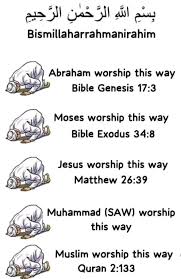
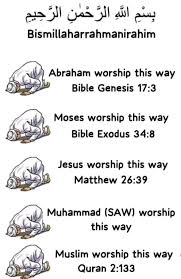
Jesus fell on his face in prayer: “He went a little farther and fell on his face, and prayed, saying, ‘O my Father, if it be possible, let this cup pass from me…’”
— Matthew 26:39 – Jesus prayed with his head bowed and hands raised: “He lifted up his eyes to heaven and said, ‘Father, the hour has come…’”
— John 17:1 -Jesus often prayed alone and submitted himself fully to God; “He withdrew about a stone’s throw beyond them, knelt down and prayed.”
— Luke 22:41 – Jesus Prays on the Mount of Olives
39Jesus went out as usual to the Mount of Olives, and his disciples followed him. 40On reaching the place, he said to them, “Pray that you will not fall into temptation.” 41He withdrew about a stone’s throw beyond them, knelt down and prayed, 42“Father, if you are willing, take this cup from me; yet not my will, but yours be done.” 43An angel from heaven appeared to him and strengthened him. 44And being in anguish, he prayed more earnestly, and his sweat was like drops of blood falling to the ground. c
How Prophets Prayed in the Bible
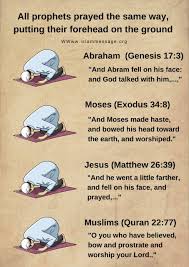
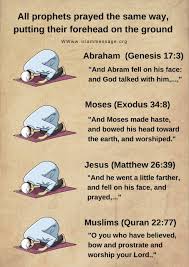
Abraham: “Abram fell facedown, and God said to him…”
— Genesis 17:3 – Moses and Aaron: “Then Moses and Aaron fell on their faces before all the assembly…”
— Numbers 16:22 – Joshua: “Then Joshua fell facedown to the ground in reverence…”
— Joshua 5:14 – 14 “Neither,” he replied, “but as commander of the army of the Lord I have now come.” Then Joshua fell facedown to the ground in reverence, and asked him, “What message does my Lord[a] have for his servant?”
David: “Come, let us bow down in worship, let us kneel before the Lord our Maker.”
Psalm 95:6
1 Come, let us sing for joy to the Lord; let us shout aloud to the Rock of our salvation. 2 Let us come before him with thanksgiving and extol him with music and song.
3 For the Lord is the great God, the great King above all gods. 4 In his hand are the depths of the earth, and the mountain peaks belong to him. 5 The sea is his, for he made it, and his hands formed the dry land.
6 Come, let us bow down in worship, let us kneel before the Lord our Maker;
How Prophets Prayed – Qur’an Verses
Jesus (‘Isa عليه السلام): it confirms he worshiped God alone and called people to submit to God, as all prophets did: “Indeed, Allah is my Lord and your Lord, so worship Him. This is the straight path.”
— Qur’an 3:51 – Mary (Maryam), the mother of Jesus: “O Mary! Be devoutly obedient to your Lord, prostrate and bow with those who bow.”
— Qur’an 3:43 -Prophet Muhammad ﷺ: “And fall prostrate and draw near to Allah.”
— Qur’an 96:19 -All believers are commanded: “O you who believe! Bow down, prostrate yourselves, and worship your Lord, and do good so that you may succeed.” — Qur’an 22:77
Muslim Beliefs:
Say, ˹O believers,˺ “We believe in Allah and what has been revealed to us; and what was revealed to Abraham, Ishmael, Isaac, Jacob, and his descendants; and what was given to Moses, Jesus, and other prophets from their Lord. We make no distinction between any of them. And to Allah we all submit.”
Surah Al Hadid – In the name of God, the Gracious, the Merciful.
1. Glorifying God is everything in the heavens and the earth. He is the Almighty, the Wise. 2. To Him belongs the kingdom of the heavens and the earth. He gives life and causes death, and He has power over all things. 3. He is the First and the Last, and the Outer and the Inner, and He has knowledge of all things.
4. It is He who created the heavens and the earth in six days, then settled over the Throne. He knows what penetrates into the earth, and what comes out of it, and what descends from the sky, and what ascends to it. And He is with you wherever you may be. God is Seeing of everything you do.
5. To Him belongs the kingship of the heavens and the earth, and to God all matters are referred.
6. He merges the night into the day, and He merges the day into the night; and He knows what the hearts contains. 7. Believe in God and His Messenger, and spend from what He made you inherit. Those among you who believe and give will have a great reward.
8. What is the matter with you that you do not believe in God, when the Messenger calls you to believe in your Lord, and He has received a pledge from you, if you are believers?
Jesus was not Crucidied: Quran Kareem
Since there was a lot of confusion when the Roman soldiers came to arrest Jesus, Barnabas says that it was Judas who actually looked like Jesus; Allah does not specify who was put on the cross – but it does say Jesus was not put on cross – he was Saved due to his prayer in Getsemani garden – and he was raised alive by the angels to the Heavens; and he will return to kill the Dajjal/Antichrist; in fact the Hypocrite Rabbis of the Jews wanted to kill jesus because he told them they would go to Hell – KJ21
Bibles has many textas not 1 original version so it is not fully reliable unlike Quran Kareem (1 Original Arabic revelation by God through Angel Gabriel to Prophet Muhammad- saw);
The New International Version (NIV) is a completely original translation of the Bible developed by more than one hundred scholars working from the best available Hebrew, Aramaic, and Greek texts.
(The initial vision for the project was provided by a single individual – an engineer working with General Electric in Seattle by the name of Howard Long. Long was a lifelong devotee of the King James Version, but when he shared it with his friends he was distressed to find that it just didn’t connect. Long saw the need for a translation that captured the truths he loved in the language that his contemporaries spoke.
For 10 years, Long and a growing group of like-minded supporters drove this idea. The passion of one man became the passion of a church, and ultimately the passion of a whole group of denominations. And finally, in 1965, after several years of preparatory study, a trans-denominational and international group of scholars met in Palos Heights, Illinois, and agreed to begin work on the project – determining to not simply adapt an existing English version of the Bible but to start from scratch with the best available manuscripts in the original languages. Their conclusion was endorsed by a large number of church leaders who met in Chicago in 1966.)
Mathew 23:14 – Woe unto you, scribes and Pharisees, hypocrites! For ye devour widows’ houses, and for a pretense make long prayers; therefore ye shall receive the greater damnation.
Surah An Nisaa’ – the Women
154. And We raised the Mount above them in accordance with their covenant, and We said to them, “Enter the gate humbly”, and We said to them, “Do not violate the Sabbath”, and We received from them a solemn pledge.
155. But for their violation of their covenant, and their denial of God’s revelations, and their killing of the prophets unjustly, and their saying, “Our minds are closed.” In fact, God has sealed them for their disbelief, so they do not believe, except for a few.
156. And for their faithlessness, and their saying against Mary a monstrous slander.
157. And for their saying, “We have killed the Messiah, Jesus, the son of Mary, the Messenger of God.” In fact, they did not kill him, nor did they crucify him, but it appeared to them as if they did. Indeed, those who differ about him are in doubt about it. They have no knowledge of it, except the following of assumptions. Certainly, they did not kill him.
158. Rather, God raised him up to Himself. God is Mighty and Wise.
159. There is none from the People of the Scripture but will believe in him before his death, and on the Day of Resurrection he will be a witness against them.
36 Then Jesus went with them to a place called Gethsemane, and he said to his disciples, “Sit here, while I go over there and pray.” 37 And taking with him Peter and the two sons of Zebedee, he began to be sorrowful and troubled. 38 Then he said to them, “My soul is very sorrowful, even to death; remain here, and watch[a] with me.” 39 And going a little farther he fell on his face and prayed, saying, “My Father, if it be possible, let this cup pass from me; nevertheless, not as I will, but as you will.” 40 And he came to the disciples and found them sleeping. And he said to Peter, “So, could you not watch with me one hour? 41 Watch and pray that you may not enter into temptation. The spirit indeed is willing, but the flesh is weak.” 42 Again, for the second time, he went away and prayed, “My Father, if this cannot pass unless I drink it, your will be done.” 43 And again he came and found them sleeping, for their eyes were heavy. 44 So, leaving them again, he went away and prayed for the third time, saying the same words again. 45 Then he came to the disciples and said to them, “Sleep and take your rest later on.[b] See, the hour is at hand, and the Son of Man is betrayed into the hands of sinners. 46 Rise, let us be going; see, my betrayer is at hand.”
THE OLD TESTAMENT
In the Jewish tradition, prostration is also mentioned in the Hebrew Bible (the Old Testament). In the Old Testament, there are instances where individuals prostrate themselves before God as an act of reverence and worship. For example, in the book of Genesis, Joseph’s brothers prostrate themselves before him (Genesis 42:6), and in the book of Exodus, Moses and Aaron prostrate themselves before God (Exodus 34:8). Genesis 17:3 states, “And Abram fell on his face: and God talked with him, saying, As for me, behold, my covenant is with thee…” and Exodus 34:8 states, “Moses bowed to the ground at once and worshiped. “Lord,” he said, “if I have found favor in your eyes, then let the Lord go with us.”
Abraham and the Covenant of Circumcision
17 When Abram was ninety-nine years old the Lord appeared to Abram and said to him, “I am God Almighty;[a] walk before me, and be blameless, 2 that I may make my covenant between me and you, and may multiply you greatly.” 3 Then Abram fell on his face. And God said to him, 4 “Behold, my covenant is with you, and you shall be the father of a multitude of nations. 5No longer shall your name be called Abram,[b] but your name shall be Abraham,[c] for I have made you the father of a multitude of nations. 6 I will make you exceedingly fruitful, and I will make you into nations, and kings shall come from you. 7 And I will establish my covenant between me and you and your offspring after you throughout their generations for an everlasting covenant, to be God to you and to your offspring after you. 8And I will give to you and to your offspring after you the land of your sojournings, all the land of Canaan, for an everlasting possession, and I will be their God.”
EXODUS 34-8 -The New Stone Tablets
34 The Lord said to Moses, “Chisel out two stone tablets like the first ones, and I will write on them the words that were on the first tablets, which you broke. 2 Be ready in the morning, and then come up on Mount Sinai. Present yourself to me there on top of the mountain. 3No one is to come with you or be seen anywhere on the mountain; not even the flocks and herds may graze in front of the mountain.”
4 So Moses chiseled out two stone tablets like the first ones and went up Mount Sinai early in the morning, as the Lord had commanded him; and he carried the two stone tablets in his hands. 5 Then the Lord came down in the cloud and stood there with him and proclaimed his name, the Lord. 6 And he passed in front of Moses, proclaiming, “The Lord, the Lord, the compassionate and gracious God, slow to anger, abounding in love and faithfulness, 7 maintaining love to thousands, and forgiving wickedness, rebellion and sin. Yet he does not leave the guilty unpunished; he punishes the children and their children for the sin of the parents to the third and fourth generation.”
8 Moses bowed to the ground at once and worshiped. 9 “Lord,” he said, “if I have found favor in your eyes, then let the Lord go with us. Although this is a stiff-necked people, forgive our wickedness and our sin, and take us as your inheritance.”
WHO IS ALLAH?/ GOD – QURAN KAREEM
Surah Baqarah – Tranlation – 130. Who would forsake the religion of Abraham, except he who fools himself? We chose him in this world, and in the Hereafter he will be among the righteous. 131. When his Lord said to him, “Submit!” He said, “I have submitted to the Lord of the Worlds.” 132. And Abraham exhorted his sons, and Jacob, “O my sons, God has chosen this religion for you, so do not die unless you have submitted.”
133. Or were you witnesses when death approached Jacob, and he said to his sons, “What will you worship after Me?” They said, “We will worship your God, and the God of your fathers, Abraham, Ishmael, and Isaac; One God; and to Him we submit.”
134. That was a community that has passed; for them is what they have earned, and for you is what you have earned; and you will not be questioned about what they used to do.
135. And they say, “Be Jews or Christians, and you will be guided.” Say, “Rather, the religion of Abraham, the Monotheist; he was not an idolater.”
136. Say, “We believe in God; and in what was revealed to us; and in what was revealed to Abraham, and Ishmael, and Isaac, and Jacob, and the Patriarchs; and in what was given to Moses and Jesus; and in what was given to the prophets—from their Lord. We make no distinction between any of them, and to Him we surrender.”
ESTABLISH PRAYER – IN WORSHIP
Surah Baqarah – 40. O Children of Israel! Remember My blessings which I bestowed upon you, and fulfill your pledge to Me, and I will fulfill My pledge to you, and fear Me. 41. And believe in what I revealed, confirming what is with you; and do not be the first to deny it; and do not exchange My revelations for a small price; and be conscious of Me.
42. And do not mix truth with falsehood, and do not conceal the truth while you know.
43. And attend to your prayers, and practice regular charity, and kneel with those who kneel.
44. Do you command people to virtuous conduct, and forget yourselves, even though you read the Scripture? Do you not understand?
4 “You shall not make for yourself an image in the form of anything in heaven above or on the earth beneath or in the waters below. 5 You shall not bow down to them or worship them; for I, the Lord your God, am a jealous God, punishing the children for the sin of the parents to the third and fourth generation of those who hate me, 6 but showing love to a thousand generations of those who love me and keep my commandments.
7“You shall not misuse the name of the Lord your God, for the Lord will not hold anyone guiltless who misuses his name.
Now in Quran we do not believe God punishes kids for parents sins or vice-versa; but some of the Bible Verses were changed from the original – Bible comes from the Word Biblos in Greek – and it literally means Book – it is Collection of Books/ Writings- not the literal Word of God – because they do not have a complete original Revelation unlike Quran Kareem);
The Greatest Commandment – Matthew 22:34-40
34 Hearing that Jesus had silenced the Sadducees, the Pharisees got together. 35 One of them, an expert in the law, tested him with this question: 36 “Teacher, which is the greatest commandment in the Law?”
37 Jesus replied: “‘Love the Lord your God with all your heart and with all your soul and with all your mind.’[c]38 This is the first and greatest commandment. 39 And the second is like it: ‘Love your neighbor as yourself.’[d]40 All the Law and the Prophets hang on these two commandments.”
Note: Jesus taught to worship God Alone (it was only later around 325 CE – Coucil of Nicea – a Few Hundred years after Jesus where they made the “trinity” the concept of the “son” or God a State religion and changed many of the texts available in Hewbrew and Aramaic); Jesus and the Prophets were upon Monotheism not the “trinity”;
The Lord’s Prayer (Traditional Version)
Our Father, who art in heaven, hallowed be thy Name;
thy Kingdom come, thy Will be done, on earth as it is in heaven.
Give us this day our daily bread;
and forgive us our trespasses, as we forgive those who trespass against us;
and lead us not into temptation, but deliver us from evil. Amen.
Here the word Father/ Abba means Creator of All; so Jesus was teaching to worship the Father/ God Alone – and make his name Hollowed – Glorified – and the rest if Obvious.
Key aspects of the opening line
“Our Father”: Highlights a relationship with God as a loving, personal parent, and emphasizes a community of faith (“Our”) rather than just “My” relationship.
“who art in heaven”: Acknowledges God’s transcendence and holiness, separating Him from earthly limitations, while still being present.
“hallowed be thy Name”: Calls for reverence and respect for God’s sacred name.
Significance
It serves as a perfect model for prayer, teaching believers what to pray for and how to approach God, focusing on His glory first, then needs
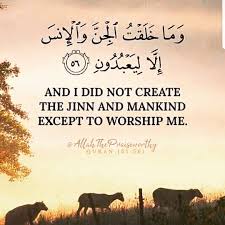
Surah Adh-Dhariat – surah 51:56-57 I did not create jinn and humans except to worship Me. I seek no provision from them, nor do I need them to feed Me.
Monotheism in Islam, known as Tawhid, is the core principle asserting God (Allah) is indivisibly One, without partners or equals, demanding worship of Him alone and rejecting polytheism (shirk) as the gravest sin. It’s a strict, pure monotheism emphasizing God’s incomparability, uniqueness, and sovereignty, described through His beautiful names, with no intermediaries, forming the foundation of the Islamic faith and worldview.
Key Aspects of Tawhid/ Monotheism:
Absolute Oneness (Wahdaniyyah): Allah is one and unique; He has no partners, children, spouses, or divisions within His essence.
Rejection of Shirk: Attributing divinity or partners to God (polytheism, idolatry) is the unforgivable sin in Islam.
No Intermediaries:Muslims worship Allah directly, without clergy or intermediaries, fostering a personal relationship with God.
Description by Attributes: God is known through His attributes (like Ar-Rahmān – The Entirely Merciful, Ar-Rahīm – The Especially Merciful) and His “99 Names,” not through physical forms or icons.
Creator & Sustainer:Allah is the sole creator and sustainer of the universe, which operates under His unified command.
Surah Nisa’/ Women ayah 48: Indeed, Allah does not forgive associating others with Him ˹in worship˺,1 but forgives anything else of whoever He wills. And whoever associates others with Allah has indeed committed a grave sin.
48. God does not forgive association with Him, but He forgives anything less than that to whomever He wills. Whoever associates anything with God has devised a monstrous sin.
49. Have you not considered those who claim purity for themselves? Rather, God purifies whom He wills, and they will not be wronged a whit. 50. See how they devise lies against God. That alone is an outright sin.
51. Have you not considered those who were given a share of the Book? They believe in superstition and evil powers, and say of those who disbelieve, “These are better guided on the way than the believers.” 52. Those are they whom God has cursed. Whomever God curses, you will find no savior for him.
53. Or do they own a share of the kingdom? Then they would not give people a speck. 54. Or do they envy the people for what God has given them of His grace? We have given the family of Abraham the Book and wisdom, and We have given them a great kingdom.
Jesus in Quran Kareem – monotheism Verses/ Ayaat:
Surah Al-Ma’idah (5:72): “The Messiah, son of Mary, said, ‘O Children of Israel, worship Allah—my Lord and your Lord.’Whoever associates others with Allah in worship will surely be forbidden Paradise by Allah. Their home will be the Fire, and the wrongdoers will have no helpers”.
Surah Maryam (19:36): “And indeed, Allah is my Lord and your Lord, so worship Him. That is the Straight Path”.
Surah Al-Ma’idah (5:117): Jesus denies ever telling people to worship him or his mother as gods, stating, “I never told them anything except what You ordered me to say: ‘Worship Allah—my Lord and your Lord!’
SURAH MAIDAH / The Table Spread:
Verses emphasize belief in God Alone and Not taking Jesus as a Partner to God (Idolatry);
16. God guides with it whoever follows His approval to the ways of peace, and He brings them out of darkness into light, by His permission, and He guides them in a straight path.
17. They disbelieve those who say, “God is the Christ, the son of Mary.” Say, “Who can prevent God, if He willed, from annihilating the Christ son of Mary, and his mother, and everyone on earth?” To God belongs the sovereignty of the heavens and the earth and what is between them. He creates whatever He wills, and God has power over everything.
18. The Jews and the Christians say, “We are the children of God, and His beloved.” Say, “Why then does He punish you for your sins?” In fact, you are humans from among those He created. He forgives whom He wills, and He punishes whom He wills. To God belongs the dominion of the heavens and the earth and what lies between them, and to Him is the return.
19. O People of the Book! Our Messenger has come to you, making things clear to you—after a cessation of messengers—so that you cannot say, “No preacher has come to us, and no warner.” In fact, a preacher has come to you, and a warner; and God is Capable of everything.
ياأيها النبي إذا جاءك المؤمنات يبايعنك على أن لايشركن بالله شيئا ولا يسرقن ولا يزنين ولا يقتلن أولادهن ولا يأتين ببهتان يفترينه بين أيديهن وأرجلهن ولا يعصينك في معروف فبايعهن واستغفر لهن الله إن الله غفور رحيم سورة: الممتحنة – آية: ( 12 ) – جزء: ( 28 ) – صفحة: ( 551 )
Almuntakhab Fi Tafsir Alquran Alkarim
O you the Prophet: If emigrating women who conformed to Islam come to you and pledge before Allah their vows to you that: they will not incorporate with Allah other deities, they will not steal, nor will they commit adultery nor infanticide, they will not speak or utter slanders nor relate falsehood, they will not conceive an illegitimate child and make the husband believe it is his, nor will they disobey you in matters crowned with equity; then you accept their pledge and invoke on their behalf Allahs forgiveness, for He is indeed Ghafurun and Rahimun
Tafseer Tafheem-ul-Quran by Syed Abu-al-A’la Maududi
(60:12) O Prophet, when believing women come to you and pledge *18 to you that they will not associate aught with Allah in His Divinity, that they will not steal, *19 that they will not commit illicit sexual intercourse, that they will not kill their children, *20 that they will not bring forth a calumny between their hands and feet, *21 and that they will not disobey you in anything known to be good, *22 then accept their allegiance *23 and ask Allah to forgive them. Surely Allah is Most Forgiving, Most Compassionate.
O Prophet, when the believing women come to you pledging to you meaning
*18) As we have explained above, this verse was sent down some time before the conquest of Makkah. After the conquest the Quraish stated coming to the Holy Prophet in large numbers to take the oath of allegiance. From the men he took the oath himself on Mount Safa, As for the woman he appointed Hadrat ‘Umar to administer the oath to them on his behalf and to ask them to pledge that they would refrain from the things mentioned in this verse. (Ibn Jarir, on the authority Of Ibn ‘Abbas; Ibn Abi Hatim, on the authority of Qatadah). Then. on his return to Madinah he ordered the Muslim women of Madinah to be gathered together in a house and he sent Hadrat Umar to take the oath from them. (Ibn Jarir, Ibn Marduyah, Bazzar, Ibn Hibban, on the authority of Umm ‘Atiyyah Ansariah). On the ‘Id day also, after his address to men, he went to the assembly of women and in his sermon to than he recited this verse and asked them to pledge that they would refrain from the things mentioned in it. (Bukhari on the authority of Ibn `Abbas’s tradition). Apart from these occasions. at different other tithes also, the women came before the Holy Prophet individually as well as collectively to take the oath of allegiance, as mentioned in several Ahadith.
*19) In Makkah, when the oath of allegiance was being administered, Hind bint `Utbah. wife of Abu Sufyan, asked the Nabi- Prophet its explanation and said: “Messenger of Allah, Abu Sufyan is rather stingy. Will it be sinful if I take out something from his wealth without his permission to meet my own and my children’s needs?” The Holy Prophet replied: “Nay, but only ,lastly and lawfully; i.e. take only that much as may actually suffice for your needs.” (Ibn al–‘Arabi, Ahkam al-Qur’an).
*20) This also includes abortion, whether ii is abortion of the legitimate or of the illegitimate foetus. *21) This implies two kinds of calumny: (1) a woman’s accusing other women of having illicit relations with other men and her spreading such stories among the people, for the women are generally prone to spreading such things; and (2) a woman’s delivering a child by somebody else and making her husband believe that it is his. Abu Da’ud has related a tradition from Abu Hurairah saying that he heard the Holy Prophet say: “The woman who brings such a child into a family as does not actually belong to it, has no connection with Allah, and Allah will never admit her to Paradise.”
*22) In this brief sentence two important points of the law have been stated: First, that obedience even to the Holy Prophet (upon whom be Allah s peace) has boon restricted to “in what is good”, although about the Holy Prophet no one could imagine that he would order somebody 10 do an evil From this it automatically follows that no one in the world can be obeyed outside the bounds of Divine law. For when obedience to Allah’s Messenger-himself is conditional upon “in what is good”. who else can have a position to demand unconditional obedience and require the people to obey and follow each of his commands laws, rules or customs, which are opposed to the law of Allah? The Nabi- Prophet (upon whom be Allah’s peace) has stated this principle, thus: “There is no obedience in the disobedience of Allah; obedience is only in what is good and right.” (Muslim, Abu Da’ud, Nasa’i). Our great doctors have derived this very theme from this verse, Hadrat ‘Abdur Rehman bin Zaid bin Aslam says: “Allah has not said that they should not disobey you (the Holy Prophet) but that they should not disobey you in what is good. Then, when Allah Almighty has made obedience even to the Holy Prophet himself conditional upon this, how can another person have the right that he should be obeyed in anything but what is good?” (Ibn Jarir).
Imam Abu Bakr al-Jassas writes: “Allah knew that His Prophet never enjoined anything but what was good. Still He restricted obedience to him only in what is good, so that no one ever may find a provision to obey the kings when they enjoined something outside the obedience of AIIah. The Holy Prophet (upon whom be Allah’s peace) has said: ‘He who obeys a creature in disobedience to the Creator, Allah appoints the. same c creature over him in power’ . ” (Ahkam al-Qur an). ‘Allama Alusi says: “This command refutes the view of those ignorant people who think that obedience to the ruler is absolutely necessary. Allah has restricted even obedience to His Messenger only in what is good, whereas the Messenger never enjoins anything but what is good. This is meant to wam the people that obedience to no one is lawful in disobedience to the Creator. ” (Ruh al-Ma ani). Thus, this command in fact, is the foundation stone of the rule of law in Islam. The rule is that anything which is opposed to the law of Islam is a crime, and no one has the right to enjoin any such thing on any one. Anyone who enjoins anything against the law, is a culprit; and the one who obeys such a command is . also a culprit. No subordinate can escape the punishment on the basis of the excuse that his superior officer had ordered him to do something which was a crime in the law.
In this world, the believer is like a stranger passing through a land that he does not live in, his goal is to go home and his concern is to return to it. With this in mind, he takes only that amount of provision as would allow him to reach his destination, he does not compete with the people living in that land for nobility or honour and neither does he despair at any humiliation he faces from them. [The Journey of the Strangers | pg. 90]










 bismillahschool.net