Now [among the best of righteous deeds which] We have enjoined upon man [is] goodness towards his parents; yet [even so,] should they endeavour to make thee ascribe divinity, side by side with Me, to something which thy mind cannot accept [as divine], obey then, not: [for] it is unto Me that you all must return, whereupon I shall make you [truly] understand [the right and wrong of] all that you were doing [in life] – Surah Al Ankabut – 29:8;
For your Lord has decreed that you worship none but Him. And honour your parents. If one or both of them reach old age in your care, never say to them ˹even˺ ‘ugh,’ nor yell at them. Rather, address them respectfully. – Surah – Al Isra 17:23
KEEP COMPANY OF YOUR MOTHER
Abu Huraira reported: A man asked the Messenger of Allah, peace and blessings be upon him, “Who is most deserving of my good company?” The Prophet said, “Your mother.” The man asked, “Then who?” The Prophet said “Your mother.” The man asked again, “Then who?” The Prophet said, “Your mother.” The man asked again, “Then who?” The Prophet said, “Your father.”
Source: Ṣaḥīḥ al-Bukhārī 5971, Ṣaḥīḥ Muslim 2548
Grade: Muttafaqun Alayhi (authenticity agreed upon) according to Al-Bukhari and Muslim
Regarding the narrations which shows the poisoning by Jewish woman:
حَدَّثَنَا عَبْدُ اللَّهِ بْنُ يُوسُفَ، حَدَّثَنَا اللَّيْثُ، قَالَ حَدَّثَنِي سَعِيدٌ، عَنْ أَبِي هُرَيْرَةَ ـ رضى الله عنه ـ قَالَ لَمَّا فُتِحَتْ خَيْبَرُ أُهْدِيَتْ لِلنَّبِيِّ صلى الله عليه وسلم شَاةٌ فِيهَا سُمٌّ فَقَالَ النَّبِيُّ صلى الله عليه وسلم ” اجْمَعُوا إِلَىَّ مَنْ كَانَ هَا هُنَا مِنْ يَهُودَ ”. فَجُمِعُوا لَهُ فَقَالَ ” إِنِّي سَائِلُكُمْ عَنْ شَىْءٍ فَهَلْ أَنْتُمْ صَادِقِيَّ عَنْهُ ”. فَقَالُوا نَعَمْ. قَالَ لَهُمُ النَّبِيُّ صلى الله عليه وسلم ” مَنْ أَبُوكُمْ ”. قَالُوا فُلاَنٌ. فَقَالَ ” كَذَبْتُمْ، بَلْ أَبُوكُمْ فُلاَنٌ ”. قَالُوا صَدَقْتَ. قَالَ ” فَهَلْ أَنْتُمْ صَادِقِيَّ عَنْ شَىْءٍ إِنْ سَأَلْتُ عَنْهُ ” فَقَالُوا نَعَمْ يَا أَبَا الْقَاسِمِ، وَإِنْ كَذَبْنَا عَرَفْتَ كَذِبَنَا كَمَا عَرَفْتَهُ فِي أَبِينَا. فَقَالَ لَهُمْ ” مَنْ أَهْلُ النَّارِ ”. قَالُوا نَكُونُ فِيهَا يَسِيرًا ثُمَّ تَخْلُفُونَا فِيهَا. فَقَالَ النَّبِيُّ صلى الله عليه وسلم ” اخْسَئُوا فِيهَا، وَاللَّهِ لاَ نَخْلُفُكُمْ فِيهَا أَبَدًا ـ ثُمَّ قَالَ ـ هَلْ أَنْتُمْ صَادِقِيَّ عَنْ شَىْءٍ إِنْ سَأَلْتُكُمْ عَنْهُ ”. فَقَالُوا نَعَمْ يَا أَبَا الْقَاسِمِ. قَالَ ” هَلْ جَعَلْتُمْ فِي هَذِهِ الشَّاةِ سُمًّا ”. قَالُوا نَعَمْ. قَالَ ” مَا حَمَلَكُمْ عَلَى ذَلِكَ ”. قَالُوا أَرَدْنَا إِنْ كُنْتَ كَاذِبًا نَسْتَرِيحُ، وَإِنْ كُنْتَ نَبِيًّا لَمْ يَضُرَّكَ.
When Khaibar was conquered, a roasted poisoned sheep was presented to the Prophet (ﷺ) as a gift (by the Jews). The Prophet (ﷺ) ordered, “Let all the Jews who have been here, be assembled before me.” The Jews were collected and the Prophet (ﷺ) said (to them), “I am going to ask you a question. Will you tell the truth?” They said, “Yes.” The Prophet (ﷺ) asked, “Who is your father?” They replied, “So-and-so.” He said, “You have told a lie; your father is so-and-so.” They said, “You are right.” He said, “Will you now tell me the truth, if I ask you about something?” They replied, “Yes, O Abu Al-Qasim; and if we should tell a lie, you can realize our lie as you have done regarding our father.” On that he asked, “Who are the people of the (Hell) Fire?” They said, “We shall remain in the (Hell) Fire for a short period, and after that you will replace us.” The Prophet (ﷺ) said, “You may be cursed and humiliated in it! By Allah, we shall never replace you in it.” Then he asked, “Will you now tell me the truth if I ask you a question?” They said, “Yes, O Abu Al-Qasim.” He asked, “Have you poisoned this sheep?” They said, “Yes.” He asked, “What made you do so?” They said, “We wanted to know if you were a liar in which case we would get rid of you, and if you are a prophet then the poison would not harm you.”
It is narrated to us by Ibrahim b. Hashim from Ja’far b. Muhammad from Abdullah b. Maymoon Al-Qaddah that Abu Abdullah ع said:
حدثنا ابراهيم بن هاشم عن جعفر بن محمد عن عبد الله بن ميمون القداح عن ابى عبد الله عليه السلام قال سمت اليهودية النبي صلى الله عليه وآله في ذراع قال وكان رسول الله صلى الله عليه وآله يحب الذراع والكتف ويكره الورك لقربها من المبال قال لما اوتى بالشوا اكل من الذراع وكان يحبها فاكل ما شاء الله ثم قال الذراع يا رسول الله صلى الله عليه وآله انى مسموم فتركه وما ذاك ينتقض به سمه حتى مات صلى الله عليه وآله.
‘A Jewess poisoned the Prophet (saws) in a forearm (of a grilled sheep). And the Messenger of Allah (saws) used to love the forearm and the shoulder, and disliked the thighs due to its vicinity from the urinary tract’. He then said: ‘When she came with the grill, he ate from the forearm, and he loved it, so he ate whatever Allah so Desired. Then the forearm said, ‘O Messenger of Allah (saws), I am poisoned’. So, he left it, and the poison did not cease to infringe with Him until He passed away’
Basair al-darajat, pg 523
حدثنا احمد بن محمد عن الحسين بن سعيد عن القاسم بن محمد عن على عن ابى بصير عن ابى عبد الله عليه السلام قال سم رسول الله صلى الله عليه وآله يوم خيبر فتكلم اللحم فقال يارسول الله صلى الله عليه وآله انى مسموم قال فقال النبي صلى الله عليه وآله عند موته اليوم قطعت مطاياى الاكلة التى اكلت بخيبر وما من نبى ولا وصى والا شهيد.
It is narrated to us by Ahmad b. Muhammad from Al-Hussain b. Saeed from Al-Qasim b. Muhammad from Ali from Abi Baseer that Abu Abdullah عليه السلام said: ‘The Messenger of Allah (saws) was poisoned on the day of Khaybar. The meat spoke and said, ‘O Messenger of Allah (saws) ! I am poisoned’. He [the Imam] said: ‘The Prophet (saws) said during his passing: ‘My insides is being cut by the meal which I ate at Khaybar, and there is no Prophet nor a succesor except that he is a martyr’’
Basair al-darajat, pg 523
#poisoning of Nabi(sal Allahu alayhi wa Salaam); #hadith;
Narrated `Aisha:
The Prophet (ﷺ) in his ailment in which he died, used to say, “O `Aisha! I still feel the pain caused by the food I ate at Khaibar, and at this time, I feel as if my aorta is being cut from that poison.” – Sahih al Bukhari 4428;
وَقَالَ يُونُسُ عَنِ الزُّهْرِيِّ، قَالَ عُرْوَةُ قَالَتْ عَائِشَةُ ـ رضى الله عنها ـ كَانَ النَّبِيُّ صلى الله عليه وسلم يَقُولُ فِي مَرَضِهِ الَّذِي مَاتَ فِيهِ “ يَا عَائِشَةُ مَا أَزَالُ أَجِدُ أَلَمَ الطَّعَامِ الَّذِي أَكَلْتُ بِخَيْبَرَ، فَهَذَا أَوَانُ وَجَدْتُ انْقِطَاعَ أَبْهَرِي مِنْ ذَلِكَ السَّمِّ ”.
Muhammad AsadTHE PARABLE of those who spend their possessions for the sake of God is that of a grain out of which grow seven ears, in every ear a hundred grains: for God grants manifold increase unto whom He wills; and God is infinite, all-knowing – surah Baqarah 2:261;
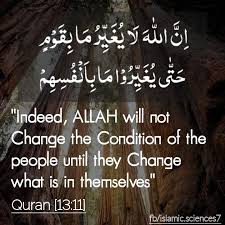
the Quran (13:11) Allah azza wa Jal states, “Indeed, Allah will not change the condition of a people until they change what is in themselves“. – surah ArRad- The Thunder
20:123 – Sahih International: [Allah] said, “Descend from Paradise – all, [your descendants] being enemies to one another. And if there should come to you guidance from Me – then whoever follows My guidance will neither go astray [in the world] nor suffer [in the Hereafter].
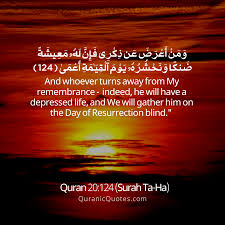
20:124 – Sahih International: And whoever turns away from My remembrance – indeed, he will have a depressed life, and We will gather him on the Day of Resurrection blind.”
20:125 –Sahih International: He will say, “My Lord, why have you raised me blind while I was [once] seeing?”
20:125 –Sahih International: [Allah] will say, “Thus did Our signs come to you, and you forgot them; and thus will you this Day be forgotten.”
20:126 – Sahih International: And thus do We recompense he who transgressed and did not believe in the signs of his Lord. And the punishment of the Hereafter is more severe and more enduring.
The Day (The Ressurection) when neither wealth will be of any use (to any one) nor sons, [ 88] except to one who will come to Allah with a sound heart, [ Surah As Shuarah – the Poets 26:89]
This verse has declared that wealth and children will not be of any help to a person on the Day of Judgment. This declaration is subjected to exception in the words, “except to one who will come to Allah with sound heart”
Of the most significant effects of persistent sinning that remains unchecked, is that it hardens the heart. As The Prophet ﷺ said, “Verily, when the servant commits a sin a black spot appears upon his heart. If he abandons the sin, seeks forgiveness, and repents, then his heart will be polished. If he returns to the sin, the blackness will be increased until it overcomes his heart. It is the covering that Allah has mentioned: ‘No, but on their hearts is a covering because of what they have earned’.” [Tirmidhi]
Al-Nu’man ibn Bashir reported: The Messenger of Allah, peace and blessings be upon him, said:
Verily, in the body is a piece of flesh which, if sound, the entire body is sound, and if corrupt, the entire body is corrupt. Truly, it is the heart. Source: Ṣaḥīḥ al-Bukhārī 52, Grade: Muttafaqun Alayhi
We said, “O Messenger of Allah, we know truthful in speech. What is a heart swept clean?” The Prophet said:
هُوَ التَّقِيُّ النَّقِيُّ لا إِثْمَ فِيهِ وَلا بَغْيَ وَلا حَسَدَ
One that is Godfearing and pure, in which there is neither sin, nor transgression, nor envy. We said, “Who shows a sign of it?” The Prophet said: الَّذِي يَشْنَأُ الدُّنْيَا وَيُحِبُّ الآخِرَةَ One who despises worldliness and loves the Hereafter. We said, “And who shows a sign of it?” The Prophet said: A believer with good character.Source: Shu’ab al-Imān 4462, Grade: Sahih
مُؤْمِنٌ فِي خُلُقٍ حَسَنٍ
Anas ibn Malik reported: The Messenger of Allah, peace and blessings be upon him, said to me:
Young man, if you are able every morning and evening to remove any rancor from your heart towards anyone, do so.
Abu Huraira reported: A man came to the Messenger of Allah, peace and blessings be upon him, and he complained about the hardness of his heart. The Prophet said:
Abu Dharr reported: The Messenger of Allah, peace and blessings be upon him, said:
Wealth is in the heart and poverty is in the heart. Whoever is wealthy in his heart will not be harmed no matter what happens in the world. Whoever is impoverished in his heart will not be satisfied no matter how much he has in the world. Verily, he will only be harmed by the greed of his own soul.
We will quote here some of the effects of sin, as described by Ibn Al-Qayyim (may Allah have mercy on him):
Being deprived of knowledge for knowledge is light that Allah causes to reach the heart, and sin extinguishes that light. When Ash-Shafi`i sat before Malik and read to him, he admired him because of the intelligence, alertness and understanding that he saw in him. He said, “I think that Allah has caused light to enter your heart, so do not extinguish it with the darkness of sin.”
Being deprived of provision. In Musnad Ahmad it is narrated that Thawban (may Allah be pleased with him) said: “The Messenger of Allah (peace and blessings of Allah be upon him) said: ‘A man is deprived of provision because of the sins that he commits.’” (Narrated by Ibn Majah, 4022, classed as sound by Al-Albani in Sahih Ibn Majah)
Sense of alienation that comes between a person and his Lord, and between him and other people. One of the Salaf (righteous predecessors) said: “If I disobey Allah, I see that in the attitude of my riding beast and my wife.”
Things become difficult for him, so that he does not turn his attention towards any matter but he finds the way blocked or he finds it difficult. By the same token, for the one who fears Allah, things are made easy for him.
The sinner will find darkness in his heart, which he will feel just as he feels the darkness of night. So this darkness affects his heart as the physical darkness affects his vision. For obedience is light and disobedience is darkness. The stronger the darkness grows, the greater becomes his confusion, until he falls into innovation, misguidance and other things that lead to doom, without even realizing, like a blind man who goes out in the darkness of the night, walking alone
This darkness grows stronger until it covers the eyes, then it grows stronger until it covers the face, which appears dark and is seen by everyone. `Abdullah ibn `Abbas said: “Good deeds make the face light, give light to the heart, and bring about ample provision, physical strength and love in people’s hearts. Bad deeds make the face dark, give darkness to the heart, and bring about physical weakness, a lack of provision and hatred in people’s hearts.”
Deprivation of worship and obedience. If sin brought no punishment other than that it prevents a person from doing an act of worship which is the opposite of sin, and cuts off access to other acts of worship, that would be bad enough. So the sin cuts off a third way and a fourth way and so on, and because of the sin he is cut off from many acts of worship, each of which would have been better for him than this world and everything in it. So he is like a man who eats food that is bound to cause a lengthy sickness, and thus he is deprived of many other foods that are better than that. And Allah is the One Whose help we seek.
Sin breeds sin until it dominates a person and he cannot escape from it.
Sin weakens a person’s willpower. It gradually strengthens his will to commit sin and weakens his will to repent until there is no will in his heart to repent at all… so he seeks forgiveness and expresses repentance, but it is merely words on the lips, like the repentance of the liars, whose hearts are still determined to commit sin and persist in it. This is one of the most serious diseases that are most likely to lead to doom.
He will become desensitized and will no longer find sin abhorrent, so it will become his habit, and he will not be bothered if people see him committing the sin or talk about him.
For the leaders of immorality, this is the ultimate shamelessness in which they find great pleasure, such that they feel proud of their sin and will speak of it to people who do not know that they have done it, saying, “O so and so, I did such and such.” Such people cannot be helped and the path to repentance is blocked for them in most cases. The Prophet (peace and blessings of Allah be upon him) said: “All of my ummah (followers) will be fine except for those who commit sin openly, and that includes cases where Allah conceals a person’s sin, but the following morning he exposes himself and says, ‘O So and so, I did such and such last night, so he shamelessly exposes himself when all night his Lord had concealed his sin.” (Narrated by Al-Bukhari, 5949 and Muslim, 2744).
When there are many sins they leave a mark on the heart of the person who commits them, so he becomes one of the negligent. As one of the Salaf said, concerning the verse–
{Nay! But on their hearts is the Ran (covering of sins and evil deeds) which they used to earn.} [Al-Mutaffifin 83:14 – interpretation of the meaning] – this means sin after sin.
How this starts is that the heart gets stained by sin, and if the sin increases then the stain grows bigger until it becomes the Ran (covering of sin and evil deeds), then it increases until it becomes a seal, and the heart becomes covered and sealed. If that happens after a person had been guided and had understood, then his heart is turned upside down, and at that point the devil gains control over him and directs him as he wants.
“Have you seen he who has taken as his god his [own] desire, and Allah has sent him astray due to knowledge and has set a seal upon his hearing and his heart and put over his vision a veil? So who will guide him after Allah ? Then will you not be reminded?” (45:23)
Young man, that is my Sunnah. Whoever revives my Sunnah has loved me, and whoever loves me will be with me in Paradise. Source: Sunan al-Tirmidhī 2678, Grade: Hasan
REPENTANCE: The Prophet ﷺ said, that Allah said in a Hadith Qudsi, “O son of Adam, so long as you call upon Me and ask of Me, I shall forgive you for what you have done, and I shall not mind. O son of Adam, were your sins to reach the clouds of the sky and were you then to ask forgiveness of Me, I would forgive you. O son of Adam, were you to come to Me with sins nearly as great as the earth and were you then to face Me, ascribing no partner to Me, I would bring you forgiveness nearly as great as it.”
Sahih International: And it has already come down to you in the Book that when you hear the verses of Allah [recited], they are denied [by them] and ridiculed; so do not sit with them until they enter into another conversation. Indeed, you would then be like them. Indeed Allah will gather the hypocrites and disbelievers in Hell all together – Surah Nisa(The Women) – 4:10;
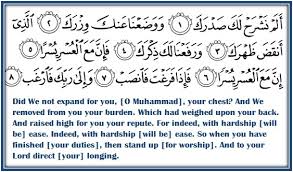
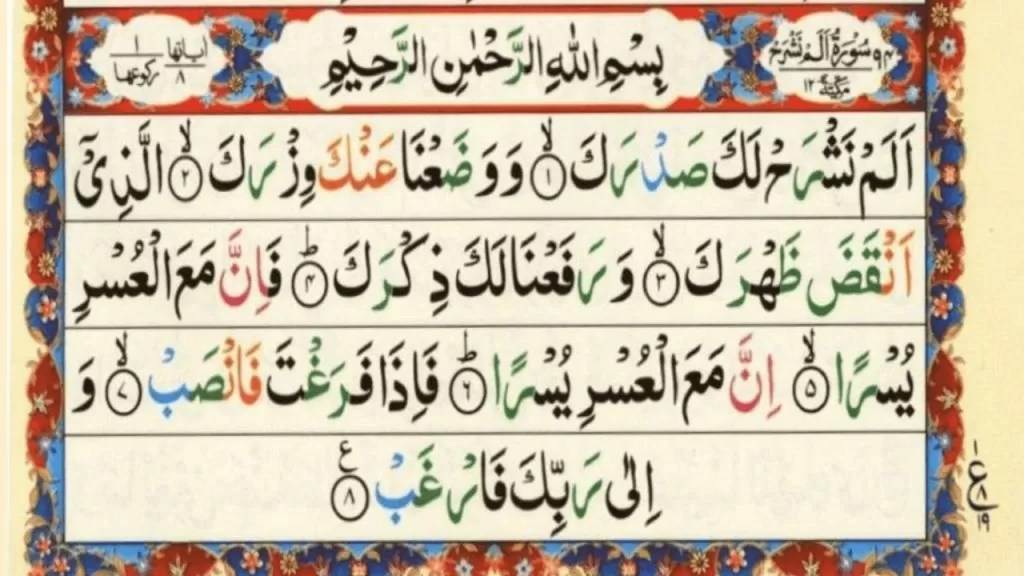
Surah Ash-Sharh (Arabic text: الشرح) is the 94th chapter of the Qur’an, it is also referred to as Surah Inshirah. The surah titled in English means “The Expansion” or “The Opening-Up of the Heart” and it consists of 8 verses…
“Have We not expanded for you, [O Muhammad], your breast?”
“And We removed from you your burden”
“Which weighed upon your back?”
“And We raised high for you your repute?”
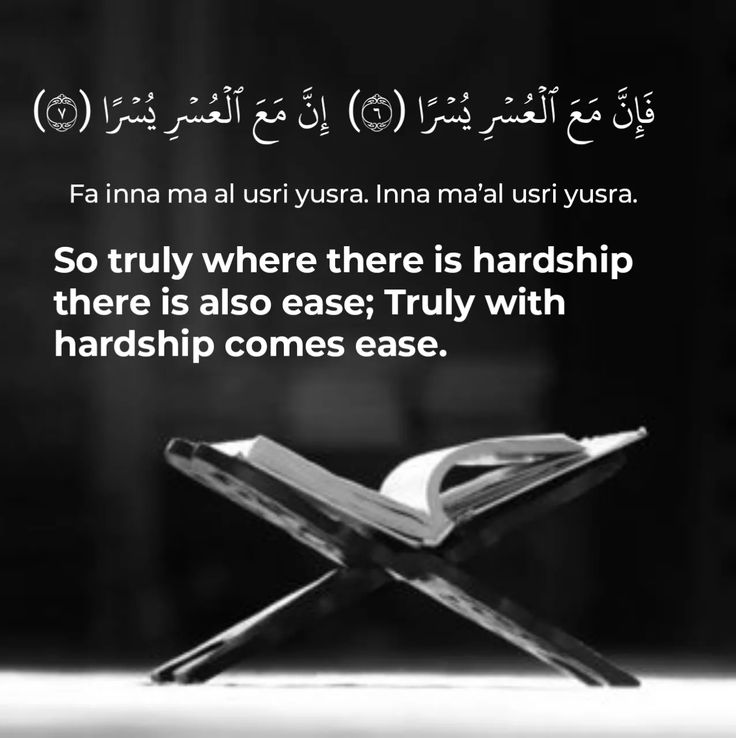
“For indeed, with hardship [will be] ease.”
“Indeed, with hardship [will be] ease.”
“So when you have finished (your duties), then stand up [for worship].”
“And to your Lord direct [your] longing.”
Divine Comfort and Encouragement
Surah Ash-Sharh begins with Allah SWT addressing the Prophet SAW directly, asking if He has not expanded the Prophet SAW’s chest. This metaphorical expansion signifies the easing of emotional and spiritual burdens, allowing the Prophet SAW to carry out his mission with greater fortitude. The verse, “Did We not expand for you, [O Muhammad], your chest?” (Quran 94:1), highlights the divine support and encouragement given to the Prophet SAW during times of distress.
This surah reminds believers that Allah SWT is always there to support and ease their difficulties. It reassures them that Allah’s assistance and comfort are near even in the most challenging times. This message is timeless and offers solace to all believers experiencing hardship.
Key Lessons of Surah Ash-Sharh
Surah Ash-Sharh offers several key lessons for believers:
1. Divine Support: Allah SWT’s support and comfort are always near, especially in times of hardship.
2. Relief from Burdens: Trust in Allah SWT to alleviate burdens and provide ease.
3. Elevation through Perseverance: Patience and dedication to faith lead to honor and rewards.
4. Promise of Ease: Hardships are temporary, and ease will follow, instilling hope and resilience.
5. Importance of Worship: Devotion to Allah SWT is a source of strength and comfort, guiding believers through challenges.
The Prophet (ﷺ) said:”Eman means that you believe in Allah, in His Angels, in His Books, in His Messengers, in the Day of Judgment and in the Divine Decree (Qadr) in its good and evil.”[Sahih Muslim 8a]
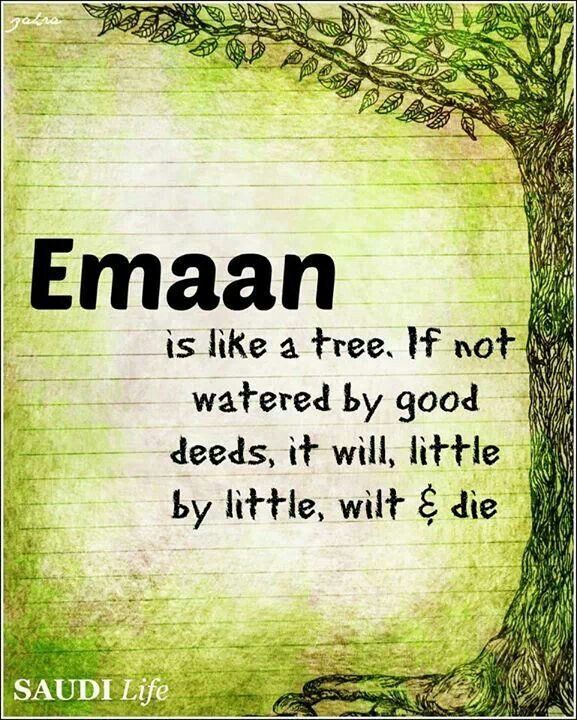
Abu Ja’far reported: ‘Umayr ibn Habib, may Allah be pleased with him, said, “Faith increases and decreases.” It was said, “How does it increase and decrease?” ‘Umayr said, “If we remember our Lord and fear him, it will increase. If we are heedless and we forget and we waste our time, it will decrease.”
55 شعب الإيمان للبيهقي باب القول في زيادة الإيمان ونقصانه
1. Belief in Allah:This includes believing in Allah’s existence, His oneness (Tawhid), His attributes, His Lordship, and His right to be worshipped alone.
2. Belief in Angels:This involves believing in the existence of angels as Allah’s messengers, their obedience to Him, and their specific roles.
3. Belief in Allah’s Books:Muslims believe in the divine books revealed by Allah to various prophets, including the Quran, which is considered the final and complete revelation.
4. Belief in Allah’s Messengers:This pillar encompasses belief in all prophets sent by Allah, including Adam, Noah, Abraham, Moses, Jesus, and Muhammad (peace be upon them all).
5. Belief in the Last Day:This is the belief in the Day of Judgment, when all of humanity will be resurrected and judged by Allah based on their deeds.
6. Belief in Divine Decree (Qadar):This pillar entails believing in Allah’s predestination of all things, both good and bad, and that everything happens according to His will and wisdom.
The most important thing to remember is that the conception of knowledge (Al-Ilm) in Islam is the Guiding Light (Huda) separating right from wrong (Al furqan). Therefore, in the same way the sun brings light to our eyes to see the world around us, Al-Ilm (Knowledge) is the source of guidance to see the signs of Allah (SWT) around us.
“We will show them Our signs in the universe and in their own selves, until it becomes manifest to them that this (the Quran) is the truth” (Quran; 41:53).
Based on this Quranic verse, Allah (SWT) exhorts Muslims to observe and study the universe in order to find some of His signs. For that reason, many verses of the Noble Quran invite Muslims to study nature and seek knowledge, and this has been interpreted to mean encouragement for scientific inquiry.
The importance of seeking knowledge is repeatedly emphasized in the Noble Quran with frequent injunctions, such as “God will exalt those of you who believe and those who have knowledge to high degrees” (Quran58:11), “O my Lord! Increase me in knowledge” (Quran 20:114), and “As God has taught him, so let him write” (Quran 2:282). Such Quranic verses provide a forceful stimulus for the Islamic community to strive for education and knowledge, and range from previously unknown facts about the universe to the wonders on Earth, such as the benefits of pomegranate.
Moreover, I consider this Quranic verse “And of knowledge, you mankind have been given only a little” (Quran 17:85) as an inspiration for the acquisition of new knowledge. In this perspective, according to Mr. Shamsher Ali, there are around 750 verses in the Noble Quran dealing with natural phenomena [1]. For some Muslim writers, the study of science stems from Al-Tawheed [2], which means that there is a complete harmony between the signs of Allah (SWT) in nature, scientifically proven, and His words in the Noble Quran. Indeed, the Quran, which was revealed fourteen centuries ago, mentioned scientific facts only recently discovered. These are just some of the many scientific facts found in the Quran:
1. Water
In Surah Al-Anbya, it was revealed: “We made every living thing from water, will they not believe?” (Quran, 21:30) and it was only after the discovery of the microscope that it was concluded that all living things consist mostly of water – while in the deserts of Arabia, the last thing a man could guess is that all of life ultimately came from water.
2. Universe: The Big Bang Theory
In Surah Al-Anbya, Allah (SWT) also states: “Have those who disbelieved not considered that the heavens and the earth were a joined entity, and We separated them” (Quran, 21:30). In 1929, American astronomer Edwin Hubble proposed the Hubble’s Law according to which all entities in space are moving away from the Earth at speeds proportional to their distance i.e. the greater the distance from earth, the faster they are moving. Soon after this, he discovered that galaxies are moving away from each other as well which means that the universe is expanding overall.
This laid the basis for the Big Bang Theory which states that around 12-15 billion years ago the universe came into existence from one single extremely hot and dense point, due to an explosion of this point the universe came into being. The universe, since then, has been expanding from this single point. In 1965, radio astronomers Arno Penzias and Robert Wilson won the Noble Prize for the discovery that confirmed the Big Bang theory [3]. When looking at the verse cited above, while acknowledging Allah Knows best, it remains astounding that the Quran had already revealed that “the heavens and the earth were a joined entity, and We separated them”.
3. Universe: The Big Crunch Theory
Again, in Surah Al-Anbya, Allah (SWT) says: “The Day when We will fold the heaven like the folding of a [written] sheet for the records. As We began the first creation, We will repeat it. [That is] a promise binding upon Us. Indeed, We will do it” (Quran, 21:104). This fits in with the theory of Big Crunch which talks about how the universe will be pulled back into the black holes and again form a tiny mass [4].
4. Embryology
In Surah Al-Mu’minun, Allah (SWT) says “We created man from an extract of clay. Then We made him as a drop in a place of settlement, firmly fixed. Then We made the drop into an alaqah (leech, suspended thing, and blood clot), then We made the alaqah into a mudghah (chewed substance)…” (Quran 23:12-14).
Science has only proved this with the help of the latest technology. It is Professor Emeritus Keith L. Moore who is one of the world’s most well-known scientists in the fields of anatomy and embryology, who said that “It is clear to me that these statements must have come to Muhammad from God, because almost all of this knowledge was not discovered until many centuries later” [6].
5. The Sky’s Protection
In Surah Al-Anbya, Allah (SWT) says: “And We made the sky a protected ceiling, but they, from its signs, are turning away” (Quran 21:32). It is a scientific fact that the sky, with all of its gasses, protects the earth and life that is present on it from the harmful rays of the sun. If there was no protective layer, life on earth would cease to exist as the temperature on earth would be freezing at -270.556°C, the same as the temperature in space.
6. Iron within Meteorites
In Surah Al-Hadid it is written that: “We sent down Iron with its great inherent strength and its many benefits for humankind” (Quran 57:25). According to M. E. Walrath, iron is not natural to the earth. Scientists state that billions of years ago, the earth was struck by meteorites. It was within these meteorites that iron was present and due to explosion on earth, we now have iron available to us [7]. The Quran, as stated above, has already enlightened us of this fact by stating “We sent down iron with its great inherent strength…”.
7. The Meeting of the Seas
In Surah Ar-Rahman, it states “He released the two seas, meeting [side by side], Between them is a barrier [so] neither of them transgresses” (Quran, 55:19-20). Science has discovered that in places where two different seas meet, there is a barrier that divides them which helps both the seas maintain their own temperature, salinity, as well as density [8].
8. Sun Moving in Orbit
In Surah Al-Anbya, it states “And it is He who created the night and the day and the sun and the moon; all [heavenly bodies] in an orbit are swimming” (Quran, 21:33). Although it was only a widespread belief in the 20th century amongst the astronomers, today it is a well-established fact that the Sun, the Moon, and all the other bodies in the Universe are moving in an orbit and constantly moving, not stationary [9] as commonly thought before.
In Surah An-Naba, Allah (SWT) states: “Have We not made the earth a resting place? And the mountains as stakes?” (Quran, 78:6-7). In a book by geophysicist Frank Press called ‘Earth’ (1986), he explains how the mountains are like stakes and are buried deep within the earth’s surface [10]. Mt. Everest which has a height of approximately 9 km above sea level has a root deeper than 125 km – thus only reinforcing the Quranic revelation of the importance and strength of mountains on our earth.
10. Expansion of the Universe
In Surah Adh-Dhariyat, Allah (SWT) says “And the heaven We constructed with strength, and indeed, We are [its] expander” (Quran, 51:47). According to the prominent physicist Stephen Hawking in his book ‘A Brief History of Time’, “The discovery that the universe is expanding was one of the great intellectual revolutions of the 20th century” [11], although centuries before the Quran had already revealed to us that in regards to the universe, “We are its expander”.
11. Pain Receptors
In Surah An-Nisa, it is stated that “We shall send those who reject our revelations to the (hell) fire. When their skins have been burned away, We shall replace them with new ones so that they may continue to feel the pain: God is almighty, all-wise” (Quran, 4:56).
For a long time it was thought that the sense of feeling and pain was dependent on the brain. However, it has been discovered that there are pain receptors present in the skin. Without these pain receptors, a person would not be able to feel pain [12] – another example of the scientific miracles of the Holy Quran.
12. Internal Waves in the Oceans
In Surah An-Nur, Allah (SWT) has revealed: “Or [they are] like darknesses within an unfathomable sea which is covered by waves, upon which are waves, over which are clouds – darknesses, some of them upon others. When one puts out his hand [therein], he can hardly see it. And he to whom Allah has not granted light – for him there is no light” (Quran, 24:40).
Incredibly, oceanographers have stated that unlike the belief that waves only occur on the surface, there are waves that take place internally in the oceans, below the surface of the water. Invisible to the human eye, these can only be detected through special equipment [13].
13. Frontal Lobe
In Surah Al-Alaq, in the story of a man named Abu Jahl who was a cruel oppressive tribal leader in the times of the Prophet Mohammad (peace and blessings of Allah be upon him), Allah revealed a verse to warn him. Therein Allah (SWT) says: “No indeed! if he does not stop, We will seize him by the forehead, his lying, sinful forehead” (Quran, 96:15-16).
According to a book titled ‘Essentials of Anatomy and Physiology,’ it is clearly stated that the forehead or frontal area of the brain is responsible for motivation and the foresight to plan and initiate movements. All this takes place in the prefrontal area of the brain. The part of the brain that is responsible for movement and planning is said to be seized if he does not stop. Other studies have proved that it is this prefrontal region that is responsible for the function of lying [14].
Another study at the University of Pennsylvania in which volunteers were questioned during a computerized interrogation showed that the volunteers who were lying had increased activity in their prefrontal and premotor cortices [15]. Subhanallah, there is a deeper meaning behind why the Quran stated: “We will seize him by the forehead”.
The most important thing to remember is that the conception of knowledge (Al-Ilm) in Islam is the Guiding Light (Huda) separating right from wrong (Al furqan). Therefore, in the same way the sun brings light to our eyes to see the world around us, Al-Ilm is the source of guidance to see the signs of Allah (SWT) around us. More such facts that are already mentioned in the Quran and will be proven in the future by mankind as Allah (SWT) says in the Quran in Surah Ar-Rahman, “So which of the favors of your Lord would you deny?”
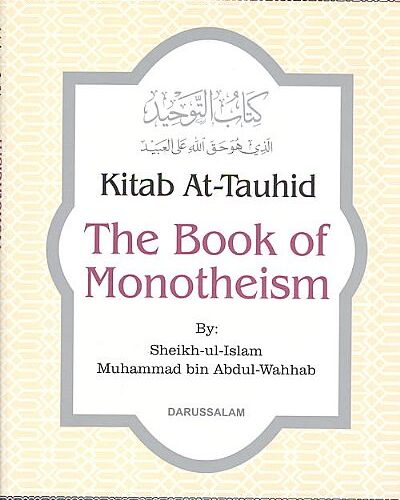
#Qur’an for Kids; #Arabic language for Kids; #Kids Islamic Course; English for Beginners; #Nourani Qaeda (Arabic Alphabets and some Pronounciation); Qur’an for Adults, Kitab at Tawheed; #Tajweed;
19 God is Not a Man, that he should lie; neither the son of man, that he should repent: hath he said, and shall he not do it? or hath he spoken, and shall he not make it good?– Numbers 23:19
Exodus 20King James Version
20 And God spoke all these words, saying,
2 I am the Lord thy God, which have brought thee out of the land of Egypt, out of the house of bondage.
3 Thou shalt have no other gods before me.
4 Thou shalt not make unto thee any graven image, or any likeness of any thing that is in heaven above, or that is in the earth beneath, or that is in the water under the earth.
5 Thou shalt not bow down thyself to them, nor serve them: for I the Lord thy God am a jealous God, visiting the iniquity of the fathers upon the children unto the third and fourth generation of them that hate me;
6 And showing mercy unto thousands of them that love me, and keep my commandments.
7 Thou shalt not take the name of the Lord thy God in vain; for the Lord will not hold him guiltless that taketh his name in vain.
30 By myself I can do nothing; I judge only as I hear, and my judgment is just, for I seek not to please myself but him who sent me. – John 5:30;
Based on the Above Quoted Verses – God Is Not a Man – it is pretty Clear that New Testament is way too much modified; Jesus (alaihis Salam/ peace be upon him) was a Prophet – and even the expression of “son” of God is mostly Hebrew for Ebed – Slave/ Servant of God; and most of the verses are modified and not in the Original Aramaic (the Language Jesus actually spoke)- and contradict many monotheistic verses of the Old Testament; so accoding to the Bible – you’re supposed to have only 1 God – worthy of worship – Not to bow down or worship Jesus, Mary, saints or anything else with or along with God/ Allah azza wa Jal and that is pure monotheism;
ALLAH/ GOD ALLMIGHTY IN ISLAM
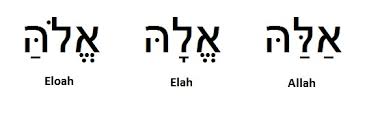
God in Islam called Allah in the Arabic language -in Quran Kareem and Biblical tranlation is the same AllMighty God (the only one God worthy of worship) in the Bible and can be defined with the following qualities; Muslims consider all prophets Muslim(in Submission to God);
Say, ˹O believers,˺ “We believe in Allah and what has been revealed to us; and what was revealed to Abraham, Ishmael, Isaac, Jacob, and his descendants; and what was given to Moses, Jesus, and other prophets from their Lord. We make no distinction between any of them. And to Allah we all submit.” – surah Baqarah 2:136;
3:2 Allah – there is no deity except Him, the Ever-Living, the Sustainer of existence.
Abridged Explanation of the Quran
Allah is the One Who alone deserves to be worshipped. He is the One Who lives perfectly without any death or deficiency. He exists by Himself and is not in need of any of His creation. The creation only exists through Him and is always in need of Him.
The Messenger ˹firmly˺ believes in what has been revealed to him from his Lord, and so do the believers. They ˹all˺ believe in Allah, His angels, His Books, and His messengers. ˹They proclaim,˺ “We make no distinction between any of His messengers.” And they say, “We hear and obey. ˹We seek˺ Your forgiveness, our Lord! And to You ˹alone˺ is the final return.”
Allah! There is no god ˹worthy of worship˺ except Him, the Ever-Living, All-Sustaining. Neither drowsiness nor sleep overtakes Him. To Him belongs whatever is in the heavens and whatever is on the earth. Who could possibly intercede with Him without His permission? He ˹fully˺ knows what is ahead of them and what is behind them, but no one can grasp any of His knowledge—except what He wills ˹to reveal˺. His Seat1 encompasses the heavens and the earth, and the preservation of both does not tire Him. For He is the Most High, the Greatest.2– surah Baqarah 2:255;
Last 3 Ayaat/ verses from Surah Hashr (Gathering in Judgement Day) “He is Allah—there is no god ‘worthy of worship’ except Him: Knower of the seen and unseen. He is the Most Compassionate, Most Merciful.
He is Allah—there is no god except Him: the King, the Most Holy, the All-Perfect, the Source of Serenity, the Watcher ‘of all’, the Almighty, the Supreme in Might,1 the Majestic. Glorified is Allah far above what they associate with Him ˹in worship˺!
He is Allah: the Creator, the Inventor, the Shaper. He ‘alone’ has the Most Beautiful Names. Whatever is in the heavens and the earth ‘constantly’ glorifies Him. And He is the Almighty, All-Wise. (Qur’an 59 – 22/23/24)
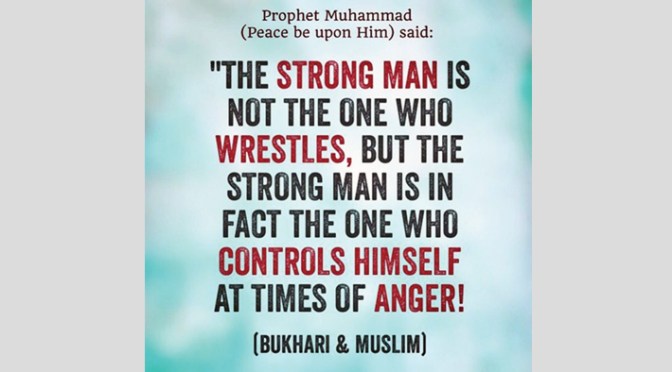
Abdullah ibn Mas’ud reported: The Messenger of Allah, peace and blessings be upon him, said, “Whom do you consider to be a fighter among you?” We said, “One whom men cannot wrestle down.” The Prophet said, “It is not so. Rather, it is one who controls himself when angry.”
Source: Ṣaḥīḥ Muslim 2608
Abu Huraira reported: The Messenger of Allah, peace and blessings be upon him, said, “The strongest are not the best wrestlers. Verily, the strongest are those who control themselves when angry.”
Source: Ṣaḥīḥ al-Bukhārī 6114, Ṣaḥīḥ Muslim 2609
Imam Ibn ‘Abdul Barr commented, “This is evidence that striving against oneself is a more difficult task and is better than striving against the enemy.”

























 bismillahschool.net