

https://archive.org/details/quran-arabic-english-clearquran_202506/page/n1/mode/2up


Islam. Comparative Religion
Muhsin Khan
Then, We sent after them, Our Messengers, and We sent ‘Iesa (Jesus) – son of Maryam (Mary), and gave him the Injeel (Gospel). And We ordained in the hearts of those who followed him, compassion and mercy. But the Monasticism which they invented for themselves, We did not prescribe for them, but (they sought it) only to please Allah therewith, but that they did not observe it with the right observance. So We gave those among them who believed, their (due) reward, but many of them are Fasiqun (rebellious, disobedient to Allah).
Maulana Maududi Tafsir:
53. The words in the original can have two meanings: (1) That We did not enjoin monasticism (ruhbaniyyat) upon them. We enjoined upon them only the seeking of Allah’s good pleasure.
(2) That monasticism was not enjoined by Us. They of their own accord enjoined it on themselves, to seek Allah’s good pleasure. In both cases this verse makes it explicit that monasticism is an un-Islamic creed, and it has never been part of the true faith. The same thing has been stated by the Prophet (peace be upon him) thus: There is no monasticism in Islam. (Musnad Ahmed).
#No #Monasticism in #Islam; and #Innovations in Christianity;
JESUS IN QURAN KAREEM – Verses
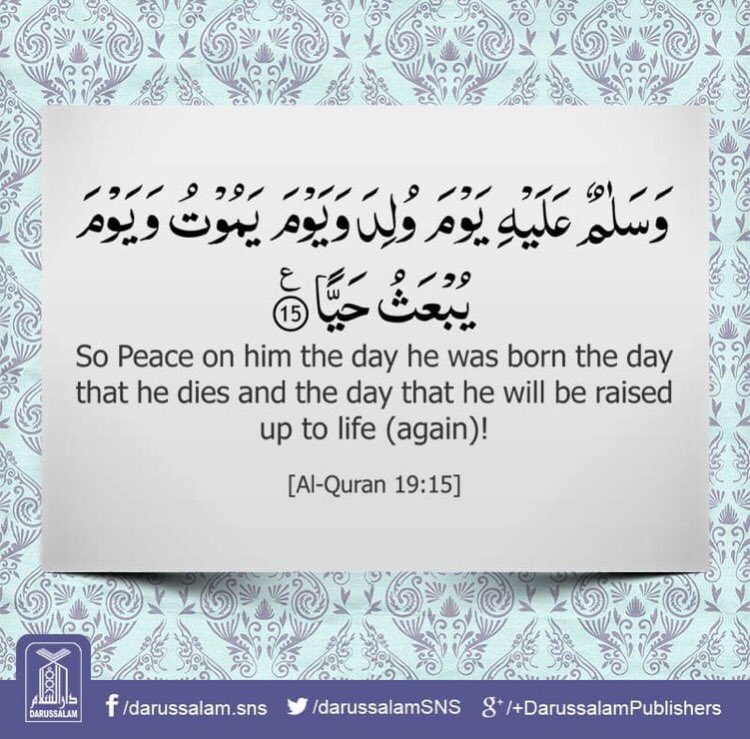
Isa (عَلَيْهِ ٱلسَّلَامُ) made the supplication,
“Indeed, I am the servant of Allah. He has given me the Scripture and made me a prophet. And He has made me blessed wherever I am and has enjoined upon me prayer and zakah as long as I remain alive And [made me] dutiful to my mother, and He has not made me a wretched tyrant. And peace is on me the day I was born and the day I will die and the day I am raised alive.”
— (Surah Maryam, ayat 30-33)

Ka’ab ibn Malik (R.A) said, “When I greeted the Messenger of Allah, whose face was glittering with happiness, for whenever Allah’s Messenger ﷺ was happy, his face used to glitter, as if it was a piece of the moon, and we used to recognize it (i.e. his happiness) from his face.” Once Al-Baraa (R.A) was asked whether the Prophet Muhammad ﷺ face was like the sword to which he replied: No, it was like the moon.
On the authority of Umm Ma‘bad ‘Atikah bint Khalid al-Khuza‘iyyah (ra) who said: ’I saw a man of visible radiance and purity, beautiful appearance, bright faced, with neither protruding ribs nor a small head, handsome and fair. His eyes were deep black and large, and his eyelashes were lush. His voice was mellow and soft. The whiteness of his eyes was bright and his pupils were very black. His eyebrows were beautifully arched and connected. His neck was long, his beard densely full. When he was silent, he appeared dignified. When he spoke, he was eminent and crowned with magnificence. His speech was sweet, his words precise, neither too little nor too much. Like a string of pearls flowing down gradually. He was the most striking and beautiful of people when seen from afar and the fairest of them when seen up close. He was medium height, neither unagreeably tall nor scornfully short; a branch between two branches. Among the three he was the most radiant in appearance, the finest of them in stature. He was surrounded by companions. When he spoke, they listened attentively. When he gave orders, they hastened to fulfil them. Honoured, served and surrounded by followers. He neither frowned, nor criticised’. [Al-Baihaqi and al-Hakim]
#Prophet Muhammad(Sal Allahu Alayhi wa Sallam) – Appearance; #Islam; #Hadith

Ka’ab ibn Malik (R.A) said, “When I greeted the Messenger of Allah, whose face was glittering with happiness, for whenever Allah’s Messenger ﷺ was happy, his face used to glitter, as if it was a piece of the moon, and we used to recognize it (i.e. his happiness) from his face.” Once Al-Baraa (R.A) was asked whether the Prophet Muhammad ﷺ face was like the sword to which he replied: No, it was like the moon.
The Prophet ﷺ had the seal of prophethood between his shoulders. The seal was something distinct on his body like a birth mark. Jabir ibn Samurah (R.A) said: “And I saw the seal near his shoulder, it was the size of a pigeon’s egg and its color was the same as that of his body.”

In the name of Allāh, ar-Raḥmān (the most merciful), ar-Raḥīm (the bestower of mercy).
During the hijrah, the Prophet ﷺ passed by an elderly non-Muslim woman called Umm Ma’bad al-Khuzā’iyyah. He stopped at her place to seek provisions and rest. Her husband was away tending to his flock whilst the Prophet ﷺ visited. When he returned, she described the physical features and appearance of the Prophet ﷺ in great detail:
On the authority of Umm Ma‘bad ‘Atikah bint Khalid al-Khuza‘iyyah (ra) who said: ’I saw a man of visible radiance and purity, beautiful appearance, bright faced, with neither protruding ribs nor a small head, handsome and fair. His eyes were deep black and large, and his eyelashes were lush. His voice was mellow and soft. The whiteness of his eyes was bright and his pupils were very black. His eyebrows were beautifully arched and connected. His neck was long, his beard densely full. When he was silent, he appeared dignified. When he spoke, he was eminent and crowned with magnificence. His speech was sweet, his words precise, neither too little nor too much. Like a string of pearls flowing down gradually.
He was the most striking and beautiful of people when seen from afar and the fairest of them when seen up close. He was medium height, neither unagreeably tall nor scornfully short; a branch between two branches. Among the three he was the most radiant in appearance, the finest of them in stature. He was surrounded by companions. When he spoke, they listened attentively. When he gave orders, they hastened to fulfil them. Honoured, served and surrounded by followers. He neither frowned, nor criticised’. [Al-Baihaqi and al-Hakim]
الت أم معبد الخزاعية عن رسول الله ﷺ وهي تصفه لزوجها:
“رأيتُ رَجُلًا ظَاهِرَ الْوَضَاءَةِ أَبْلَجَ الْوَجْهِ حَسَنَ الْـخَلُقِ.
لَمْ تَعِبْهُ ثُجْلَةٌ وَلَمْ تُزْرِ بِهِ صعْلَةٌ وَسِيمًا قَسِيمًا.
فِي عَيْنَيْهِ دَعَجٌ وَفِي أَشْفَارِهِ وَطَفٌ وَفِي صوَتِهِ صَحَلٌ.
وَفِي عُنُقِهِ سَطَعٌ. وَفِي لِحْيَتِهِ كَثَاثَةٌ أَحْوَرُ أَكْحَلُ أَزَجُّ أَقْرَنُ.
شَدِيدُ سَوَادِ الشّعْرِ إذَا صَمَتَ عَلاهُ الْوَقَارُ وَإِذَا تَكَلّمَ سَما.
عَلاهُ الْبَهَاءُ أَجْمَلُ النّاسِ وَأَبْهَاهُ مِنْ بَعِيدٍ وَأَحْسَنُهُم وَأَحْلاهُم مِنْ قَرِيبٍ.
حُلْوُ الْمَنْطِقِ فصل لا نَزْرٌ ولا هَذَرٌ كَأَنّ مَنْطِقَهُ خَرَزَاتُ نَظْمٍ يَنحدرنَ.
رَبْعَةٌ لا تَقْتَحِمُهُ عَيْنٌ مِنْ قِصَرٍ ولا تَشْنَؤُهُ مِنْ طُولٍ.
غُصْنٌ بَيْنَ غُصْنَيْنِ فَهُوَ أَنْضَرُ الثلاثَةِ مَنْظَرًا، وَأَحْسَنُهُمْ قَدًا.
لَهُ رُفَقَاءُ يَحُفّونَ بِهِ ، إن قَالَ اسْتَمَعُوا لِقَوْلِهِ. وَإن أَمَرَ تَبَادَرُوا إلَى أَمْرِهِ.
مَحْفُودٌ مَحْشُودٌ لا عَابِسٍ وَلا مُفْنِدٌ.”
Footnotes: [1] Her words have been narrated in various books of ḥadīth and sīrah including: at-Tabarāni in “al-Mu’jam al-Kabīr”; al-Ḥākim in “al-Mustadrak”; Ibn Kathīr in “al-Bidāyah wan-Nihāyah”; Ibn Hishām in his “Sīrah”; Ibn al-Qayyim in “Zād al-Ma’ād”; and al-Mubārakphuri in “ar-Rahīq al-Makhtūm”.
ALLAH has described these attributes in the Glorious Quran. (Al Fath 48: 29)

28. He it is Who has sent His Messenger (Muhammad  ) with guidance and the religion of truth (Islam), that He may make it (Islam) superior over all religions. And All-Sufficient is Allah as a Witness.
29. Muhammad () is the Messenger of Allah, and those who are with him are severe against disbelievers, and merciful among themselves. You see them bowing and falling down prostrate (in prayer), seeking Bounty from Allah and (His) Good Pleasure. The mark of them (i.e. of their Faith) is on their faces (foreheads) from the traces of (their) prostration (during prayers). This is their description in the Taurat (Torah). But their description in the Injeel (Gospel) is like a (sown) seed which sends forth its shoot, then makes it strong, it then becomes thick, and it stands straight on its stem, delighting the sowers that He may enrage the disbelievers with them. Allah has promised those among them who believe (i.e. all those who follow Islamic Monotheism, the religion of Prophet Muhammad till the Day of Resurrection) and do righteous good deeds, forgiveness and a mighty reward (i.e. Paradise).
1. Those who disbelieve [in the Oneness of Allah, and in the Message of Prophet Muhammad ], and hinder (men) from the Path of Allah (Islamic Monotheism), He will render their deeds vain .
2. But those who believe and do righteous good deeds, and believe in that which is sent down to Muhammad (), for it is the truth from their Lord, He will expiate from them their sins, and will make good their state.
3. That is because those who disbelieve follow falsehood, while those who believe follow the truth from their Lord. Thus does Allah set forth their parables for mankind.
7. O you who believe! If you help (in the cause of) Allah, He will help you, and make your foothold firm.
8. But those who disbelieve (in the Oneness of Allah Islamic Monotheism), for them is destruction, and (Allah) will make their deeds vain.
9. That is because they hate that which Allah has sent down (this Qur’an and Islamic laws, etc.), so He has made their deeds fruitless.
SURAH ARAF – Prophet Muhammad(saw)
“˹They are˺ the ones who follow the Messenger, the unlettered Prophet, whose description they find in their Torah and the Gospel.1 He commands them to do good and forbids them from evil, permits for them what is lawful and forbids to them what is impure, and relieves them from their burdens and the shackles that bound them. ˹Only˺ those who believe in him, honour and support him, and follow the light sent down to him will be successful.”
1. Alif-Lam-Mim. [These letters are one of the miracles of the Qur’an, and none but Allah (Alone) knows their meanings].
2. Allah! La ilaha illa Huwa (none has the right to be worshipped but He), the Ever Living, the One Who sustains and protects all that exists.
3. It is He Who has sent down the Book (the Qur’an) to you (Muhammad ) with truth, confirming what came before it. And he sent down the Taurat (Torah) and the Injeel (Gospel).
4. Aforetime, as a guidance to mankind, And He sent down the criterion [of judgement between right and wrong (this Qur’an)]. Truly, those who disbelieve in the Ayat (proofs, evidences, verses, lessons, signs, revelations, etc.) of Allah, for them there is a severe torment; and Allah is All-Mighty, All-Able of Retribution.
5. Truly, nothing is hidden from Allah, in the earth or in the heavens.
6. He it is Who shapes you in the wombs as He pleases. La ilaha illa Huwa (none has the right to be worshipped but He), the All-Mighty, the All-Wise.
7. It is He Who has sent down to you (Muhammad ) the Book (this Qur’an). In it are Verses that are entirely clear, they are the foundations of the Book [and those are the Verses of Al-Ahkam (commandments, etc.), Al-Fara’id (obligatory duties) and Al-Hudud (legal laws for the punishment of thieves, adulterers, etc.)]; and others not entirely clear. So as for those in whose hearts there is a deviation (from the truth) they follow that which is not entirely clear thereof, seeking Al-Fitnah (polytheism and trials, etc.), and seeking for its hidden meanings, but none knows its hidden meanings save Allah. And those who are firmly grounded in knowledge say: “We believe in it; the whole of it (clear and unclear Verses) are from our Lord.” And none receive admonition except men of understanding. (Tafsir At-Tabari).
Abu Huraira reported: The Messenger of Allah, peace and blessings be upon him, said, “The strong believer is more beloved to Allah than the weak believer, but there is goodness in both of them. Be eager for what benefits you, seek help from Allah, and do not be frustrated. If something befalls you, then do not say: If only I had done something else! Rather say: Allah has decreed what He wills. Verily, the phrase ‘if only’ opens the way for the work of Satan.” Source: Ṣaḥīḥ Muslim 2664; Grade: Sahih (authentic) according to Muslim;
Why Christianity is Idolatry – even by Bible Old Standards

Christians are Idolators even by the Bible standards – like Exodus 20 – The 10 Commandments – they should not make Partners to God/ Allah azza wa Jal (shirk) in Arabic; because in those early days they were worshipping Allah azza wa Jal Alone (God AllMighty in English) they were Muslim (meaning Submitting to God);
-Nabi/ Prophet Jesus himself was a Muslim and preached the Shema (hear,Oh Israel the Lord your God is One)- but Later on – about 325CE – at the Council of Nicea when the Church became a State – they came up with this “son” of God idea – and even the Greek and Latin translations from Aramaic (the Language Jesus actually spoke) – they used “ebed” – Slave/ Servant of God; Islam was Jesus’ religion not modern day Christianity;
Exodus The Ten Commandments
20 And God spoke all these words:
2 “I am the Lord your God, who brought you out of Egypt, out of the land of slavery.
3 “You shall have no other gods before[a] me.
4 “You shall not make for yourself an image in the form of anything in heaven above or on the earth beneath or in the waters below. 5 You shall not bow down to them or worship them; for I, the Lord your God, am a jealous God, punishing the children for the sin of the parents to the third and fourth generation of those who hate me, 6 but showing love to a thousand generations of those who love me and keep my commandments.
Here are some Verses about Jesus – he himself will Deny many people’s Idolatry in Judgement Day:
And ˹on Judgment Day˺ Allah will say, “O Jesus, son of Mary! Did you ever ask the people to worship you and your mother as gods besides Allah?” He will answer, “Glory be to You! How could I ever say what I had no right to say? If I had said such a thing, you would have certainly known it. You know what is ˹hidden˺ within me, but I do not know what is within You. Indeed, You ˹alone˺ are the Knower of all unseen.(Surah Maidah 116);
Jesus in Quran Kareem – Surah Maryam(Mary) – 19:30-33:
Sahih International[Jesus] said, “Indeed, I am the servant of Allah . He has given me the Scripture and made me a prophet.
And He has made me blessed wherever I am and has enjoined upon me prayer and zakah as long as I remain alive.
And [made me] dutiful to my mother, and He has not made me a wretched tyrant.
And peace is on me the day I was born and the day I will die and the day I am raised alive.
That is Jesus, the son of Mary – the word of truth about which they are in dispute.
It is not [befitting] for Allah to take a son; exalted is He! When He decrees an affair, He only says to it, “Be,” and it is.
Sahih International[Jesus said], “And indeed, Allah is my Lord and your Lord, so worship Him. That is a straight path.”
42. And (remember) when the angels said: “O Maryam (Mary)! Verily, Allah has chosen you, purified you (from polytheism and disbelief), and chosen you above the women of the ‘Alamin (mankind and jinns) (of her lifetime).”
43. O Mary! “Submit yourself with obedience to your Lord (Allah, by worshipping none but Him Alone) and prostrate yourself, and Irka’i (bow down etc.) along with Ar-Raki’un (those who bow down etc.).”
44. This is a part of the news of the Ghaib (unseen, i.e. the news of the past nations of which you have no knowledge) which We inspire you with (O Muhammad  ). You were not with them, when they cast lots with their pens as to which of them should be charged with the care of Maryam (Mary); nor were you with them when they disputed.
45. (Remember) when the angels said: “O Maryam (Mary)! Verily, Allah gives you the glad tidings of a Word [“Be!” – and he was! i.e. ‘Iesa (Jesus) the son of Maryam (Mary)] from Him, his name will be the Messiah ‘Iesa (Jesus), the son of Maryam (Mary), held in honour in this world and in the Hereafter, and will be one of those who are near to Allah.”
46. “He will speak to the people in the cradle and in manhood, and he will be one of the righteous.”
47. She said: “O my Lord! How shall I have a son when no man has touched me.” He said: “So (it will be) for Allah creates what He wills. When He has decreed something, He says to it only: “Be!” and it is.
48. And He (Allah) will teach him [‘Iesa (Jesus)] the Book and Al-Hikmah (i.e. the Sunnah, the faultless speech of the Prophets, wisdom, etc.), (and) the Taurat (Torah) and the Injeel (Gospel).
49. And will make him [‘Iesa (Jesus)] a Messenger to the Children of Israel (saying): “I have come to you with a sign from your Lord, that I design for you out of clay, as it were, the figure of a bird, and breathe into it, and it becomes a bird by Allah’s Leave; and I heal him who was born blind, and the leper, and I bring the dead to life by Allah’s Leave. And I inform you of what you eat, and what you store in your houses. Surely, therein is a sign for you, if you believe.
50. And I have come confirming that which was before me of the Taurat (Torah), and to make lawful to you part of what was forbidden to you, and I have come to you with a proof from your Lord. So fear Allah and obey me.
51. Truly! Allah is my Lord and your Lord, so worship Him (Alone). This is the Straight Path.
52. Then when ‘Iesa (Jesus) came to know of their disbelief, he said: “Who will be my helpers in Allah’s Cause?” Al-Hawariun (the disciples) said: “We are the helpers of Allah; we believe in Allah, and bear witness that we are Muslims (i.e. we submit to Allah).”
53. Our Lord! We believe in what You have sent down, and we follow the Messenger [‘Iesa (Jesus)]; so write us down among those who bear witness (to the truth i.e. La ilaha ill-Allah – none has the right to be worshipped but Allah).
54. And they (disbelievers) plotted [to kill ‘Iesa (Jesus)], and Allah planned too. And Allah is the Best of the planners.
55. And (remember) when Allah said: “O ‘Iesa (Jesus)! I will take you and raise you to Myself and clear you [of the forged statement that ‘Iesa (Jesus) is Allah’s son] of those who disbelieve, and I will make those who follow you (Monotheists, who worship none but Allah) superior to those who disbelieve [in the Oneness of Allah, or disbelieve in some of His Messengers, e.g. Muhammad , ‘Iesa (Jesus), Musa (Moses), etc., or in His Holy Books, e.g. the Taurat (Torah), the Injeel (Gospel), the Qur’an] till the Day of Resurrection. Then you will return to Me and I will judge between you in the matters in which you used to dispute.”
56. “As to those who disbelieve, I will punish them with a severe torment in this world and in the Hereafter, and they will have no helpers.”
Bismillahir Rahmanir Rahim:
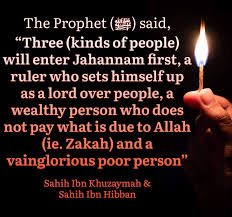
How many enter the Fire because of Misuse or Non-Payment of Zakah:
God Almighty has said about those who consume the orphan’s wealth, meaning the consumption of the wealth of the fuqara’ and masakin: “Those who consume the wealth of the orphan in an act of wrongdoing, eat fire in their bellies and will burn in the flames of hell” (al-Nisa’ 10).
From above the seven heavens, God- Almighty and Exalted is He- defined the disbursements of zakat and the people deserving zakat, and He did not leave zakat to the whims and ambitions of the greedy. For the Exalted said: “Charity is for the fuqara’, the masakin, those who work on the matters of charity, for those whose hearts are to be conciliated, for freeing slaves, those in debt, in the path of God, and for the wayfarer. It is a duty imposed by God, and God is wise and knowing” (al-Tawba 60).
The scholars have agreed that it is not allowed to disburse zakat to those who are not mentioned by God Almighty. So zakat is not permitted to a rich person who has sufficient means or to a strong person capable of making a living.
The Prophet (SAWS) said: “Charity is not permitted to a rich or strong person”- (narrated by Abu Dawud and al-Tirmidhi from a hadith of Abdullah bin ‘Amro).
Ibn Qudama said: “A rich person is not to be given from the shares of the fuqara’ and masakin, and there is no disagreement about this among scholars. For God Almighty has made zakat for the fuqara’ and masakin and the rich person is not part of those categories of people” (al-Mughni 2/522).
Therefore, it is forbidden for the Muslim to ask for zakat money and take from it unless he knows from himself that he comes under the categories of people entitled to it.
So if one not entitled to zakat money dares to take from it, whether driven to do so by greed, a desire for more, indifference or abandoning work, and then claims poverty and destitution, that person commits a great crime by consuming wealth forbidden to him, and depriving the entitled ones among the poor of their right, and deceiving the Muslims.
Ahmad narrated in his Musnad in an authentic transmission on the authority of Hubshi in Junada: that the Prophet (SAWS) said: “Whoever asks [for zakat] without being poor, it is as though that person is eating fire.”
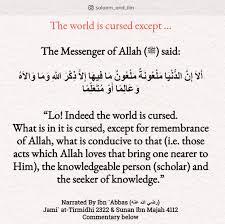
Abu Huraira reported: The Messenger of Allah, peace and blessings be upon him, said, “Is not the world cursed and everything in it? Except for the remembrance of Allah and what facilitates it, the scholar or the student.” Source: Sunan al-Tirmidhī 2322
Grade: Hasan (fair) according to Al-Tirmidhi
عَنْ أَبِي هُرَيْرَةَ قَالَ قَالَ رَسُولُ اللَّهِ صَلَّى اللَّهُ عَلَيْهِ وَسَلَّمَ أَلَا إِنَّ الدُّنْيَا مَلْعُونَةٌ مَلْعُونٌ مَا فِيهَا إِلَّا ذِكْرُ اللَّهِ وَمَا وَالَاهُ وَعَالِمٌ أَوْ مُتَعَلِّمٌ
2322 سنن الترمذي كتاب الزهد
4/151 المحدث الترمذي خلاصة حكم المحدث حسن في سنن الترمذي

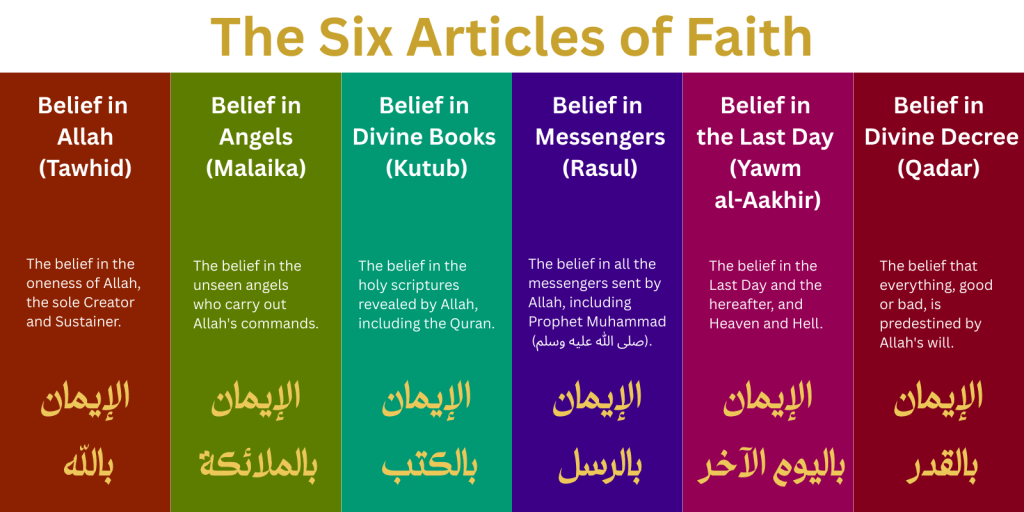
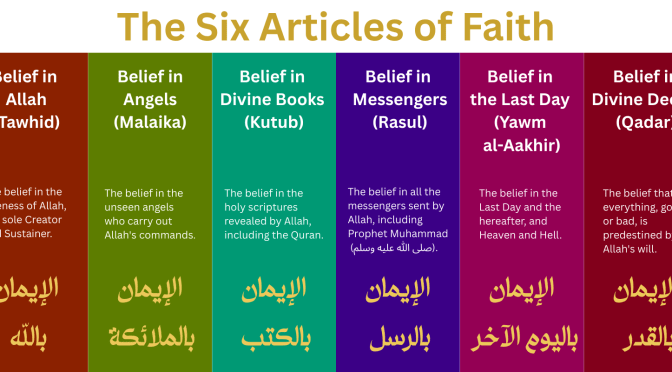
Umar ibn al-Khattab reported: We were sitting with the Messenger of Allah, peace and blessings be upon him, one day, a man appeared with very white clothes and very black hair. There were no signs of travel on him and we did not recognize him. He sat in front of the Prophet, rested his knees by his knees, and placed his hands on his thighs. The man said, “O Muhammad, tell me about Islam.” The Prophet said, “Islam is to testify there is no God but Allah and Muhammad is the Messenger of Allah, to establish prayer, to give charity, to fast the month of Ramadan, and to perform pilgrimage to the House if a way is possible.” The man said, “You have spoken truthfully.” We were surprised that he asked him and said he was truthful. He said, “Tell me about faith.” The Prophet said, “Faith is to believe in Allah, His angels, His Books, His Messengers, the Last Day, and to believe in providence, its good and its harm.” The man said, “You have spoken truthfully. Tell me about excellence.” The Prophet said, “Excellence is to worship Allah as if you see Him, for if you do not see Him, He surely sees you.” The man said, “Tell me about the final hour.” The Prophet said, “The one asked does not know more than the one asking.” The man said, “Tell me about its signs.” The Prophet said, “The slave-girl will give birth to her mistress and you will see barefoot, naked, and dependent shepherds compete in the construction of tall buildings.” Then, the man returned and I remained. The Prophet said to me, “O Umar, do you know who he was?” I said, “Allah and His Messenger know best.” The Prophet said, “Verily, he was Gabriel who came to teach you your religion.” Source: Ṣaḥīḥ Muslim 8
#Islam; #beliefs; 5 Pillars of Islam; 6 Pillars of Belief;

It is narrated on the authority of ‘Umar ibn al-Khattab (رضي الله عنه) as part of a long hadith:
أَنْ تُؤْمِنَ بِاللَّهِ وَمَلاَئِكَتِهِ وَكُتُبِهِ وَرُسُلِهِ وَالْيَوْمِ الآخِرِ وَتُؤْمِنَ بِالْقَدَرِ خَيْرِهِ وَشَرِّهِ
“That you affirm your faith in Allah, in His angels, in His Books, in His Apostles, in the Last Day, and you affirm your faith in the Divine Decree about good and evil.”
Reference: Sahih Muslim, Book 1, Hadith 1
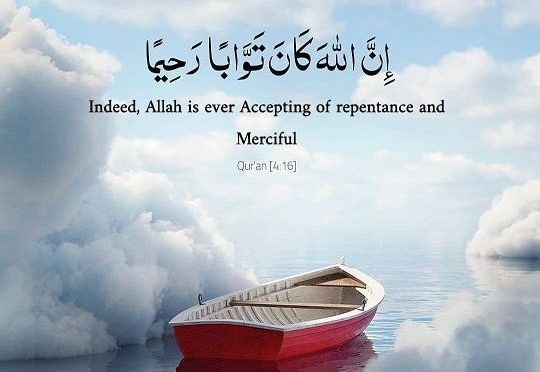
bn Umar reported: The Prophet, peace and blessings be upon him, said, “Verily, Allah accepts the repentance of his servants, as long as they are not on their death bed.”

Source: Sunan al-Tirmidhī 3537; Grade: Hasan (fair) according to Al-Tirmidhi عَنْ ابْنِ عُمَرَعَنْ النَّبِيِّ صَلَّى اللَّهُ عَلَيْهِ وَسَلَّمَ قَالَ إِنَّ اللَّهَ يَقْبَلُ تَوْبَةَ الْعَبْدِ مَا لَمْ يُغَرْغِرْ 3537 سنن الترمذي كتاب الدعوات باب في فضل التوبة والاستغفار وما ذكر من رحمة الله لعباده; 5/507 المحدث الترمذي خلاصة حكم المحدث حسن في سنن الترم
Prophet Muhammad (ﷺ) said: Regret is repentance, And the one who repents is like one who did not sin. [Al-Jaami’ as-Sagheer (6803)]
Ibn Umar reported: The Prophet, peace and blessings be upon him, said, “Verily, Allah accepts the repentance of his servants, as long as they are not on their death bed.”
Source: Sunan al-Tirmidhī 3537; Grade: Hasan (fair) according to Al-Tirmidhi عَنْ ابْنِ عُمَرَعَنْ النَّبِيِّ صَلَّى اللَّهُ عَلَيْهِ وَسَلَّمَ قَالَ إِنَّ اللَّهَ يَقْبَلُ تَوْبَةَ الْعَبْدِ مَا لَمْ يُغَرْغِرْ 3537 سنن الترمذي كتاب الدعوات باب في فضل التوبة والاستغفار وما ذكر من رحمة الله لعباده; 5/507 المحدث الترمذي خلاصة حكم المحدث حسن في سنن الترم
Prophet Muhammad (ﷺ) said: Regret is repentance, And the one who repents is like one who did not sin. [Al-Jaami’ as-Sagheer (6803)]
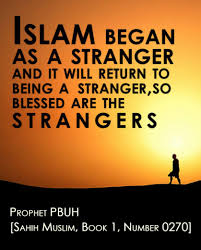
Hadeeth on Stangers Abu Huraira reported: The Messenger of Allah, peace and blessings be upon him, said, “Islam began as a something strange and it will return to being strange, so blessed are the strangers.” Source: Ṣaḥīḥ Muslim 145 Grade: Sahih (authentic) according to Muslim عَنْ أَبِي هُرَيْرَةَ قَالَ قَالَ رَسُولُ اللَّهِ صلى الله عليه وسلم بَدَأَ الإِسْلاَمُ غَرِيبًا وَسَيَعُودُ كَمَا بَدَأَ غَرِيبًا فَطُوبَى لِلْغُرَبَاءِ 145 صحيح مسلم كتاب الإيمان باب بيان أن الإسلام بدأ غريبا وسيعود غريبا وأنه يأرز بين المسجدين #Strangers #Hadith #Blessings #Ghurabah
#ISLAM #STRANGE #MONOTHEISM


 bismillahschool.net