On the authority of Abu Hurayrah (may Allah be pleased with him), that the Messenger of Allah (peace be upon him) said:
“Let him who believes in Allah and the Last Day speak good, or keep silent; and let him who believes in Allah and the Last Day be generous to his neighbour; and let him who believes in Allah and the Last Day be generous to his guest.” Related by Bukhari & Muslim
Follow a Bad Deed with a Good Deed:
On the authority of Abu Dharr Jundub ibn Junadah, and Abu ‘Abd-ir-Rahman Mu’adh bin Jabal (may Allah be pleased with them) that the Messenger of Allah (peace and blessing of Allah be upon him) said:
“Be conscious of Allah wherever you are. Follow the bad deed with a good one to erase it, and engage others with beautiful character.” Related by Tirmidhi
On the authority of Abu Hurayrah (may Allah be pleased with him) who said: The Messenger of Allah (peace be upon him) said:
“Part of the perfection of one’s Islam is his leaving that which does not concern him.” [Tirmidhi]
عَنْ أَبِي هُرَيْرَةَ رَضِيَ اللهُ عَنْهُ قَالَ: قَالَ رَسُولُ اللَّهِ صلى الله عليه و سلم”مِنْ حُسْنِ إسْلَامِ الْمَرْءِ تَرْكُهُ مَا لَا يَعْنِيهِ”.
حَدِيثٌ حَسَنٌ، رَوَاهُ التِّرْمِذِيُّ [رقم: 2318] ، ابن ماجه [رقم:3976].
* LEAVE WHAT MAKES YOU DOUBTFUL
On the authority of Abu Muhammad al-Hasan ibn Ali ibn Abee Talib (may Allah be pleased with him), the grandson of the Messenger of Allah (peace and blessings of Allah be upon him), and the one much loved by him, who said: I memorized from the Messenger of Allah (peace and blessings of Allah be upon him):
“Leave what makes you doubtful for what does not.” Related by Tirmidhi & Nasai
عَنْ أَبِي مُحَمَّدٍ الْحَسَنِ بْنِ عَلِيِّ بْنِ أَبِي طَالِبٍ سِبْطِ رَسُولِ اللَّهِ صلى الله عليه و سلم وَرَيْحَانَتِهِ رَضِيَ اللَّهُ عَنْهُمَا، قَالَ: حَفِظْت مِنْ رَسُولِ اللَّهِ صلى الله عليه و سلم “دَعْ مَا يُرِيبُك إلَى مَا لَا يُرِيبُك”.
On the authority of Abu Hurayrah (may Allah be pleased with him) who said: The Messenger of Allah (peace be upon him) said:
“Allah the Almighty is good and accepts only that which is good. And verily Allah has commanded the believers to do that which He has commanded the Messengers. So the Almighty has said: “O (you) Messengers! Eat of the tayyibat (good things), and perform righteous deeds” [23:51] and the Almighty has said: “O you who believe! Eat of the lawful things that We have provided you” [2:172]. Then he (peace be upon him) mentioned a man who, having journeyed far, is dishevelled and dusty, and who spreads out his hands to the sky saying, “O Lord! O Lord!” while his food is haram, his drink is haram, his clothing is haram, and he has been nourished with haram, so how can [his supplication] be answered?” [Muslim]
On the authority of Abu Hurayrah (may Allah be pleased with him) who said: I heard the Messenger of Allah (peace be upon him) say:
What I have forbidden for you, avoid. What I have ordered you [to do], do as much of it as you can. For verily, it was only their excessive questioning and disagreeing with their Prophets that destroyed [the nations] who were before you.[Al-Bukhari & Muslim]
عَنْ أَبِي هُرَيْرَةَ عَبْدِ الرَّحْمَنِ بْنِ صَخْرٍ رَضِيَ اللهُ عَنْهُ قَالَ: سَمِعْت رَسُولَ اللَّهِ صلى الله عليه و سلم يَقُولُ:
Another thing that we derive from this hadith is the importance of eating food that is tayyeb. This word does not simply mean that the food is halal or that it comes from a pure source, but it also means that the food is good for you. This hadith can be applied to eating out at a fast food restaurant. Even if the food is “halal” or “zabiha,” it may not necessarily be tayyeb. The reason it may not be tayyeb is that many of these foods are unhealthy, full of added chemicals and preservatives that may be harmful to our health.
Ahmad (22978) narrated from Abu Nadrah: Someone who heard the khutbah of the Messenger of Allah (blessings and peace of Allah be upon him) on the second of the days of at-Tashreeq told me that he said: “O people, verily your Lord is One and your father is one. Verily there is no superiority of an Arab over a non-Arab or of a non-Arab over an Arab, or of a red man over a black man, or of a black man over a red man, except in terms of Taqwa (Piety, Fear of God). Have I conveyed the message?” They said: The Messenger of Allah (blessings and peace of Allah be upon him) has conveyed the message. Classed as saheeh by al-Albaani in as-Saheehah (6/199).
Hadith 2: Islam, faith, and excellence الإسلام والإيمان والإحسان
Umar ibn al-Khattab reported: We were sitting with the Messenger of Allah, peace and blessings be upon him, one day when a man appeared with very white clothes and very black hair. There were no signs of travel on him and we did not recognize him. He sat down in front of the Prophet and rested his knees by his knees and placed his hands on his thighs. The man said, “O Muhammad, tell me about Islam.” The Prophet said:
Islam is to testify there is no God but Allah and Muhammad is the Messenger of Allah, to establish prayer, to give charity, to fast the month of Ramadan, and to perform pilgrimage to the House if a way is possible.
The man said, “You have spoken truthfully.” We were surprised that he asked him and then said he was truthful. He said, “Tell me about faith.” The Prophet said:
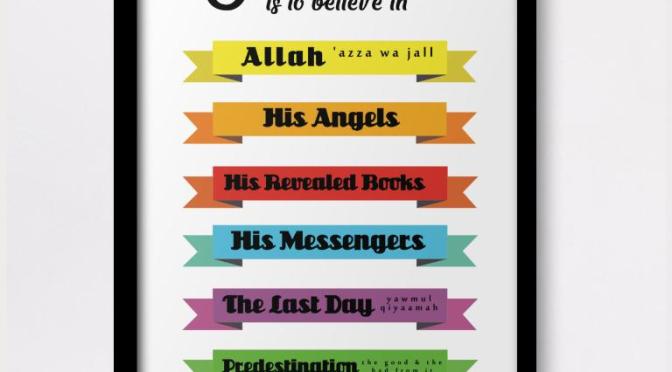
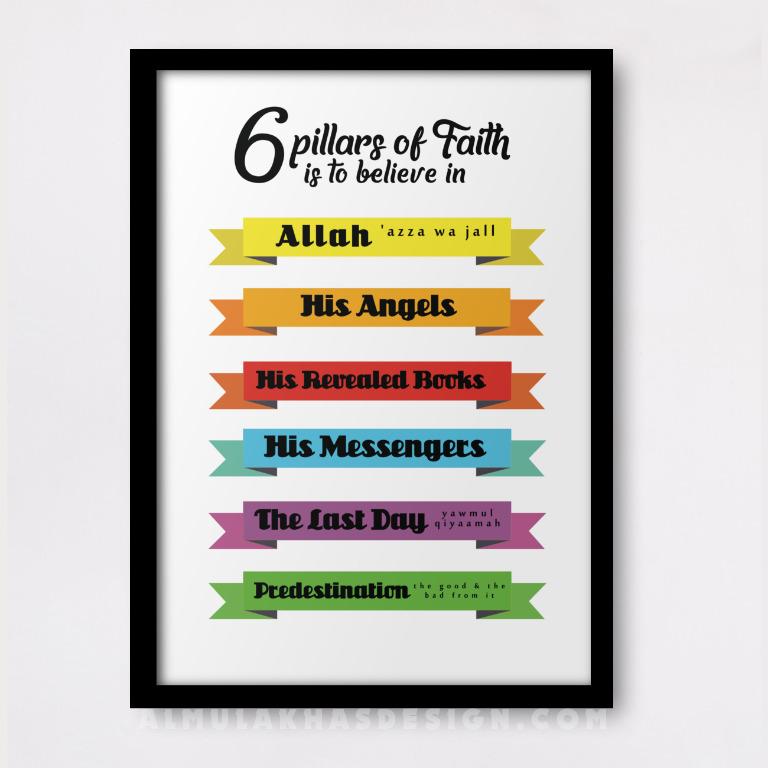
Faith is to believe in Allah, His angels, His books, His messengers, the Last Day, and to believe in providence, its good and its evil.
The man said, “You have spoken truthfully. Tell me about excellence.” The Prophet said: أَنْ تَعْبُدَ اللَّهَ كَأَنَّكَ تَرَاهُ فَإِنْ لَمْ تَكُنْ تَرَاهُ فَإِنَّهُ يَرَاكَ
* Excellence is to worship Allah as if you see Him, for if you do not see Him, He surely sees you.
The man said, “Tell me about the final hour.” The Prophet said: مَا الْمَسْئُولُ عَنْهَا بِأَعْلَمَ مِنْ السَّائِلِ ; The one asked does not know more than the one asking.
The man said, “Tell me about its signs.” The Prophet said:
The slave girl will give birth to her master and you will see barefoot, naked, and dependent shepherds compete in the construction tall buildings.
Then, the man left and I remained. The Prophet said to me: يَا عُمَرُ أَتَدْرِي مَنْ السَّائِلُ O Umar, do you know who he was? I said, “Allah and his messenger know best.” The Prophet said: فَإِنَّهُ جِبْرِيلُ أَتَاكُمْ يُعَلِّمُكُمْ دِينَكُمْVerily, he was Gabriel who came to teach you your religion. Source: Ṣaḥīḥ Muslim 8, Grade: Sahih
Hadith 3: Pillars of Islam أركان الإسلام
Ibn Umar reported: The Messenger of Allah, peace and blessings be upon him, said:
Islam is built upon five: to worship Allah and to disbelieve in what is worshiped besides him, to establish prayer, to give charity, to perform Hajj pilgrimage to the house, and to fast the month of Ramadan. Source: Ṣaḥīḥ al-Bukhārī 8, Grade: Muttafaqun Alayhi;
#Pillars of #Islam, Eeeman/ Faith; #Hadith, #Narrations;
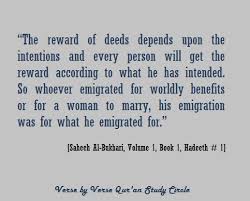
Verily, deeds are only with intentions. Verily, every person will have only what they intended. Whoever emigrated to Allah and his messenger, his emigration is for Allah and his messenger. Whoever emigrated to get something in the world or to marry a woman, his emigration is for that to which he emigrated.
Jabir bin ‘Abdullah narrated that the Messenger of Allah (s.a.w) said:’A slave (of Allah) shall not believe until he believes in Al-Qadar, its good and its bad, such that he knows that what struck him would not have missed him, and that what missed him would not have struck him.”
Abu Huraira reported: The Messenger of Allah, peace and blessings be upon him, said, “The strong believer is more beloved to Allah than the weak believer, but there is goodness in both of them. Be eager for what benefits you, seek help from Allah, and do not be frustrated. If something befalls you, then do not say: If only I had done something else! Rather say: Allah has decreed what He wills. Verily, the phrase ‘if only’ opens the way for the work of Satan.” Source: Ṣaḥīḥ Muslim 2664 Grade: Sahih (authentic) according to Muslim
Al-Nawawi said, “His statement, ‘It opens the way for the work of Satan,’ means he casts into the heart opposition to the divine decree, and Satan tempts him with it.” Source: Sharḥ Ṣaḥīḥ Muslim 16/216
#Qadr of Allah; #Fate #Islam; #Divine Destiny; #Good and Bad;
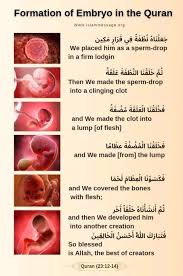
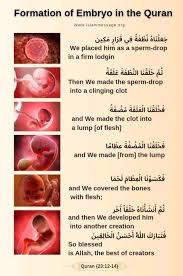
Verily, the creation of each one of you is brought together in his mother’s womb for forty days as a drop, then he is a clot for a similar period, then a morsel for a similar period, then there is sent to him the angel who blows the spirit into him and he is commanded regarding four matters: to write down his provision, his life span, his deeds, and whether he is blessed or damned. By Allah, other than whom there is no God, one of you acts like the people of Paradise until he is but an arm’s length from it, and what is written overtakes him so he acts like the people of Hellfire and he enters it. Verily, one of you acts like the people of Hellfire until he is but an arm’s length from it, and what is written overtakes him so he acts like the people of Paradise and he enters it.
Ka’ab ibn Malik (R.A) said, “When I greeted the Messenger of Allah, whose face was glittering with happiness, for whenever Allah’s Messenger ﷺ was happy, his face used to glitter, as if it was a piece of the moon, and we used to recognize it (i.e. his happiness) from his face.” Once Al-Baraa (R.A) was asked whether the Prophet Muhammad ﷺ face was like the sword to which he replied: No, it was like the moon.
On the authority of Umm Ma‘bad ‘Atikah bint Khalid al-Khuza‘iyyah (ra) who said:’I saw a man of visible radiance and purity, beautiful appearance, bright faced, with neither protruding ribs nor a small head, handsome and fair. His eyes were deep black and large, and his eyelashes were lush. His voice was mellow and soft. The whiteness of his eyes was bright and his pupils were very black. His eyebrows were beautifully arched and connected. His neck was long, his beard densely full. When he was silent, he appeared dignified. When he spoke, he was eminent and crowned with magnificence. His speech was sweet, his words precise, neither too little nor too much. Like a string of pearls flowing down gradually. He was the most striking and beautiful of people when seen from afar and the fairest of them when seen up close. He was medium height, neither unagreeably tall nor scornfully short; a branch between two branches. Among the three he was the most radiant in appearance, the finest of them in stature. He was surrounded by companions. When he spoke, they listened attentively. When he gave orders, they hastened to fulfil them. Honoured, served and surrounded by followers. He neither frowned, nor criticised’. [Al-Baihaqi and al-Hakim]
#Prophet Muhammad(Sal Allahu Alayhi wa Sallam) – Appearance; #Islam; #Hadith
Ka’ab ibn Malik (R.A) said, “When I greeted the Messenger of Allah, whose face was glittering with happiness, for whenever Allah’s Messenger ﷺ was happy, his face used to glitter, as if it was a piece of the moon, and we used to recognize it (i.e. his happiness) from his face.” Once Al-Baraa (R.A) was asked whether the Prophet Muhammad ﷺ face was like the sword to which he replied: No, it was like the moon.
Seal of Prophethood
The Prophet ﷺ had the seal of prophethood between his shoulders. The seal was something distinct on his body like a birth mark. Jabir ibn Samurah (R.A) said: “And I saw the seal near his shoulder, it was the size of a pigeon’s egg and its color was the same as that of his body.”
DESCRIPTION OF UMM MA’BAD AL KHUZA’IYYAH
In the name of Allāh, ar-Raḥmān (the most merciful), ar-Raḥīm (the bestower of mercy).
During the hijrah, the Prophet ﷺ passed by an elderly non-Muslim woman called Umm Ma’bad al-Khuzā’iyyah. He stopped at her place to seek provisions and rest. Her husband was away tending to his flock whilst the Prophet ﷺ visited. When he returned, she described the physical features and appearance of the Prophet ﷺ in great detail:
On the authority of Umm Ma‘bad ‘Atikah bint Khalid al-Khuza‘iyyah (ra) who said:’I saw a man of visible radiance and purity, beautiful appearance, bright faced, with neither protruding ribs nor a small head, handsome and fair. His eyes were deep black and large, and his eyelashes were lush. His voice was mellow and soft. The whiteness of his eyes was bright and his pupils were very black. His eyebrows were beautifully arched and connected. His neck was long, his beard densely full. When he was silent, he appeared dignified. When he spoke, he was eminent and crowned with magnificence. His speech was sweet, his words precise, neither too little nor too much. Like a string of pearls flowing down gradually.
He was the most striking and beautiful of people when seen from afar and the fairest of them when seen up close. He was medium height, neither unagreeably tall nor scornfully short; a branch between two branches. Among the three he was the most radiant in appearance, the finest of them in stature. He was surrounded by companions. When he spoke, they listened attentively. When he gave orders, they hastened to fulfil them. Honoured, served and surrounded by followers. He neither frowned, nor criticised’.[Al-Baihaqi and al-Hakim]
الت أم معبد الخزاعية عن رسول الله ﷺ وهي تصفه لزوجها:
Footnotes: [1] Her words have been narrated in various books of ḥadīth and sīrah including: at-Tabarāni in “al-Mu’jam al-Kabīr”; al-Ḥākim in “al-Mustadrak”; Ibn Kathīr in “al-Bidāyah wan-Nihāyah”; Ibn Hishām in his “Sīrah”; Ibn al-Qayyim in “Zād al-Ma’ād”; and al-Mubārakphuri in “ar-Rahīq al-Makhtūm”.
Abu Huraira reported: The Messenger of Allah, peace and blessings be upon him, said, “Is not the world cursed and everything in it? Except for the remembrance of Allah and what facilitates it, the scholar or the student.” Source: Sunan al-Tirmidhī 2322
bn Umar reported: The Prophet, peace and blessings be upon him, said, “Verily, Allah accepts the repentance of his servants, as long as they are not on their death bed.”
Source: Sunan al-Tirmidhī 3537; Grade: Hasan (fair) according to Al-Tirmidhi عَنْ ابْنِ عُمَرَعَنْ النَّبِيِّ صَلَّى اللَّهُ عَلَيْهِ وَسَلَّمَ قَالَ إِنَّ اللَّهَ يَقْبَلُ تَوْبَةَ الْعَبْدِ مَا لَمْ يُغَرْغِرْ 3537 سنن الترمذي كتاب الدعوات باب في فضل التوبة والاستغفار وما ذكر من رحمة الله لعباده; 5/507 المحدث الترمذي خلاصة حكم المحدث حسن في سنن الترم
Prophet Muhammad (ﷺ) said: Regret is repentance, And the one who repents is like one who did not sin. [Al-Jaami’ as-Sagheer (6803)]