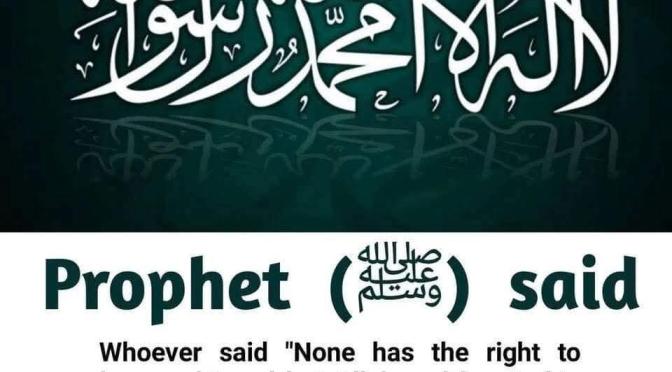
From: Sahih Bukhari Chapter No. 2, Belief/ FAITH Hadith No: 43 Narrated/Authority of AnasThe Prophet said, “Whoever said “None has the right to be worshipped but Allah and has in his heart good (faith) equal to the weight of a barley grain will be taken out of Hell. And whoever said: “None has the right to be worshipped but Allah and has in his heart good (faith) equal to the weight of a wheat grain will be taken out of Hell. And whoever said, “None has the right to be worshipped but Allah and has in his heart good (faith) equal to the weight of an atom will be taken out of Hell.”
2. Have the people supposed that they will be left alone to say, “We believe,” without being put to the test?
3. We have tested those before them. God will surely know the truthful, and He will surely know the liars.
4. Or do those who commit sins think they can fool Us? Terrible is their opinion!
5. Whoever looks forward to the meeting with God—the appointed time of God is coming. He is the All-Hearing, the All-Knowing.
6. Whoever strives, strives only for himself. God is Independent of the beings.
7. Those who believe and do righteous deeds—We will remit their sins, and We will reward them according to the best of what they used to do.
8. We have advised the human being to be good to his parents. But if they urge you to associate with Me something you have no knowledge of, do not obey them. To Me is your return; and I will inform you of what you used to do.
9. Those who believe and do good works—We will admit them into the company of the righteous.
10. Among the people is he who says, “We have believed in God.” Yet when he is harmed on God’s account, he equates the people’s persecution with God’s retribution. And if help comes from your Lord, he says, “We were actually with you.” Is not God aware of what is inside the hearts of the people?
11. God certainly knows those who believe, and He certainly knows the hypocrites.
12. Those who disbelieve say to those who believe, “Follow our way, and we will carry your sins.” In no way can they carry any of their sins. They are liars.
13. They will carry their own loads, and other loads with their own. And they will be questioned on the Day of Resurrection concerning what they used to fabricate.
Notes: everyone will be Tested;
WHOMEVER DOES NOT REMEMBER ALLAH AZZA WA JAL WILL HAVE A DEPRESSED LIFE – SURAH TAHA 124-127:
122. But then his Lord recalled him, and pardoned him, and guided him.
123. He said, “Go down from it, altogether; some of you enemies of some others. But whenever guidance comes to you from Me, whoever follows My guidance, will not go astray, nor suffer.
124. But whoever turns away from My Reminder, for him is a confined life. And We will raise him on the Day of Resurrection blind.”
125. He will say, “My Lord, why did You raise me blind, though I was seeing?”
126. He will say, “Just as Our revelations came to you, and you forgot them, today you will be forgotten.”
127. Thus We recompense him who transgresses and does not believe in the revelations of his Lord. The punishment of the Hereafter is more severe, and more lasting.
Now [among the best of righteous deeds which] We have enjoined upon man [is] goodness towards his parents; yet [even so,] should they endeavour to make thee ascribe divinity, side by side with Me, to something which thy mind cannot accept [as divine], obey then, not: [for] it is unto Me that you all must return, whereupon I shall make you [truly] understand [the right and wrong of] all that you were doing [in life] – Surah Al Ankabut – 29:8;
For your Lord has decreed that you worship none but Him. And honour your parents. If one or both of them reach old age in your care, never say to them ˹even˺ ‘ugh,’ nor yell at them. Rather, address them respectfully. – Surah – Al Isra 17:23
KEEP COMPANY OF YOUR MOTHER
Abu Huraira reported: A man asked the Messenger of Allah, peace and blessings be upon him, “Who is most deserving of my good company?” The Prophet said, “Your mother.” The man asked, “Then who?” The Prophet said “Your mother.” The man asked again, “Then who?” The Prophet said, “Your mother.” The man asked again, “Then who?” The Prophet said, “Your father.”
Source: Ṣaḥīḥ al-Bukhārī 5971, Ṣaḥīḥ Muslim 2548
Grade: Muttafaqun Alayhi (authenticity agreed upon) according to Al-Bukhari and Muslim
Muhammad AsadTHE PARABLE of those who spend their possessions for the sake of God is that of a grain out of which grow seven ears, in every ear a hundred grains: for God grants manifold increase unto whom He wills; and God is infinite, all-knowing – surah Baqarah 2:261;
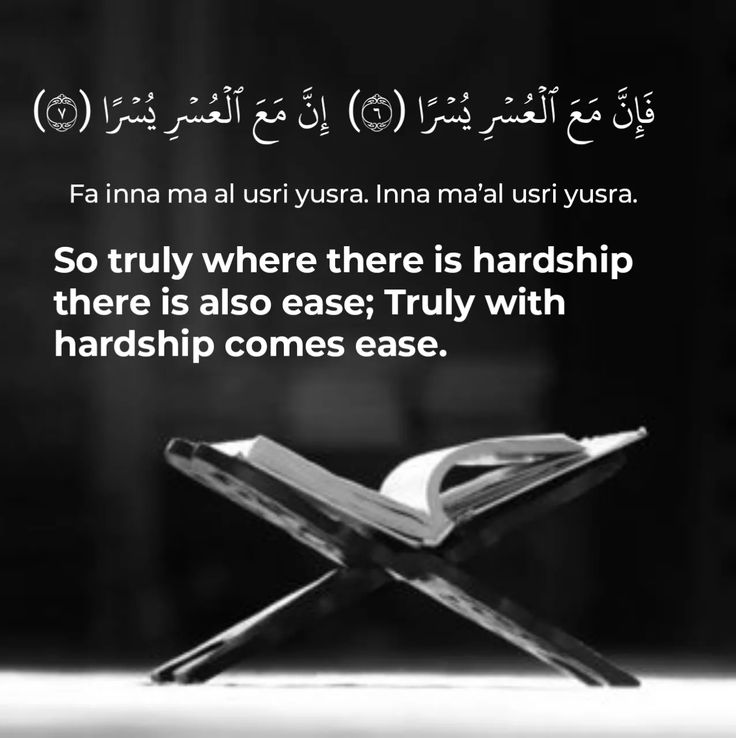
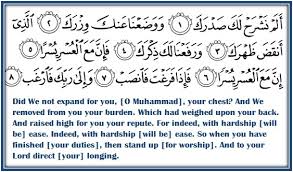
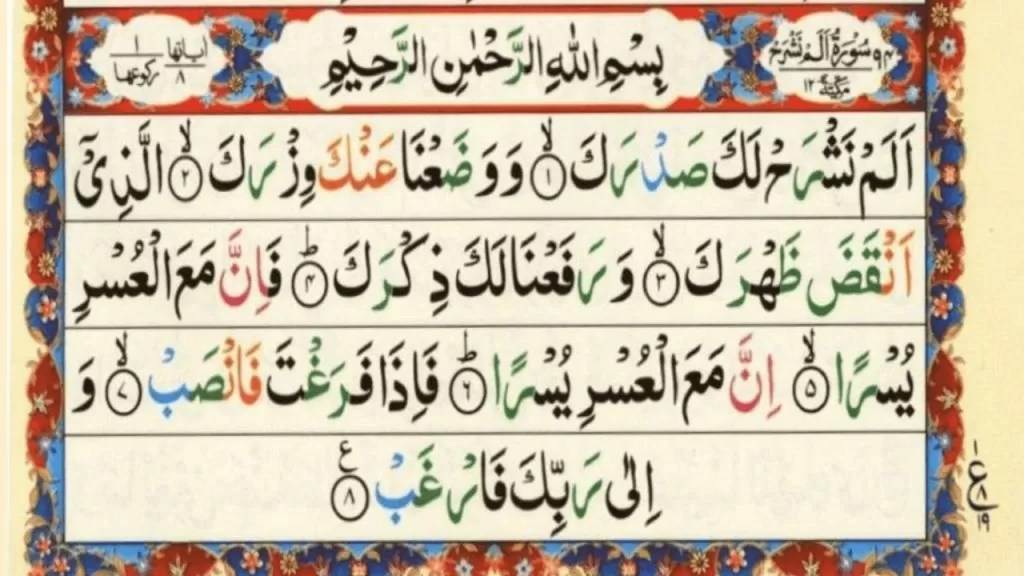
Surah Ash-Sharh (Arabic text: الشرح) is the 94th chapter of the Qur’an, it is also referred to as Surah Inshirah. The surah titled in English means “The Expansion” or “The Opening-Up of the Heart” and it consists of 8 verses…
“Have We not expanded for you, [O Muhammad], your breast?”
“And We removed from you your burden”
“Which weighed upon your back?”
“And We raised high for you your repute?”
“For indeed, with hardship [will be] ease.”
“Indeed, with hardship [will be] ease.”
“So when you have finished (your duties), then stand up [for worship].”
“And to your Lord direct [your] longing.”
Divine Comfort and Encouragement
Surah Ash-Sharh begins with Allah SWT addressing the Prophet SAW directly, asking if He has not expanded the Prophet SAW’s chest. This metaphorical expansion signifies the easing of emotional and spiritual burdens, allowing the Prophet SAW to carry out his mission with greater fortitude. The verse, “Did We not expand for you, [O Muhammad], your chest?” (Quran 94:1), highlights the divine support and encouragement given to the Prophet SAW during times of distress.
This surah reminds believers that Allah SWT is always there to support and ease their difficulties. It reassures them that Allah’s assistance and comfort are near even in the most challenging times. This message is timeless and offers solace to all believers experiencing hardship.
Key Lessons of Surah Ash-Sharh
Surah Ash-Sharh offers several key lessons for believers:
1. Divine Support: Allah SWT’s support and comfort are always near, especially in times of hardship.
2. Relief from Burdens: Trust in Allah SWT to alleviate burdens and provide ease.
3. Elevation through Perseverance: Patience and dedication to faith lead to honor and rewards.
4. Promise of Ease: Hardships are temporary, and ease will follow, instilling hope and resilience.
5. Importance of Worship: Devotion to Allah SWT is a source of strength and comfort, guiding believers through challenges.
The Prophet (ﷺ) said:”Eman means that you believe in Allah, in His Angels, in His Books, in His Messengers, in the Day of Judgment and in the Divine Decree (Qadr) in its good and evil.”[Sahih Muslim 8a]
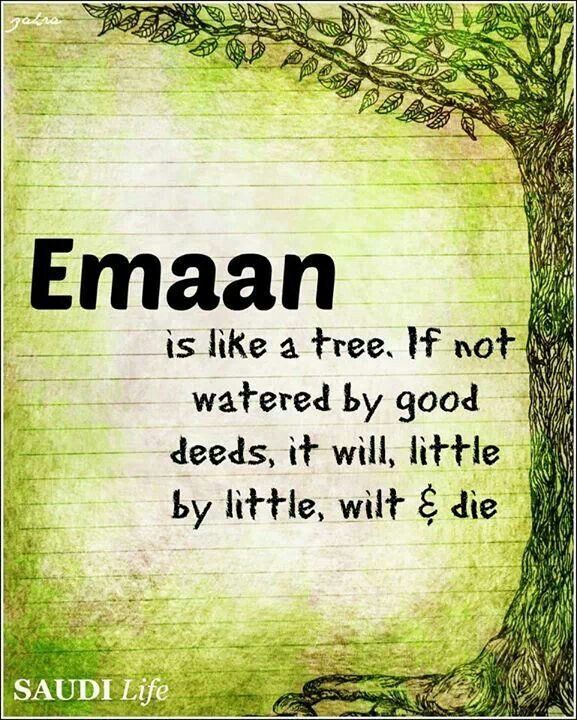
Abu Ja’far reported: ‘Umayr ibn Habib, may Allah be pleased with him, said, “Faith increases and decreases.” It was said, “How does it increase and decrease?” ‘Umayr said, “If we remember our Lord and fear him, it will increase. If we are heedless and we forget and we waste our time, it will decrease.”
55 شعب الإيمان للبيهقي باب القول في زيادة الإيمان ونقصانه
1. Belief in Allah:This includes believing in Allah’s existence, His oneness (Tawhid), His attributes, His Lordship, and His right to be worshipped alone.
2. Belief in Angels:This involves believing in the existence of angels as Allah’s messengers, their obedience to Him, and their specific roles.
3. Belief in Allah’s Books:Muslims believe in the divine books revealed by Allah to various prophets, including the Quran, which is considered the final and complete revelation.
4. Belief in Allah’s Messengers:This pillar encompasses belief in all prophets sent by Allah, including Adam, Noah, Abraham, Moses, Jesus, and Muhammad (peace be upon them all).
5. Belief in the Last Day:This is the belief in the Day of Judgment, when all of humanity will be resurrected and judged by Allah based on their deeds.
6. Belief in Divine Decree (Qadar):This pillar entails believing in Allah’s predestination of all things, both good and bad, and that everything happens according to His will and wisdom.
This is a Page used for Poetry, Story Writing, Islam, different Teaching and Learning Articles;it starts with the Poem of Hope and renewed beginnings;
it starts with the Poem of Hope and Renewed beginnings;
Rise from the Ashes
Rise from the Ashes of Despair, A Cauldron of Lava, From the Storm – of Arguments and Tension, Lost in the Abyss, into the Peace of Blue Skies, Calm, Cool waters. Healing and Soothing My Soul- with Allah.
19 God is Not a Man, that he should lie; neither the son of man, that he should repent: hath he said, and shall he not do it? or hath he spoken, and shall he not make it good?– Numbers 23:19
Exodus 20King James Version
20 And God spoke all these words, saying,
2 I am the Lord thy God, which have brought thee out of the land of Egypt, out of the house of bondage.
3 Thou shalt have no other gods before me.
4 Thou shalt not make unto thee any graven image, or any likeness of any thing that is in heaven above, or that is in the earth beneath, or that is in the water under the earth.
5 Thou shalt not bow down thyself to them, nor serve them: for I the Lord thy God am a jealous God, visiting the iniquity of the fathers upon the children unto the third and fourth generation of them that hate me;
6 And showing mercy unto thousands of them that love me, and keep my commandments.
7 Thou shalt not take the name of the Lord thy God in vain; for the Lord will not hold him guiltless that taketh his name in vain.
30 By myself I can do nothing; I judge only as I hear, and my judgment is just, for I seek not to please myself but him who sent me. – John 5:30;
Based on the Above Quoted Verses – God Is Not a Man – it is pretty Clear that New Testament is way too much modified; Jesus (alaihis Salam/ peace be upon him) was a Prophet – and even the expression of “son” of God is mostly Hebrew for Ebed – Slave/ Servant of God; and most of the verses are modified and not in the Original Aramaic (the Language Jesus actually spoke)- and contradict many monotheistic verses of the Old Testament; so accoding to the Bible – you’re supposed to have only 1 God – worthy of worship – Not to bow down or worship Jesus, Mary, saints or anything else with or along with God/ Allah azza wa Jal and that is pure monotheism;
ALLAH/ GOD ALLMIGHTY IN ISLAM
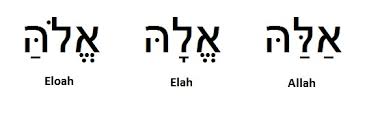
God in Islam called Allah in the Arabic language -in Quran Kareem and Biblical tranlation is the same AllMighty God (the only one God worthy of worship) in the Bible and can be defined with the following qualities; Muslims consider all prophets Muslim(in Submission to God);
Say, ˹O believers,˺ “We believe in Allah and what has been revealed to us; and what was revealed to Abraham, Ishmael, Isaac, Jacob, and his descendants; and what was given to Moses, Jesus, and other prophets from their Lord. We make no distinction between any of them. And to Allah we all submit.” – surah Baqarah 2:136;
3:2 Allah – there is no deity except Him, the Ever-Living, the Sustainer of existence.
Abridged Explanation of the Quran
Allah is the One Who alone deserves to be worshipped. He is the One Who lives perfectly without any death or deficiency. He exists by Himself and is not in need of any of His creation. The creation only exists through Him and is always in need of Him.
The Messenger ˹firmly˺ believes in what has been revealed to him from his Lord, and so do the believers. They ˹all˺ believe in Allah, His angels, His Books, and His messengers. ˹They proclaim,˺ “We make no distinction between any of His messengers.” And they say, “We hear and obey. ˹We seek˺ Your forgiveness, our Lord! And to You ˹alone˺ is the final return.”
Allah! There is no god ˹worthy of worship˺ except Him, the Ever-Living, All-Sustaining. Neither drowsiness nor sleep overtakes Him. To Him belongs whatever is in the heavens and whatever is on the earth. Who could possibly intercede with Him without His permission? He ˹fully˺ knows what is ahead of them and what is behind them, but no one can grasp any of His knowledge—except what He wills ˹to reveal˺. His Seat1 encompasses the heavens and the earth, and the preservation of both does not tire Him. For He is the Most High, the Greatest.2– surah Baqarah 2:255;
Last 3 Ayaat/ verses from Surah Hashr (Gathering in Judgement Day) “He is Allah—there is no god ‘worthy of worship’ except Him: Knower of the seen and unseen. He is the Most Compassionate, Most Merciful.
He is Allah—there is no god except Him: the King, the Most Holy, the All-Perfect, the Source of Serenity, the Watcher ‘of all’, the Almighty, the Supreme in Might,1 the Majestic. Glorified is Allah far above what they associate with Him ˹in worship˺!
He is Allah: the Creator, the Inventor, the Shaper. He ‘alone’ has the Most Beautiful Names. Whatever is in the heavens and the earth ‘constantly’ glorifies Him. And He is the Almighty, All-Wise. (Qur’an 59 – 22/23/24)
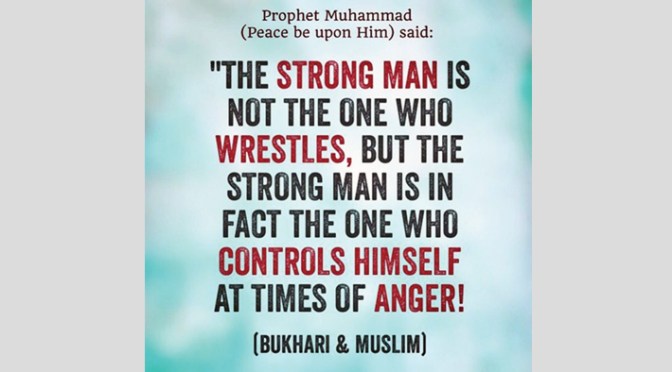
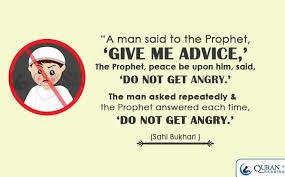
Abdullah ibn Mas’ud reported: The Messenger of Allah, peace and blessings be upon him, said, “Whom do you consider to be a fighter among you?” We said, “One whom men cannot wrestle down.” The Prophet said, “It is not so. Rather, it is one who controls himself when angry.”
Source: Ṣaḥīḥ Muslim 2608
Abu Huraira reported: The Messenger of Allah, peace and blessings be upon him, said, “The strongest are not the best wrestlers. Verily, the strongest are those who control themselves when angry.”
Source: Ṣaḥīḥ al-Bukhārī 6114, Ṣaḥīḥ Muslim 2609
Imam Ibn ‘Abdul Barr commented, “This is evidence that striving against oneself is a more difficult task and is better than striving against the enemy.”
Volume 6, Book 60, Number 105: Narrated Abu Said Al-Khudri: During the lifetime of the Prophet some people said, : O Allah’s Apostle! Shall we see our Lord on the Day of Resurrection?” The Prophet said, “Yes; do you have any difficulty in seeing the sun at midday when it is bright and there is no cloud in the sky?” They replied, “No.” He said, “Do you have any difficulty in seeing the moon on a full moon night when it is bright and there is no cloud in the sky?” They replied, “No.” The Prophet said, “(Similarly) you will have no difficulty in seeing Allah on the Day of Resurrection as you have no difficulty in seeing either of them. On the Day of Resurrection, a call-maker will announce, “Let every nation follow that which they used to worship.” Then none of those who used to worship anything other than Allah like idols and other deities but will fall in Hell (Fire), till there will remain none but those who used to worship Allah, both those who were obedient (i.e. good) and those who were disobedient (i.e. bad) and the remaining party of the people of the Scripture. Then the Jews will be called upon and it will be said to them, ‘Who do you use to worship?’ They will say, ‘We used to worship Ezra, the son of Allah.’ It will be said to them, ‘You are liars, for Allah has never taken anyone as a wife or a son. What do you want now?’ They will say, ‘O our Lord! We are thirsty, so give us something to drink.’ They will be directed and addressed thus, ‘Will you drink,’ whereupon they will be gathered unto Hell (Fire) which will look like a mirage whose different sides will be destroying each other. Then they will fall into the Fire. Afterwards the Christians will be called upon and it will be said to them, ‘Who do you use to worship?’ They will say, ‘We used to worship Jesus, the son of Allah.’ It will be said to them, ‘You are liars, for Allah has never taken anyone as a wife or a son,’ Then it will be said to them, ‘What do you want?’ They will say what the former people have said. Then, when there remain (in the gathering) none but those who used to worship Allah (Alone, the real Lord of the Worlds) whether they were obedient or disobedient. Then (Allah) the Lord of the worlds will come to them in a shape nearest to the picture they had in their minds about Him. It will be said, ‘What are you waiting for?’ Every nation have followed what they used to worship.’ They will reply, ‘We left the people in the world when we were in great need of them and we did not take them as friends. Now we are waiting for our Lord Whom we used to worship.’ Allah will say, ‘I am your Lord.’ They will say twice or thrice, ‘We do not worship any besides Allah.’ “
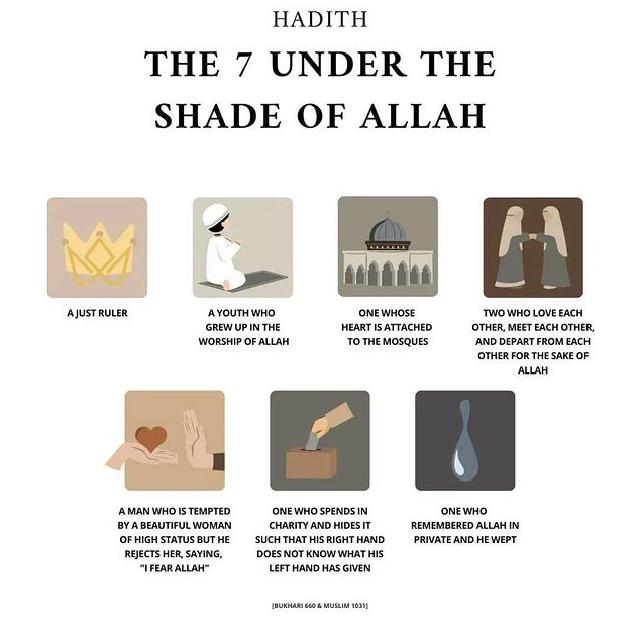
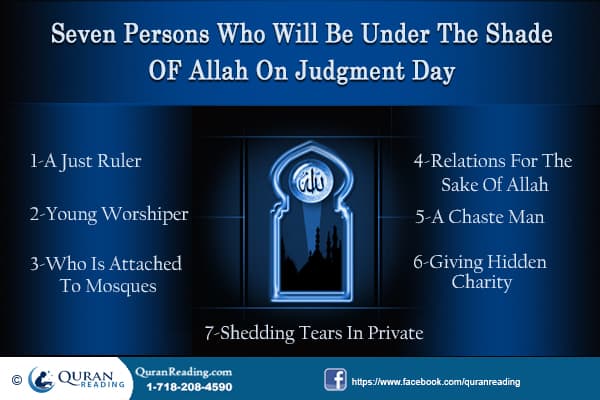
“There are seven whom Allah will shade in His Shade on the Day when there is no shade except His Shade: a Just ruler: a youth who grew up in the worship of Allah, the Mighty and Majestic; a man whose heart is attached to the mosques; two men who love each other for Allah’s sake, meeting for that and parting upon that; a man who is called by a woman of beauty and position (for illegal intercourse), but he says: ‘I fear Allah’; a man who gives in charity and hides it, such that his justify hand does not know that his right hand gives charity; and a man who remembered Allah in private and so his eyes shed tears.” (Bukhari and Muslim)
Prophet Muhammad (PBUH) said in His hadith:
Prophet (Sal Allahu alayihi wa Sallam/ peace from Allah be upon him) said in a hadith;“Take benefit of five before five: Your youth before your old age, your health before your sickness, your wealth before poverty, your free time before you are preoccupied, and your life before your death.” (Narrated by Ibn Abbas)
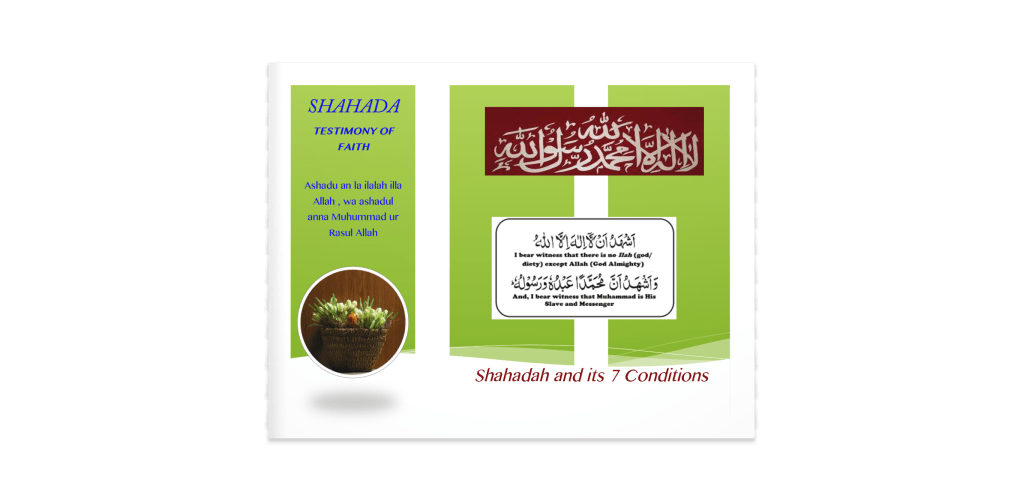
It was narrated from Mu’adh bin Jabal that theMessenger of Alkah()said:“There is no soul thatdied bearing witness to la ilaha ill Allah,and that lamthe Messenger of Allah,from the heart withcertainty,but Allah will forgive it.“(lbn Majah)
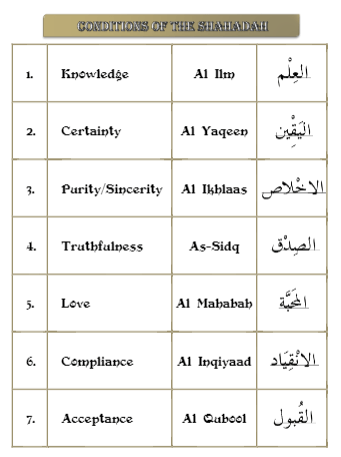
1-Al llm-Knowledge of what Shahadah mean (there is no god to be worshipped but Allah and Muhammad -saw-is hisMessenger)
2-Al Yaqueen-Certainty -you have to be sure of the Shahadah is true,having no doubt or suspicion
3 –Al Iklhas -Sincerity –to believe in your Heart and Testify with your tongue -and negate Shirk they reject the Taghut (evildeities and man made systems and believe in Allah alone)and Riyaa'(show off)
4-Truthfullness -AsSidq-whatis True is True and Falsehood is Falsehood
Alif Lam Mim.Do people think that they will be left alone because they say,We believe,and will not be tested.And We indeedtested those who were before them.And Allah will certainly make (it)known (the truth of)those who are true,and will certainlymake (it)known (the falsehood of)those who are liars,(although Allah knows all that before putting them to test).[29:1-4].|
5 –Love -Al Mahabb love for the Word of Tawhid –Loving Allah azza wa Jal -to be practicing Muslims -and abide by Allah’s
Law(Shariah)-and disliking Bidah (innovations in religion);
The firmest of lman’s ties are having loyalty in the cause of Allah,disloyalty in Allah,love in Allah and hatred for Allah’s Sake.”[At-
Tabarani,Abu Dawood &Al-Hakim].What further testifies to the fact that love in Allah is a condition of lman;
And of mankind are some who take (for worship)others besides Allah as rivals (to Allah).They love them as they love Allah.Butthose who believe,love Allah more(than anything else).C [2:165].
Narrated Ubada bin As-Samit:The Prophet (s)“Whoever getsup at night and says:—La ilaha illallah wahdahu la Sharika lahuLahu-lmulk,waLahu-Lhamd wahuwa ‘ala kullishaiin Qadir.Alhamdu liLHahi,wa subhanallahi,wa la-ilaha ilHal-lah wa-I-lahuakbar wa la hawla wala Quwata il-la-biHah.’(None has the rightto be worshipped but Allah.He is the Only One and has nopartners.For Him is the Kingdom and all the praises are duefor Him.He is Omnipotent.All the praises are for Allah.All theglories are for Allah.And none has the right to be worshippedbut Alah,And Allah is Great And there is neither Might nor Power Except with Allah).And then says:—Allahumma,Ighfir li(O Allah!Forgive me).Or invokes (Allah),he will be respondedto and ifhe performs ablution (and prays),his prayer will be accepted.



















 bismillahschool.net